
Caster bracket material selection is far more complex than simply choosing between steel and aluminum. Behind every high-quality caster bracket lies a world of material science, engineering expertise, and manufacturing technology that determines the bracket’s strength, durability, corrosion resistance, and overall performance. This article unveils the technological secrets behind caster bracket materials, examining the advanced materials, processing techniques, and quality control measures that distinguish premium caster brackets from ordinary ones.
Introduction: The Hidden Technology of Caster Brackets
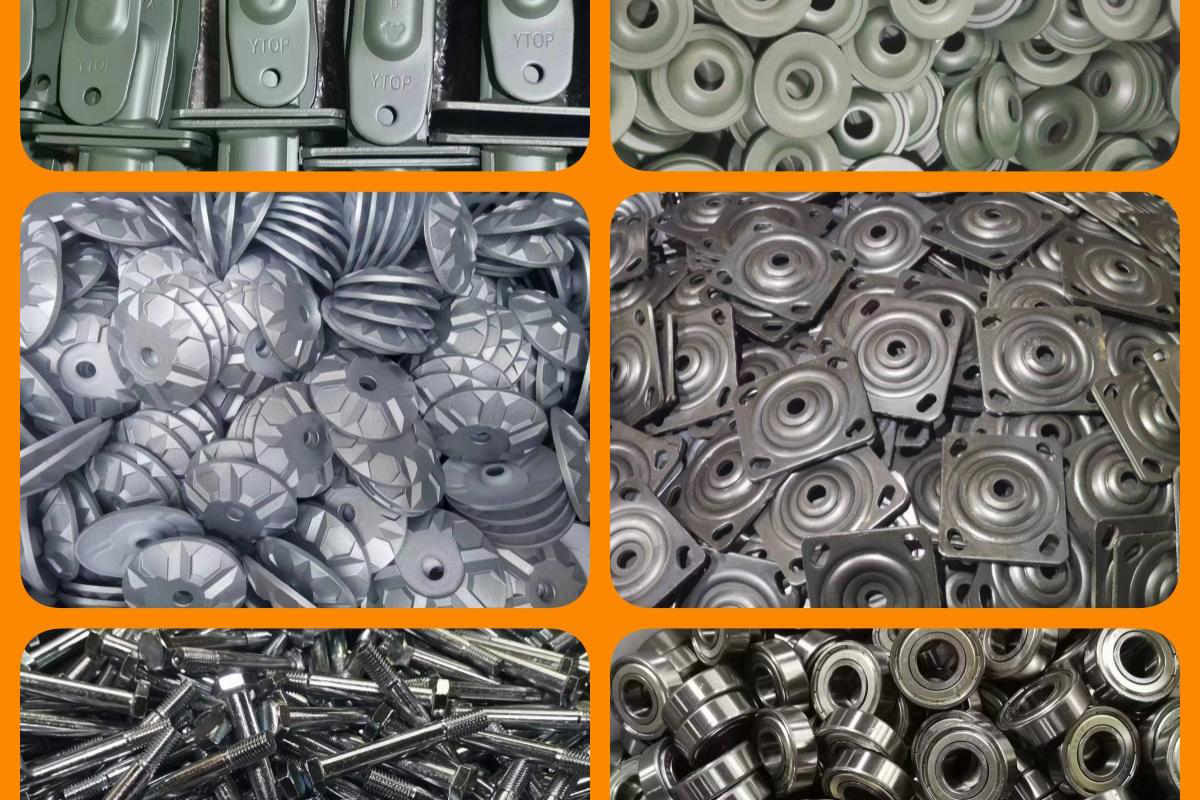
At first glance, a caster bracket may appear to be a simple piece of bent metal with a wheel attached. However, beneath this seemingly simple exterior lies a sophisticated world of material science, structural engineering, and manufacturing technology. The caster bracket is the structural backbone of the entire caster system, responsible for safely transferring the full load of the equipment to the wheel and floor while withstanding dynamic forces, impacts, and environmental stresses. The material used for the bracket, and the technology used to process and finish it, directly determines the caster’s load capacity, service life, safety, and suitability for different operating environments.
The technological secrets behind caster bracket materials encompass several areas: the selection and specification of the base material (including alloy composition, grade, and quality level); the processing and forming techniques (including cutting, bending, stamping, welding, and casting); the heat treatment and hardening processes (which can significantly enhance the strength and durability of the bracket); the surface treatment and finishing technologies (which provide corrosion protection, wear resistance, and aesthetic appeal); and the quality control and testing procedures (which ensure that the bracket meets the required specifications and performance standards). Each of these areas involves specialized knowledge, advanced equipment, and rigorous processes that distinguish high-quality caster brackets from low-quality alternatives. In this article, we will delve into each of these areas, unveiling the technological secrets behind caster bracket materials and providing insight into what makes a premium caster bracket perform reliably and safely in demanding applications.
Base Material Selection: Alloy, Grade, and Quality
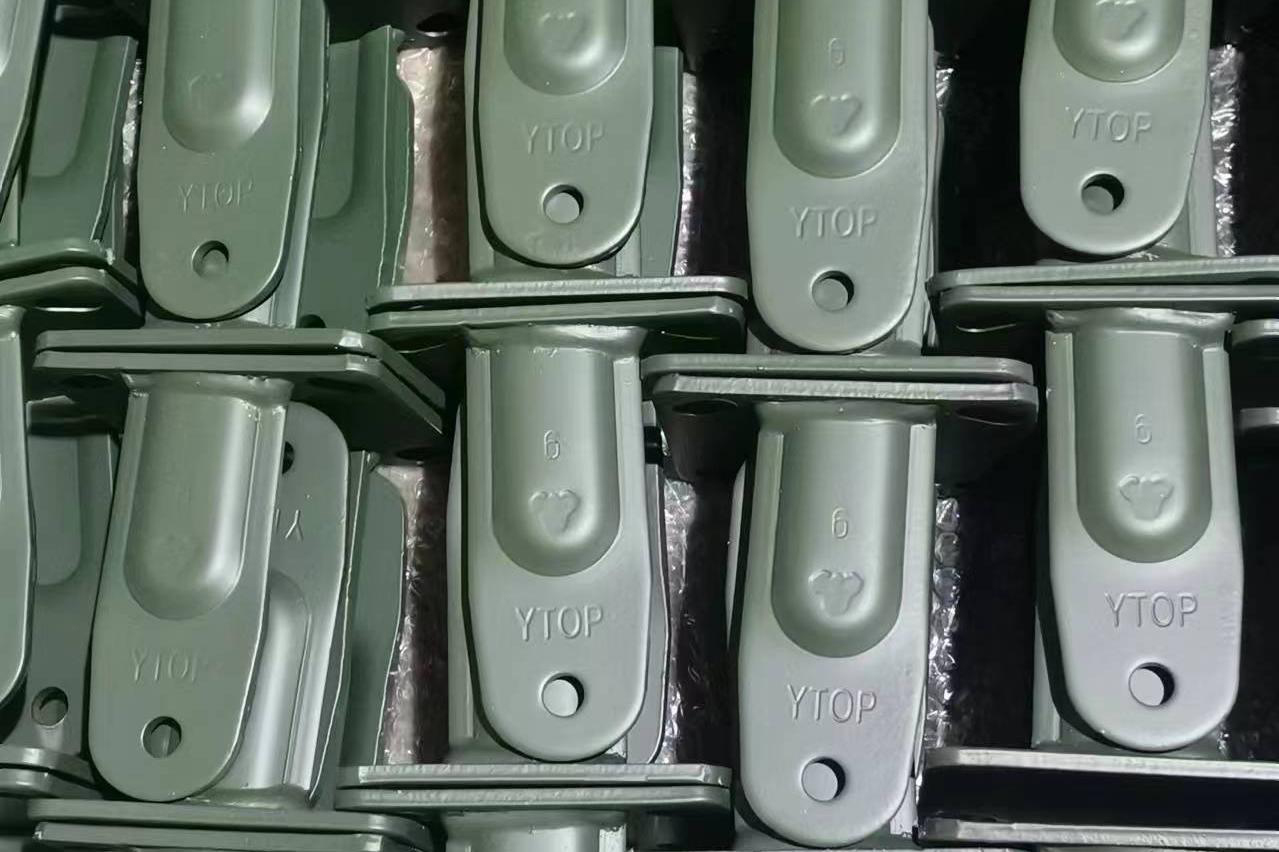
The first technological secret behind caster bracket materials is the careful selection of the base material, including the specific alloy, grade, and quality level. Not all steel is created equal, and the difference between a high-quality caster bracket and a low-quality one often begins with the raw material. Premium caster manufacturers carefully select the specific steel alloy and grade for their brackets based on the required mechanical properties, including yield strength, tensile strength, toughness, hardness, and formability. They may use certified materials with traceable mill test reports (MTRs) that document the chemical composition and mechanical properties of each batch of material, ensuring consistency and quality.
For carbon steel brackets, the most common material is low-carbon steel (typically A36, S235, or equivalent), which offers a good balance of strength, formability, and weldability. For heavier duty applications, medium-carbon steel or high-strength low-alloy (HSLA) steel may be used, offering higher strength and load capacity. For stainless steel brackets, the grade selection is critical: 304 stainless steel (18% chromium, 8% nickel) is the standard for most corrosive applications, while 316 stainless steel (with added molybdenum) is used for more demanding environments such as marine, chemical, or chloride-exposed applications. For aluminum brackets, 6061-T6 is the most common alloy, offering a good balance of strength, formability, and corrosion resistance, while 6063 is used for extruded applications and 5052 for applications requiring better formability and corrosion resistance. Premium manufacturers also pay close attention to the material thickness and tolerance, ensuring that the bracket has sufficient material to safely support the rated load with an appropriate safety factor. Low-quality manufacturers may use thinner material than specified, or material with inconsistent thickness or poor surface quality, which can compromise the bracket’s strength and safety. By carefully selecting and specifying the base material, premium caster manufacturers ensure that their brackets provide consistent, reliable performance and meet the required load capacity and safety standards.
Forming and Processing Technology
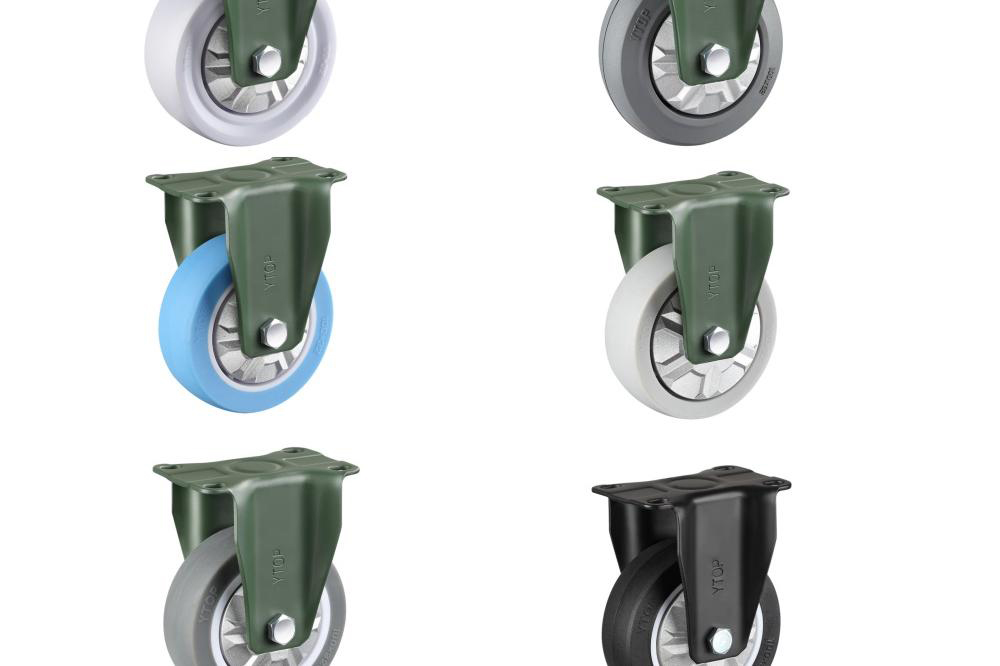
The second technological secret behind caster bracket materials is the advanced forming and processing technology used to shape the raw material into the final bracket design. The forming process has a significant impact on the bracket’s strength, dimensional accuracy, consistency, and aesthetic quality. Premium caster manufacturers use advanced forming technologies such as CNC laser cutting, CNC punching, CNC bending, robotic welding, and precision stamping to produce brackets with high dimensional accuracy, consistent quality, and excellent structural integrity. These advanced technologies allow for complex bracket designs that optimize strength while minimizing material usage, and they ensure that each bracket is produced to exact specifications with minimal variation.
CNC laser cutting uses a high-powered laser to cut the bracket shape from steel sheet or plate with extreme precision (typically within 0.1 mm), producing clean, smooth cut edges that require minimal finishing. This technology allows for complex shapes and patterns that would be difficult or impossible to achieve with conventional cutting methods, and it produces minimal material waste. CNC bending uses computer-controlled press brakes to bend the cut blank into the desired bracket shape with precise angle and dimension control. Premium manufacturers use multi-axis CNC bending machines that can perform complex bends in a single setup, ensuring consistent accuracy and reducing the risk of human error. Robotic welding uses industrial robots to perform the welding operations on the bracket, ensuring consistent weld quality, precise weld placement, and minimal spatter or distortion. Robotic welding is particularly important for heavy-duty brackets where weld quality is critical to structural integrity, and it ensures that each weld is consistent in size, penetration, and appearance. Precision stamping is used for high-volume production of lighter duty brackets, using progressive dies that perform multiple forming operations in a single press stroke to produce complete brackets with high efficiency and consistency. In addition to these primary forming processes, premium manufacturers may use secondary operations such as deburring, grinding, polishing, and tapping to finish the bracket and ensure that all edges are smooth, all holes are properly sized and threaded, and the bracket is ready for surface treatment and assembly. By using advanced forming and processing technology, premium caster manufacturers produce brackets with superior dimensional accuracy, consistent quality, excellent structural integrity, and attractive appearance, distinguishing them from low-quality brackets that may be produced with less precise methods and exhibit dimensional variation, poor weld quality, or rough edges.
Heat Treatment and Strengthening Technologies
The third technological secret behind caster bracket materials is the use of heat treatment and strengthening technologies to enhance the mechanical properties of the bracket, particularly its strength, hardness, toughness, and wear resistance. While the base material provides a foundation of mechanical properties, heat treatment can significantly modify and improve these properties, allowing the bracket to handle higher loads, resist wear and impact better, and provide longer service life. Premium caster manufacturers may use various heat treatment processes on specific components of the caster bracket (particularly the swivel raceway, axle, and load-bearing surfaces) to optimize their performance.
One common heat treatment process is induction hardening, which uses electromagnetic induction to rapidly heat a specific area of the bracket (such as the swivel raceway or axle bore) to a high temperature, followed by rapid quenching to harden the surface. Induction hardening produces a hard, wear-resistant surface layer while maintaining a tough, ductile core, providing an excellent combination of wear resistance and impact resistance. This is particularly important for the swivel raceway, which experiences significant wear and friction during swiveling, and for the axle bore, which experiences wear from the rotating axle. Another heat treatment process is case hardening (also known as carburizing or carbonitriding), which introduces carbon or nitrogen into the surface of the steel to create a hard, wear-resistant case while maintaining a tough core. Case hardening is often used for axles, pins, and other small components that require high surface hardness and wear resistance. Through-hardening (quenching and tempering) heats the entire component to a high temperature and then quenches it to harden it throughout, followed by tempering to reduce brittleness and achieve the desired balance of hardness and toughness. Through-hardening is used for components that require high strength and hardness throughout, such as heavy-duty axles or load pins. Normalizing and annealing are heat treatment processes used to refine the grain structure, relieve internal stresses, and improve the machinability and toughness of the steel. These processes are often used after forming or welding to ensure that the bracket has consistent mechanical properties and is not susceptible to cracking or distortion. In addition to these conventional heat treatment processes, some premium manufacturers may use advanced surface modification technologies such as nitriding (which introduces nitrogen into the surface to create a hard, wear-resistant layer with excellent corrosion resistance), boronizing (which creates an extremely hard boride layer), or physical vapor deposition (PVD) coatings (which deposit a thin, hard coating such as titanium nitride or chromium nitride on the surface). These advanced technologies can significantly enhance the wear resistance, corrosion resistance, and service life of critical caster bracket components. By carefully selecting and applying the appropriate heat treatment and strengthening technologies, premium caster manufacturers optimize the performance and durability of their brackets, ensuring that they can withstand the demanding conditions of heavy-duty industrial applications and provide long, reliable service life.
Surface Treatment and Coating Technologies
The fourth technological secret behind caster bracket materials is the advanced surface treatment and coating technology used to protect the bracket from corrosion, wear, and environmental damage, while also providing an attractive appearance. The surface treatment is one of the most visible differences between high-quality and low-quality caster brackets, and it plays a critical role in determining the bracket’s corrosion resistance, durability, and service life. Premium caster manufacturers use advanced surface treatment processes such as powder coating, e-coating, zinc plating, chromate conversion coating, and anodizing to provide superior corrosion protection and aesthetic appeal. They may also use multi-layer coating systems that combine several treatment processes for maximum protection in demanding environments.
Powder coating is the most common surface treatment for carbon steel caster brackets, and it involves applying a dry powder coating to the bracket via electrostatic spray, followed by curing in an oven at high temperature (typically 180-200C). Powder coating produces a thick, durable, and attractive finish that provides excellent corrosion protection, chip resistance, and color retention. Premium manufacturers use high-quality polyester or polyurethane powder coatings with proper pretreatment (including cleaning, phosphating, and e-coat primer) to ensure excellent adhesion and corrosion protection. They may also use textured or matte finishes for improved scratch resistance and appearance. E-coating (electrophoretic coating or electrodeposition coating) is a process that uses electrical current to deposit a thin, uniform organic coating onto the metal surface. E-coating provides excellent coverage, including in recesses, edges, and complex geometries that are difficult to coat with conventional spray methods, and it produces a uniform, pinhole-free coating with excellent corrosion protection. E-coating is often used as a primer under powder coating, providing a multi-layer protection system that significantly enhances corrosion resistance. Zinc plating (galvanizing) applies a thin layer of zinc to the steel surface via electroplating, providing corrosion protection through both barrier protection and sacrificial protection (the zinc corrodes preferentially to the steel). Zinc plating is often followed by a chromate or passivation conversion coating to further enhance corrosion protection and provide a colored finish (clear, yellow, or black). Zinc plating is commonly used for caster brackets, hardware, and components where a thinner, more economical coating is desired. For aluminum brackets, anodizing is the most common surface treatment, which uses an electrochemical process to create a thick, hard oxide layer on the aluminum surface. Anodizing provides excellent corrosion resistance, wear resistance, and the ability to dye the surface in various colors. Premium manufacturers may use hard anodizing for applications requiring maximum wear resistance. For the most demanding corrosive environments, premium manufacturers may use multi-layer coating systems such as e-coat + powder coat, zinc-rich primer + powder coat, or thermal spray coatings (such as zinc or aluminum flame spray) for extreme corrosion protection. By using advanced surface treatment and coating technologies, premium caster manufacturers ensure that their brackets provide excellent corrosion protection, durable and attractive appearance, and long service life even in demanding environments.
Quality Control, Testing, and Conclusion
The fifth and final technological secret behind caster bracket materials is the rigorous quality control and testing procedures used to ensure that every bracket meets the required specifications and performance standards. Premium caster manufacturers implement comprehensive quality management systems (often certified to ISO 9001 or equivalent) that cover every stage of the manufacturing process, from incoming material inspection to final product testing. They use advanced inspection and testing equipment such as coordinate measuring machines (CMMs), optical comparators, hardness testers, tensile testing machines, salt spray chambers, and load testing rigs to verify the dimensional accuracy, material properties, coating quality, corrosion resistance, and load capacity of their brackets.
Incoming material inspection verifies that the raw material meets the specified alloy, grade, thickness, and mechanical properties, often using material test reports (MTRs) and positive material identification (PMI) testing to confirm the chemical composition. In-process inspection monitors the forming, welding, heat treatment, and coating processes to ensure that each operation is performed correctly and that the intermediate products meet the required specifications. Dimensional inspection using CMMs or calibrated gauges verifies that the finished bracket meets all dimensional tolerances, including critical dimensions such as mounting hole locations, axle bore diameter, and overall height. Coating inspection measures the coating thickness, adhesion, and appearance, using tools such as coating thickness gauges, cross-hatch adhesion testers, and visual inspection standards. Corrosion testing using salt spray chambers (ASTM B117 or equivalent) verifies the corrosion resistance of the coating, with premium brackets often required to withstand hundreds or thousands of hours of salt spray exposure without red rust. Load testing using hydraulic or mechanical test rigs verifies that the bracket can safely support its rated load (and often a multiple of the rated load as a safety factor) without permanent deformation or failure. Fatigue testing subjects the bracket to repeated loading and unloading cycles to verify its durability and service life under dynamic conditions. By implementing these rigorous quality control and testing procedures, premium caster manufacturers ensure that every bracket they produce meets the highest standards of quality, safety, and performance, providing customers with reliable, long-lasting products that they can trust in demanding applications.
In conclusion, the technological secrets behind caster bracket materials are multifaceted and sophisticated, encompassing careful base material selection, advanced forming and processing technology, precision heat treatment and strengthening, sophisticated surface treatment and coating, and rigorous quality control and testing. Each of these areas contributes to the overall performance, durability, safety, and value of the caster bracket, and the difference between a premium bracket and a low-quality alternative often lies in the attention to detail and technological sophistication applied in each of these areas. By understanding and appreciating the technological secrets behind caster bracket materials, purchasers and users can make more informed decisions about caster selection, recognizing that the initial cost difference between a premium caster and a low-cost alternative reflects significant differences in material quality, manufacturing technology, and performance that translate into safer, more reliable, and longer-lasting products. Investing in high-quality caster brackets with advanced material technology is an investment in safety, productivity, and long-term value that pays dividends over the life of the caster system.
Related Reading
Looking for more in-depth caster guides and industrial mobility resources? Explore these related articles:
- Heavy-Duty Casters Selection Guide — Learn how to select the right heavy-duty casters for your equipment, including load calculation, material selection, and braking systems.
- Extra Heavy Duty Casters: Full Analysis — An in-depth look at extra heavy duty casters, including features, load capacity specifications, structural design, and industry applications.
- PP vs TPR Casters: A Complete Comparison Guide — Understand the key differences between polypropylene and thermoplastic rubber caster wheels for industrial applications.
- Rubber vs Nylon Casters: Which is Right for You? — A detailed comparison of rubber and nylon caster wheels, covering performance characteristics and selection criteria.
- Caster Maintenance Tips — Maximize the lifespan of your industrial casters with this comprehensive maintenance guide covering inspection, lubrication, and replacement.
Explore our complete range of heavy-duty casters (150-610kg) and super heavy-duty casters (700-1600kg), or contact our engineering team for expert guidance on selecting the perfect caster solution for your industrial application.
Related Reading
Explore more caster bracket material, technology, and structure guides:
- Caster Bracket Material: Understand Characteristics of Different Materials — Learn about caster bracket material characteristics including technological secrets behind material selection.
- Iron Core Casters vs. Aluminum Core Casters: Material Analysis — Complete comparison of iron core and aluminum core caster materials including bracket material technology.
- Manganese Steel Casters: Hardness and Wear Resistance — Learn about manganese steel caster material characteristics including bracket material technological secrets.
- The Power of Manganese Steel: Properties, Origin and Excellence — Learn about manganese steel properties and caster production excellence including bracket material technology.
- Analysis of the Structure and Characteristics of Industrial Casters — Learn about industrial caster structure and characteristics including bracket material technological components.
Explore our complete range of technologically advanced bracket material heavy-duty casters (150-610kg) and super heavy-duty casters (700-1600kg) with premium manganese steel brackets, or contact our engineering team for expert caster bracket material technology guidance.
Post time: Mar-02-2026