
As a special category of industrial casters, extra heavy duty casters have gained widespread attention and adoption due to their exceptional load-bearing capacity and unmatched durability. Designed to handle the most demanding material handling challenges, these robust casters are engineered to support loads ranging from 600kg to over 1500kg per caster—far exceeding the capabilities of standard heavy-duty casters. From automotive manufacturing plants to aerospace facilities, from mining operations to shipyards, extra heavy duty casters play a critical role in enabling the safe and efficient movement of massive equipment and materials. This comprehensive analysis explores the key features, load capacity specifications, structural design, application scenarios, and selection criteria for extra heavy duty casters, providing you with the knowledge needed to make informed decisions for your most demanding mobility challenges.
Key Features of Extra Heavy Duty Casters
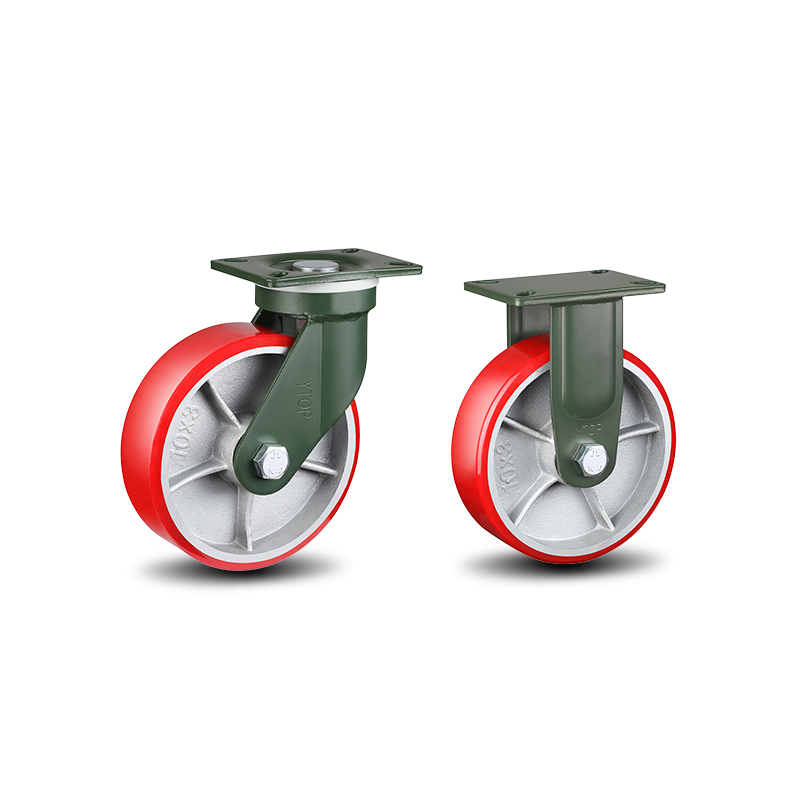
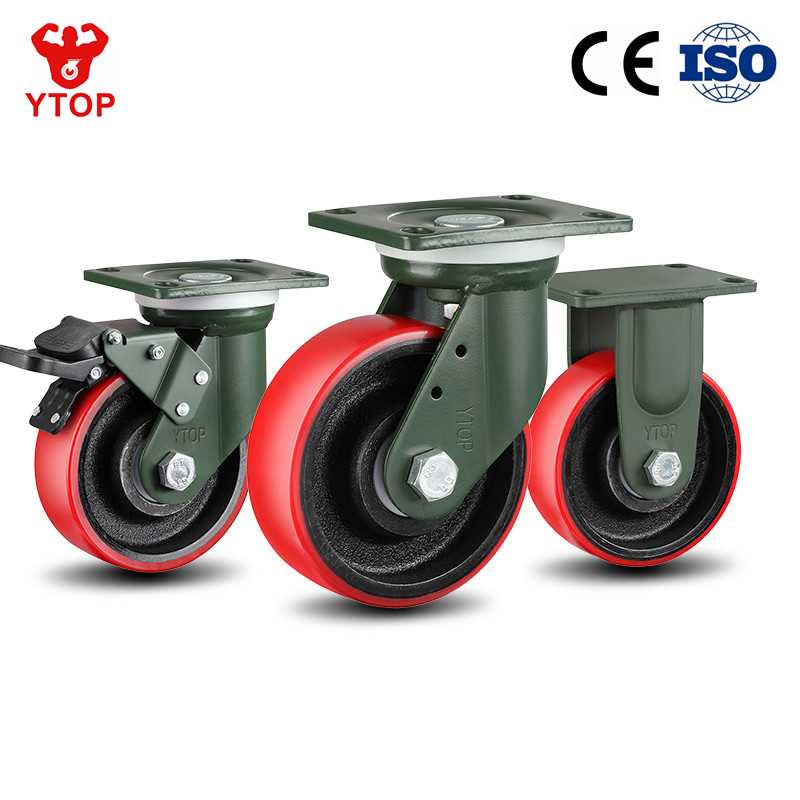
Extra heavy duty casters are distinguished by several key features that set them apart from standard and heavy-duty casters. These features are engineered to deliver exceptional performance under the most extreme operating conditions:
1. Exceptional Load-Bearing Capacity
Extra heavy duty casters are constructed from high-strength materials, including forged steel rigs, high-quality polyurethane treads, cast iron or nylon wheels, and alloy steel components. These materials provide extremely high load-carrying capacity, enabling the casters to operate stably in the most demanding heavy-duty environments. Load capacities range from 600kg to over 1500kg per caster, with custom solutions available for even higher load requirements.
2. Wear-Resistant and Durable Construction
The wheel surfaces of extra heavy duty casters are manufactured from premium wear-resistant materials such as polyurethane (85-95 Shore A), cast iron, or high-grade nylon (PA6/PA66). These materials effectively resist abrasion, impact, and deformation, significantly prolonging service life even under continuous heavy loads. The caster rigs are typically constructed from 6-10mm thick forged or welded steel, with reinforced fork legs and heavy-duty mounting plates that resist bending and structural fatigue.
3. Precision Rotation and Smooth Mobility
Extra heavy duty casters utilize precision bearing systems—including tapered roller bearings, spherical roller bearings, or heavy-duty ball bearings—combined with advanced lubrication systems. These components ensure that wheels rotate flexibly and smoothly even under maximum load, reducing friction, minimizing push-pull effort, and improving overall work efficiency. Kingpinless swivel designs with interlocking raceways provide 360-degree rotation with minimal play and exceptional side-load resistance.
4. Enhanced Safety Features
Safety is paramount in extra heavy duty caster design and manufacturing. These casters incorporate multiple safety features such as total lock braking systems that immobilize both wheel rotation and swivel movement, non-slip wheel treads for improved traction, reinforced safety rims to prevent wheel separation under impact, and load-indicating devices in some advanced models. These features ensure that the casters maintain stability and safety throughout their service life, even under the most challenging operating conditions.
5. Corrosion and Environmental Resistance
Extra heavy duty casters are available with various corrosion-resistant finishes, including zinc plating, chrome plating, powder coating, and full stainless steel construction (304 or 316 grade). These finishes protect the casters from rust, oxidation, and chemical corrosion, making them suitable for use in wet environments, chemical processing plants, food processing facilities, marine applications, and outdoor settings.
6. Customization and Adaptability
Extra heavy duty casters offer extensive customization options to meet specific application requirements. Available customizations include special wheel materials (high-temperature polyurethane, conductive polyurethane, V-groove wheels), custom mounting plates, special brake configurations, extended lead times for swivel seals, shock-absorbing suspensions, and specialized bearings for extreme temperatures or cleanroom environments. This adaptability ensures that extra heavy duty casters can be tailored to virtually any heavy-load mobility challenge.
Load Capacity Specifications by Size and Configuration
The load capacity of extra heavy duty casters varies significantly according to model, wheel diameter, wheel material, bearing type, and rig construction. Generally speaking, the load capacity of extra heavy duty casters ranges from 600kg to over 1500kg per caster, with custom engineered solutions capable of supporting several tons or even tens of tons for specialized applications. When selecting extra heavy duty casters, users should choose the appropriate model and specification based on actual load requirements, ensuring safe operation and maximizing service life.
Standard load capacity by wheel diameter:
| Wheel Diameter | Polyurethane (PU) on Iron | Cast Iron | Nylon (PA) | Steel |
|---|---|---|---|---|
| 100mm (4″) | 400-600kg | 500-700kg | 350-500kg | 600-800kg |
| 125mm (5″) | 500-800kg | 700-1000kg | 500-700kg | 800-1200kg |
| 150mm (6″) | 700-1000kg | 900-1300kg | 700-900kg | 1000-1500kg |
| 200mm (8″) | 900-1300kg | 1200-1800kg | 900-1200kg | 1500-2000kg |
| 250mm (10″) | 1200-1600kg | 1500-2200kg | 1200-1500kg | 2000-2500kg |
| 300mm (12″) | 1500-2000kg | 2000-3000kg | 1500-1800kg | 2500-3500kg |
Important load calculation principles:
- Calculate total load: Add the weight of the equipment/cart itself plus the maximum cargo weight. For example: cart weight = 500kg, maximum cargo = 3500kg, total = 4000kg.
- Account for uneven load distribution: Due to uneven floors, frame flex, and load shifting, only 3 out of 4 casters may bear the full load at any given time. Divide total load by 3, not 4.
- Apply safety factor: Multiply by a safety factor of 1.5 to 2.0 to account for dynamic loads, impacts, and unexpected forces. Example: 4000kg ÷ 3 × 1.5 = 2000kg per caster minimum.
- Consider dynamic conditions: If the cart will be towed at speed, encounter impacts, or operate on rough terrain, increase the safety factor to 2.0 or higher.
- Verify floor capacity: Ensure that the floor can support the total load, including point loads from caster wheels. Reinforce floors if necessary.
Factors that affect load capacity:
- Wheel diameter: Larger wheels distribute load over a larger area and provide higher load capacity
- Wheel width: Wider wheels provide higher load capacity and better floor load distribution
- Wheel material: Cast iron and steel offer the highest load capacity; polyurethane and nylon offer slightly lower but still substantial capacity
- Bearing type: Tapered roller bearings and spherical roller bearings offer higher load capacity than standard ball bearings
- Rig construction: Forged steel rigs with thick fork legs and reinforced mounting plates offer higher load capacity than stamped steel rigs
- Swivel design: Kingpinless designs offer higher load capacity and better side-load resistance than kingpin designs
- Temperature: Extreme temperatures (both high and low) can reduce load capacity; consult manufacturer specifications for temperature derating
Structural Design and Engineering
The exceptional performance of extra heavy duty casters is the result of careful structural engineering and premium component selection. Every aspect of the caster—from the mounting plate to the wheel tread—is designed to handle extreme loads while maintaining smooth operation and long service life.
Caster rig (fork) construction:
- Material: Forged steel or heavy-gauge welded steel (6-10mm thick), with tensile strength of 400-600 MPa
- Fork legs: Reinforced with gussets or ribbed construction to prevent bending under side loads; leg thickness typically 8-12mm
- Mounting plate: Thick steel plate (8-12mm) with 4 or 6 bolt holes; standard sizes include 5″x5″, 6″x6″, and 8″x8″ for extra heavy duty
- Swivel raceway: Kingpinless design with interlocking upper and lower raceways, precision-machined and heat-treated for durability; loaded with ball bearings or tapered rollers for smooth rotation
- Axle: Shouldered or welded axle made from alloy steel, diameter 12-20mm, with hex head or threaded ends for secure attachment
- Finish: Zinc plating (standard), chrome plating, powder coating, or epoxy coating for corrosion resistance; stainless steel construction available for corrosive environments
Wheel construction:
- Cast iron wheels: Solid cast iron with hardness 180-220 BHN; machined tread and hub; press-fit or bolt-on bearings; highest load capacity and temperature resistance
- Polyurethane on iron wheels: Cast iron or steel core bonded with polyurethane tread (85-95 Shore A); combines high load capacity of iron with floor protection and quiet operation of polyurethane; tread thickness 5-10mm
- Nylon wheels: Solid nylon (PA6 or PA66) or glass-filled nylon; lightweight, corrosion-resistant, non-marking; good load capacity with low rolling resistance
- Steel wheels: Solid forged or machined steel; maximum load capacity and impact resistance; suitable for the most extreme applications; can be heat-treated for enhanced wear resistance
- Rubber wheels: Natural or synthetic rubber on iron/steel core; excellent shock absorption and traction; lower load capacity than other materials; suitable for outdoor and rough terrain use
Bearing systems:
- Tapered roller bearings: The most common bearing for extra heavy duty casters; handles both radial and thrust loads; high load capacity and durability; requires periodic lubrication
- Spherical roller bearings: Self-aligning bearing that compensates for shaft deflection; extremely high load capacity; suitable for the most demanding applications
- Heavy-duty ball bearings: Sealed or shielded ball bearings for moderate extra heavy duty loads; low rolling resistance; maintenance-free when sealed
- Plain bore (sleeve) bearings: Simplest and most economical bearing type; suitable for lower end of extra heavy duty range; requires regular lubrication
- High-temperature bearings: Special bearings with high-temperature grease or solid lubricant for operating temperatures up to 250°C or higher
Braking systems:
- Total lock brake: Locks both wheel rotation and swivel rotation simultaneously; the most secure braking option; essential for heavy loads on inclines
- Wrap-around brake: Encircles the wheel for maximum braking force; ideal for extra heavy duty applications where maximum holding power is required
- Cam brake: Uses a cam mechanism to apply pressure to the wheel tread; foot-operated; suitable for moderate extra heavy duty loads on level surfaces
- Directional lock: Locks swivel rotation only, converting swivel caster to rigid for straight-line tracking; does not lock wheel rotation
- Heavy-duty pedal brake: Large, reinforced pedal for easy foot operation even with heavy boots; designed for industrial environments
Application Scenarios and Industry Use Cases
Extra heavy duty casters find application across a wide range of industries where massive loads must be moved safely and efficiently. Their exceptional load capacity, durability, and reliability make them indispensable in the following sectors:
1. Heavy Machinery and Equipment Manufacturing
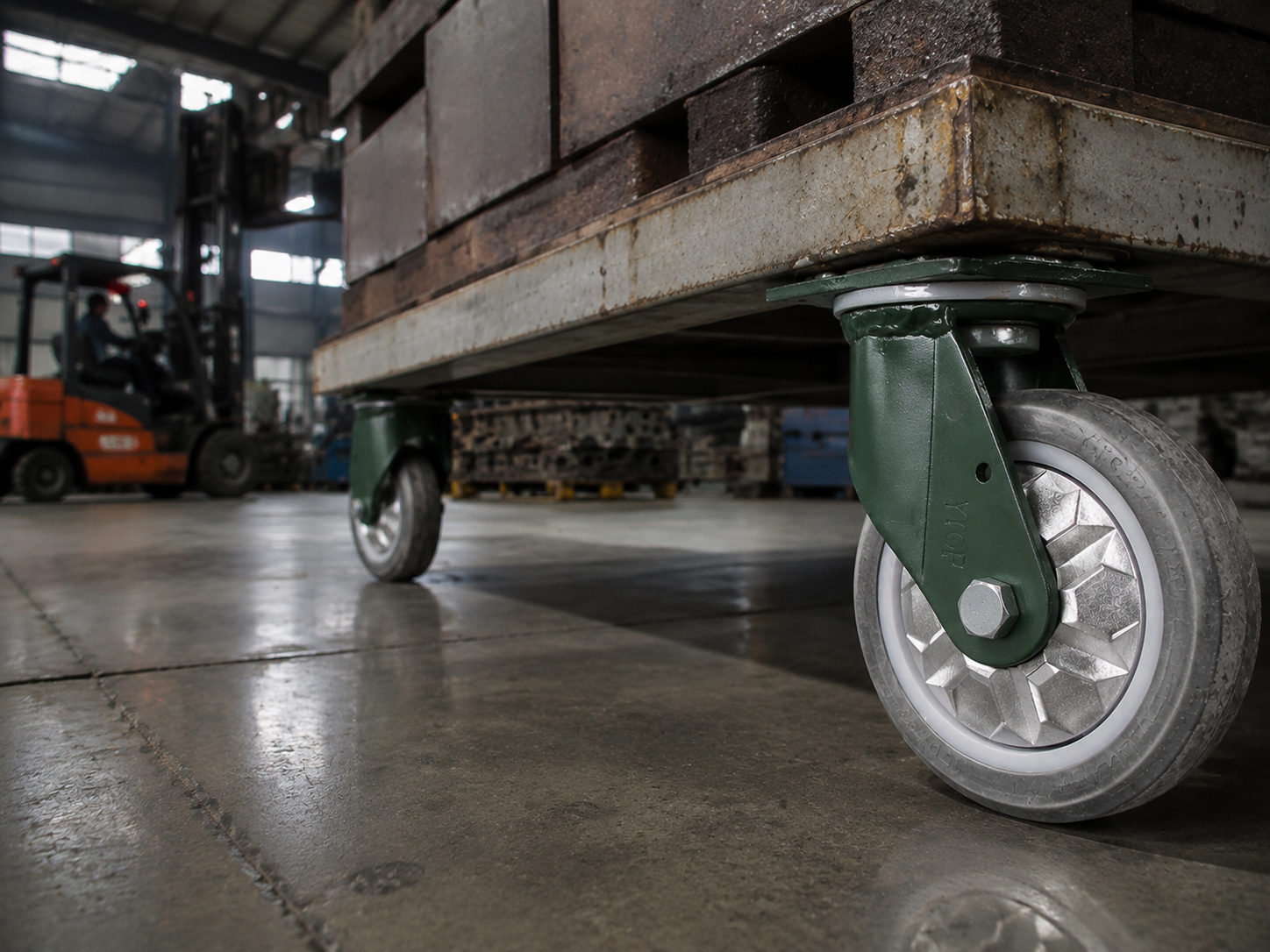
Extra heavy duty casters are widely used in the production, assembly, and transport of various heavy machinery and equipment, including machine tools, presses, injection molding machines, generators, and industrial turbines. These equipment units often weigh several tons and require precise positioning on factory floors. The high load capacity, smooth rotation, and precise steering of extra heavy duty casters make them an ideal choice for mobile machine bases, assembly fixtures, and test stands. In automotive manufacturing, extra heavy duty casters are used on skid systems, conveyor transfers, and engine dress-up carts that carry complete powertrains weighing over 1000kg.
2. Automotive and Transportation Industry
The automotive industry relies heavily on extra heavy duty casters for a multitude of applications, including vehicle assembly line carts, engine and transmission transporters, body-in-white fixtures, tire racks, and tooling carts. In automotive assembly plants, extra heavy duty casters with total lock brakes are used on build-out carts that carry complete vehicles through final assembly, requiring load capacities of 2000-3000kg per caster. In automotive repair and maintenance facilities, heavy-duty vehicle lifts, transmission jacks, and wheel dollies utilize extra heavy duty casters for safe and stable mobility. The automotive industry also demands casters that can withstand welding sparks, oil and grease exposure, and continuous high-frequency use.
3. Aerospace and Defense
In aerospace manufacturing and maintenance, extra heavy duty casters are used on aircraft engine stands, wing assembly fixtures, fuselage transporters, tooling cradles, and ground support equipment. Aircraft engines alone can weigh 3000-8000kg, requiring specialized extra heavy duty casters with load capacities of 1000-2000kg per caster. Aerospace applications demand the highest levels of precision, reliability, and safety, often requiring custom-engineered caster solutions with special materials, precision bearings, and certified quality processes. In defense applications, extra heavy duty casters are used on missile transporters, radar systems, armored vehicle maintenance stands, and field equipment that must operate reliably in extreme environmental conditions.
4. Logistics and Warehousing
In warehouses, distribution centers, freight yards, and logistics facilities, cargo handling and storage are essential daily operations. Extra heavy duty casters are installed on heavy-duty pallet jacks, roll cages, bulk storage racks, die carts, and industrial trailers to improve handling efficiency and reduce labor intensity. In e-commerce fulfillment centers, extra heavy duty casters are used on automated storage and retrieval systems (AS/RS), conveyor transfer carts, and order picking vehicles that must operate continuously with heavy loads. In freight terminals, container dollies and baggage carts utilize extra heavy duty casters to handle heavy loads in high-traffic environments. The durability and low maintenance requirements of extra heavy duty casters make them ideal for 24/7 logistics operations.
5. Construction and Building Materials
On construction sites, heavy materials and equipment must be moved frequently across rough and uneven terrain. Extra heavy duty casters are used on construction material carts, concrete buggies, scaffolding with wheels, temporary site facilities, and heavy equipment transporters to improve work efficiency and reduce labor costs. In precast concrete manufacturing, extra heavy duty casters are used on heavy-duty curing racks and transport carts that carry concrete elements weighing several tons. In steel fabrication shops, extra heavy duty casters are installed on welding positioners, material handling carts, and heavy plate transporters. For outdoor construction use, extra heavy duty casters with pneumatic or solid rubber wheels and corrosion-resistant finishes are preferred to handle rough terrain and weather exposure.
6. Mining and Natural Resources
In mining, quarrying, and mineral processing operations, extra heavy duty casters are used on mining carts, ore transporters, conveyor maintenance platforms, and heavy equipment service stands to withstand the weight of massive quantities of ore, rock, and mining equipment. In underground mining, extra heavy duty casters with flame-resistant materials and special seals are used on personnel carriers, supply carts, and equipment transporters that must operate in harsh conditions with dust, moisture, and limited space. In mineral processing plants, extra heavy duty casters are used on heavy-duty screen feeders, crusher maintenance platforms, and material handling carts that operate continuously with abrasive materials. The extreme durability and load capacity of extra heavy duty casters ensure stable equipment operation in the most demanding mining environments.
7. Shipbuilding and Marine
In shipyards and marine facilities, extra heavy duty casters are used on ship section transporters, hull assembly fixtures, heavy equipment maintenance stands, and dockside material handling carts. Ship sections can weigh hundreds of tons, requiring specialized extra heavy duty caster systems with multiple wheels per caster and load capacities of several tons per unit. In marine applications, extra heavy duty casters with stainless steel construction or heavy-duty corrosion-resistant finishes are essential to withstand saltwater exposure, high humidity, and corrosive atmospheres. On naval vessels and offshore platforms, extra heavy duty casters are used on weapons handling systems, equipment transporters, and maintenance carts that must operate reliably in challenging marine environments.
8. Energy and Power Generation
In power plants (nuclear, fossil fuel, hydroelectric, and renewable energy), extra heavy duty casters are used on turbine maintenance carts, generator transporters, fuel handling equipment, and heavy component service stands. In nuclear power plants, extra heavy duty casters with special radiation-resistant materials and precision bearings are used on fuel handling machines, reactor maintenance equipment, and waste transport casks that must operate with absolute reliability in highly regulated environments. In wind turbine manufacturing and maintenance, extra heavy duty casters are used on blade transporters, nacelle assembly fixtures, and tower section carts that handle massive components. In solar panel manufacturing, extra heavy duty casters are used on glass handling carts and module assembly fixtures that require precise positioning with heavy loads.
9. Paper, Printing, and Textile Manufacturing
In paper mills and printing plants, extra heavy duty casters are used on paper roll carts, printing press maintenance platforms, ink supply carts, and heavy material handling equipment. Paper rolls can weigh over 2000kg, requiring extra heavy duty casters with V-groove or flat tread wheels designed to handle cylindrical loads. In textile manufacturing, extra heavy duty casters are used on loom maintenance carts, fabric roll transporters, and dyeing equipment stands that operate in wet, chemical-rich environments. These industries demand casters that can handle heavy loads while operating reliably in environments with continuous moisture, chemical exposure, and high ambient temperatures.
10. Glass, Ceramics, and Stone Processing
In glass manufacturing and processing, extra heavy duty casters are used on glass sheet transporters, kiln furniture, annealing lehr carts, and heavy material handling equipment. Large glass sheets and architectural glass units can weigh over 1000kg, requiring extra heavy duty casters with precision steering and smooth rotation to prevent breakage. In ceramic and sanitary ware manufacturing, extra heavy duty casters are used on kiln cars, glaze application carts, and heavy material transporters that operate at high temperatures. In stone and marble processing, extra heavy duty casters are used on slab transporters, polishing machine maintenance platforms, and heavy material handling carts that handle massive stone slabs weighing several thousand kilograms. These applications demand casters with high load capacity, shock absorption, and resistance to abrasive materials and high temperatures.
Selection Criteria and Purchasing Guide
Selecting the right extra heavy duty caster requires careful evaluation of multiple factors to ensure optimal performance, safety, and cost-effectiveness. Use this systematic approach to identify the best caster solution for your specific application:
Step 1: Define Load Requirements
- Calculate total load (equipment weight + maximum cargo weight)
- Determine number of casters (typically 4, but 6 or 8 for very heavy loads)
- Calculate per-caster load: total load ÷ (number of casters – 1) × safety factor (1.5-2.0)
- Consider dynamic loads from towing, impacts, and acceleration
Step 2: Evaluate Operating Environment
- Floor conditions: Smooth concrete, rough concrete, asphalt, gravel, steel grating, or special surfaces
- Temperature range: Standard (-10°C to 50°C), high-temperature (up to 250°C), low-temperature (down to -40°C)
- Moisture and chemicals: Dry, wet, wash-down, chemical exposure, oil/grease, saltwater
- Debris and contaminants: Clean, dusty, metal chips, wood shavings, abrasive particles
- Indoor vs. outdoor: Indoor only, occasional outdoor, continuous outdoor exposure
Step 3: Select Wheel Material
- Polyurethane on iron: Best all-around choice for extra heavy duty; high load capacity, floor protection, quiet operation; avoid in high-temperature or oily environments
- Cast iron: Maximum load capacity and temperature resistance; very durable; noisy and can damage floors; best for rough industrial environments
- Nylon: Lightweight, corrosion-resistant, non-marking; good load capacity; can be noisy on hard floors; best for wet and chemical environments
- Steel: Maximum strength and impact resistance; very heavy; can damage floors; best for the most extreme heavy-duty applications
- Rubber: Excellent shock absorption and traction; lower load capacity; best for outdoor and rough terrain use
Step 4: Choose Bearing Type
- Tapered roller bearings: Recommended for most extra heavy duty applications; high load capacity, handles radial and thrust loads; requires periodic lubrication
- Spherical roller bearings: For the most demanding applications; self-aligning, extremely high load capacity; higher cost
- Sealed ball bearings: For lower end of extra heavy duty range; maintenance-free, low rolling resistance; lower load capacity
- High-temperature bearings: For operating temperatures above 80°C; special grease or solid lubricant
Step 5: Determine Mounting Type
- Top plate mount: Most common and strongest for extra heavy duty; ensure plate size and bolt pattern match equipment; reinforce mounting surface if necessary
- Threaded stem mount: For applications where plate mount is not feasible; ensure stem diameter and thread size are adequate for load
- Custom mount: For specialized equipment; work with manufacturer to design custom mounting brackets or adapters
Step 6: Specify Braking Requirements
- Total lock brakes recommended for all extra heavy duty applications where stationary stability is required
- Wrap-around brakes for maximum holding force on very heavy loads
- Directional locks for long-distance straight-line transport
- Install brakes on at least 2 casters (preferably the swivel casters at the steering end)
Step 7: Verify Quality and Certification
- ISO 9001 certified manufacturer
- CE marking for EU market
- Load testing and certification (request test reports)
- Material certificates (mill certificates for steel, material data sheets for polymers)
- Warranty coverage (minimum 1-2 years for extra heavy duty)
Step 8: Evaluate Total Cost of Ownership
- Initial purchase cost
- Installation cost and hardware
- Maintenance cost (lubrication, inspection, adjustment)
- Replacement cost (wheels, bearings, complete casters)
- Downtime cost from caster failure or maintenance
- Safety cost from potential accidents or injuries
Maintenance and Care for Long Service Life
Proper maintenance is essential to maximize the service life and ensure the safe operation of extra heavy duty casters. Even the highest-quality casters will fail prematurely if not properly maintained. Follow these maintenance guidelines:
Daily/Pre-Shift Inspection:
- Visually inspect all casters for visible damage, cracks, or deformation
- Check that all mounting bolts are tight and secure
- Verify that wheels rotate freely without binding or unusual noise
- Ensure swivel casters rotate 360 degrees without restriction
- Test brakes for proper engagement and holding force
- Check wheel tread for flat spots, chunks, or excessive wear
- Remove any debris, string, or material wrapped around axles or swivel raceways
Weekly Maintenance:
- Clean caster wheels and rigs with a damp cloth to remove dirt, debris, and chemical residue
- Inspect wheel tread wear—replace wheels when tread wear exceeds 30% or when flat spots/cracks develop
- Check lubrication points and apply grease if fittings are present
- Inspect swivel raceway for play or roughness—replace caster if raceway is worn or damaged
- Verify that all casters are the same height and that equipment is level
Monthly Maintenance:
- Lubricate wheel bearings with appropriate grease (use high-temperature grease for high-temp applications)
- Lubricate swivel raceway with light oil or grease
- Check axle bolts/nuts for tightness and replace if worn or damaged
- Inspect caster rig for cracks, bends, or structural damage—replace immediately if found
- Check mounting plate for deformation or elongated bolt holes—reinforce or replace if necessary
- Test brake function and adjust or replace brake pads if worn
- Inspect floor conditions and address any issues that could damage casters (debris, cracks, holes)
Quarterly/Annual Maintenance:
- Remove wheels from axles and clean bearing surfaces thoroughly
- Inspect bearings for pitting, discoloration, or roughness—replace if necessary
- Check axle for wear, bending, or thread damage—replace if worn beyond specifications
- Inspect swivel raceway balls/rollers for wear or damage—replace caster if raceway is compromised
- Check all welds on caster rig for cracks or separation—replace if weld failure is detected
- Verify load rating plates are legible and intact
- Perform load test if caster has been subjected to impact or overload conditions
- Replace any caster that shows signs of structural fatigue, even if not yet failed
Special Environment Maintenance:
- Wet/corrosive environments: Inspect more frequently for corrosion; rinse with clean water after chemical exposure; use corrosion-resistant casters (stainless steel or plated)
- High-temperature environments: Use high-temperature grease; inspect wheels more frequently for thermal degradation; verify temperature rating is not exceeded
- Food processing environments: Follow sanitation protocols; use food-grade lubricants; inspect for contamination buildup; use stainless steel or non-corrosive casters
- Outdoor environments: Inspect for UV degradation, weather damage, and corrosion; clean after exposure to salt, chemicals, or debris; store equipment indoors when not in use
- Abrasive/dusty environments: Clean more frequently to remove abrasive particles; use sealed bearings to prevent contamination; inspect wheels for accelerated wear
Replacement Guidelines:
- Replace wheels when tread wear exceeds 30% of original thickness
- Replace wheels immediately if flat spots, chunks, cracks, or deformation are detected
- Replace bearings if they become rough, noisy, or bind during rotation
- Replace complete caster if rig is cracked, bent, or structurally compromised
- Replace swivel caster if raceway has excessive play, roughness, or binding
- Replace brakes if they no longer hold securely or if brake components are damaged
- Replace all casters on a piece of equipment at the same time for even wear and stability
- Keep spare casters and replacement wheels in stock to minimize downtime
FAQs About Extra Heavy Duty Casters
Q: What is the difference between heavy-duty and extra heavy duty casters?
A: Heavy-duty casters typically support 200-600kg per caster and feature 4-6mm thick steel rigs with standard ball or roller bearings. Extra heavy duty casters support 600-1500kg+ per caster and feature 6-10mm thick forged or welded steel rigs, kingpinless swivel designs, and tapered roller or spherical roller bearings. The choice depends on your specific load requirements—if your per-caster load exceeds 600kg, you need extra heavy duty casters.
Q: Can I use extra heavy duty casters on standard warehouse floors?
A: Yes, extra heavy duty casters can be used on standard warehouse concrete floors, but there are important considerations. The high point loads from extra heavy duty caster wheels can damage or crack concrete floors that are not reinforced to handle the load. Ensure the floor thickness and reinforcement are adequate for the total load and point loads. Use wider wheels or wheel loads to distribute the load over a larger area. Polyurethane or nylon wheels are preferred over cast iron or steel for floor protection, as they distribute load more evenly and are less likely to damage concrete.
Q: What wheel material is best for extra heavy duty casters?
A: The best wheel material depends on your specific application. For most general extra heavy duty applications on smooth concrete floors, polyurethane on cast iron wheels are the best all-around choice—they offer high load capacity (700-1300kg for 150-200mm wheels), excellent floor protection, quiet operation, and good wear resistance. For the absolute maximum load capacity and temperature resistance, cast iron wheels are preferred. For wet or chemical environments, nylon wheels offer excellent corrosion resistance. For outdoor or rough terrain use, rubber wheels provide superior shock absorption and traction. Consult with the caster manufacturer to select the optimal wheel material for your specific conditions.
Q: How do I calculate the required load capacity for extra heavy duty casters?
A: Follow this formula: (1) Calculate total load = equipment weight + maximum cargo weight. (2) Divide by (number of casters – 1) to account for uneven load distribution (only 3 of 4 casters bear weight at any time). (3) Multiply by a safety factor of 1.5 to 2.0 to account for dynamic loads, impacts, and unexpected forces. Example: Total load = 4000kg, 4 casters, safety factor 1.5 → 4000 ÷ 3 × 1.5 = 2000kg per caster minimum. Always select casters with a rated load capacity at or above this calculated minimum. If the cart will be towed at speed or encounter impacts, use a higher safety factor (2.0 or more).
Q: Do extra heavy duty casters require special maintenance?
A: Yes, extra heavy duty casters require regular maintenance to ensure safe operation and long service life. Key maintenance tasks include: daily visual inspection for damage and proper function; weekly cleaning and tread wear inspection; monthly lubrication of bearings and swivel raceways; quarterly/annual disassembly and thorough inspection of bearings, axles, and raceways; and immediate replacement of any damaged or worn components. Use appropriate lubricants for the operating environment (high-temperature grease for hot environments, food-grade grease for food processing). Extra heavy duty casters operating in harsh environments (wet, chemical, abrasive, high-temperature) require more frequent maintenance and inspection.
Q: Can extra heavy duty casters be used outdoors?
A: Yes, extra heavy duty casters can be used outdoors, but you must select casters specifically designed for outdoor use. Key considerations include: corrosion-resistant finishes (zinc plating, powder coating, or stainless steel construction) to prevent rust from moisture and humidity; UV-resistant wheel materials (some polyurethanes and rubbers degrade under prolonged UV exposure); wheel materials suitable for rough terrain (larger diameter wheels, rubber or pneumatic tires for uneven surfaces); and bearings with adequate seals to prevent moisture and debris contamination. For continuous outdoor use in coastal or marine environments, stainless steel casters (316 grade) with corrosion-resistant wheels are recommended. Always verify that the caster’s load capacity rating applies to outdoor conditions, as some materials may have reduced capacity at temperature extremes.
Q: What is the expected lifespan of extra heavy duty casters?
A: With proper maintenance and appropriate use, quality extra heavy duty casters typically last 3-7 years in industrial applications. However, lifespan varies significantly based on several factors: load (lighter loads = longer life), frequency of use (occasional use = longer life, continuous 24/7 use = shorter life), floor conditions (smooth clean floors = longer life, rough abrasive floors = shorter life), environmental conditions (dry clean = longer life, wet chemical = shorter life), and maintenance (regular lubrication and inspection = longer life). Casters in harsh environments may have shorter lifespans of 1-3 years, while casters in light-duty, well-maintained applications can last 10+ years. Regular inspection and timely replacement of worn components (wheels, bearings) can significantly extend the life of the caster rig.
Q: Are extra heavy duty casters available with special features for specific industries?
A: Yes, extra heavy duty casters are available with a wide range of special features and customizations for specific industries and applications. Common special features include: conductive/anti-static wheels for electronics manufacturing and explosive environments; high-temperature wheels (up to 250°C) for bakery ovens and industrial ovens; low-temperature wheels (down to -40°C) for cold storage and freezers; V-groove wheels for track-guided systems; stainless steel construction for food processing, pharmaceutical, and marine applications; shock-absorbing suspensions for fragile loads or rough terrain; total lock and directional lock brakes; special mounting plates and adapters; and custom colors and branding. Many manufacturers offer custom engineering services to design casters for unique applications that cannot be met by standard products.
Q: How do I install extra heavy duty casters safely?
A: Safe installation of extra heavy duty casters is critical to ensure proper load distribution and prevent catastrophic failure. Follow these steps: (1) Ensure the equipment frame or mounting surface is strong enough to support the casters and total load—reinforce with backing plates or gussets if the frame is thin or weak. (2) Use grade 8 or higher mounting bolts with lock nuts—never use ordinary hardware for extra heavy duty applications. (3) Ensure all mounting holes are properly aligned and not elongated or damaged. (4) Tighten bolts to the manufacturer’s recommended torque specification using a calibrated torque wrench—overtightening can strip threads or warp plates, undertightening can cause loosening. (5) Verify that all casters are the same height and that the equipment is level after installation. (6) Test the equipment with a partial load before applying full load, checking for stability, smooth rolling, and proper brake function. (7) Follow all safety protocols during installation, including proper lifting techniques and personal protective equipment.
Conclusion
Extra heavy duty casters represent the pinnacle of industrial caster engineering, combining exceptional load-bearing capacity, rugged durability, precision engineering, and reliable safety features to handle the most demanding material handling challenges. With load capacities ranging from 600kg to over 1500kg per caster—and custom solutions capable of supporting several tons—these robust casters are indispensable across a wide range of industries, from automotive manufacturing and aerospace to mining, shipbuilding, energy, and logistics.
The key to successful extra heavy duty caster selection lies in careful evaluation of your specific load requirements, operating environment, floor conditions, and performance expectations. By following a systematic selection process—from accurate load calculation and material selection to bearing choice, mounting configuration, and braking requirements—you can ensure that the casters you choose provide safe, reliable, and cost-effective performance for your application. Equally important is establishing a regular maintenance program to maximize service life, prevent premature failure, and ensure ongoing safety.
Investing in quality extra heavy duty casters from a reputable manufacturer with proper engineering support, quality certification, and after-sales service pays dividends in the form of longer service life, reduced maintenance costs, improved workplace safety, and lower total cost of ownership. While the initial cost of extra heavy duty casters may be higher than standard casters, the consequences of caster failure under heavy loads—including equipment damage, workplace accidents, production downtime, and potential injuries—far outweigh the cost savings of choosing an inferior product.
At YTOP Casters, we offer a comprehensive range of extra heavy duty caster solutions engineered to meet the most demanding industrial applications. Our super heavy-duty casters (700-1600kg) feature forged steel rigs, kingpinless swivel designs, tapered roller bearings, and a choice of premium wheel materials including polyurethane on iron, cast iron, nylon, and steel. For applications requiring load capacities beyond our standard range, our engineering team can design custom caster solutions tailored to your specific requirements. With 15 years of manufacturing experience, ISO 9001 and CE certification, and a commitment to quality and customer satisfaction, we are your trusted partner for all extra heavy duty caster needs. Contact us today for expert engineering guidance, custom solution design, and a competitive quote.
Related Reading
Looking for more in-depth caster guides and industrial mobility resources? Explore these related articles:
- HD Selection Guide — Complete guide to selecting heavy duty casters.
- EHD Application Areas — Where extra heavy duty casters are used.
- Choose High Load Casters — How to select high load casters.
- 18B Nylon Manganese Steel — High-quality heavy duty casters.
- Load Capacity Types — Different caster load capacity types.
Explore our complete range of heavy-duty casters (150-610kg) and super heavy-duty casters (700-1600kg), or contact our engineering team for expert guidance.
Related Reading
Explore more extra heavy-duty caster, load capacity, and heavy-duty application guides:
- Application Areas of Extra Heavy Duty Casters — Learn about extra heavy-duty caster application areas including industrial scenarios for high-load mobility.
- Difference Between Heavy Duty and Medium Duty Industrial Casters — Learn about heavy-duty vs medium-duty industrial caster differences including load capacity classifications.
- 12 Inch Extra Heavy Duty Universal Casters — Learn about 12-inch extra heavy-duty universal casters including high-load capacity specifications.
- Analysis of Heavy-Duty Industrial Caster Selection Questions — Learn about heavy-duty industrial caster selection including load capacity and application scenario considerations.
- Why Use Heavy Duty Casters for Automotive Factory Mobility Tools? — Learn about heavy-duty caster applications in automotive factories including high-load mobility scenarios.
Explore our complete range of high-load heavy-duty casters (150-610kg) and super heavy-duty casters (700-1600kg) for extreme load applications, or contact our engineering team for expert extra heavy-duty caster selection guidance.
Post time: Oct-18-2024