
Extra heavy duty casters, because of their excellent load carrying capacity and stability performance, play an important role in several industrial sectors. In the construction industry, extra heavy duty casters are widely used for large mobile equipment. In manufacturing, they support heavy machinery and production lines. In aerospace, they enable the movement of massive aircraft components and tooling. This article provides a comprehensive analysis of the application areas of extra heavy duty casters across diverse industries.
Introduction to Extra Heavy Duty Casters
Extra heavy duty casters are specialized mobility components designed to support and move extremely heavy loads, typically ranging from several thousand to tens of thousands of kilograms per caster. These casters are engineered with robust construction, high-quality materials, and precision engineering to ensure safe, reliable support of massive loads while providing stable, controlled movement. Unlike standard or heavy duty casters designed for loads up to a few thousand kilograms, extra heavy duty casters are built for the most demanding applications where conventional casters cannot safely handle the loads.
The construction of extra heavy duty casters typically features extremely thick steel brackets (often 1/2 inch or thicker), large diameter wheels (typically 8 inches or larger), heavy-duty wheel cores (cast iron or steel), high-capacity bearings (tapered roller bearings), and robust swivel mechanisms (often kingpinless designs with large diameter raceways). These components work together to provide the strength, stability, and durability needed for extremely heavy loads. Extra heavy duty casters are available in swivel, rigid, and braked configurations, with wheel materials including polyurethane, nylon, and steel or cast iron depending on application requirements.
Construction Industry Applications
Scaffolding and Formwork Systems
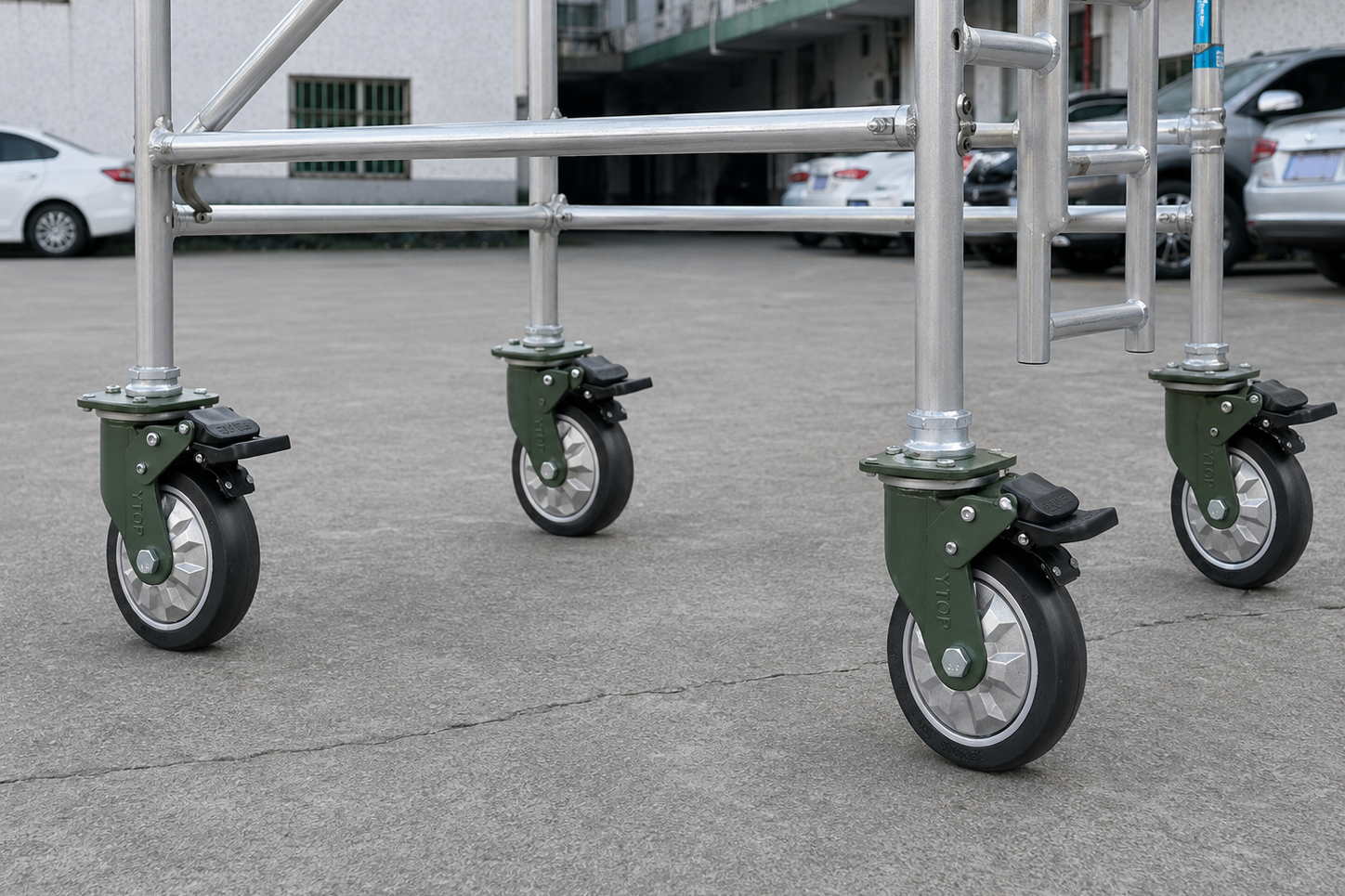
The construction industry is one of the primary application areas for extra heavy duty casters, where they support and move a wide range of heavy construction equipment, machinery, and materials. One common application is on mobile construction equipment such as concrete pumps, mortar mixers, mobile cranes, and aerial work platforms. These machines can weigh tens of thousands of kilograms and need to be moved around construction sites. Extra heavy duty casters provide the load capacity and stability needed to support these massive machines while allowing safe, efficient movement.
Another important application is on formwork and shoring systems. Concrete formwork systems for large structures such as bridges, dams, and high-rise buildings can be extremely heavy. Extra heavy duty casters are used on modular formwork systems to allow movement and repositioning as construction progresses. Similarly, shoring systems used to support structures during construction or renovation are equipped with extra heavy duty casters for mobility and adjustment. Construction material handling also relies on extra heavy duty casters on heavy-duty carts and trolleys to transport heavy materials such as steel beams, concrete blocks, and piping around construction sites. In precast concrete manufacturing, extra heavy duty casters transport massive precast elements from manufacturing to storage and shipping. The construction industry presents challenging conditions including rough surfaces, outdoor exposure, and contact with abrasive materials, requiring extra heavy duty casters with robust construction and durable materials.
Manufacturing and Industrial Applications
Machine Tools and Production Equipment
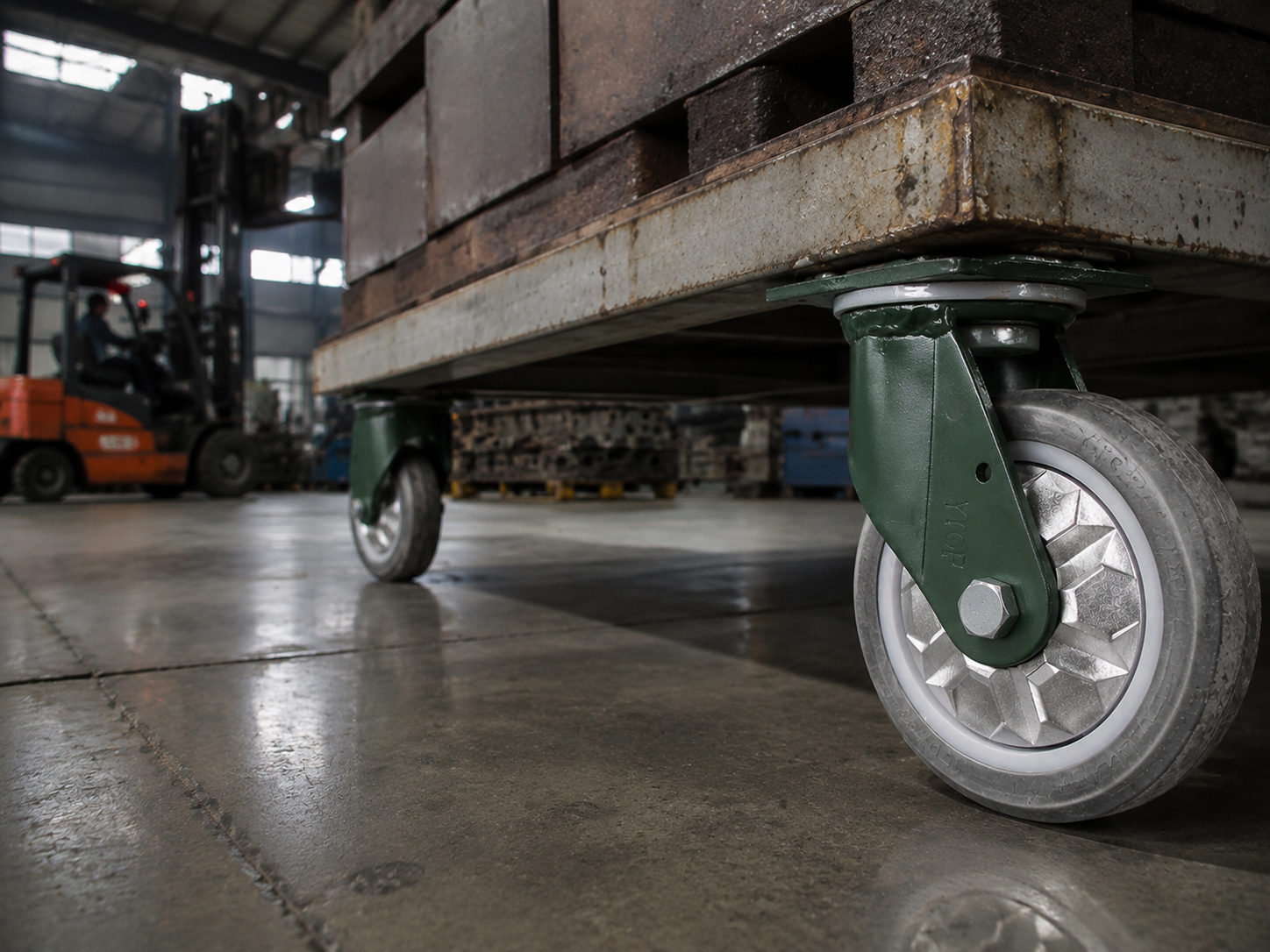
The manufacturing and industrial sector is another major application area for extra heavy duty casters, where they support and move heavy machinery, production equipment, tooling, and materials. One common application is on heavy industrial machinery and machine tools such as CNC machining centers, lathes, milling machines, grinders, and presses. These machines can weigh several thousand to tens of thousands of kilograms and often need to be moved or repositioned. Extra heavy duty casters installed on machine bases allow safe, efficient movement for installation, reconfiguration, or maintenance.
Another important application is on production line equipment and assembly systems. In automotive manufacturing, extra heavy duty casters are used on assembly line carts, tooling carts, and parts transport equipment. In aerospace manufacturing, they support assembly fixtures, tooling stands, and transport carts for massive aircraft components. In heavy equipment manufacturing, they are used on assembly line systems and material handling equipment. Die and mold handling is another critical application, particularly in automotive and appliance industries. Dies and molds used in stamping and injection molding can weigh several thousand kilograms, and extra heavy duty casters on die carts and mold carts transport them between storage, production, and maintenance. Heavy material handling in manufacturing facilities, including transport of raw materials, work-in-progress, and finished goods, also relies on extra heavy duty casters on industrial carts and transport systems. In steel and metal manufacturing, they transport heavy steel coils, plates, and beams.
Aerospace and Aviation Applications
Aircraft Component Assembly and Testing
The aerospace and aviation industry is a specialized but important application area for extra heavy duty casters, where they support and move massive aircraft components, tooling, and equipment with high precision and safety. One critical application is in aircraft manufacturing and assembly, where extra heavy duty casters are used on assembly fixtures, tooling stands, and transport carts to move massive components such as fuselage sections, wings, tail assemblies, and engine nacelles. These components can weigh tens of thousands of kilograms and must be moved with extreme precision to avoid damage to expensive and sensitive structures.
Another important application is in aircraft maintenance, repair, and overhaul (MRO) facilities. Extra heavy duty casters are used on aircraft jacks, engine stands, maintenance platforms, and tooling carts. Aircraft engines can weigh several thousand kilograms and must be safely removed, transported, and reinstalled during maintenance. Landing gear components, flight control surfaces, and other systems also require heavy-duty mobility solutions. Aerospace tooling and jigs used to hold and position aircraft components during manufacturing are another important application. These tooling systems can be extremely large and heavy and often need to be moved between work areas or reconfigured for different aircraft models. In aerospace testing facilities, extra heavy duty casters are used on test stands and equipment carts. The aerospace industry has stringent requirements for quality, precision, and safety, and extra heavy duty casters used in these applications must meet these high standards with premium materials, precision engineering, and rigorous quality control.

Shipbuilding and Marine Applications
Dockside Equipment and Shipyard Operations
The shipbuilding and marine industry is another important application area for extra heavy duty casters, where they support and move massive ship components, equipment, and materials in shipyards and marine manufacturing facilities. One significant application is in the movement of hull sections and ship blocks. Modern shipbuilding uses modular construction where large sections (blocks) are built separately and then joined. These hull sections can weigh tens of thousands to hundreds of thousands of kilograms and must be moved around the shipyard. Extra heavy duty casters are used on heavy-duty transport carts and self-propelled modular transporters (SPMTs) to move these massive sections safely and efficiently.
Another important application is in the movement of ship equipment and systems. Ships contain massive equipment such as engines, generators, propellers, rudders, boilers, and HVAC systems that must be transported and installed during construction. Extra heavy duty casters on equipment carts and transport dollies move these heavy components from storage to the ship and position them accurately during installation. In ship repair and maintenance facilities, extra heavy duty casters are used on dry dock equipment, maintenance platforms, and tooling carts. Shipyard material handling, including transport of steel plates, beams, and piping, also relies on extra heavy duty casters. In offshore and marine equipment manufacturing, they are used on equipment carts for offshore platforms and drilling equipment. The shipbuilding industry presents some of the most demanding conditions including extremely heavy loads, outdoor exposure, saltwater contact, and rough surfaces. Extra heavy duty casters used in shipbuilding feature extremely robust construction, corrosion-resistant materials and finishes (often galvanized or stainless steel), and durable wheel materials.
Warehousing, Logistics, and Distribution Applications
Heavy Pallet Racking and Storage Systems
The warehousing, logistics, and distribution industry is a major application area for extra heavy duty casters, where they handle the heaviest loads in warehouses, distribution centers, and logistics hubs. One common application is on heavy-duty material handling equipment such as industrial carts, trolleys, dollies, and platform trucks used to transport heavy loads within facilities. These loads may include palletized goods, bulk materials, heavy products, and industrial equipment ranging from several hundred to several thousand kilograms per cart. Extra heavy duty casters provide the load capacity, durability, and maneuverability needed for efficient, safe handling in high-volume logistics operations.
Another important application is on heavy-duty storage systems such as mobile shelving, pallet racks, and storage carts that need to be moved or reconfigured. Extra heavy duty casters allow these storage systems to be moved safely even when fully loaded. In order fulfillment and e-commerce distribution centers, they are used on order picking carts and packing station carts. In cross-docking and transloading facilities, they are used on transport carts and dollies to move heavy loads between different areas. In freight and cargo handling, they are used on heavy-duty carts and dollies in freight terminals, airports, and shipping facilities. In cold storage warehouses, extra heavy duty casters with low-temperature formulations operate reliably in cold environments. The logistics industry requires casters that handle heavy loads, operate reliably for long hours, maneuver efficiently in confined spaces, and require minimal maintenance. Extra heavy duty casters used in logistics feature durable construction, high-quality wheel materials (typically polyurethane), precision bearings, and robust swivel mechanisms.
Other Specialized Application Areas
In addition to the major industries discussed above, extra heavy duty casters are used in a wide range of other specialized applications. In the energy and power generation industry, they are used on equipment carts and transport systems for turbines, generators, transformers, and heavy electrical components. In nuclear power facilities, special radiation-resistant materials are used. In wind energy, they support equipment for manufacturing and maintenance of massive wind turbine components. In solar energy, they are used in panel manufacturing and installation equipment.
In the entertainment and events industry, extra heavy duty casters are used on stage equipment, lighting rigs, sound systems, and mobile stages that need to be moved and positioned safely during event setup. In the museum and cultural heritage sector, they are used on display cases, artifact storage systems, and large exhibit structures requiring smooth, controlled movement to protect valuable artifacts. In healthcare and medical equipment, they are used on heavy medical equipment such as MRI machines, CT scanners, and radiation therapy equipment requiring smooth, quiet movement and precise positioning. In the military and defense industry, they are used on equipment carts, weapon systems, and vehicle maintenance equipment meeting stringent military specifications. In the mining and natural resources industry, they are used on heavy equipment carts and material handling systems in challenging mining environments. In the glass and ceramics industry, they are used on carts and racks to transport heavy glass sheets and ceramic products requiring smooth, stable movement to prevent breakage. These diverse specialized applications demonstrate the versatility and importance of extra heavy duty casters across a wide range of industries wherever extremely heavy loads need to be moved safely and efficiently.
Selection Considerations for Extra Heavy Duty Casters
Selecting the right extra heavy duty casters requires careful consideration of several key factors. The first and most critical is load capacity. Accurately calculate the total load including equipment weight plus maximum cargo weight, divide by the number of casters, and apply a significant safety factor (typically 2-4 times for extra heavy duty applications) to account for dynamic loads, uneven distribution, and impacts. It is always better to select casters with higher capacity than needed rather than risking failure.
The second factor is wheel selection including diameter, width, material, and hardness. Larger diameter wheels offer lower rolling resistance and better obstacle traversal but increase overall height. Wheel material is critical: polyurethane offers a good balance of load capacity, wear resistance, and floor protection; nylon offers very high load capacity and chemical resistance but is noisier; steel or cast iron offer the highest load capacity but are extremely noisy and damaging to floors. The third factor is bracket construction with very thick steel brackets and robust swivel mechanisms (often kingpinless designs). The fourth factor is operating environment including floor conditions, temperature, moisture, chemicals, and special requirements such as corrosion resistance. The fifth factor is maneuverability and control needs including swivel vs. rigid configuration and brake requirements. The sixth factor is total cost of ownership including initial price, service life, maintenance, replacement costs, and potential downtime costs. By carefully evaluating all these factors and selecting high-quality extra heavy duty casters from reputable manufacturers, organizations can ensure safe, reliable, and cost-effective heavy-duty mobility.
Conclusion: The Indispensable Role of Extra Heavy Duty Casters
In conclusion, extra heavy duty casters are indispensable components in a wide range of industries, enabling the safe, efficient, and reliable movement of extremely heavy loads that would be impossible with conventional casters. From construction and manufacturing to aerospace, shipbuilding, logistics, and countless specialized applications, extra heavy duty casters play a critical role in enabling heavy-duty mobility across the global economy.
The key characteristics that make extra heavy duty casters suitable for demanding applications include extremely high load capacity, robust construction with thick steel brackets, large diameter wheels with durable materials, high-capacity bearings, robust swivel mechanisms, and rigorous quality control. These casters are engineered to withstand heavy loads, frequent use, harsh environments, and the rigors of industrial operation, providing years of reliable service with minimal maintenance. Selecting the right extra heavy duty casters requires careful consideration of load capacity, wheel selection, bracket construction, operating environment, maneuverability needs, and total cost of ownership. By investing in high-quality extra heavy duty casters from reputable manufacturers, organizations can ensure safe, efficient, and reliable heavy-duty mobility that protects workers, equipment, and productivity. As industries continue to evolve and the need for efficient material handling grows, the importance of extra heavy duty casters will only continue to increase. These specialized mobility components, often overlooked and underappreciated, are truly the unsung heroes of heavy industry, quietly enabling the movement of massive loads that power construction, manufacturing, aerospace, shipbuilding, logistics, and countless other sectors of the global economy.
Frequently Asked Questions
What is the load range for extra heavy duty casters?
Extra heavy duty casters typically support loads from 700 kg to over 2000 kg per wheel, depending on wheel diameter, bearing type, and mounting configuration. Super heavy duty caster models can handle up to 1600-2000 kg per caster, making them suitable for extreme industrial applications.
What wheel materials are best for extra heavy duty applications?
For extra heavy duty caster applications, forged steel wheels, cast iron wheels, and polyurethane-on-nylon or polyurethane-on-cast-iron wheels are the most common choices. Steel and cast iron wheels offer maximum load capacity but can be harsh on floors, while polyurethane tread wheels provide floor protection with high load capacity.
How do I select the right swivel radius for heavy loads?
The swivel radius should be at least 1.5 times the wheel diameter for loads above 1000 kg to ensure smooth turning. Kingpinless swivel constructions with hardened raceways are recommended for extra heavy duty applications to prevent premature failure under extreme loads.
Can extra heavy duty casters be used outdoors?
Yes, many extra heavy duty casters are designed for outdoor use. Look for models with sealed precision ball bearings or tapered roller bearings, corrosion-resistant finishes (zinc-plated or powder-coated), and wheels rated for outdoor temperatures. Stainless steel options are available for marine or corrosive environments.
What maintenance do extra heavy duty casters require?
Regular inspection of wheels, bearings, and swivel joints is essential. Lubricate swivel races and bearings every 3-6 months depending on usage. Check for flat spots, worn tread, or loose mounting hardware. Proper maintenance can extend caster service life by 50% or more in demanding industrial environments.
Related Reading
Looking for more in-depth caster guides and industrial mobility resources? Explore these related articles:
- HD Selection Guide — Complete guide to selecting heavy duty casters.
- Extra Heavy Duty Analysis — In-depth look at extra heavy duty casters.
- Choose High Load Casters — How to select high load casters.
- Application Scenarios — Caster applications across industries.
- 18B Nylon Manganese Steel — High-quality heavy duty casters.
Explore our complete range of heavy-duty casters (150-610kg) and super heavy-duty casters (700-1600kg), or contact our engineering team for expert guidance.
Related Reading
Explore more extra heavy-duty caster application and selection guides:
- Heavy-Duty Casters Selection Guide — Learn how to select extra heavy-duty casters for specific applications.
- Extra Heavy Duty Casters: Full Analysis — In-depth analysis of extra heavy duty caster features and applications.
- Caster Load Capacity Calculation — Learn how to calculate load capacity for extra heavy-duty applications.
- Industrial Caster Load Grading Guide — Understand extra heavy duty load classifications and applications.
- Dual-Wheel Structure for Ultra-Heavy-Load Casters — Learn about dual-wheel caster structure for extra heavy-duty applications.
Explore our complete range of heavy-duty casters (150-610kg) and super heavy-duty casters (700-1600kg) for extra heavy-duty applications, or contact our engineering team for expert extra heavy-duty caster application guidance.
Post time: May-13-2025