
When picking casters, the first glance asks load capacity, the second glance looks at grading: light, medium, heavy, extra-heavy — price, structure, and usage follow grading. But grading is not casually determined by manufacturers; behind it is the correspondence between load grades and structural configurations.
Only after figuring out load grading can selection avoid “a small horse pulling a big cart” or “overqualified for the task.”
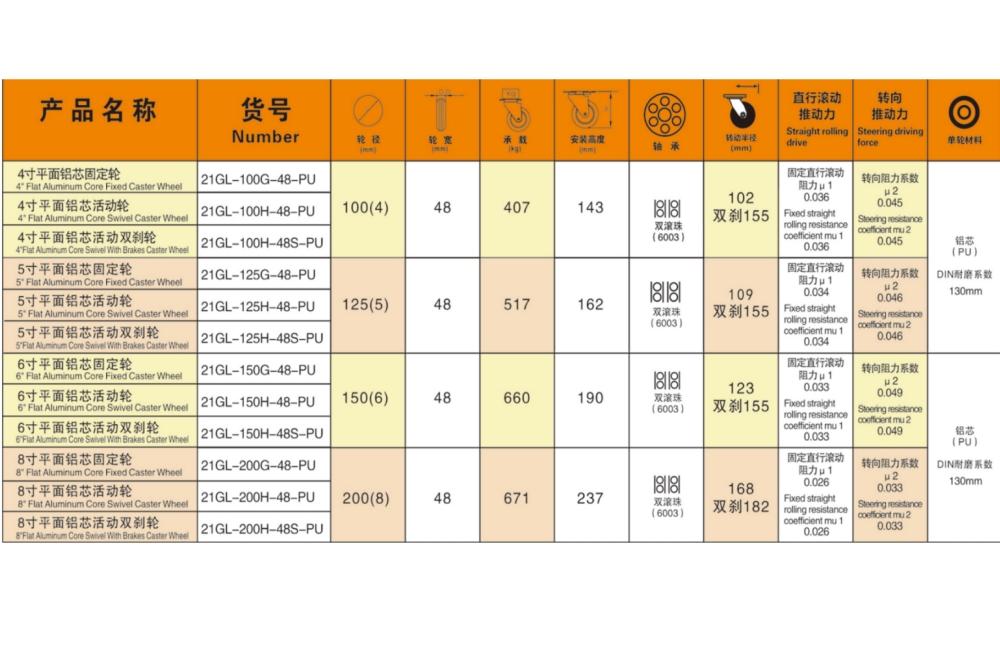
Mainstream Grading of Industrial Casters
The load grading of industrial casters has rough industry conventions, with specific values slightly differing among manufacturers:
- Light casters, per-wheel load at tens of kilograms level, suitable for light-load transfer, office furniture, display props and the like.
- Medium casters, per-wheel load at one to two hundred kilograms level, suitable for ordinary workshop carts, tool carts, supermarket shelves.
- Heavy casters, per-wheel load at hundreds of kilograms level, suitable for heavy workshops, logistics warehousing, equipment handling.
- Extra-heavy casters, per-wheel load at nearly one thousand kilograms level, suitable for port heavy loads, large mechanical equipment.
A reminder here: the above is magnitude division, specific values depend on manufacturer specification tables, and different manufacturers’ “heavy” cannot be directly equated.
Behind Grading Are Structural Differences
Load grading is not just numerical layering, but layering of structural configuration:
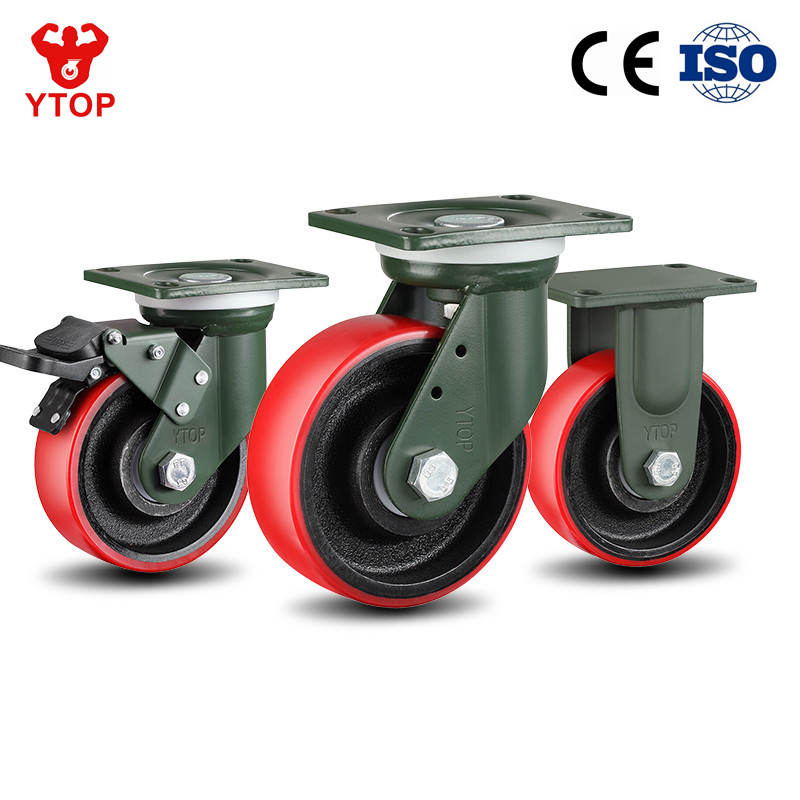
Bracket material — light uses stamped thin-plate brackets, heavy uses thickened plates, with material differing by grade. Hub structure — the greater the load the thicker the hub, the more reinforced the load-bearing structure. Base plate thickness — heavy wheels come with thickened base plates, load dispersed not concentrated under pressure. Bearing specifications — heavy grades use larger specification bearings, with greater load and operating margin. Surface and lubrication — heavy grade bracket surface treatment and rotating part lubrication are also more refined.
These structural differences added together can support a load grade.
The Essence of Grading Is Matching Working Conditions
The significance of grading’s existence is to let different working conditions each have suitable wheels.
Light-load scenarios use light type, low cost, light structure, no waste; heavy-load scenarios use heavy type, load guaranteed, long life, safety has a bottom. Conversely, letting light-load configuration bear heavy load, structural overload, wheel deformation and fracture — this is one of the most common accident hazards in handling scenarios.
Grading is only a reference line, the real criterion is working condition matching: load, usage frequency, road conditions, environment — all matching the grade, then wheels are used to their proper place.
Two Common Mistakes in Grade Selection
Two typical errors are relatively common during grade selection.
One is only looking at the per-wheel marked load, not looking at actual per-wheel force. Equipment total weight divided by wheel count, then multiplied by force unevenness coefficient, is the actual per-wheel load — cannot directly compare equipment total weight to per-wheel load.
The other is comparing “heavy” across manufacturers. Each manufacturer’s grading standards differ, and the same “heavy” — Factory A’s may bear less than Factory B’s. To compare, compare the specific values marked on the specification sheet.
The Cost of Overload
The reverse side of load grading is safety grading. Overload operation, at best wheel deformation, at worst wheel set failure during handling, equipment tipping injuring people or damaging objects. For heavy-load equipment wheel selection, rather select one grade higher, don’t gamble on critical values. Safety redundancy is the most cost-effective investment in heavy-load scenarios.
Zhuoye’s load grades are designed according to structural standards, with brackets, hubs, and base plates calculating load according to specifications. During selection, verify per-wheel dynamic load against the specification table, don’t only look at the two words “heavy.”
Selection According to Actual Per-Wheel Load
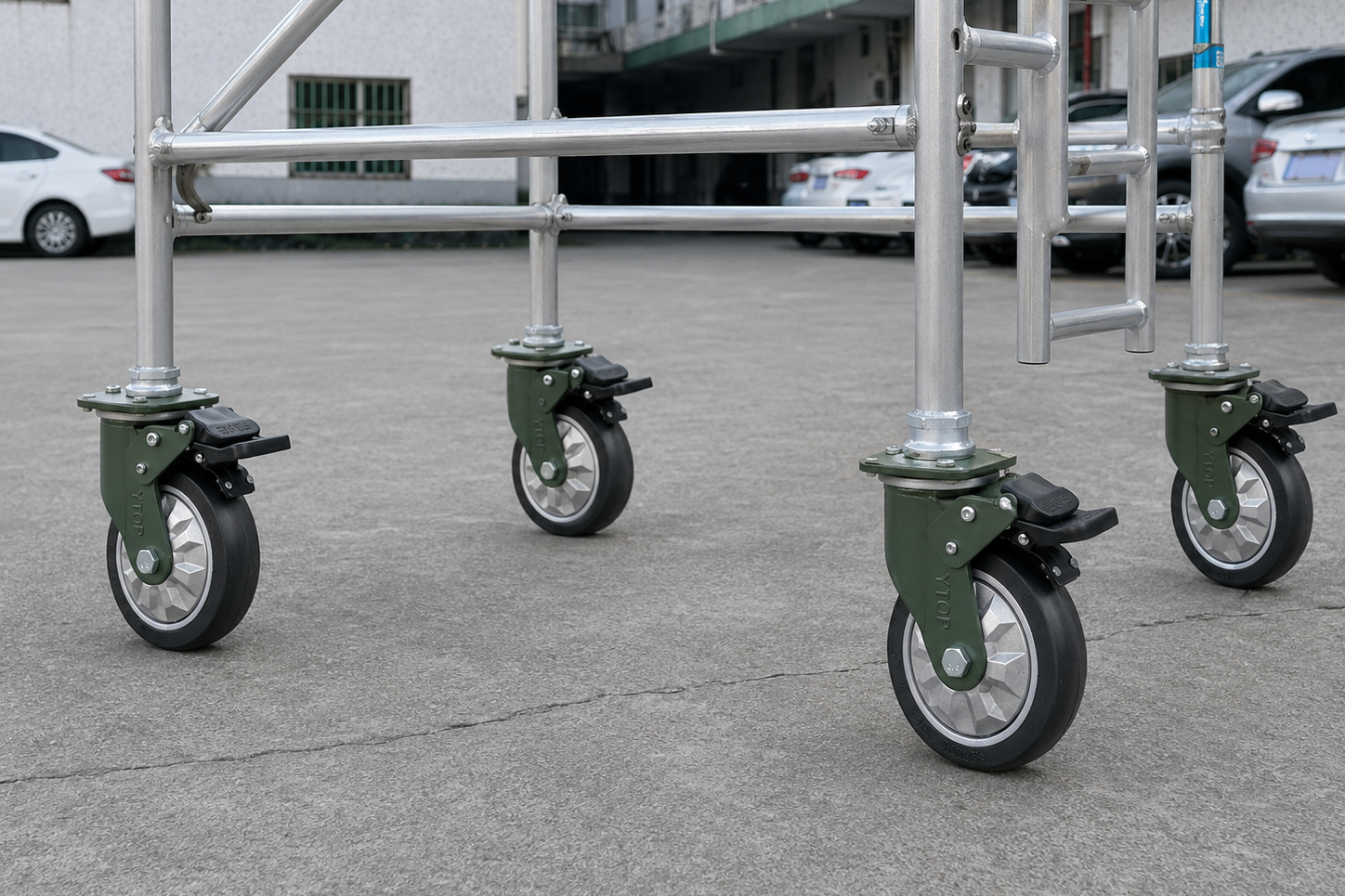
The correct approach for selection is: calculate the equipment’s real force on each wheel, match against each grade’s specification table, and if unsure select one grade higher. Tell the manufacturer equipment total weight, wheel count, working conditions, and safety coefficient, and verify the grade according to the specification table. Load grading looks at numbers, more at structure — with the grade selected correctly, wheels won’t be overloaded.
Related Reading
Explore more load capacity and caster grading guides:
- Caster Load Capacity Calculation: Dynamic vs Static — Learn how to calculate actual per-wheel load capacity correctly.
- Industrial Caster Selection: 10 Core Parameters — Complete guide to caster selection including load grading.
- Extra Heavy Duty Casters: Full Analysis — In-depth look at extra heavy duty casters and applications.
- Dual-Wheel Structure for Ultra-Heavy-Load Casters — Force analysis of dual-wheel casters for heavy loads.
- Heavy-Duty Casters Selection Guide — Learn how to select the right heavy-duty casters.
Explore our complete range of light-duty casters (35-80kg), medium-duty casters (100-190kg), heavy-duty casters (150-610kg), and super heavy-duty casters (700-1600kg), or contact our engineering team for expert load grading guidance.
Post time: Sep-14-2026