
Introduction to Heavy Duty Caster Brake Systems
Heavy duty casters are the workhorses of material handling, industrial carts, warehouse racks, and equipment trolleys. When a loaded cart needs to stay exactly where you leave it, the brake system on your casters becomes just as critical as the wheel material or load rating. Among the most common brake configurations found on heavy-duty casters are double brakes (also called total locks) and side brakes (also called wheel locks or single brakes). Understanding the difference between these two brake types is essential for choosing the right caster for your application.
Why Brake Selection Matters for Heavy-Duty Applications
An incorrectly chosen brake can lead to unintended movement on inclines, equipment drift on uneven floors, or premature wear on both the brake pad and the wheel tread. In manufacturing floors, logistics centers, and automotive assembly lines, even a small cart rolling away can cause equipment damage, product loss, or worker injury. Heavy-duty casters bearing loads of 150 kg to over 1600 kg demand brake systems that can hold position reliably under high static and dynamic loads.
Key Terminology
Before comparing the two systems, it helps to clarify the terminology. A double brake — often called a “total lock” or “four-point brake” — simultaneously locks both the wheel rotation and the swivel bearing rotation. A side brake, by contrast, locks only the wheel rotation while allowing the swivel plate to continue rotating freely. This fundamental difference determines how and where each brake type should be used.
What Are Double Brakes on Heavy Duty Casters?
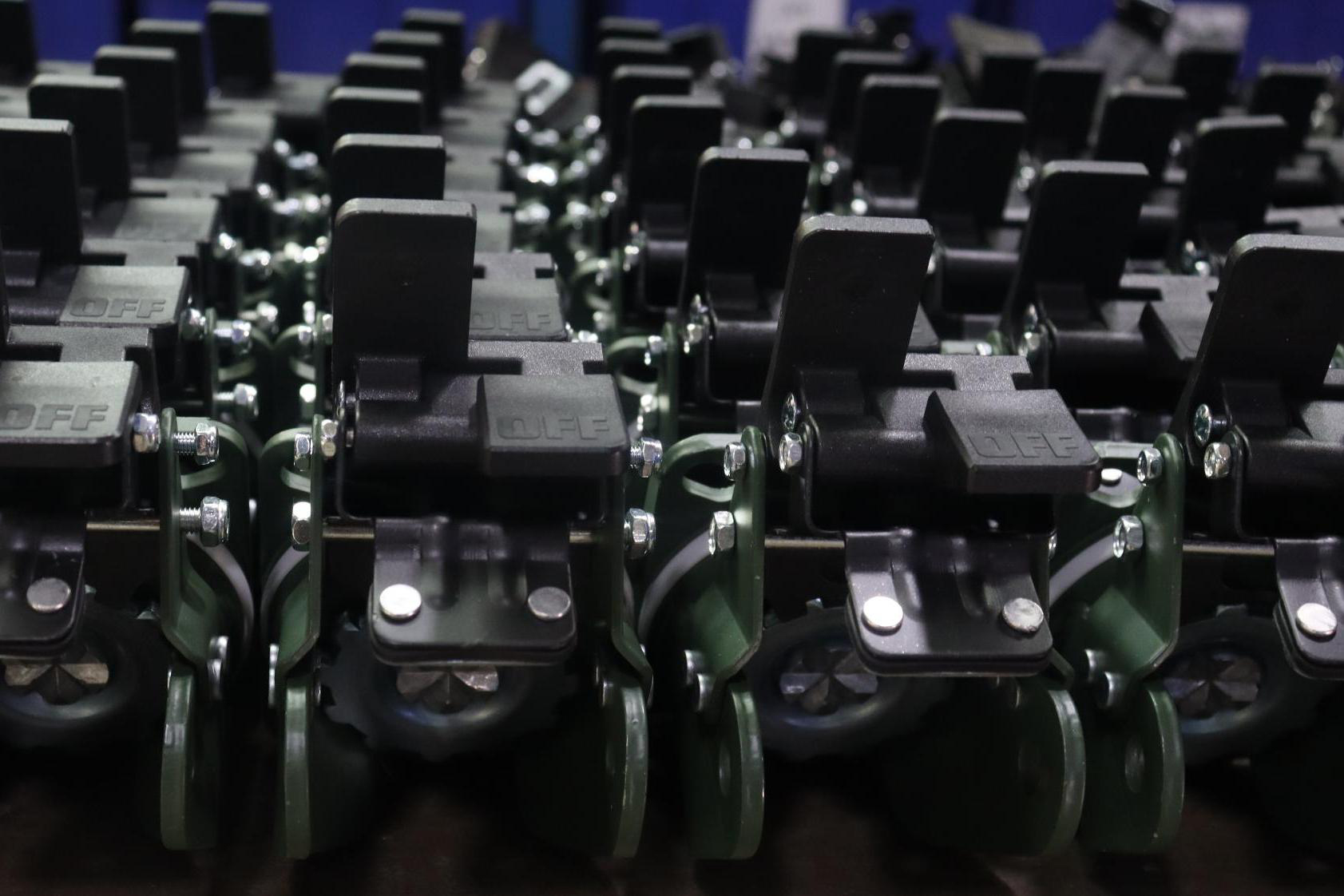
A double brake is a comprehensive locking mechanism designed to immobilize the caster completely. When the pedal is engaged, the brake applies pressure to two separate points: the wheel tread and the swivel raceway (the bearing assembly that allows the caster to turn). This dual-action lock ensures that both the rolling motion and the directional rotation are halted simultaneously.
How a Double Brake Mechanism Works
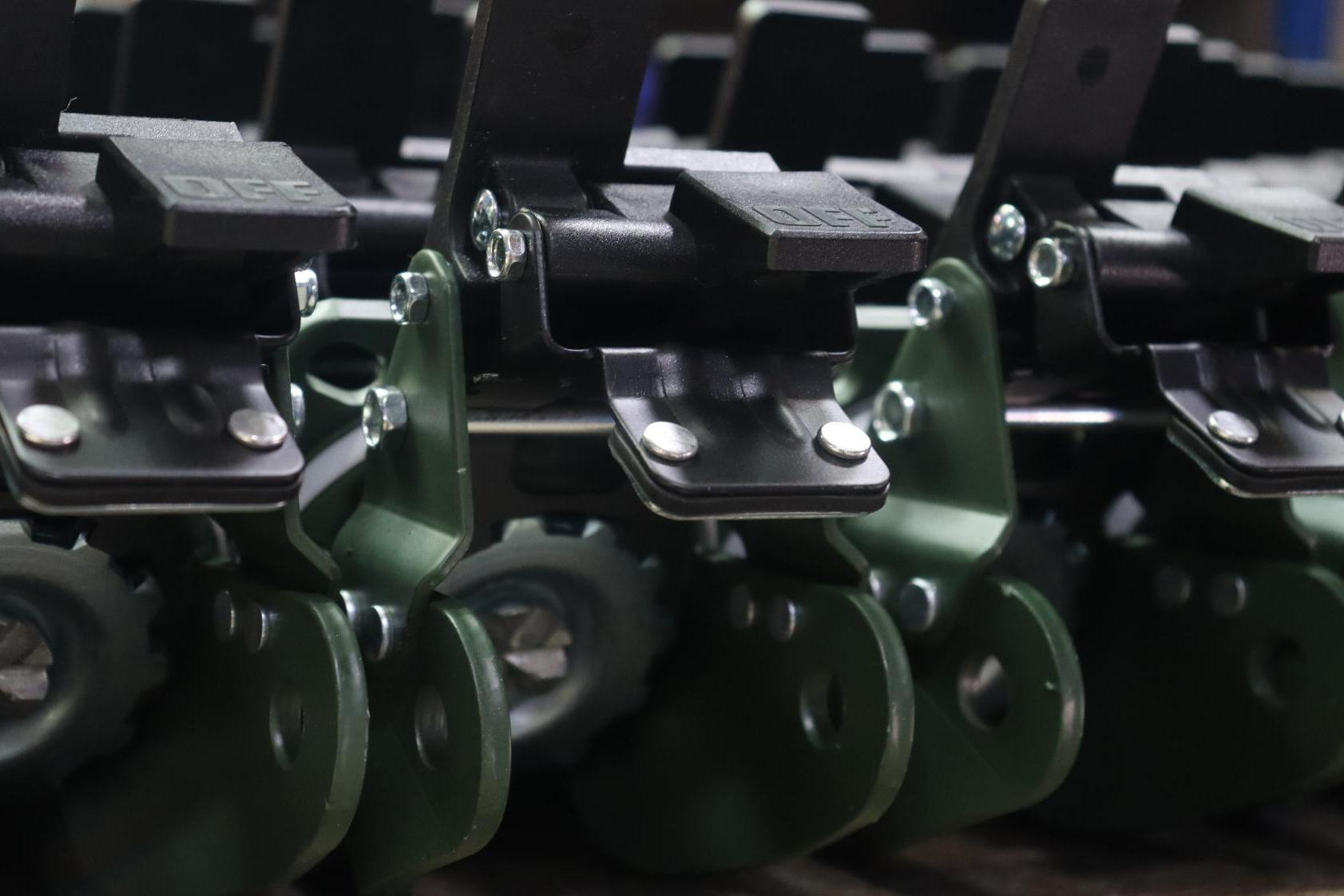
The double brake typically consists of a stamped steel or cast aluminum housing containing two brake pads connected by a single pedal lever. Pressing the pedal downward forces one pad against the wheel tread to stop rotation, while a linkage simultaneously engages a locking disc or ratchet against the swivel bearing. The result is a caster that cannot roll or turn in any direction — effectively turning a swivel caster into a fixed, immovable unit.
Locking Both Wheel and Swivel: The Benefits
Because double brakes lock both axes of movement, they provide maximum positional stability. This is particularly valuable when a cart must remain perfectly aligned, such as during loading and unloading operations, or when the cart sits on slightly sloped floors. Double brakes are the preferred choice for applications where unintended drift in any direction is unacceptable.
What Are Side Brakes on Heavy Duty Casters?
A side brake is a simpler, more conventional brake design that locks only the wheel rotation. Mounted on the side of the caster housing, the side brake uses a single pedal or lever to press a brake pad against the outer surface of the wheel tread. When engaged, the wheel cannot rotate, but the swivel bearing beneath the mounting plate remains free to turn.
How a Side Brake Mechanism Works
The side brake operates on a single-axis principle. A foot pedal connected to a pivot lever presses a friction pad against the wheel. The pad material — often rubberized composite, nylon, or phenolic resin — grips the wheel surface and prevents rolling. Because only one friction surface is involved, the mechanism is mechanically simpler, lighter, and generally less expensive than a double brake.
Locking Only the Wheel Rotation
The key characteristic of a side brake is that it stops the wheel from rolling but does not prevent the caster from swiveling. This means that even with the brake fully engaged, the cart can still rotate around the locked caster. In practice, this allows operators to reposition or steer a partially-braked cart without fully releasing the brake. However, it also means that on sloped or uneven surfaces, a cart with only side brakes can still slowly rotate out of alignment.
Key Differences Between Double Brakes and Side Brakes
Choosing between double brakes and side brakes comes down to understanding how their design differences affect real-world performance. The following comparison breaks down the most important factors.
Braking Force and Stability
Double brakes deliver superior holding power because they engage two friction surfaces. Under heavy loads — say, a fully loaded cart weighing 800 kg or more — the combined locking action of wheel pad and swivel lock resists both rolling forces and lateral drift. Side brakes, while adequate for loads up to a few hundred kilograms, rely on a single pad and may slip under extreme side loads or when the wheel tread becomes worn.
Operational Flexibility
Side brakes offer greater flexibility in dynamic situations. Operators can lock the wheels to prevent rolling while still being able to pivot the cart slightly for alignment adjustments. This is useful in tight workshop spaces where fine positioning is needed. Double brakes, by fully immobilizing the caster, require operators to release the brake completely before making any directional adjustment.
Load Capacity and Durability
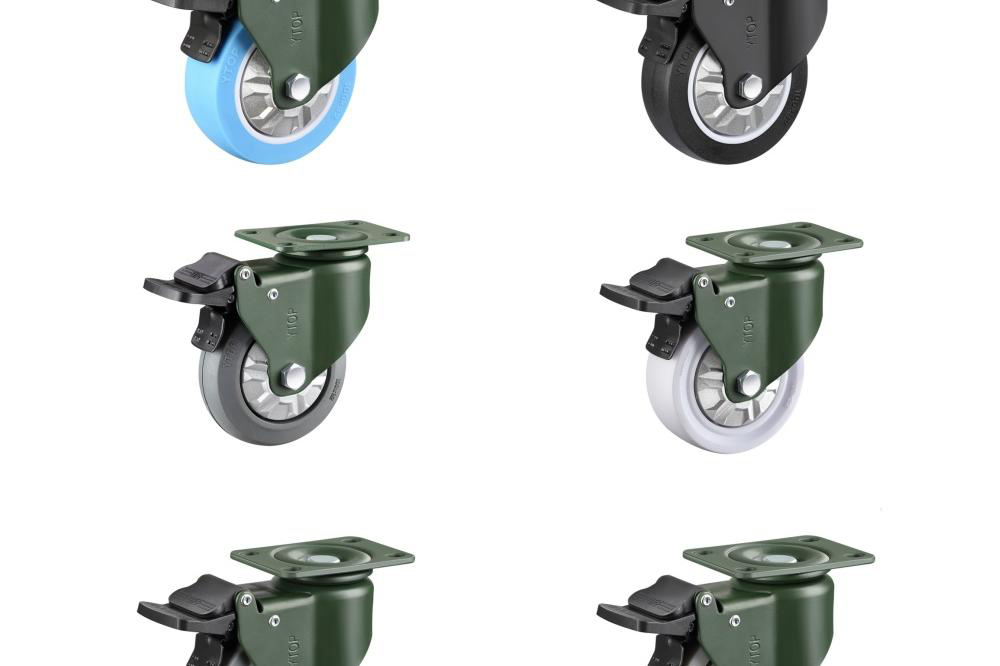
Double brake mechanisms are built with heavier housings and reinforced linkages to handle the forces generated by locking both axes. This makes them better suited for super heavy-duty casters rated at 700–1600 kg. Side brakes, being simpler and lighter, are typically found on medium-duty to heavy-duty casters in the 150–610 kg range. At YTOP (Quanzhou Zhuoye Caster Manufacturing Co., Ltd.), our 21-series heavy-duty casters are available with both brake configurations to match diverse load requirements.
Choosing the Right Brake Type for Your Application
There is no universal “better” brake — the right choice depends entirely on how the caster will be used. Consider the following guidelines when specifying heavy-duty casters with brakes.
When to Choose Double Brakes
Opt for double brakes when: (1) the cart or equipment sits on uneven or sloped floors, (2) precise positional alignment is critical during loading or processing, (3) the load exceeds 600 kg and accidental movement poses a safety risk, or (4) the application involves frequent stopping and starting where full immobilization is required. Typical applications include industrial workstations, machine stands, and heavy assembly line carts.
When to Choose Side Brakes
Choose side brakes when: (1) the primary requirement is preventing rolling on level floors, (2) operators need the flexibility to reorient the cart while the brake is engaged, (3) cost efficiency is a priority, or (4) the load range is under 600 kg. Side brakes are common on warehouse picking carts, tool cabinets, and light-to-medium duty material handling trolleys.
Maintenance and Troubleshooting
Both brake types require periodic inspection to maintain reliable performance. Brake pads wear down over time, especially in high-frequency-use environments. Inspect pad thickness every three months and replace pads when the friction material is less than 2 mm thick. Clean brake mechanisms regularly with compressed air to remove metal shavings, dust, and debris. For double brakes, also check the swivel lock engagement — if the swivel rotates despite the brake being engaged, the linkage may need adjustment.
Common Brake Issues and Solutions
Common problems include: spongy pedal feel (indicates air in the linkage or worn pads), brake creep under load (pad material worn or wrong specification for the wheel material), and squealing during engagement (misaligned pad or contaminated tread). Addressing these early prevents cascading damage to both the caster and the floor surface.
Frequently Asked Questions
Can I convert a side brake caster to a double brake?
In most cases, no. Double brake and side brake housings are structurally different and use different mounting brackets. Converting requires replacing the entire caster housing, which is usually more cost-effective than buying a new caster with the desired brake type.
Are double brakes worth the extra cost?
For heavy loads, sloped floors, or safety-critical applications, yes. The extra cost of a double brake is typically 15–25% more than a side brake, but it provides significantly greater holding power and positional security. For light loads on flat floors, side brakes are usually sufficient.
How long do caster brake pads last?
Brake pad lifespan depends on usage frequency, load weight, and floor conditions. Under normal industrial use (10–20 braking cycles per day), brake pads typically last 6–12 months. In high-cycle environments, inspection every 90 days is recommended.
Which brake type is better for outdoor use?
Double brakes are generally preferred outdoors because outdoor floors are rarely perfectly flat. The dual locking action prevents both rolling and swiveling, providing more stable positioning on gravel, concrete pads, or sloped loading docks.
Related Reading
Explore More About Caster Brake Systems
- Analysis of Caster Double Brake vs Single Brake — Detailed mechanical comparison of brake configurations.
- Brake Caster: Single Brake, Lock Direction, Double Brake — Understand how each brake type locks and why it matters.
- Industrial Caster Brake Principle Analysis — Deep dive into brake mechanics and load distribution.
- Are the Brake Wheels Universal? — Learn about brake wheel compatibility across caster sizes.
- Difference Between Caster Double Brakes and Side Brakes — General-purpose brake comparison guide.
Discover YTOP’s range of heavy-duty casters (150–610 kg) and super heavy-duty casters (700–1600 kg), available with both double brake and side brake options. Need help choosing? Contact our engineering team for expert guidance on heavy-duty caster brake selection.
Post time: Mar-12-2024