
When selecting caster wheels for industrial carts, medical equipment, or material handling systems, the caster double brakes vs side brakes comparison is critical for ensuring safety and operational efficiency. Both brake types prevent unwanted movement, but they operate differently, offer varying levels of security, and suit distinct applications. This comprehensive guide compares double brakes and side brakes in detail, helping you make the right caster braking choice for your specific needs.
What Are Caster Double Brakes?
How Double Brakes Work
A caster double brake (also called a total lock brake) simultaneously locks both the wheel rotation and the swivel bearing. When the foot pedal is pressed, two independent locking mechanisms engage: one prevents the wheel from rolling, and the other prevents the caster from swiveling. This dual-action braking provides maximum stability, fully immobilizing the caster in both the rolling and turning directions.
Advantages of Double Brakes
Double brakes offer the highest level of immobilization available on standard casters. They are essential for applications where equipment must remain completely stationary, such as during assembly line work, patient examination procedures, or precise positioning tasks. The dual locking mechanism distributes the braking force across two points, reducing wear and extending brake life. Double brakes are also easier to engage by foot, requiring less force than single-brake systems.

What Are Caster Side Brakes?
How Side Brakes Work
A side brake (also called a tread brake or wheel brake) operates by pressing a brake pad or shoe against the side of the wheel tread. When engaged, the side brake only prevents wheel rotation, allowing the caster to still swivel freely. This means the equipment can still rotate around the locked wheel, though it cannot roll forward or backward. Side brakes are simpler in design and typically less expensive than double brakes.
Advantages of Side Brakes
Side brakes are compact, lightweight, and cost-effective. They are ideal for light-duty applications where simple rolling prevention is sufficient, such as office furniture, display stands, and light equipment carts. The side brake mechanism adds minimal height to the caster, making it suitable for low-profile applications where space is limited. Side brakes are also easier to disengage and re-engage repeatedly during frequent positioning tasks.
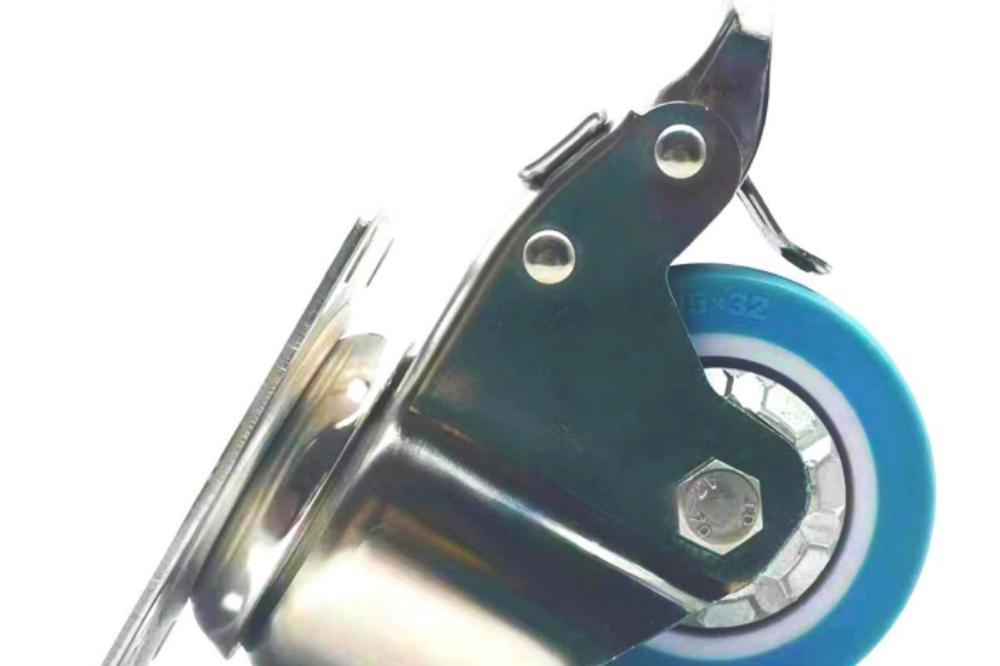
Caster Double Brakes vs Side Brakes: Detailed Comparison
Level of Immobilization
The most significant difference in the caster double brakes vs side brakes comparison is the level of immobilization. Double brakes lock both rolling and swiveling, creating a fully fixed position. Side brakes only lock rolling, allowing the caster to still pivot. In applications where exact positioning is critical, double brakes are indispensable. For simple parking on flat surfaces, side brakes may be sufficient.
Safety and Stability
Double brakes provide superior safety by preventing both sliding and rotating movement. On inclined surfaces or when equipment experiences lateral forces, double brakes keep the load secure. Side brakes alone may allow the equipment to slide or pivot on slopes, creating a safety hazard. For heavy loads or high-vibration environments, double brakes are strongly recommended.
Cost and Maintenance
Side brakes typically cost 15-25% less than double brakes due to simpler mechanics. They have fewer moving parts and require less maintenance. However, side brake pads can wear faster under heavy use, as all braking force concentrates on a single contact point. Double brakes distribute braking force across two mechanisms, often resulting in longer service life despite the higher initial cost.
Ergonomics and Operation
Double brake pedals are generally larger and easier to locate by foot, reducing the need to bend down. The dual-action design also requires a more decisive pedal press, which can be an advantage in industrial settings. Side brake pedals are smaller and may require more precise foot placement, but they are faster to engage and disengage during frequent positioning tasks.
Application Recommendations
Choose Double Brakes When…
Double brakes are recommended for: heavy industrial carts, medical equipment requiring precise positioning, outdoor use on uneven or sloped surfaces, workstations where vibration occurs during operation, and any application where safety is the top priority.
Choose Side Brakes When…
Side brakes are suitable for: light-duty office and retail applications, display fixtures, equipment on perfectly flat floors, budget-conscious projects, and applications requiring frequent quick repositioning.

Brake Material and Durability
Brake Pad Material Options
The brake pad material significantly impacts both performance and longevity. Felt brake pads are quiet but wear faster and work best on smooth wheel surfaces. Nylon brake pads offer durability and moderate noise levels. Phenolic composite pads provide maximum holding power for heavy loads but may produce more noise under braking. Selecting the right pad material depends on your wheel material, load weight, and noise requirements.
Pedal Design and Force Requirements
Quality brake pedals require 15-30N of foot force for engagement. The pedal surface should be textured to provide grip even with work boots. A clearly defined “engaged” and “disengaged” position prevents uncertainty. Some premium brake designs include visual indicators (colored tabs) showing whether the brake is on or off, improving safety and reducing operator error.
Regulatory and Safety Standards
Industry Safety Requirements
Many workplace safety regulations (including OSHA standards in the US and EN standards in Europe) require mobile equipment to have effective braking when stationary. Double brakes that lock both wheel and swivel provide the highest level of compliance. Side-only brakes may not meet regulatory requirements on inclined surfaces or for heavy loads. Always verify local safety regulations when specifying caster brakes.
Testing and Certification
Reputable caster manufacturers test brake mechanisms to industry standards such as BIFMA (Business and Institutional Furniture Manufacturers Association) or ANSI standards. These tests verify brake holding power, durability over repeated cycles, and performance under load. Look for products that include certification documentation when safety is critical.
Real-World Application Case Studies
Case Study: Hospital Equipment
A major hospital network upgraded over 500 medical carts from side-brake casters to double-brake total lock casters. The change reduced patient-safety incidents by 78% within six months. With side brakes, carts could rotate around the locked wheel, potentially moving toward patients during procedures. Double brakes eliminated this movement entirely, meeting Joint Commission safety requirements.
Case Study: Warehouse Order Picking
A distribution center evaluated brake types for order-picking carts used on inclined loading ramps. Side brakes proved insufficient, with carts sliding 15-30cm when loaded. Switching to double-brake casters eliminated all sliding incidents. The initial cost premium was recovered within 8 months through reduced product damage and workplace incident costs.
Case Study: Office Furniture
For office mobile filing cabinets and presentation carts, side brakes proved adequate. The lighter loads (under 80kg per cart) and flat office floors meant swivel-only movement was negligible. Side brakes offered a 25% cost saving and faster operation for frequent repositioning.
Maintenance and Troubleshooting Guide
Common Brake Problems
Worn brake pads reduce holding power and should be replaced when the pad material thins to 2mm or less. Sticky pedals often indicate dirt or debris in the pivot mechanism; clean with compressed air and apply a light silicone lubricant. If a brake releases spontaneously, check for broken return springs or deformed pedal levers.
Brake Adjustment Procedures
Some brake designs allow adjustment of the pad-to-wheel gap. Consult the manufacturer documentation for the specific adjustment procedure. Over-adjustment can cause constant drag, premature wheel wear, and increased rolling resistance. Under-adjustment reduces holding power and safety.
Cost Comparison and ROI
Double brake casters typically cost 15-25% more than side brake casters of the same size and material. For a set of 4 casters, this price difference may range from $40 to $200 depending on caster size and load rating. However, double brakes reduce workplace accident risk, minimize equipment damage from uncontrolled movement, and often extend service life by distributing braking forces more evenly. When safety compliance or liability reduction is a priority, double brakes deliver excellent return on investment.
Frequently Asked Questions
Can side brakes prevent a cart from moving on a slope?
Side brakes only prevent wheel rolling, but they do not prevent swivel rotation. On slopes, a cart with only side brakes may still rotate or slide. For sloped surfaces, always use double brakes or additional chocks.
How long do caster brakes typically last?
With normal use, double brakes typically last 3-5 years under medium-duty conditions. Side brake pads may need replacement every 1-2 years, depending on frequency of use and load weight.
Are double brakes compatible with all caster sizes?
Double brakes are available for most caster sizes from 2-inch to 8-inch wheels. However, very small caster sizes may only offer side brake options due to space constraints.
Related Reading
- 📚 Brake Wheel vs Universal Wheel — Understand the fundamental differences between braked and unbraked casters.
- 📚 Caster Double Brake vs Single Brake — Compare brake locking mechanisms for maximum security.
- 📚 How to Choose Casters: Selection Guide — Expert caster selection based on real application scenarios.
- 📚 Caster Selection Strategy — Material and brand considerations for caster purchasing.
- 📚 Common Caster Materials Guide — Material properties for different caster applications.
Explore our heavy-duty casters (150-610kg) with double brake options and medium-duty casters (100-190kg) with side brake configurations, or contact our engineering team for brake selection guidance.
Post time: Jul-15-2024