
What do heavy-load equipment fear most? Swaying. When equipment sways, at best operation becomes unstable, at worst it tips over. And equipment stability is directly tied to the center-of-gravity design of the casters. Low-center-of-gravity casters are a design aimed squarely at stability.
The Lower the Center of Gravity, the Harder to Tip
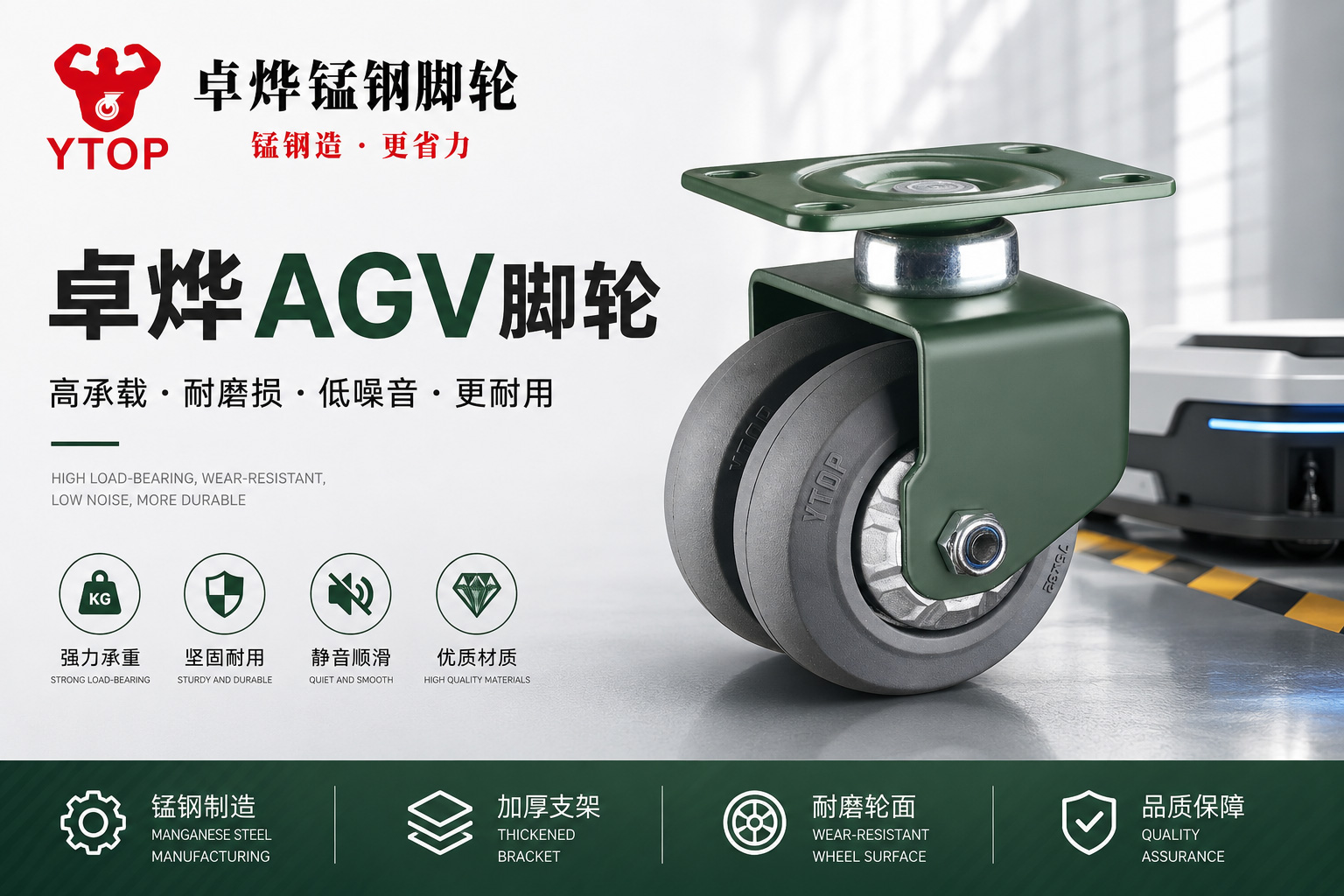
Physics is straightforward: the lower the center of gravity, the less likely an object tips. When equipment sits high, the lever arm of gravity during tilting is long, and a slight deviation can tip it over. With a low center of gravity, at the same tilt angle, gravity pulls the equipment back more effectively, giving a much larger stability margin. Casters are the lowest support points of equipment, so their center-of-gravity design directly affects overall stability. The idea is to compress the wheel set height itself, lowering the equipment's overall center of gravity.
How Low Center of Gravity Is Achieved
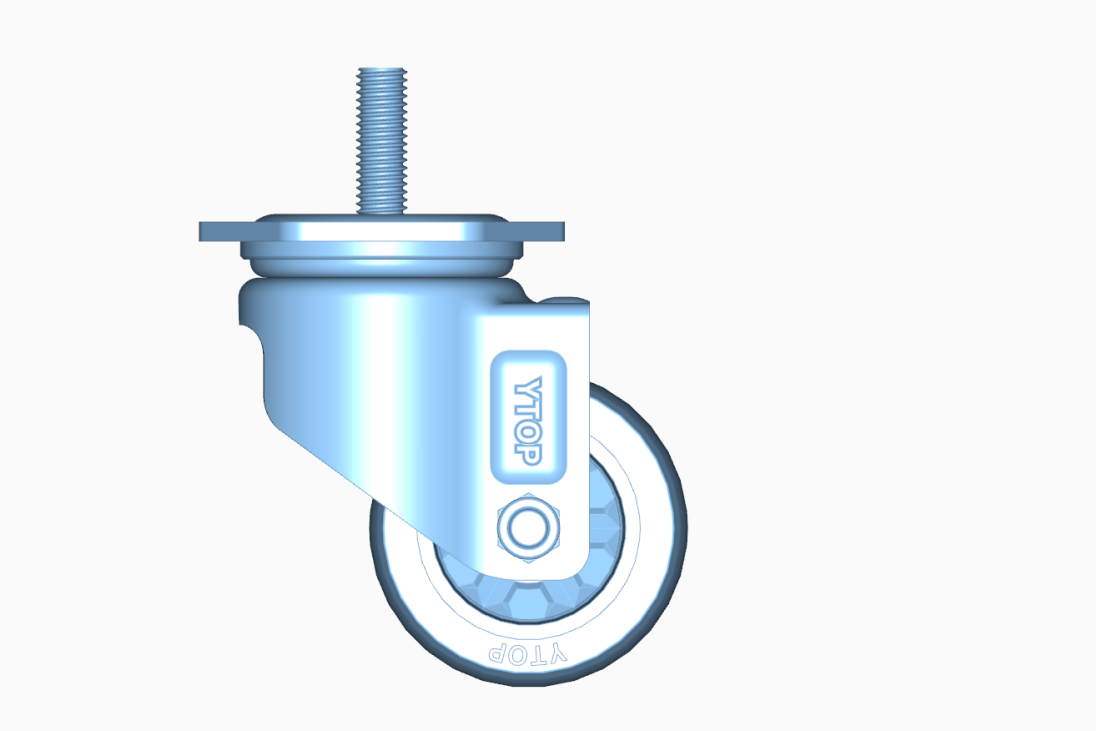
Low center of gravity is not a slogan — it is engineered step by step in the structure:
- Lower bracket height: make the bracket compact, reducing unnecessary vertical space so the mounting plane sits as close to the floor as possible.
- Reasonable wheel diameter: within load requirements, do not blindly increase wheel diameter just to gain height — diameter only needs to satisfy load capacity and passability.
- Maintain structural strength: while lowering the center of gravity, bracket and hub strength must not shrink. Stability and load capacity are both required.
Only when these three come together is it truly a low-center-of-gravity design. For related vertical dimensions, see our guide on caster overall height selection.
Which Scenarios Need Low Center of Gravity
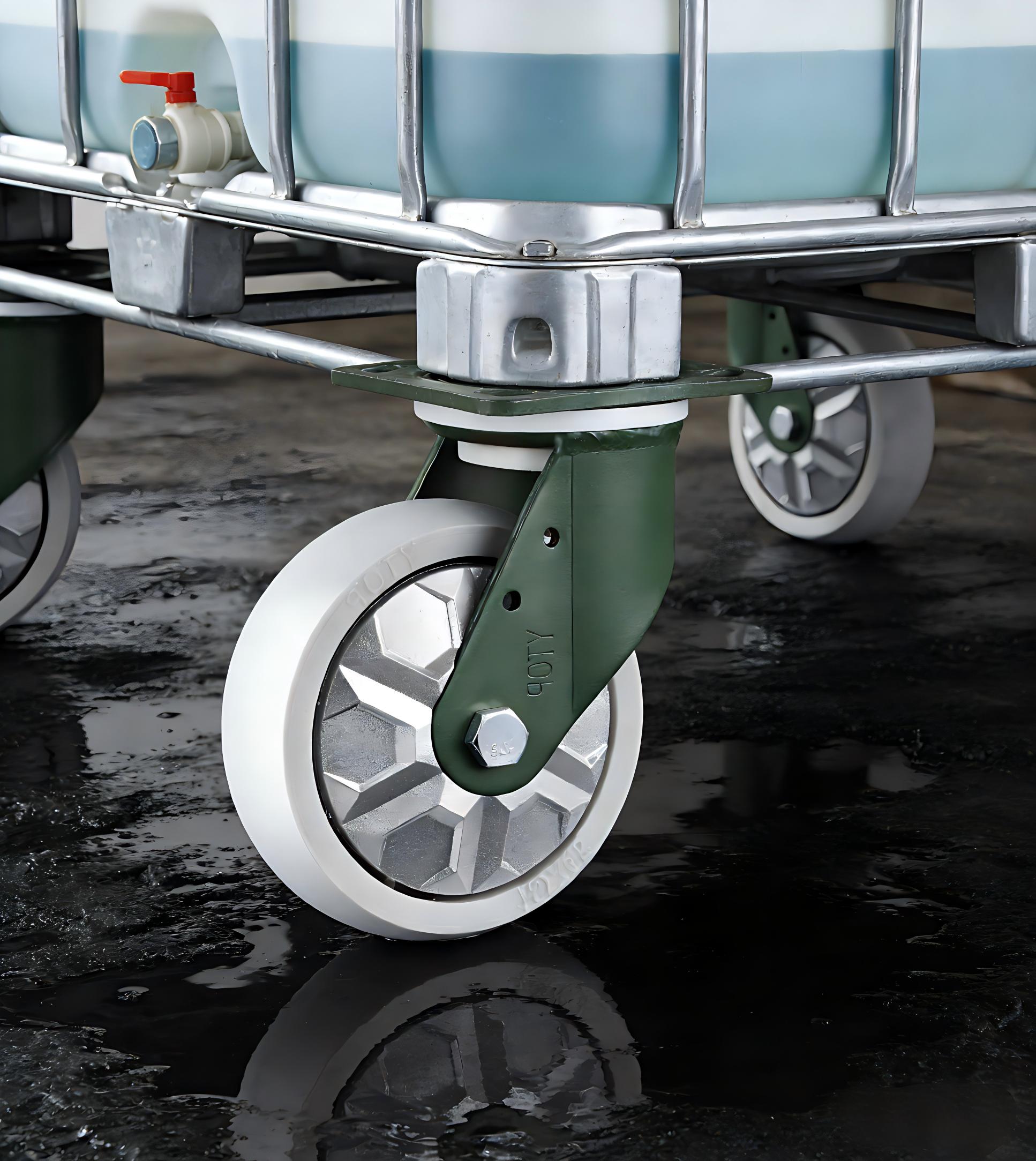
- Heavy-load equipment with a high center of gravity: if wheels raise it further, tipping risk compounds; low center of gravity is corrective.
- Fast-moving equipment: the faster the speed, the higher the stability requirement; low center of gravity reduces dynamic loss-of-control risk.
- Precision equipment transport: sway directly affects precision components; low center of gravity reduces it.
- Slope handling: the lower the center of gravity on slopes, the safer.
But there is a cost: smaller wheel diameter reduces passability across thresholds and gaps, and compact brackets demand stricter mounting space. Low center of gravity suits scenarios that “need stability,” not scenarios that “need to cross obstacles.” For extreme load stability, browse our super-heavy-duty caster line.
Stability Is a System, Not Just the Wheels
Low center of gravity works best when paired with other configurations: braking must be reliable so equipment stops firmly and does not roll away; treads must grip the floor so heavy-load starts do not slip; rotating parts must be smooth so movement does not stutter. Braking, tread, bearing, and center of gravity form a system — only then does the equipment's stability have a solid foundation. When choosing, report equipment weight, center-of-gravity height, moving speed, and passability requirements to the manufacturer, and they will judge whether a low-center-of-gravity solution fits.
Related Reading
Looking for more in-depth caster guides and industrial mobility resources? Explore these related articles:
- Caster Overall Height — How mounting dimensions set the lower bound for wheel diameter.
- Caster Offset and Lead — Steering stability that complements low-center-of-gravity design.
- Wheel Diameter: Large vs Small — The passability trade-off when choosing a smaller low-profile wheel.
- How to Calculate Load Capacity — Make sure compact brackets still carry the rated load.
Explore our complete range of heavy-duty casters (150-610kg) and super heavy-duty casters (700-1600kg) for diverse industrial applications, or contact our engineering team for expert caster selection guidance.
Post time: Oct-24-2026