
Under the same mounting height limit, choosing between a large or small wheel diameter is the most common dilemma in caster selection. Some think bigger is always better; others are constrained by mounting space and can only go small. Wheel diameter is not a matter of preference — it must balance obstacle-crossing ability, pushing resistance, and cart stability.
Why Large Wheels Cross Obstacles Better

The advantages of large wheel diameter are straightforward. The larger the wheel, the better it rolls over thresholds, floor joints, and small bumps — a small wheel may get stuck on the same ridge. Under the same load, a larger wheel also has lower rolling resistance, making the cart easier to push. On uneven floors, large wheels bounce less, protecting both the cargo and the equipment. When mounting space allows, going larger is usually the right direction.
When Small Wheels Are the Better Choice
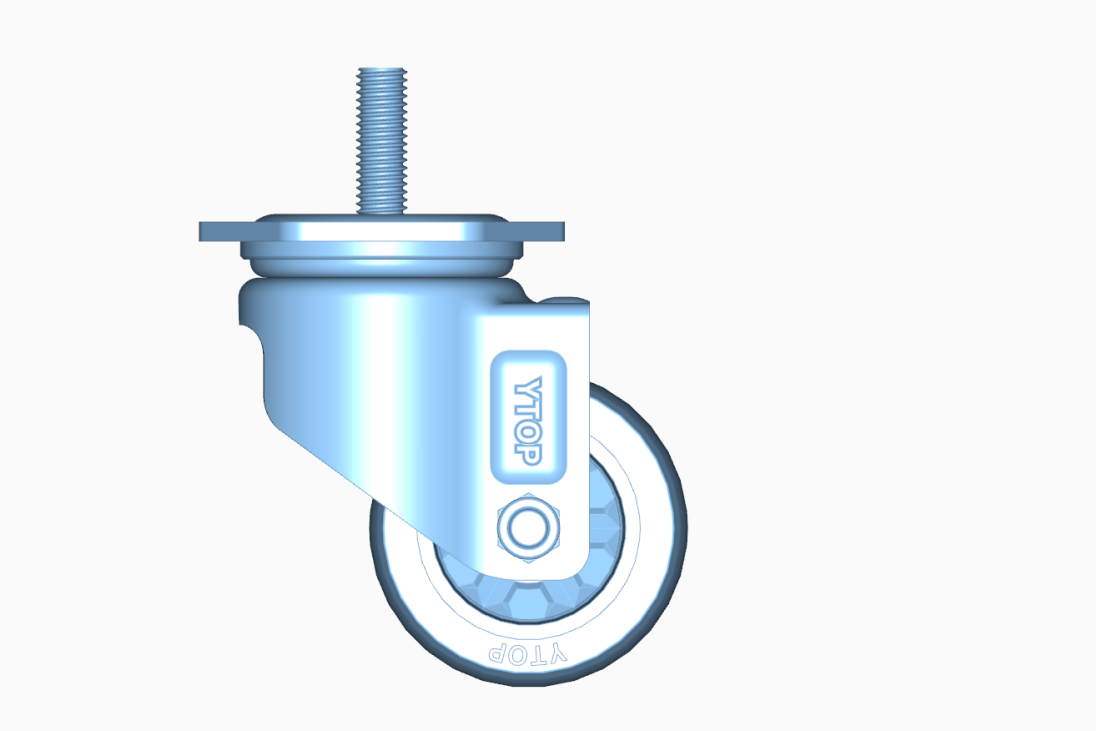
Small wheel diameter has an irreplaceable role in specific scenarios. When the equipment bottom clearance is limited, only a small wheel can keep the overall cart height within the allowed range. A small wheel also lowers the center of gravity, providing better stability — critical for precision instrument carts and inspection trolleys. Paired with a compact bracket, it suits light-load applications like trolleys and work carts, keeping the overall structure neat.
What Constrains Wheel Diameter
Wheel diameter is bounded by several factors. Mounting height is a hard limit: bracket height plus wheel diameter equals total installation height, and the reserved equipment space sets the upper bound. Floor condition sets the lower bound: if the floor has ridges, ramps, or joints, the wheel must be large enough to roll over them. Load grade also matters — large wheels save effort under heavy loads, while small wheels are enough for light-duty use.
The effect on pushing force is often underestimated. A larger wheel reduces rolling resistance under the same load, and the advantage grows on slopes. But as wheel diameter grows, bearing size and bracket strength must keep up — otherwise bearing friction cancels the savings. For a deeper look at how offset affects steering feel, see our guide on caster offset and lead.
How to Choose in Practice
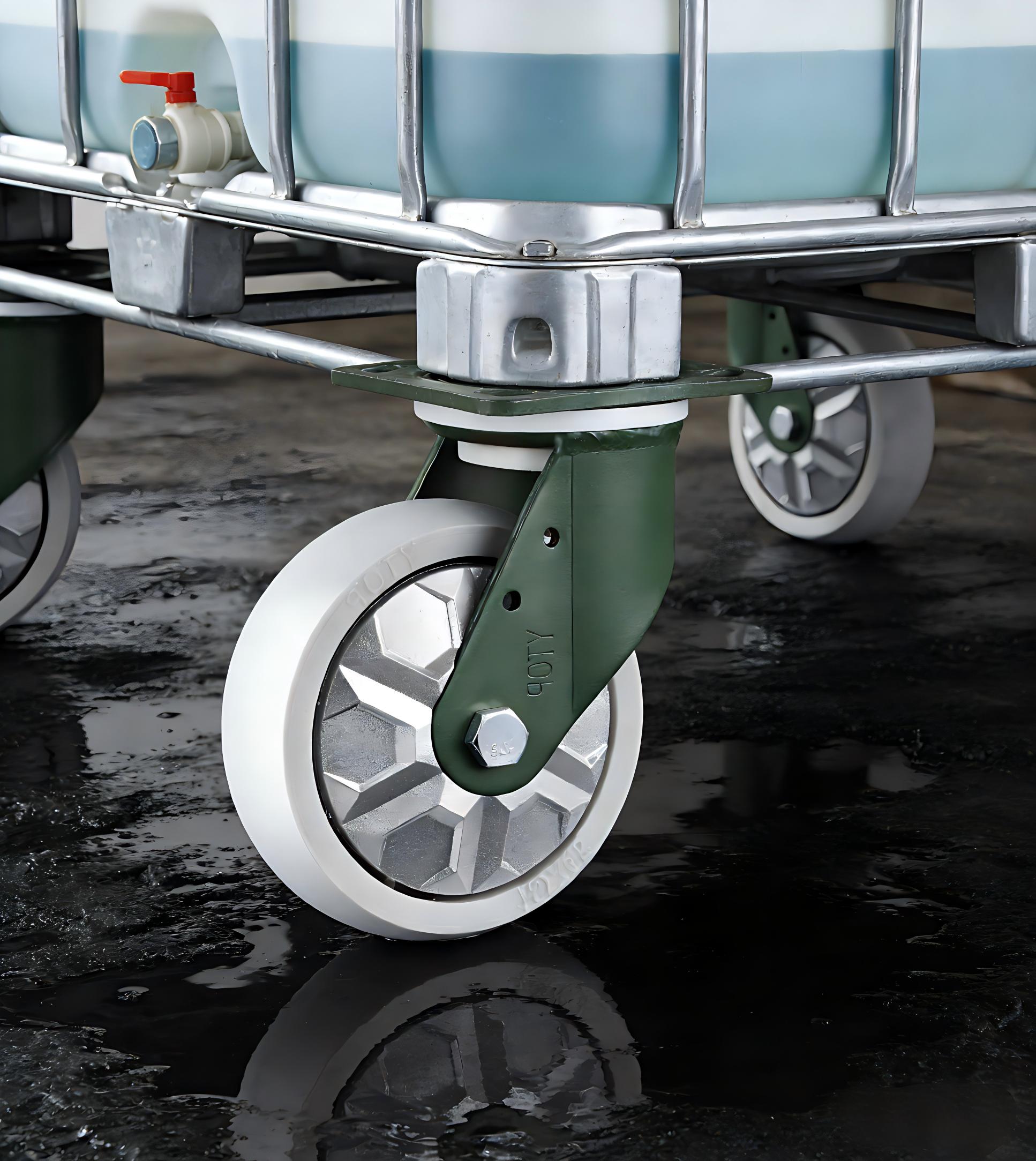
First confirm the mounting height limit, then check what the floor requires for obstacle crossing, and pick the largest wheel that fits within both. If the floor is flat with no thresholds, a smaller wheel works. If the floor has ridges, the wheel must be large enough to clear them. For example, a warehouse picking cart facing a 5 cm doorway threshold: a 75 mm wheel may need the cart lifted to cross, while a 125 mm wheel rolls straight through — provided mounting height allows.
When confirming specifications with YTOPCaster, always provide both the mounting space and the floor threshold conditions. Mounting space sets the upper limit; floor obstacles set the lower limit. Report both to the manufacturer, and the wheel diameter choice has a clear basis. For load planning, also review our guide on dynamic vs static load capacity.
Related Reading
Looking for more in-depth caster guides and industrial mobility resources? Explore these related articles:
- Caster Offset and Lead — How offset affects steering feel and cart stability at different speeds.
- Caster Overall Height — Mounting dimensions and the vertical space that sets wheel diameter limits.
- How to Calculate Load Capacity — Dynamic vs. static load ratings to match wheel diameter choices.
- Wheel Material Comparison — Rubber, PU and nylon trade-offs that pair with diameter decisions.
Explore our complete range of heavy-duty casters (150-610kg) and super heavy-duty casters (700-1600kg) for diverse industrial applications, or contact our engineering team for expert caster selection guidance.
Post time: Oct-23-2026