
The tread — the ring of material where the wheel meets the floor — is the only point of contact between a caster and the ground. Whether the cart runs quietly or loudly, wears fast or slowly, grips enough or slips, and scratches the floor or protects it, is essentially decided by this ring alone. No matter how strong the bracket is, choosing the wrong tread discounts the performance of the whole wheel. This caster wheel material comparison walks through the three treads used most often in industrial casters — rubber, polyurethane (PU) and nylon — so you can match them to real working conditions instead of deciding by feeling.
Rubber, polyurethane and nylon are not graded on a single best scale; each has a clear personality, and the right choice depends on load, noise, floor type and environment. No one material is universally good — only more or less suitable for the job.
The Core Personalities of the Three Tread Materials
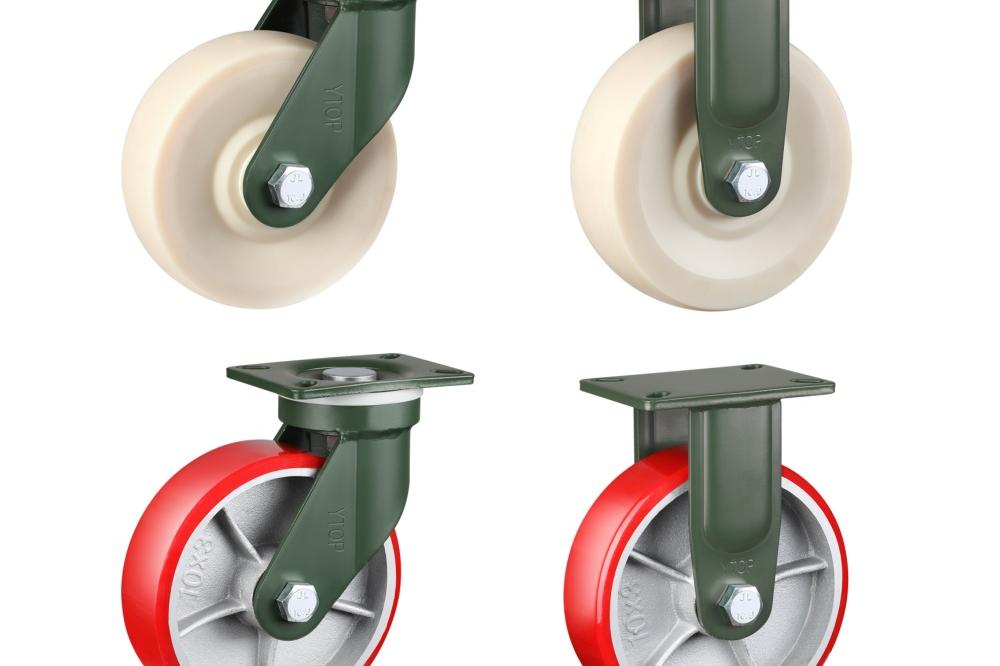
Rubber treads are elastic and soft. They roll quietly, grip well, and protect the floor — properties that make them the default choice in hospitals, hotels and office areas. Their trade-off is wear resistance: under heavy loads they wear relatively fast, and long-term contact with oil and grease accelerates aging and permanent deformation. Natural rubber is also sensitive to ozone and UV, so outdoor exposure or oily floors shorten its service life noticeably.
Polyurethane treads sit in the middle, balancing elasticity and strength better than either extreme. They run quietly, damp vibration, resist wear and oil, will not mark soft floors, and keep up with heavy-load requirements. In recent years PU has been adopted more and more widely across industrial scenarios, and it can be regarded as the most comprehensive single choice: not best in any one trait, but acceptable across almost all of them.
Nylon treads are hard treads. They offer high strength, wear resistance, and resistance to chemical corrosion, which suits heavy-load, oil-resistant and heat-sensitive working conditions. Their trade-offs are equally clear: hard treads roll noisily, offer almost no cushioning, protect the floor weakly, and can leave scratch or pressure marks on soft flooring. In short, rubber gives up durability for quietness, nylon gives up quietness for strength, and polyurethane compromises on both sides.
Match the Tread to Your Working Conditions
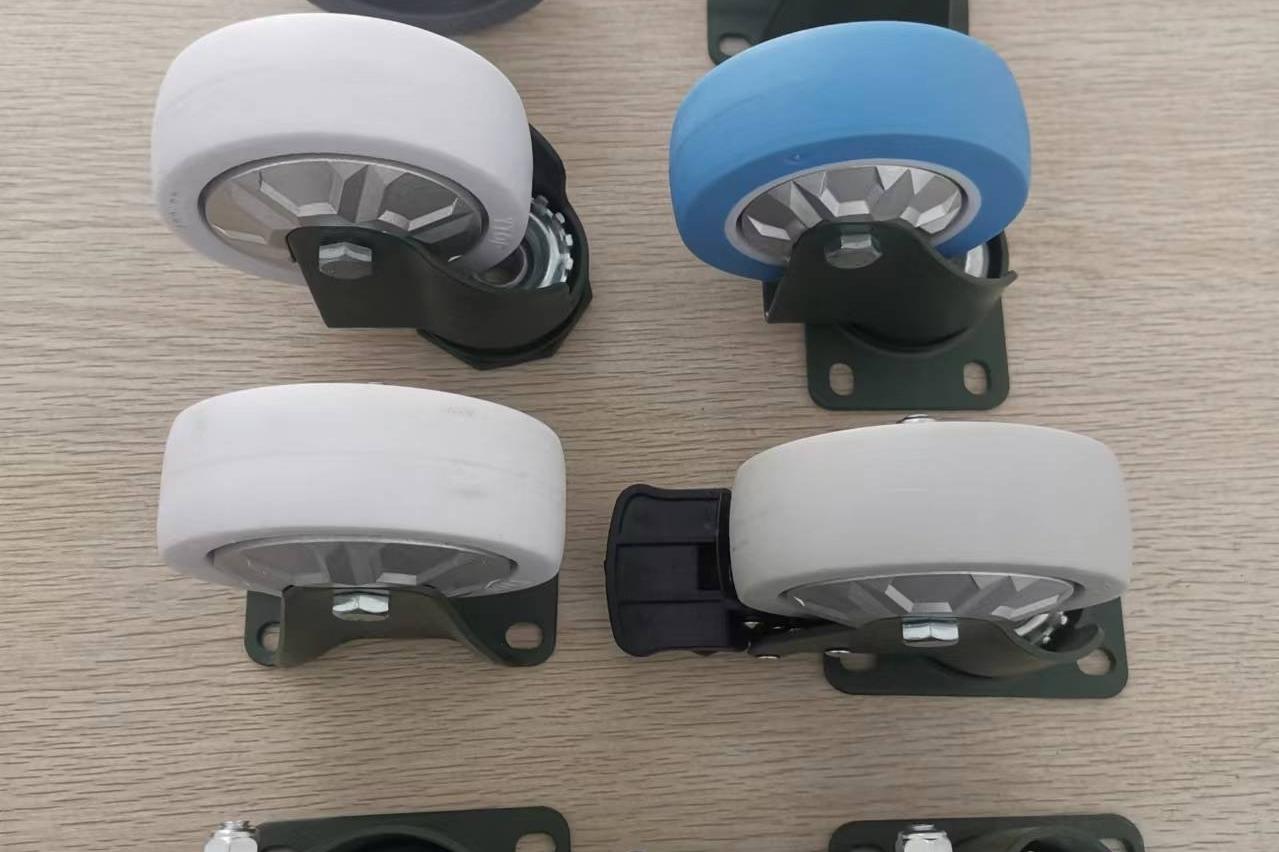
In real selection, the fastest way to narrow the field is to compare by scenario rather than by datasheet. The table below summarizes the typical fit for each material; use it as a starting point and confirm the exact tread grade with the manufacturer.
| Working Scenario | Recommended Tread | Reason |
|---|---|---|
| Quiet, floor-protection areas (hospitals, supermarkets, offices) | Rubber or PU elastic tread | Soft rolling, no floor marks, low noise |
| Heavy load with noise sensitivity (server-room equipment transport) | Polyurethane | Strength is sufficient while rolling stays quiet |
| Heavy-load, high-frequency, harsh workshops and ports | Nylon or high-strength PU | Wear-resistant and oil-resistant under continuous duty |
| Oil or chemical exposure | PU or nylon | Outlasts rubber in corrosive media |
| Light load, clean rooms and dust-sensitive workshops | PU or nylon | Sheds little debris, does not abrade into rubber dust |
One point to keep in mind: material families are only a general direction. Within each family, different formulations — Shore hardness, fillers, blend ratio — shift real performance considerably. A hard PU at Shore A 95 behaves almost like a hard tread, while a soft PU behaves more like rubber. Always confirm the specific tread grade against your floor and load rather than relying on the family name.
Quietness vs. Wear Resistance: Decide Which You Want First
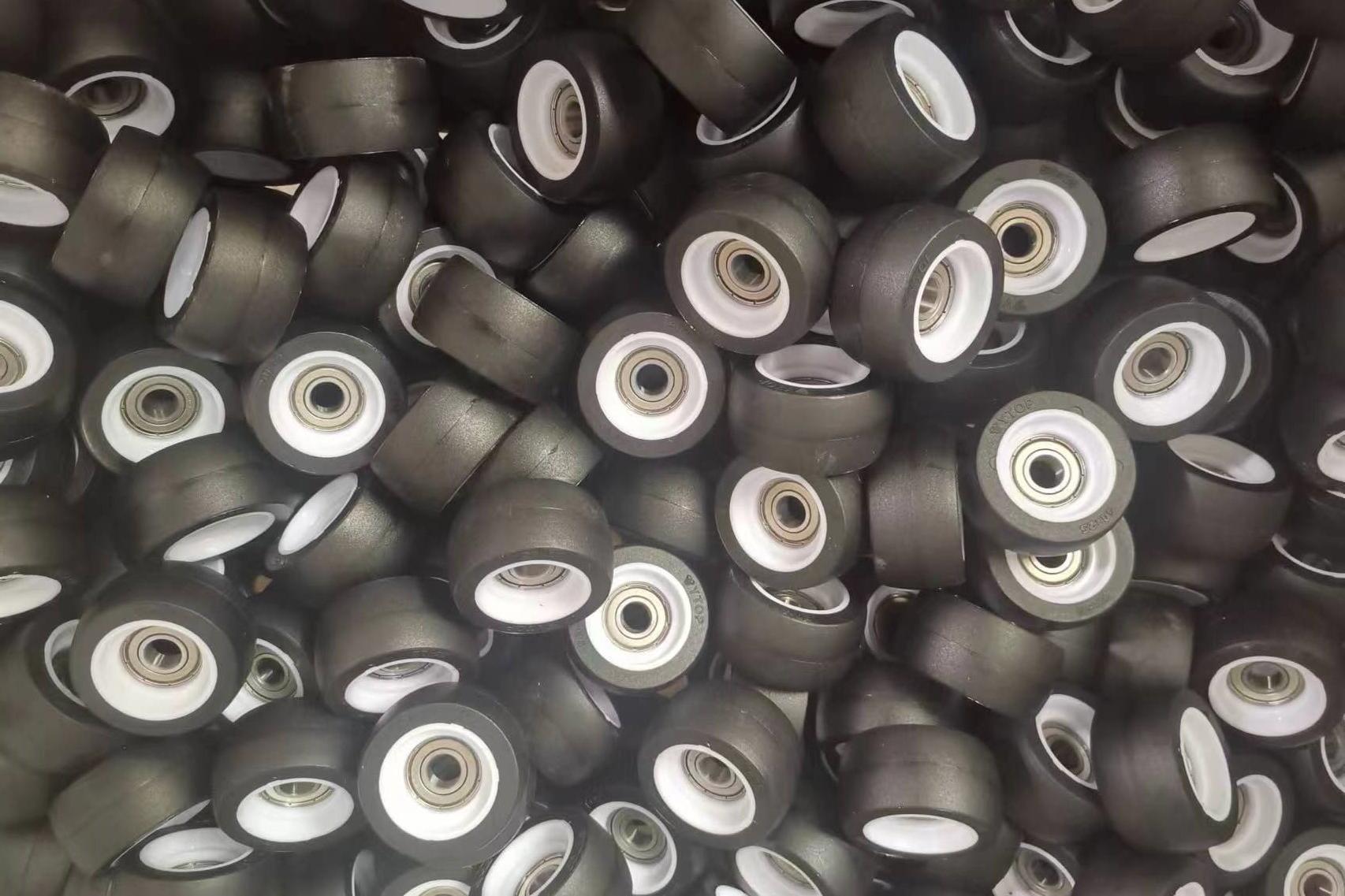
The most common dilemma in tread selection is balancing quietness against wear resistance. The answer is not in the parameter table — it lies in your priorities. If operators push the cart every day and are sensitive to noise and vibration, an elastic tread makes the workplace more comfortable. If equipment runs for long hours and you want fewer wheel replacements, a hard, wear-resistant tread lasts longer. The middle route is polyurethane: it gives up some quietness for durability and some durability for quietness.
For most industrial scenarios the practical choice is polyurethane, because users usually need both wear resistance and acceptable push noise. Only in genuinely harsh, heavy-load environments should strength take priority over everything else — there, nylon or a high-strength PU is the more stable answer. Decide your priority first, and the material choice becomes much easier.
Tread and Floor Must Match, and the Full Caster Must Match Together
The tread is like a shoe, and the floor is like the road — they have to match. On precious floors such as epoxy, wood, and tile, choose an elastic tread; hard treads leave scratches and pressure marks. On rough concrete or gravel yards, choose a wear-resistant tread; elastic treads wear quickly there. If the workshop floor is often wet with oil or water, the tread must also be oil-resistant and slip-resistant. Mismatching tread to floor is one of the most common causes of early wheel failure, even when the load was chosen correctly.
The tread also never works alone. It is one part of a complete configuration together with the bracket and the bearing: the tread handles ground contact and wear, the bracket handles load stability, and the bearing handles smooth rotation. Only when the three are matched does the caster deliver full performance. Rather than asking which tread material is best in isolation, give the manufacturer your working conditions — noise requirements, floor type, load intensity, and oil exposure — and let them configure the complete set. YTOP Manganese Steel Casters matches tread material to usage scenarios and pairs it with the corresponding bracket structure and powder-coated finish, delivering a factory-built set where no component drags the others down.
Related Reading
Looking for more in-depth caster guides and industrial mobility resources? Explore these related articles:
- PU vs TPU Wheels — Complete difference guide between polyurethane and thermoplastic polyurethane.
- TPR or Nylon? — Which wheel material is better for your specific application?
- PP vs TPR Casters — Material differences and performance trade-offs explained.
- Why Polyurethane for AGV? — Material analysis explaining PU’s dominance in AGV wheel applications.
Explore our complete range of heavy-duty casters (150-610kg) and super heavy-duty casters (700-1600kg) for diverse industrial applications, or contact our engineering team for expert caster application knowledge and selection guidance.
Post time: Oct-20-2026