
When AGV whole machine factories do wheel selection, the proportion finally landing on polyurethane tread is not low. Looking only at unit price, polyurethane wheels are indeed a bit more expensive than ordinary rubber wheels and nylon wheels; but AGV requirements for tread are not the same magnitude as hand carts, and expensive has its reason.
What AGV Expects from Wheel Treads

First say what requirements AGV has for tread. AGV is unmanned guided vehicle, and wheels are equivalent to its feet. In running distance, running more than ten kilometers a day or even more is not uncommon, and wear amount is several times that of ordinary processes; start-stop and positioning rely on friction between tread and floor, and friction coefficient fluctuates, parking position easy to drift; motor drive is sensitive to rolling resistance, and large resistance costs electricity, directly affecting battery life; workshop floors inevitably have oil stains and water stains, and wheels must also grip and be as quiet as possible.
These several items combined, ordinary rubber wheels and nylon wheels both have their own shortcomings, and polyurethane achieves relative balance in this set of requirements.
Why Polyurethane Wins
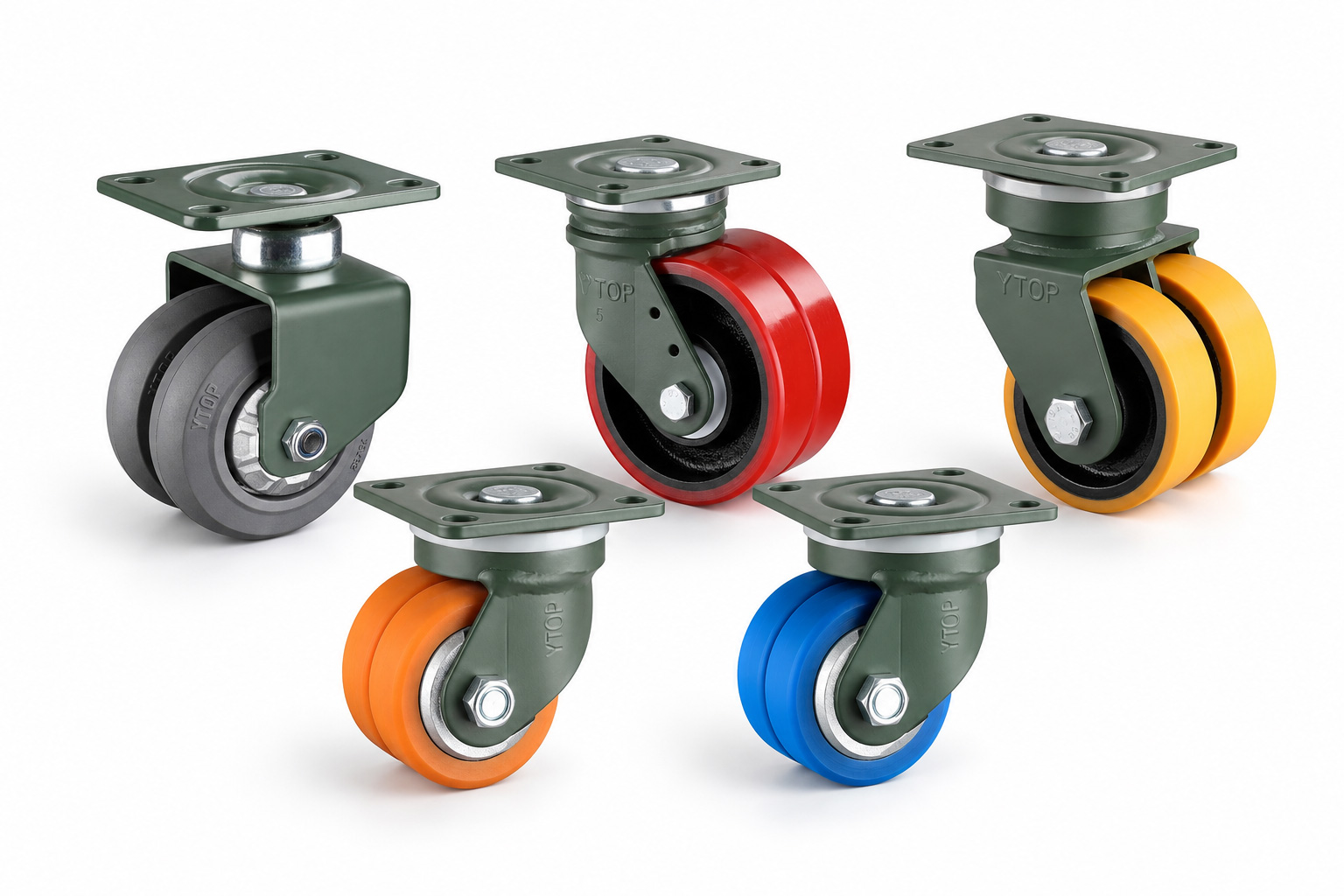
Polyurethane’s benefits can be broken down from material level. Under same size, load capacity usually higher than rubber; wear performance in several materials commonly used for wheels belongs to front; hardness moderately hard, rolling resistance small, motor drive convenient; good toughness, when floors have burrs, bolt heads and such protrusions, not easy to scratch and peel.
Single looking at one item, wear resistance has harder materials, load has stronger choices, but to have load, wear resistance, labor-saving three items simultaneously up to standard, polyurethane belongs to one of the few options.
Here need to remind: polyurethane is not one material, but a class of materials, and different formulas, performance can differ by several times. AGV tread generally falls in Shore A hardness 80~95 this segment — too soft wears fast, too hard easy to slip; formulas with good resilience, when rolling over small floor protrusions vibration small, more friendly to both vehicle body and cargo. So selecting AGV wheels, cannot only look at “whether is polyurethane,” hardness, resilience, formula must be reported three together, then there is something to compare.
Polyurethane Limitations
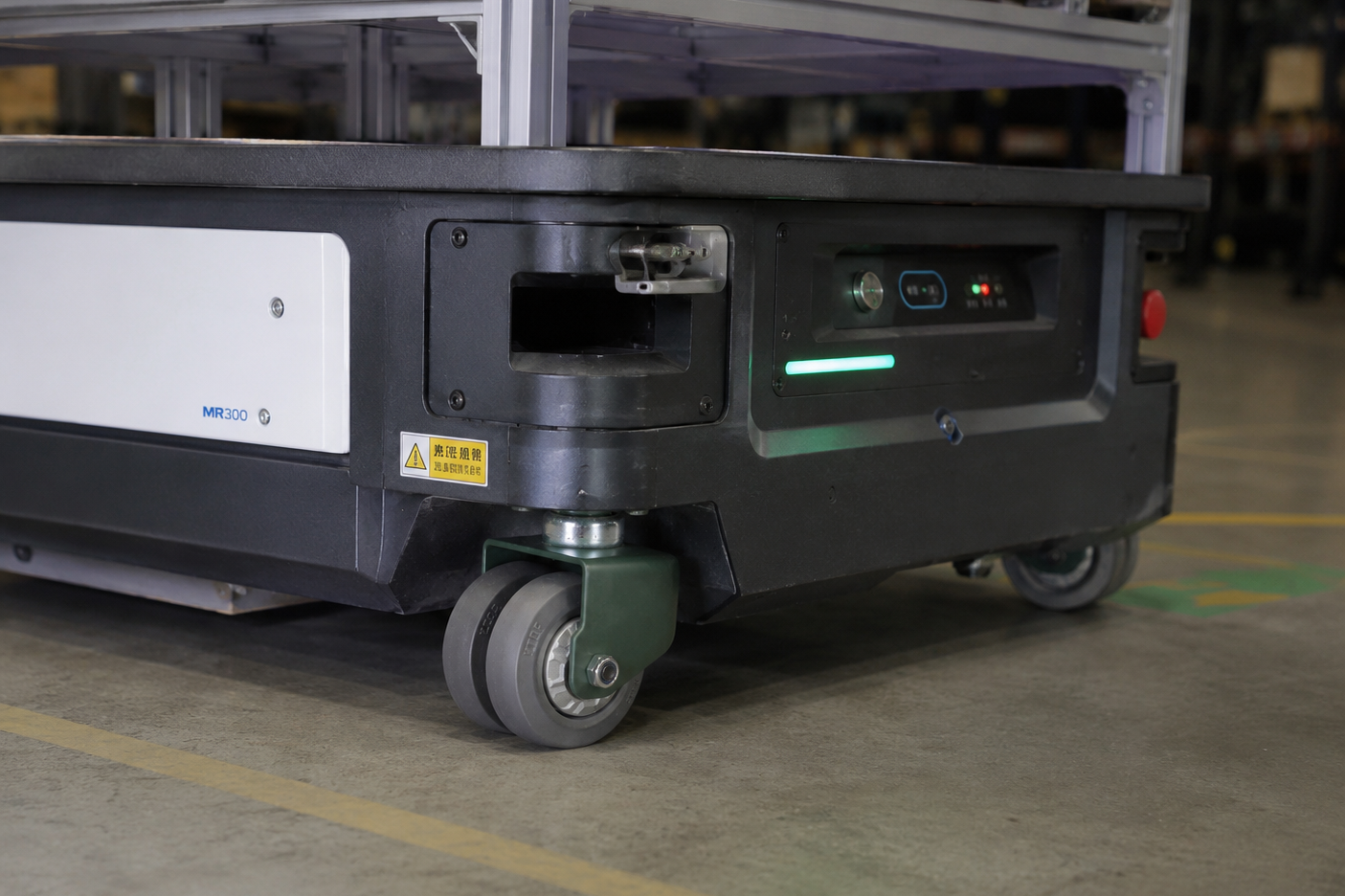
Polyurethane also has shortcomings, and during selection must have number in mind. First is fear of high temperature — long-term in environment above 80 degrees will soften and aging accelerate, high-temperature workshops need to use cautiously; second is individual formulas sensitive to oils, long-term soaking in oil will expand and soften.
AGV working conditions relatively clean, temperature controllable, exactly avoids the two things it fears most, which is also an important reason it suits AGV.
Structure: Rubber-Coated Wheel Core
Structurally, polyurethane AGV wheels on market mostly are rubber-coated structure, polyurethane coated outside metal wheel core, wheel core gives strength, tread gives wear resistance. Wheel core material has aluminum and steel, and drive wheels with large load commonly use steel core or high-strength aluminum core; rubber layer thickness also matters — too thin not wear-resistant, too thick poor heat dissipation. These parameters have no universal answer, and are reverse-calculated according to whole machine load.
Zhuoye manganese steel casters when supporting AGV drive wheels also takes this path — first calculate load, then determine wheel core, rubber coating thickness and hardness, finally land on specific model.
Selection Order for AGV Wheels
Landing on selection, order can go like this: first calculate vehicle weight, cargo weight, dynamic load generated by acceleration all included, multiply a safety coefficient; then determine hardness according to floor conditions, smooth floor select harder, rough floor or with slopes select more flexible; report workshop temperature, oil stain situation together to manufacturer, confirm whether formula matches. Drive wheels also need to focus on confirming wheel core strength and installation interface, and problems in this part are whole machine failures. Material data sheet is static, working conditions are dynamic, and finally telling manufacturer working conditions clearly is much faster than struggling alone in parameter tables.
Related Reading
Post time: Sep-24-2026