
Caster vibration during AGV operation needs timely handling. Vibration not only affects AGV stability and navigation accuracy, but if left unchecked, it also accelerates fatigue damage to casters and other components.
Vibration sources fall into two groups: problems with the caster itself, and external factors.
Cause 1: Uneven Tread Wear
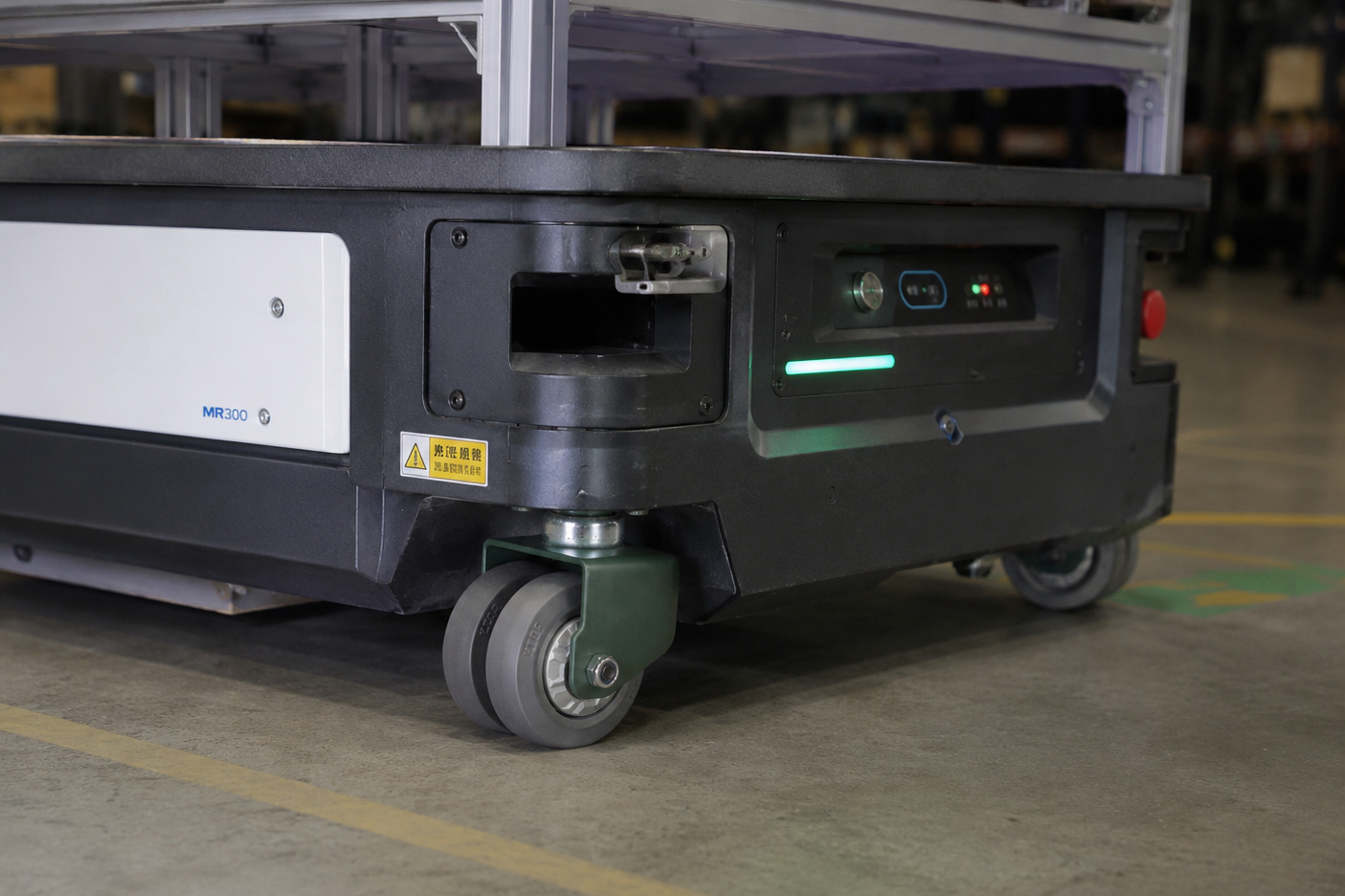
Uneven tread wear is the most common caster-side cause. After long use, if the bracket deforms, the load sits unevenly, or installation is skewed, one side of the tread wears faster than the other and the wheel diameter becomes irregular. The wheel then rotates like an out-of-round tire, producing periodic vibration tied to travel speed and wheel diameter — the AGV bounces up and down rhythmically even during straight, uniform running. Tread hardness directly influences how fast wear develops; see our Shore A vs Shore D guide.
Cause 2: Excessive Bearing Clearance
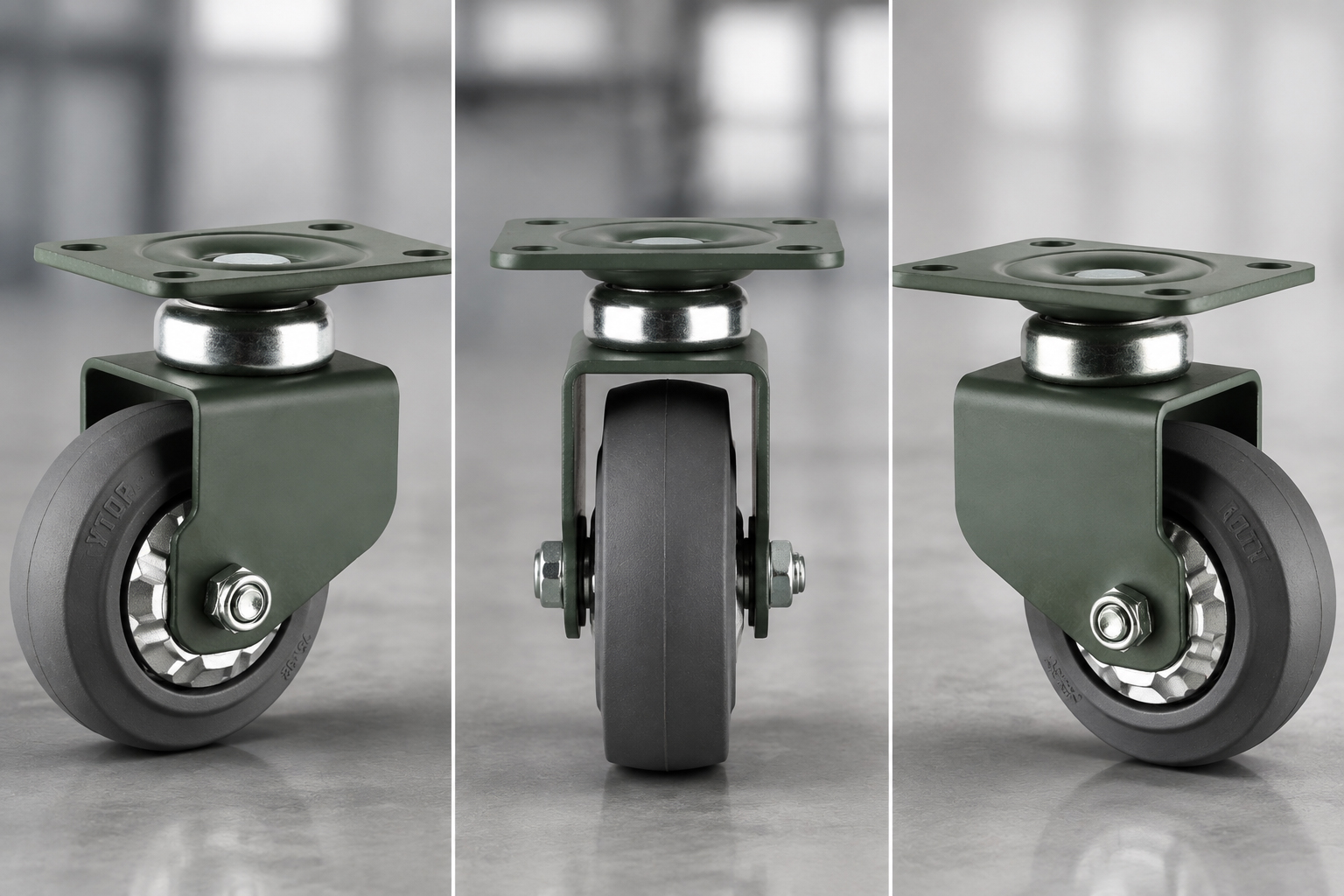
Excessive bearing clearance is another common cause. After bearing wear, the clearance between balls and raceways grows, and the wheel shows radial runout while rotating. This vibration is high-frequency but small-amplitude, usually paired with abnormal bearing noise — a rustling or clicking sound. When you hear this, the bearing is typically already worn to the point of replacement.
Cause 3: Loose Bracket Bolts
Loose bracket bolts also cause vibration, but the pattern differs from the first two. Bolt-induced vibration is irregular, worsens during turns or braking, and may produce metallic knocking sounds. It develops quickly — tighten and inspect immediately once detected.
Cause 4: Floor and Load Conditions
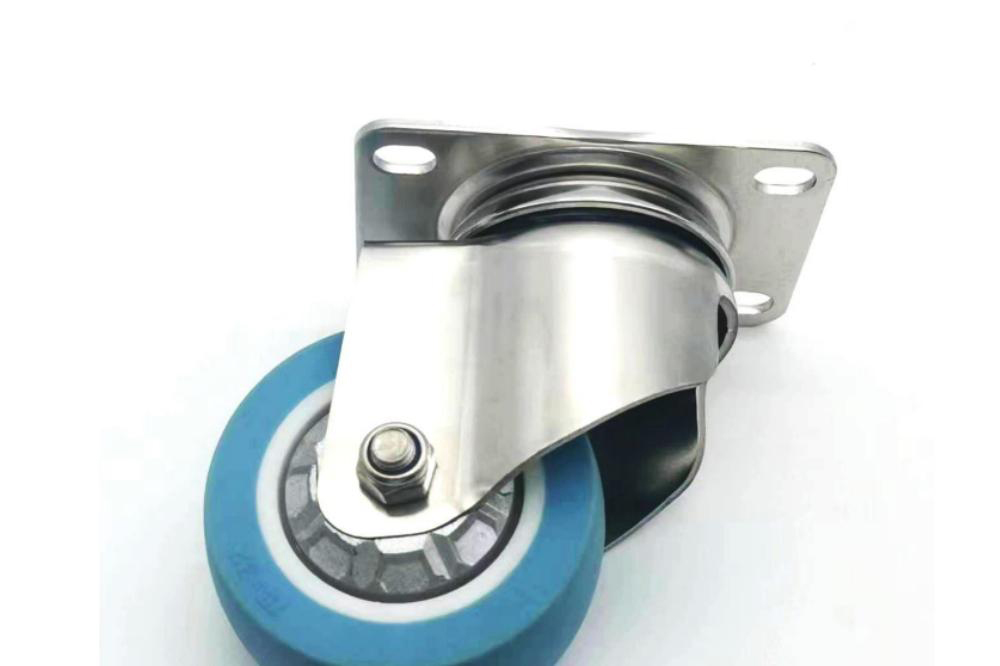
External factors are mainly floor and load. Impact vibration comes from floor joints, potholes, and speed bumps — directly tied to floor condition. Uneven load distribution is a hidden factor: a shifted center of gravity makes some wheels carry excessive load with heavy deflection, while others carry too little or even lift slightly off the ground. Lightly loaded wheels bounce and vibrate. A clear clue: vibration differs noticeably between full load and empty load. For load balancing guidance, see our load capacity calculation guide.
How Vibration Hurts the AGV
Vibration travels to navigation sensors — lidar and vision measurement signals jitter and positioning accuracy drops. Continuous vibration can shift cargo, which is risky with precision equipment. On lifespan, vibration is a fatigue load on every connector: bolts loosen, structural parts crack, and solder joints detach over time. Worse, vibration is itself a symptom of caster failure — ignoring it accelerates uneven wear, bearing wear, and bracket fatigue cracking in a vicious cycle.
Troubleshooting Order
Follow a logical sequence:
- Empty-load test: run the AGV low-speed on flat ground, unloaded. Vibration even when empty points to the caster itself; then repeat at rated load — clearly stronger vibration suggests load distribution.
- Wheel-by-wheel check: lift the AGV, spin each wheel for eccentric runout, shake it for bearing play, check bracket bolt torque, and inspect the tread for flat spots, cracks and uneven wear.
- Floor check: walk the route and note joint height, slope changes and potholes. If vibration persists on flat ground the problem is in the caster; if it only appears on specific sections, the floor is at fault.
Handle each cause at the root: for uneven tread wear, replace the wheel or entire caster and fix the cause — otherwise new wheels wear unevenly again. For bearing play, replace the bearing and check sealing and lubrication if wear repeats. For loose bolts, tighten and add spring washers or thread locker. For floor issues, fill joints and repair potholes. For uneven loads, adjust cargo placement or reselect under eccentric load. When worn casters are the verdict, see our replacement scrap standards guide.
One Often-Missed Detail
Don't replace only the vibrating wheel. Assess all four wheels together — swapping just one creates inconsistent resistance and can cause the AGV to veer. From a selection view, vibration problems often trace back to bracket rigidity, bearing precision, and tread uniformity, so match replacement casters to the same performance class across all positions.
Related Reading
Looking for more in-depth caster guides and industrial mobility resources? Explore these related articles:
- Wheel Hardness Guide — How Shore hardness affects tread wear and vibration resistance.
- How to Calculate Load Capacity — Avoid uneven loading with correct per-wheel capacity.
- When to Replace Worn Casters — Scrap standards for worn treads, bearings and brackets.
- Caster Offset and Lead — Steering geometry and its role in even tread wear.
Explore our complete range of heavy-duty casters (150-610kg) and super heavy-duty casters (700-1600kg) for diverse industrial applications, or contact our engineering team for expert caster selection guidance.
Post time: Oct-27-2026