
Workshop cart wheels worn flat on the surface are still in use — until one day a wheel seizes and the cart tips over, spilling cargo. There are clear standards for when casters should be replaced; you don't need to wait until they break completely.
Forms of Tread Wear
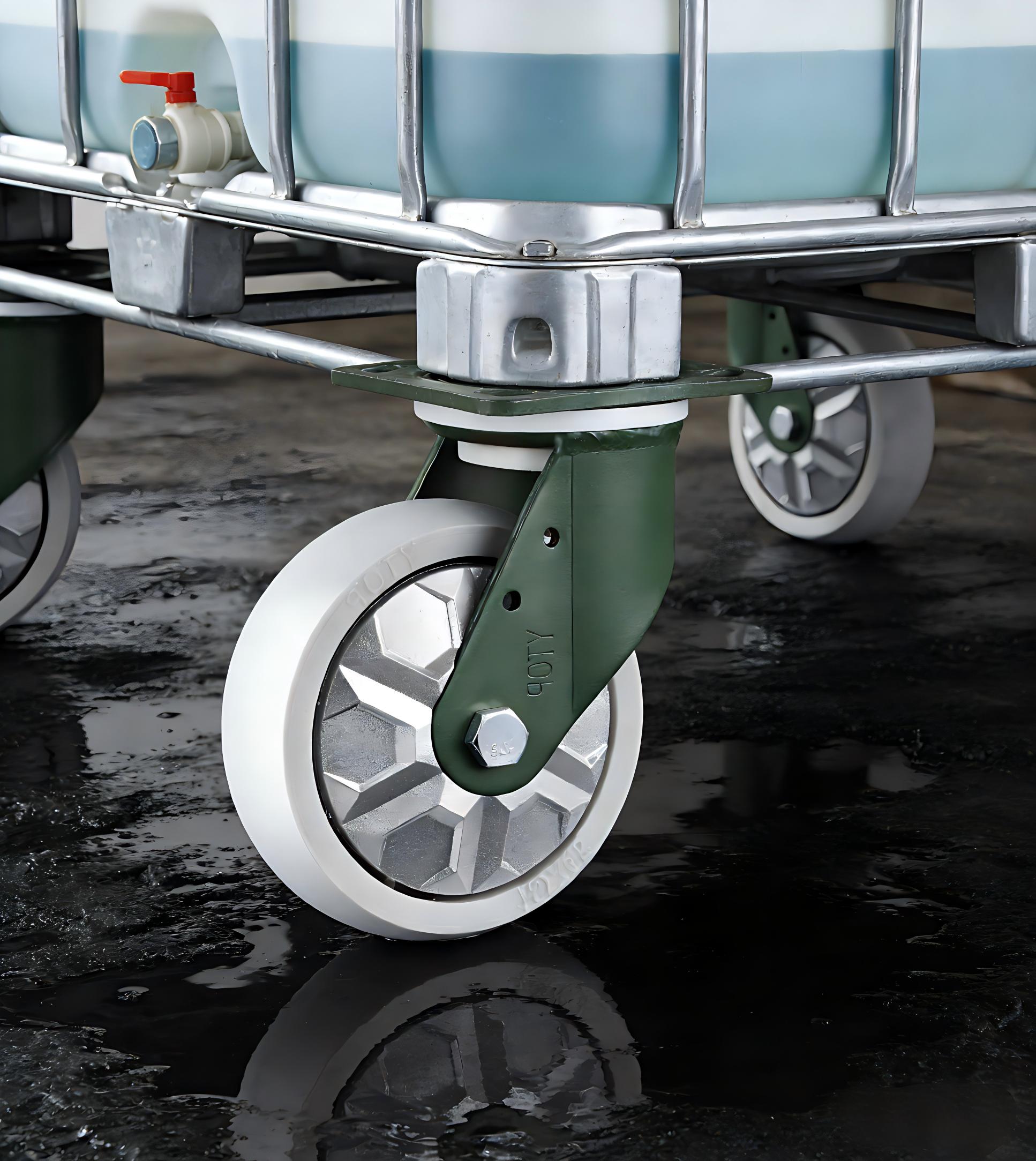
Tread wear is the most common scrapping signal, with several specific forms:
- Worn flat tread: after the curvature wears flat, the contact surface changes from curved to flat, rolling resistance rises, and pushing gets laborious.
- Uneven wear: one side wears faster than the other — usually caused by skewed installation or a failed swivel bearing preventing the wheel from running straight.
- Blistering and delamination: the tread separates from the wheel core and blisters, making a thumping sound when pushed. This already poses a safety hazard and should be replaced immediately.
Signals of Structural Damage
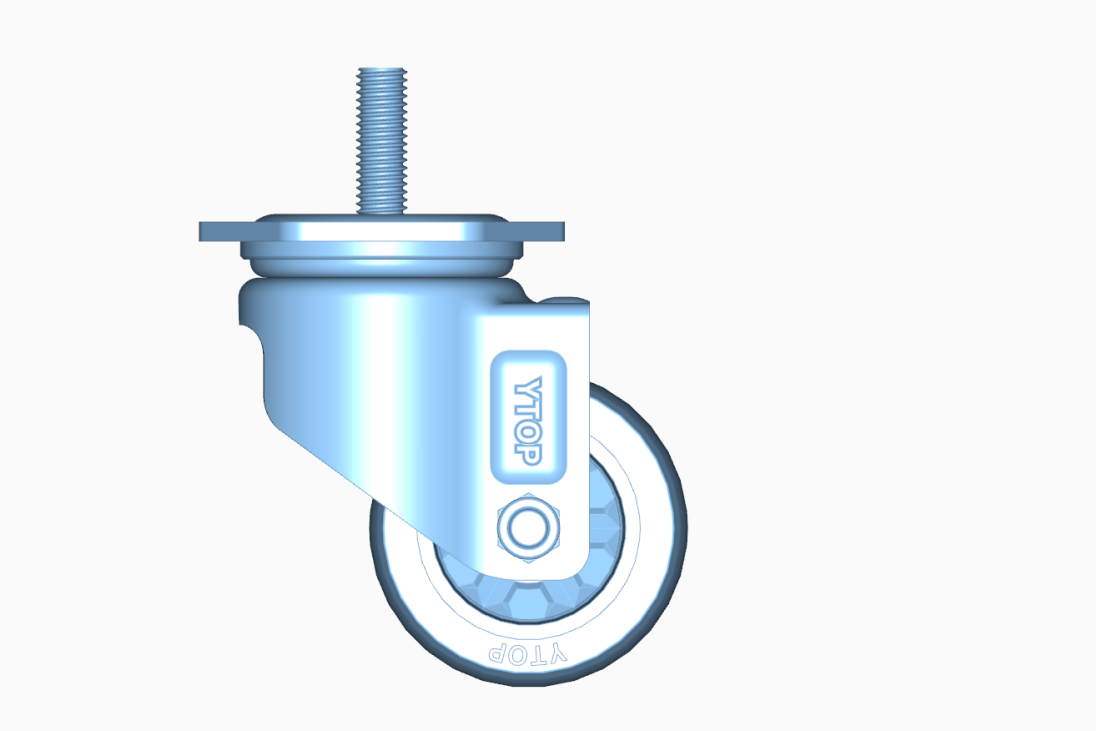
Beyond the tread, structural and rotating components also need inspection:
- Cracks: found on the tread or bracket — deep cracks carry fracture risk and cannot continue in service.
- Out-of-round wheel or bent bracket: shaking during rotation, with deformation worsening over time.
- Bearing wear: obvious play or abnormal noise during rotation means internal clearance has exceeded limits.
For more on bearing types and their effect on effort, see our guide on Shore A vs Shore D hardness.
Quantitative Reference Points
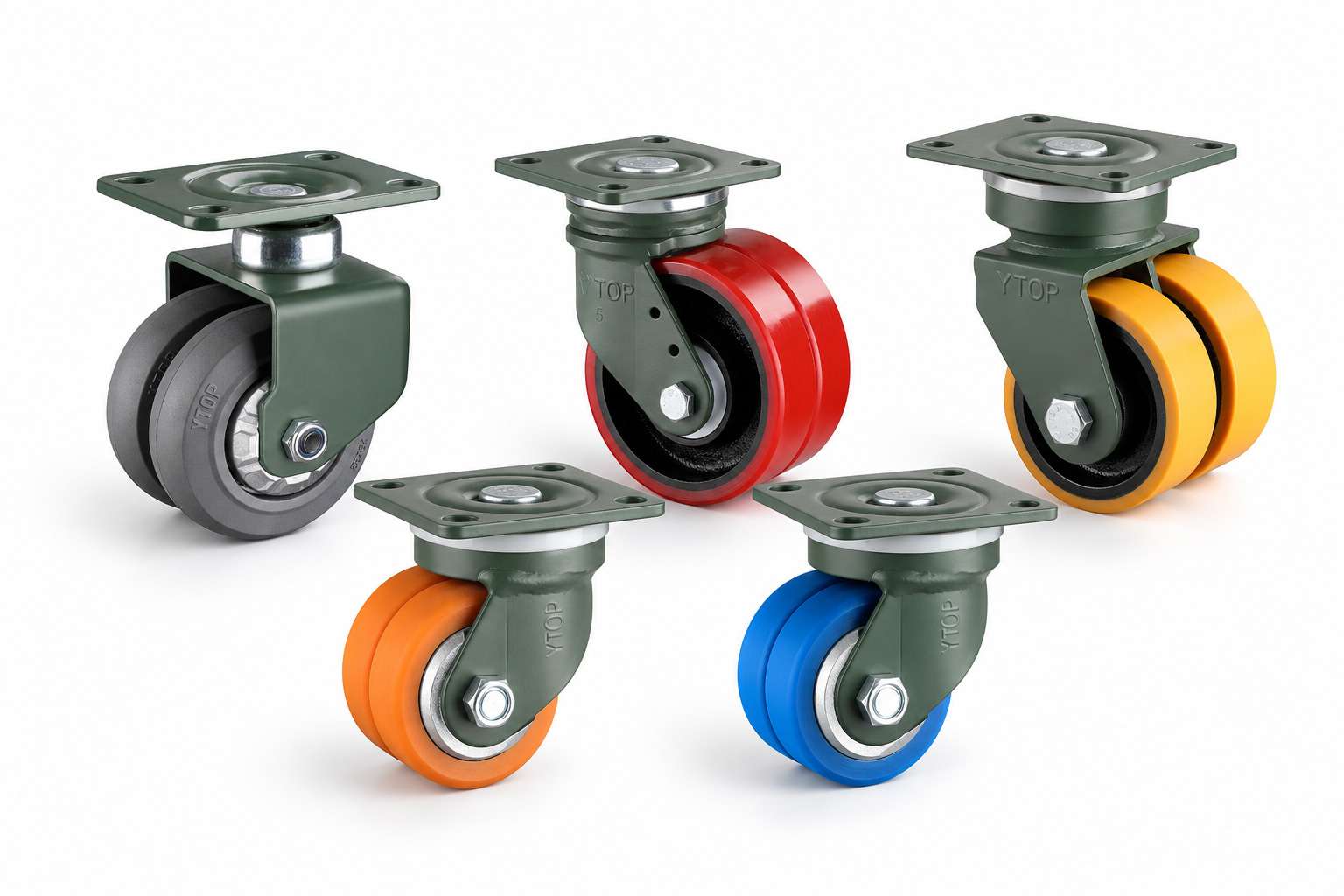
Visual judgment alone is imprecise — use these quantitative indicators:
- Tread thickness worn more than one-third of original → consider replacement. Tighten the rule for heavy-load, high-frequency use; relax it for light-duty occasional use.
- Wheel diameter noticeably smaller, and after mounting height drops the equipment tilts → wear has affected safe operation; replace now.
- Wheel side-to-side play exceeding 2–3 mm → bearing-to-axle clearance is at its limit; continued use accelerates bracket and hub wear.
Record these numbers; they give you a baseline when inspecting wheels. For sizing context, review our load capacity calculation guide.
Replacement Timing by Scenario
How strict to be depends on the scenario:
- Heavy-load workshops: be strict — replace immediately on cracks or delamination; do not make do.
- High-traffic areas: where wheel failure could injure people, replace proactively.
- General warehousing: balance wear level against replacement cost and arrange batch replacements in coordination to reduce scattered downtime.
The bottom line: whenever cracks or delamination appear, replace immediately regardless of scenario. Pair inspection with the right hardware — browse our heavy-duty caster collection for durable replacements.
Make Inspections Routine
Don't wait for failures — institutionalize inspection. Do a visual check monthly, focusing on tread wear and cracks. Do a deep check quarterly: lift equipment and verify bearing clearance and steering smoothness. Record results and flag wheels approaching the critical point. Most caster failures show signs first — cracks, noise, stiff steering are all signals.
Related Reading
Looking for more in-depth caster guides and industrial mobility resources? Explore these related articles:
- Wheel Hardness Guide — Shore A vs Shore D and how tread hardness relates to wear rate.
- Wheel Diameter: Large vs Small — How diameter affects rolling resistance and replacement choices.
- How to Calculate Load Capacity — Match replacement casters to the real per-wheel load.
- Caster Offset and Lead — Steering wear causes and how offset design reduces uneven wear.
Explore our complete range of heavy-duty casters (150-610kg) and super heavy-duty casters (700-1600kg) for diverse industrial applications, or contact our engineering team for expert caster selection guidance.
Post time: Oct-26-2026