
On a caster parameter sheet, Shore hardness looks like an inconspicuous number — yet it sets the tread’s character: soft or hard, quiet or wear-resistant, easy to push or heavy-duty. Laypeople ask first what material the wheel is made of; insiders ask first what the hardness is. Selecting caster wheel hardness well starts with understanding how the Shore scale actually works, and how a few degrees on that scale trade cushioning against durability. This guide explains the scale, the performance chain behind each hardness band, and how to match it to real working conditions.
What Shore Hardness Measures
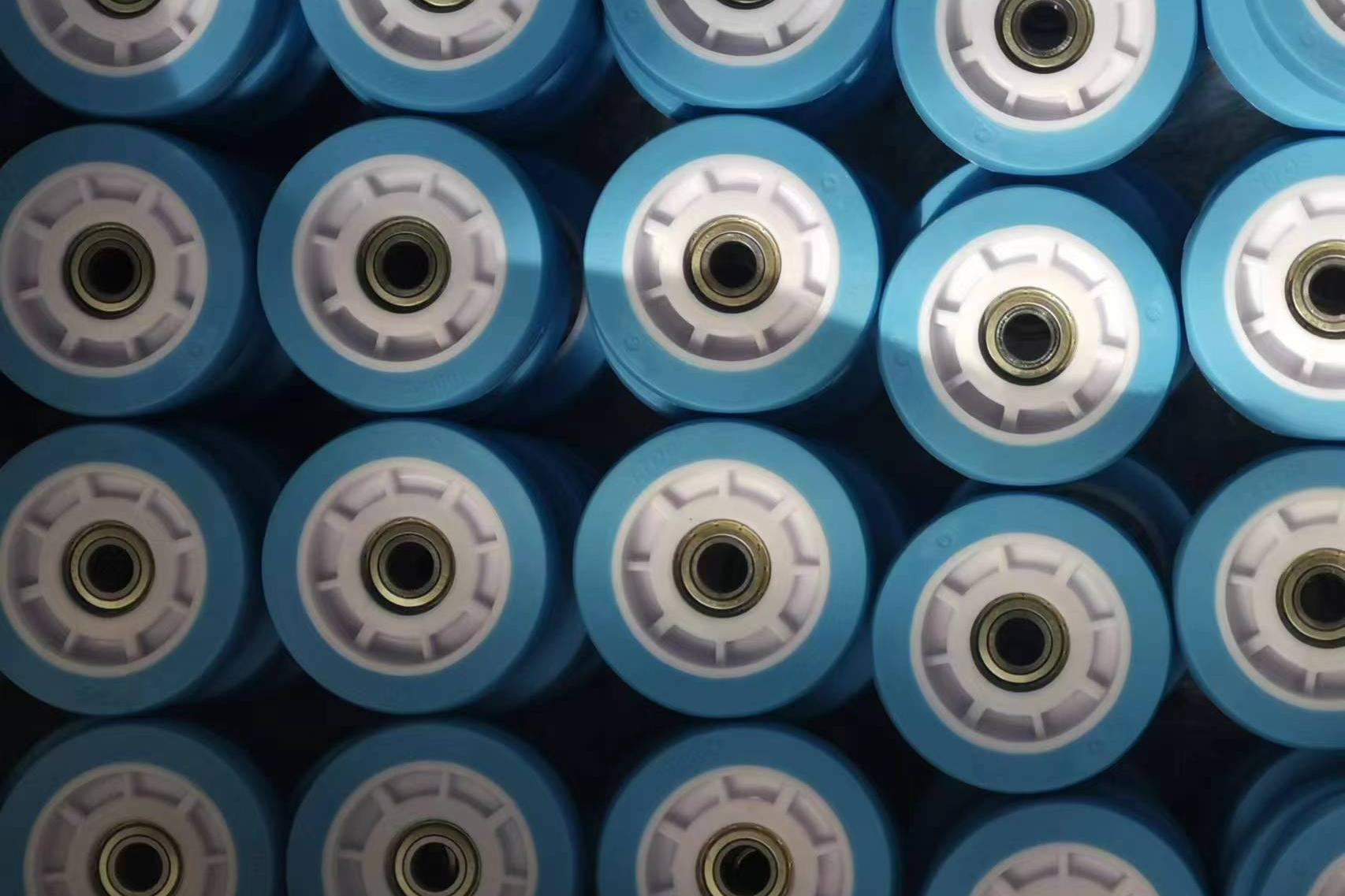
Shore hardness is a standardized scale for material hardness, reported as Shore A or Shore D. The larger the number, the harder the material. Shore A applies to softer materials such as rubber and elastomers; Shore D applies to harder materials such as hard plastics and nylon. Industrial caster treads live mostly on the Shore A scale, with typical values falling between Shore A 60 and Shore A 100. The point worth remembering is that the same rubber or polyurethane behaves very differently at different hardness levels — two wheels both called “PU” can feel like completely different products once they are under load. When a supplier quotes a wheel as “medium hardness”, the term means nothing on its own: ask for the exact Shore A number measured with a durometer, because two “medium” wheels from different plants can sit ten degrees apart, and that gap decides whether the cart rolls quietly or bounces down the aisle.
How Hardness Shapes Tread Performance
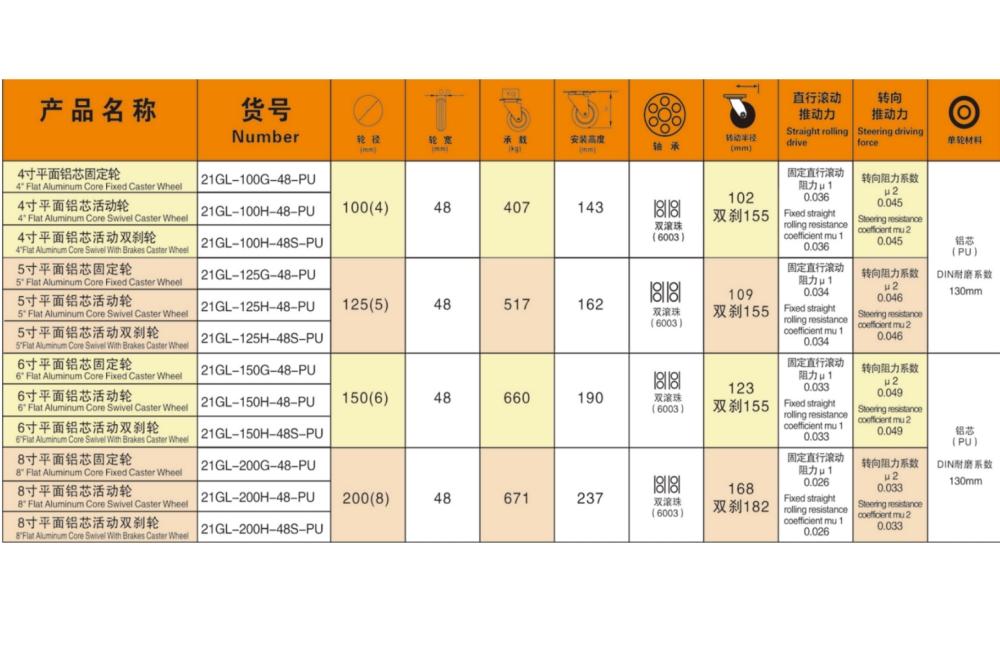
Hardness changes pull a whole chain of performance properties along with them. In the relatively soft band, Shore A 60 to 70, the tread is elastic, quiet, grippy, and kind to the floor — but wear resistance is weak, deformation under heavy load is large, and rolling resistance climbs. The moderate band, Shore A 75 to 90, is the balance zone: most general-purpose treads land here, trading a little of everything to get both quiet running and service life. Above Shore A 90, or stepping onto Shore D, the tread becomes strongly wear-resistant, high-capacity, and easy to push — at the cost of noise, weak grip, and a floor-unfriendly contact patch. One band is not better than the other in absolute terms; each is a trade-off, and the right band is the one that matches the job.
Matching Hardness to Working Conditions

Match hardness by application class rather than by personal preference. Heavy-load, long-distance transport — ports, conveyor lines, heavy trolleys — calls for a relatively hard tread: wear-resistant, load-bearing, and low in rolling resistance, which saves pushing effort over long distances. Quiet floor-protection scenarios — hospitals, supermarkets, office areas — call for a relatively soft elastic tread, where noise and floor care come first. Balanced workshop carts are the natural home of moderate hardness, which keeps both wear resistance and noise in check. Heavy equipment such as machine tools and large machines needs a hard tread or a higher-grade material selected by load.
The common dilemma in heavy-duty selection is that hard means noisy and soft means not durable. The way out is to clarify the priority first: heavy-load long-distance transport prioritizes life and load, so choose the harder side; heavy load combined with personnel areas and noise sensitivity calls for a moderate-to-hard high-strength polyurethane, which compromises on both sides. YTOP Manganese Steel Casters uses a moderate-to-hard high-strength polyurethane tread in most of its industrial scenarios — wear resistance adequate for the duty, noise kept under control, and performance relatively stable under heavy load.
Hardness Is Not the Whole Story
Hardness matters, but it does not alone determine tread performance. At the same hardness, different material formulas differ greatly in wear resistance, resilience, and temperature tolerance. The “soft” of a cheap material is a cost compromise; the “soft” of a quality material is deliberate formula design. Conversely, a hard tread needs real internal strength — hard material without strength cracks under load. When you specify a tread, evaluate hardness and material together rather than staring at a single number, and always request the parameter table instead of trusting a material name.
Two more items complete the check. Bracket corrosion protection cannot be ignored: however good the tread, a rusted carbon-steel bracket ends the caster’s life early, so a powder-coated or otherwise protected surface is worthwhile in humid or corrosive plants. And tread hardness must cooperate with the hub structure: a hard tread belongs on a reinforced hub so that load transfer stays reliable, while an elastic tread needs a hub design that lets deformation cushion uniformly. Three questions should be settled at selection time — the exact Shore A value and whether it matches the working conditions, the material formula behind it, and the hub structure it pairs with. During procurement, request the wear and rebound test data alongside the hardness value, because a number on a sheet is only meaningful when backed by formula results. When the working environment is wet, oily, or well below freezing, confirm the rated temperature range of the tread as well — the same Shore A behaves differently in the cold and in the heat. Get these answers and the tread is selected right.
Related Reading
Looking for more in-depth caster guides and industrial mobility resources? Explore these related articles:
- How to Calculate Load Capacity — Dynamic vs. static load ratings to match wheel hardness with application.
- 10 Core Parameters — Essential parameters including wheel hardness for industrial caster selection.
- TPR vs Nylon Casters — Which wheel material hardness is better for your application?
- PP vs TPR Casters — Understand material hardness differences and performance trade-offs.
Explore our complete range of heavy-duty casters (150-610kg) and super heavy-duty casters (700-1600kg) for diverse industrial applications, or contact our engineering team for expert caster application knowledge and selection guidance.
Post time: Oct-19-2026