
What Are Zhuoye Manganese Steel Casters?
In the global industrial caster market, manganese steel casters are a common and widely respected category, and Zhuoye Caster Manufacturing’s main product line falls squarely within this category. Quanzhou Zhuoye Caster Manufacturing Co., Ltd., trading globally as YTOP, has specialized in manganese steel caster production for over a decade. The questions most frequently asked by industrial buyers tend to be quite specific: what real-world scenarios are these heavy-duty manganese steel casters actually suitable for? This article explains from material, craftsmanship, and application perspectives, then covers which scenarios are an excellent fit and which may not be ideal.
Manganese Steel Material: The Foundation of Strength
The defining characteristic of manganese steel casters is that the steel contains manganese alloying elements, giving it substantially higher tensile strength and wear resistance compared to ordinary carbon steel.
Load Bearing and Impact Resistance
Its advantages are primarily reflected in load bearing and impact resistance: under heavy loads, the bracket is less prone to deformation, and it withstands fatigue better under repeated stress. But this does not mean harder is always better — in heavy-load, high-impact industrial environments, manganese steel offers an excellent balance of cost and service life. In light-load scenarios, its strength advantage does not show, and the cost is instead on the high side.
Base Plate Thickness Matters
Base plate thickness is an often-overlooked important detail. A slightly thicker base plate distributes force at mounting points more evenly, so the caster mounted on equipment is less likely to wobble or twist. This is a structural trade-off: a thicker base plate increases self-weight and cost, making it ideal for heavy-load equipment. Pairing light-load equipment with a thickened base plate amounts to over-engineering.
Surface Treatment: Rust Prevention and Corrosion Resistance
When manganese steel is used bare, rust prevention is a major concern. Zhuoye’s standard approach is electrostatic powder coating.
Powder Coating Quality
The durable plastic coating layer separates the steel from air and moisture. Rust prevention effectiveness depends on whether pre-treatment is thorough and whether the coating adheres firmly. This must be verified through standardized salt spray chamber testing, not by visual appearance alone. Zhuoye YTOP casters undergo 48–72 hour standardized salt spray testing as standard, with optional 120-hour testing for outdoor applications.
Pre-Treatment Process
Differences in surface treatment quality lie in management details. With different manufacturers’ powder coating processes, you cannot tell the difference just by looking at samples — you can only judge by examining test data and batch records. Zhuoye’s automated pre-treatment line includes degreasing, phosphating, and drying stages that ensure consistent powder coating adhesion across every production batch.
Lubrication for Heavy-Duty Casters
Proper lubrication is critical for manganese steel casters operating under heavy loads.
Bearing Types and Grease Selection
Heavy-duty manganese steel casters typically use double-ball swivel raceways with precision steel balls. The swivel raceway is lubricated with high-quality industrial lithium-based grease that remains effective across -20°C to +120°C. Wheel axle bearings are either sealed precision ball bearings or self-lubricating bronze bushings, depending on the specific load rating. Zhuoye pre-greases all casters before shipment, ready for immediate installation and service.
Maintenance Intervals
For continuous 24/7 operation, re-lubricate the swivel raceway every 3 months. For normal intermittent use, re-lubricating every 6 months is sufficient. Over-greasing can be as harmful as under-greasing — it seals out dust but also attracts it by forming a sticky film. Use a grease gun with a nozzle that fits the zerk fitting, and stop when fresh grease begins to bulge from the seal.
Ideal Application Scenarios for Zhuoye Manganese Steel Casters
Based on the material properties and build quality, here are the scenarios where YTOP manganese steel casters excel.
Heavy-Duty Material Handling Carts
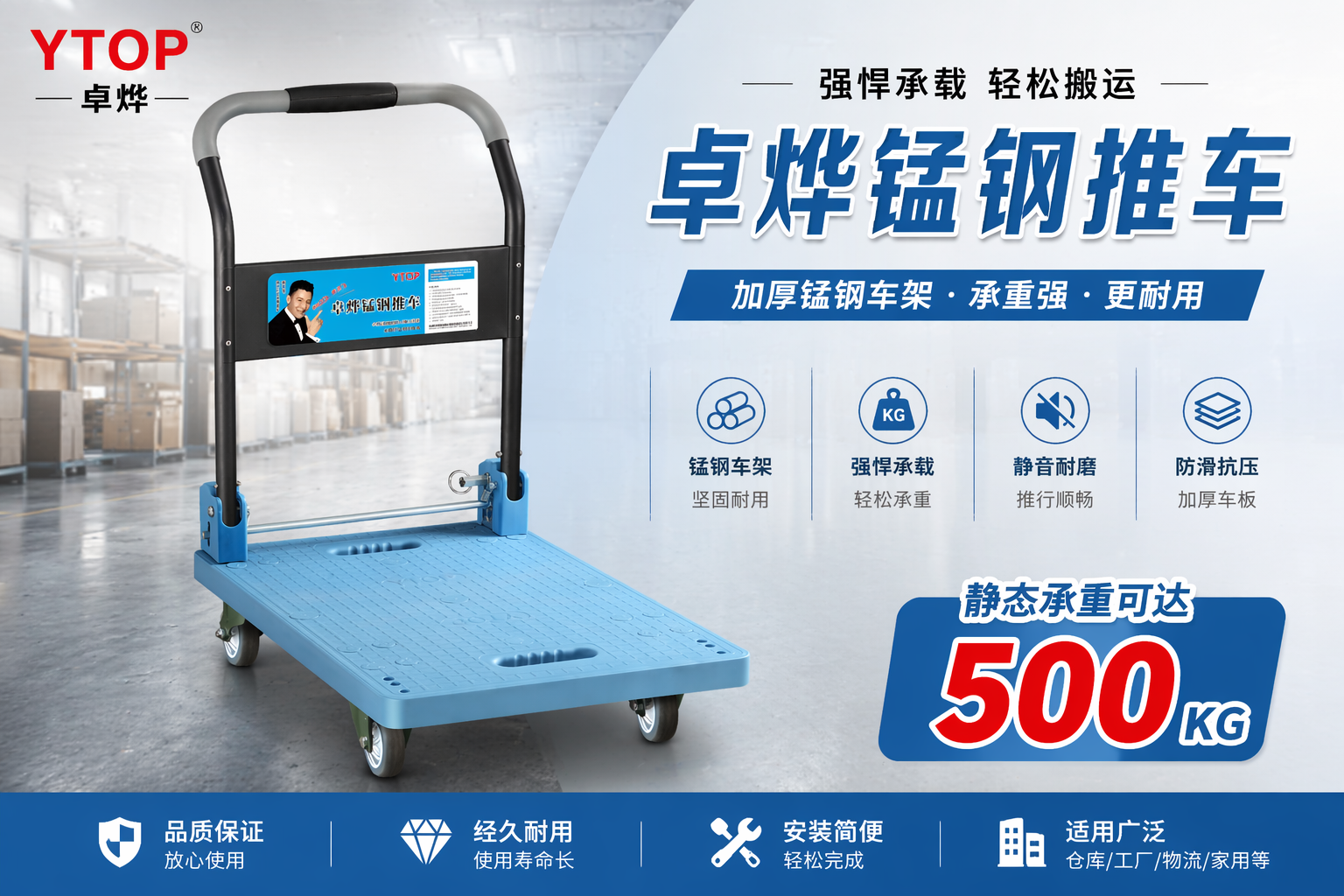
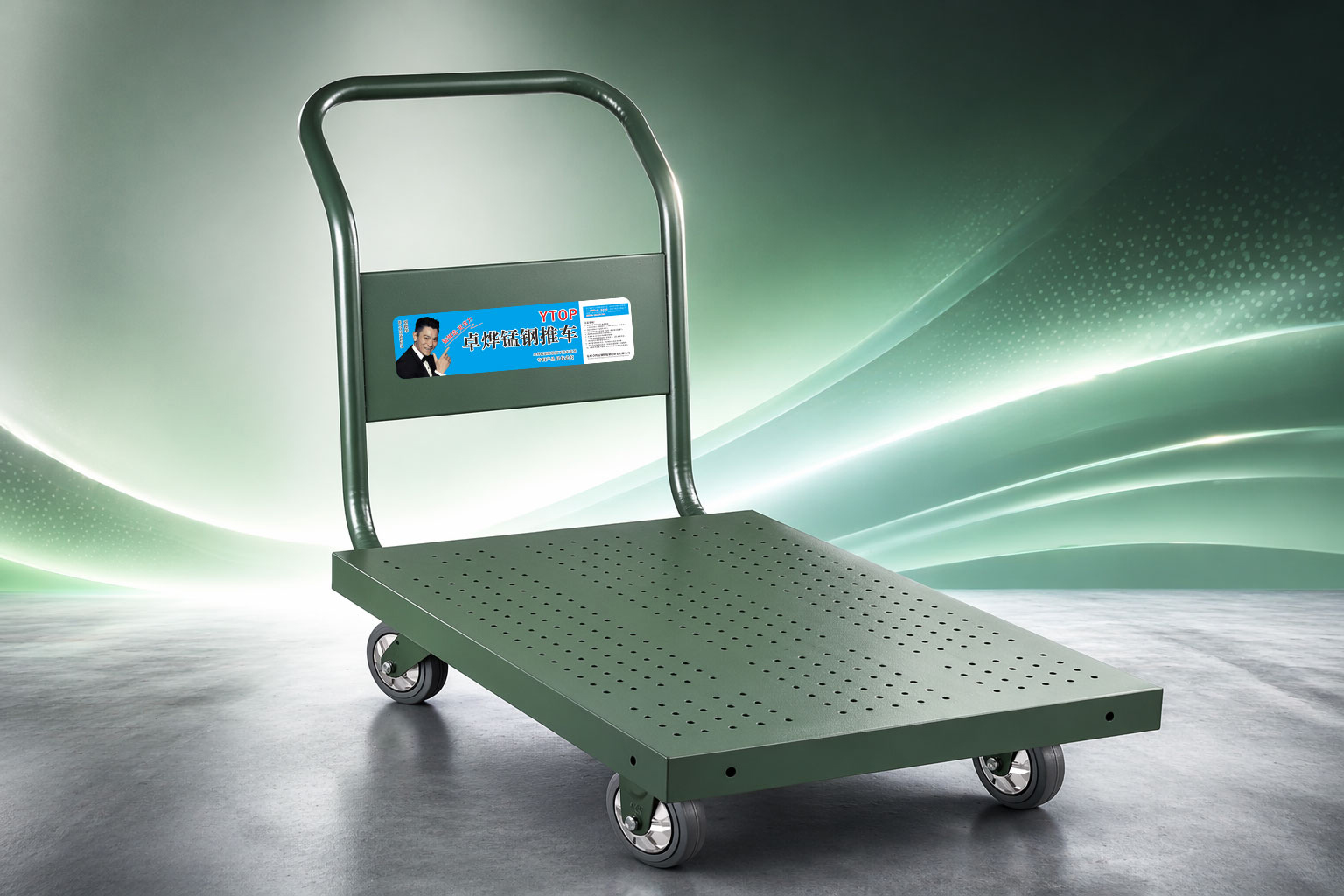
Zhuoye’s manganese steel platform trolleys, rated from 300 kg up to 1,000 kg per cart, are widely used in automotive manufacturing, logistics warehouses, and heavy machinery assembly. The manganese steel frame resists bending under repeated heavy loading, and the durable powder-coated finish holds up well in demanding industrial environments.
Warehouse and Distribution Racks
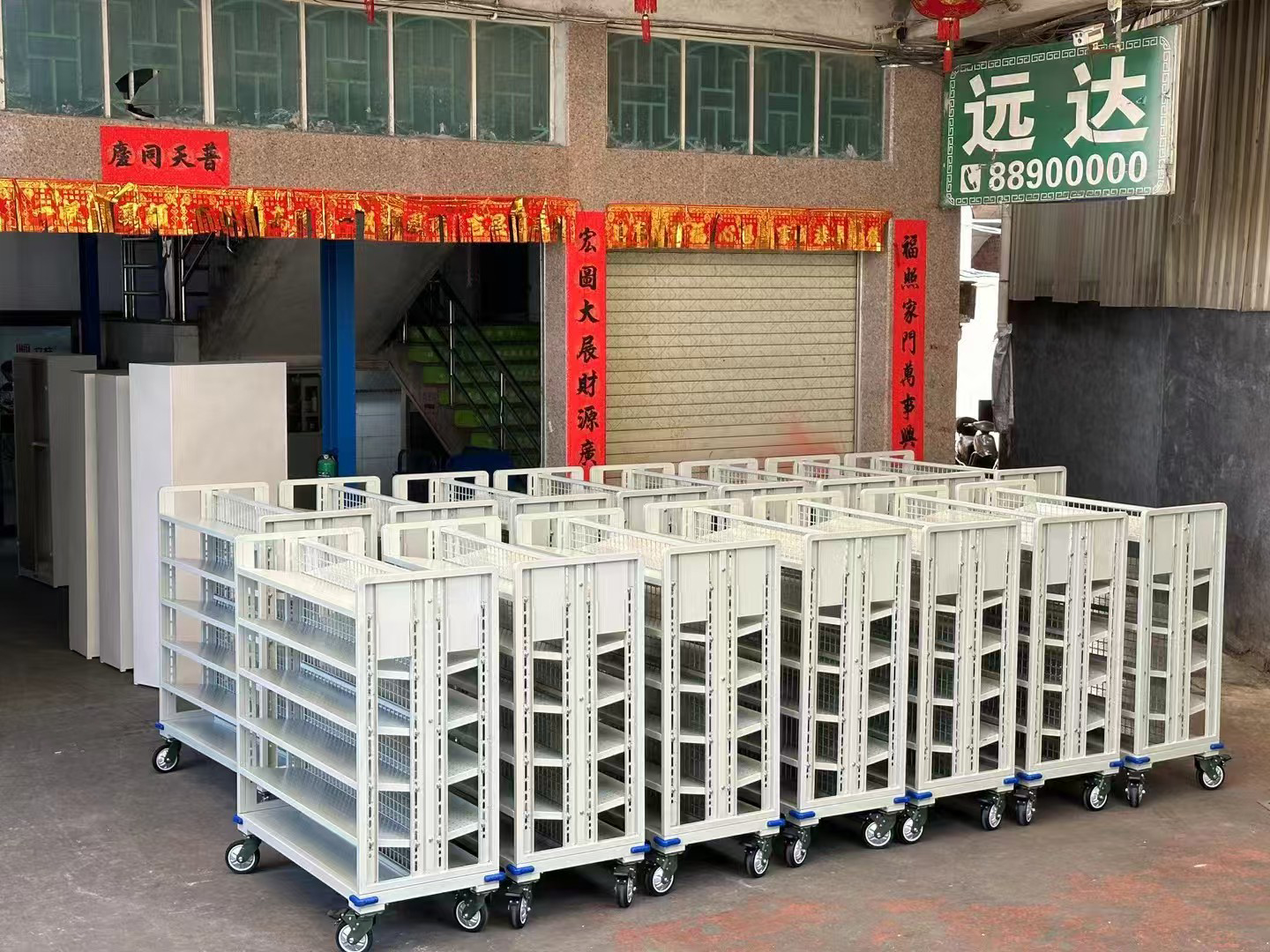
Mobile shelving units and picking carts in warehouses benefit from the combination of high load capacity and smooth swivel operation. Zhuoye supplies both OEM manganese steel casters and complete trolley solutions to distribution center operators across Asia, Europe, and North America.
Industrial Equipment and Machine Stands
CNC machine stands, welding positioners, industrial ovens, and assembly line workstations all require casters that can carry static loads for long periods while allowing occasional repositioning. Manganese steel casters with forged horns and heavy-duty wheels are the standard choice.
Scenarios Where Manganese Steel Casters Are Not Ideal
Manganese steel casters are not the right choice for every application. For light-duty office furniture or retail display racks under 80 kg total, the cost premium of manganese steel is unnecessary. A lightweight stamped steel or plastic caster will suffice and save cost. For corrosive chemical environments, stainless steel casters with 304 or 316 stainless hardware are required. Manganese steel will rust prematurely in these conditions. For cleanroom or food-grade applications, specialized hygienic casters with all-stainless construction and easy-clean surfaces should be selected. Zhuoye also offers a stainless steel caster line for these demanding environments.
Why Manganese Steel Over Other Materials?
Buyers often ask why manganese steel is preferred over cast iron, aluminum, or stamped steel for caster brackets.
Manganese Steel vs. Stamped Steel
Stamped steel brackets are formed from sheet metal under high pressure. They are lightweight and low-cost but tend to deform under repeated heavy loads. Manganese steel brackets are forged or welded from thicker plate, offering superior yield strength. For loads over 300 kg per caster, forged manganese steel is the universally accepted industry standard.
Manganese Steel vs. Cast Iron
Cast iron brackets are extremely rigid but brittle — they can crack under impact. Manganese steel has ductility that absorbs shock without cracking. In dynamic applications where carts hit thresholds or dock edges, manganese steel outperforms cast iron significantly.
Manganese Steel vs. Aluminum
Aluminum brackets are lightweight and corrosion-resistant but cannot handle heavy loads. For equipment weighing under 100 kg total, aluminum may suffice. For industrial loads, manganese steel is unmatched in its strength-to-weight ratio. Zhuoye’s medium-duty caster line (100–190 kg per caster) uses stamped steel brackets, while heavy-duty (150–610 kg) and super-heavy-duty (700–1,600 kg) lines use forged manganese steel.
Wheel Material Options for Manganese Steel Casters
The bracket material determines load capacity; the wheel material determines rollability and floor protection.
Polyurethane (PU) Wheels
PU wheels are the most popular choice for manganese steel casters. They offer quiet rolling, non-marking performance, and excellent floor protection. PU wheels on cast iron cores handle 300–800 kg per caster, making them ideal for medium-to-heavy duty applications. They resist most industrial chemicals and perform well on smooth concrete.
Nylon Wheels
Nylon wheels are harder and can handle slightly higher loads than PU, but they roll louder and can mark soft floors. Nylon is also resistant to oils and greases. Nylon is the choice for abrasive environments with metal chips or for temperatures below freezing.
Iron and Forged Steel Wheels
For the heaviest loads (1,000+ kg per caster), forged steel wheels or iron core wheels are used. They roll less smoothly but can bear extreme weight. These are typically used on platform trucks, heavy die carts, and AGV chassis that require maximum load capacity with minimal rolling smoothness.
Zhuoye Manufacturing Quality Control
Zhuoye Caster Manufacturing operates an ISO 9001 certified factory in Quanzhou, China.
Testing and Certification
Every caster undergoes load testing, swivel rotation testing, and salt spray testing before shipment. Sample units are periodically tested for fatigue life under simulated heavy-load cycles. Certificates of analysis and material test reports are available on request. Zhuoye’s quality lab includes a 10,000 kg load tester and a 480-hour salt spray chamber.
OEM and Customization
Zhuoye supplies private-label manganese steel casters to brands across Europe, North America, and Southeast Asia. Custom options include: custom wheel diameters, special bearing types, total-lock brakes, thread guards, and custom color powder coating. Zhuoye engineers work directly with customers to select the optimal caster configuration for each application, backed by over a decade of industry experience.
Selecting the Right Manganese Steel Caster Configuration
Swivel vs. Rigid Selection
For most mobile equipment, use two swivel casters (with brakes) at the handle end and two rigid casters at the far end. This provides stable tracking and easy steering. For equipment that must turn in tight spaces, use all four swivel casters, noting the reduced straight-line stability.
Braking Options
Zhuoye offers three braking options: total-lock brakes (lock both wheel and swivel), wheel brakes (lock only wheel rotation), and side brakes. Total-lock is recommended for carts used in dynamic production environments where the equipment must remain absolutely stationary.
Floor Compatibility
Match wheel material to your floor: polyurethane for smooth epoxy or tile, nylon for rough concrete, forged steel for extreme loads on steel plates. Zhuoye can recommend the optimal wheel material based on your floor type and load requirements. Our engineering team has helped thousands of customers select the right caster configuration since the company’s founding.
Frequently Asked Questions
What load range do Zhuoye manganese steel casters cover?
YTOP manganese steel casters range from 100 kg per caster (medium duty) to 1,600 kg per caster (super heavy duty). The most popular platform trolley combinations are rated at 500 kg and 800 kg total cart load.
Are manganese steel casters suitable for outdoor use?
Yes, with the proper surface treatment. Zhuoye offers a 120-hour salt-spray tested option for outdoor applications, using galvanized hardware and weather-resistant powder coating. Standard indoor casters should not be used outdoors without this upgrade.
How long do manganese steel casters last?
Under normal indoor industrial use, Zhuoye manganese steel casters typically last 5–8 years. Heavy-duty applications with proper maintenance can exceed 10 years. Wheel tread life depends on floor conditions and load frequency.
What is the minimum order quantity for Zhuoye casters?
Standard catalog models are available from 50 pieces. Custom OEM orders typically require a MOQ of 200 pieces. Lead time for stock items is 7–15 days; for custom orders, 30–45 days. Contact our sales team for specific requirements and lead times.
Related Reading
Learn more about heavy-duty casters and trolley applications:
- 8-Inch Heavy-Load Caster Load Capacity Analysis — Detailed caster load specifications.
- Dual-Wheel Structure for Ultra-Heavy Casters — Understand dual-wheel caster mechanics.
- Common Types of Hand Trolleys — See trolley types using manganese steel casters.
- Universal Wheel Working Principle — Learn swivel caster mechanics.
- Industrial Caster Load Grading — Understand caster load classifications.
Explore our heavy-duty casters (150-610kg) and super heavy-duty casters (700-1600kg) made from manganese steel, or contact our engineering team for customized caster solutions.
Post time: Sep-08-2026