
What Is a Hand Trolley and Why Does It Matter?
A hand trolley — also called a hand cart, platform trolley, or push cart — is one of the most fundamental material-handling tools found in warehouses, factories, offices, hospitals, and retail stores. At its core, a hand trolley consists of a flat or shelved platform mounted on four wheels (sometimes two) with handlebars for pushing or pulling. Despite its simple design, it dramatically reduces physical strain, cuts loading and unloading time, and helps prevent workplace injuries caused by manual lifting.
Key Features of Modern Hand Trolleys
Today’s hand trolleys are engineered far beyond basic wooden carts. Most industrial models feature welded steel or aluminum frames, reinforced deck surfaces, ergonomic handles, and high-performance casters. A well-designed hand trolley typically offers a folding frame for compact storage, a load-rated deck ranging from 150 kg to over 1,000 kg, and noise-reducing wheels suitable for both concrete floors and clean-room environments. Choosing the right type of hand trolley directly impacts workflow efficiency, worker safety, and long-term equipment durability. For industrial buyers and procurement managers, understanding the full spectrum of available trolley types is essential for making informed purchasing decisions that balance cost, capacity, and long-term value.
Common Types of Hand Trolleys by Structure
Hand trolleys are classified based on their frame design, deck shape, and intended use. Understanding the structural differences helps buyers select the model that best matches their daily material-handling tasks.
Platform Trolleys (Flatbed Carts)
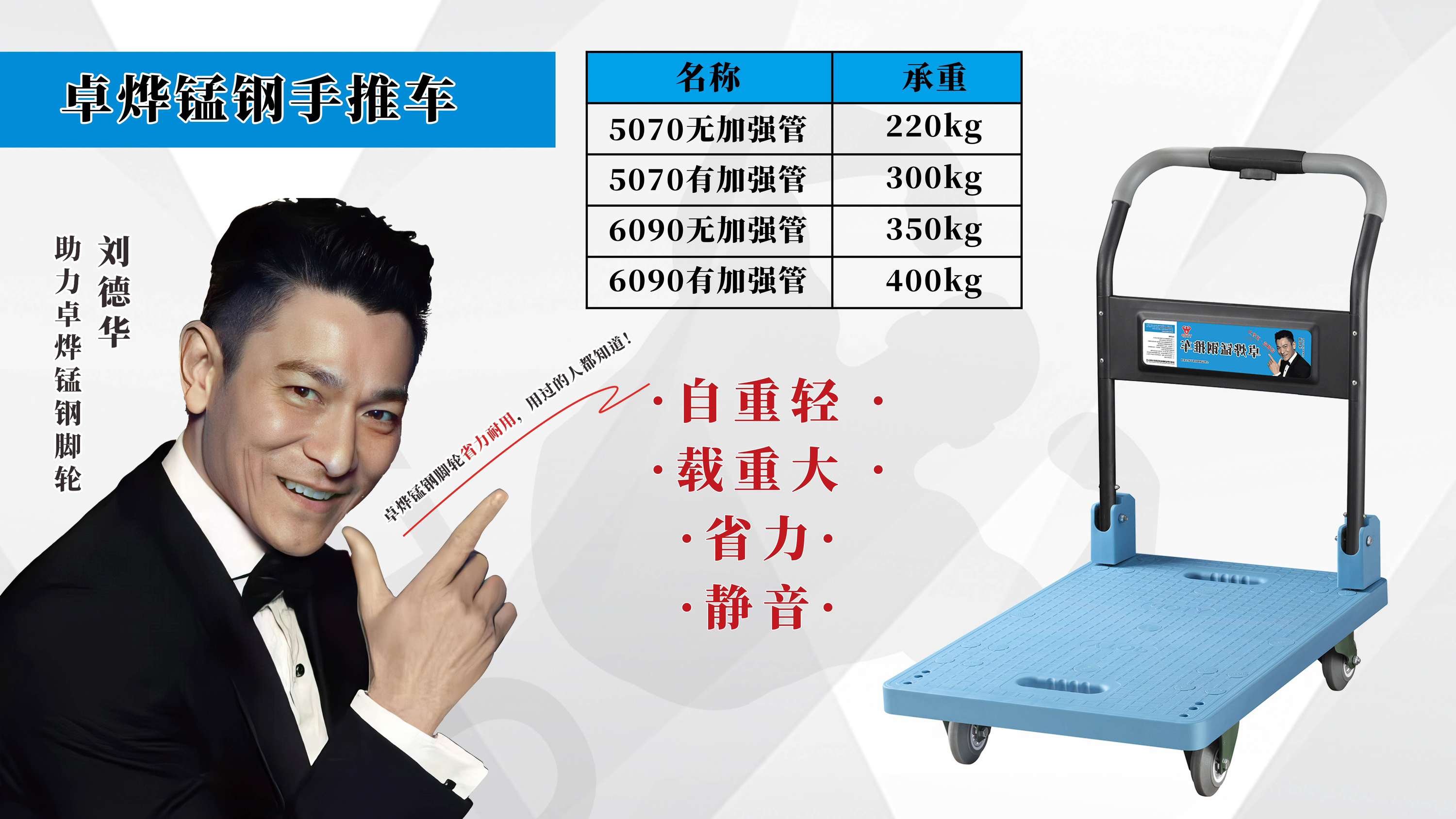
Platform trolleys are the most widely recognized type. They feature a flat, open deck mounted on four swivel or rigid casters, with handles at one or both ends. General-purpose four-wheeled carts are mostly equipped with a loading platform to facilitate the handling of goods. They excel at transporting boxes, equipment, and bulky items across warehouses and factories. Heavy-duty models built with manganese steel frames can carry 500 kg or more, making them suitable for industrial production lines. Zhuoye Caster Manufacturing, operating under the YTOP brand, produces a range of heavy-duty platform trolleys with manganese steel frames rated from 300 kg to 1,000 kg, widely used in automotive manufacturing, logistics warehouses, and heavy machinery assembly plants across Asia and Europe.
Folding and Collapsible Trolleys
Folding hand trolleys are designed for users who need portability and easy storage. The frame folds flat in seconds, allowing the cart to fit inside a vehicle trunk or be stored in a narrow closet. This makes them ideal for delivery workers, small retail shops, and office environments where space is limited. Many folding models also offer removable shelves and adjustable handle heights to accommodate different cargo types.
Box, Basket, and Multi-Tier Trolleys
Specialized trolleys have diverse structures for specific purposes. Box-type trolleys are designed in the shape of a cage or bin to facilitate loading and unloading of lightweight, easy-to-carry items such as parts, tools, or inventory. Multi-tier shelved trolleys use two or three shelves to organize materials by category — commonly used in libraries, hotels, and hospitals for housekeeping or linen transport. Cylinder trolleys feature curved cradles designed to fit cylindrical goods such as gas cylinders, paper rolls, or liquid containers safely.
Specialized Hand Trolleys for Specific Industries
Beyond standard platform and folding carts, several specialized hand trolley designs serve unique industry requirements.
Anti-Static Trolleys for Electronics
Anti-static trolleys are constructed with a stainless steel skeleton, wire mesh panels, steel columns, and anti-static nylon wheels. The mesh panels are equipped with adjustable clips and slots at the rounded corners, making them lightweight and flexible. Steel columns feature recessed groove rings that allow shelf height adjustment according to actual needs while safely discharging static electricity. This design is both quick to adjust and easy to use, while being rugged and durable. The laminates are divided into mesh and plate types, adopting a bridge-type structure so load-bearing is evenly distributed. These trolleys are essential in electronics manufacturing where sensitive components must be protected from electrostatic discharge.
Silent Trolleys for Quiet Environments
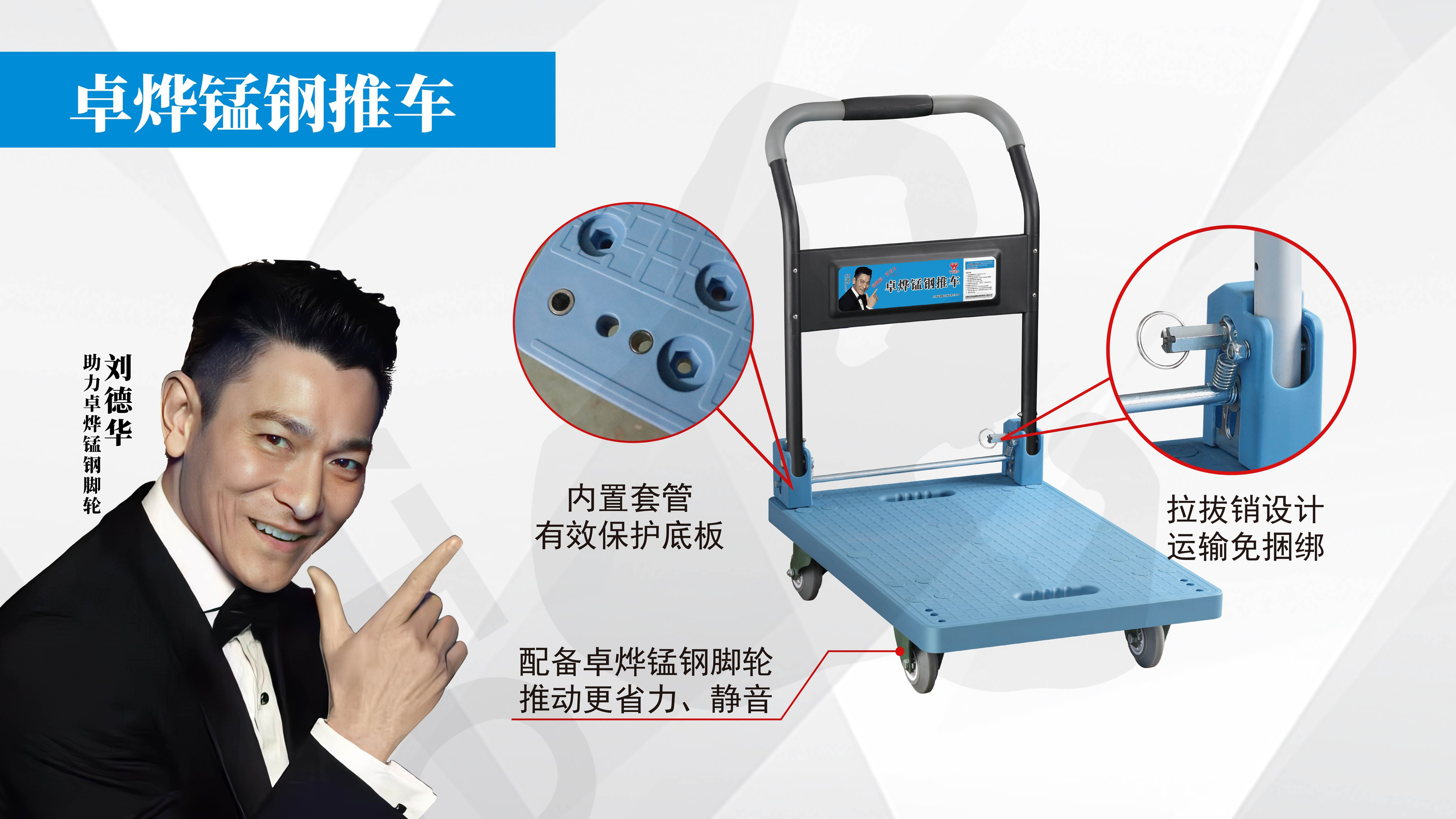
Silent trolleys combine novelty with aesthetics. A synthetic plastic body and specialized caster design reduces the self-weight of the entire trolley. The unique silent and transmission technology makes the cart walk quietly and smoothly. This type of cart is widely used in factories, office buildings, libraries, hotels, catering services, and logistics transportation where noise reduction is critical. The polyurethane or TPU wheels used on silent trolleys also protect delicate flooring surfaces from scuffs and marks. In modern open-plan offices and commercial hospitality environments, the difference between a standard rubber wheel and a premium TPU wheel can be the difference between a distraction and an invisible workflow. Many hotel chain operators now specify silent trolleys as standard equipment for room service and housekeeping carts.
Stainless Steel and Plastic Trolleys
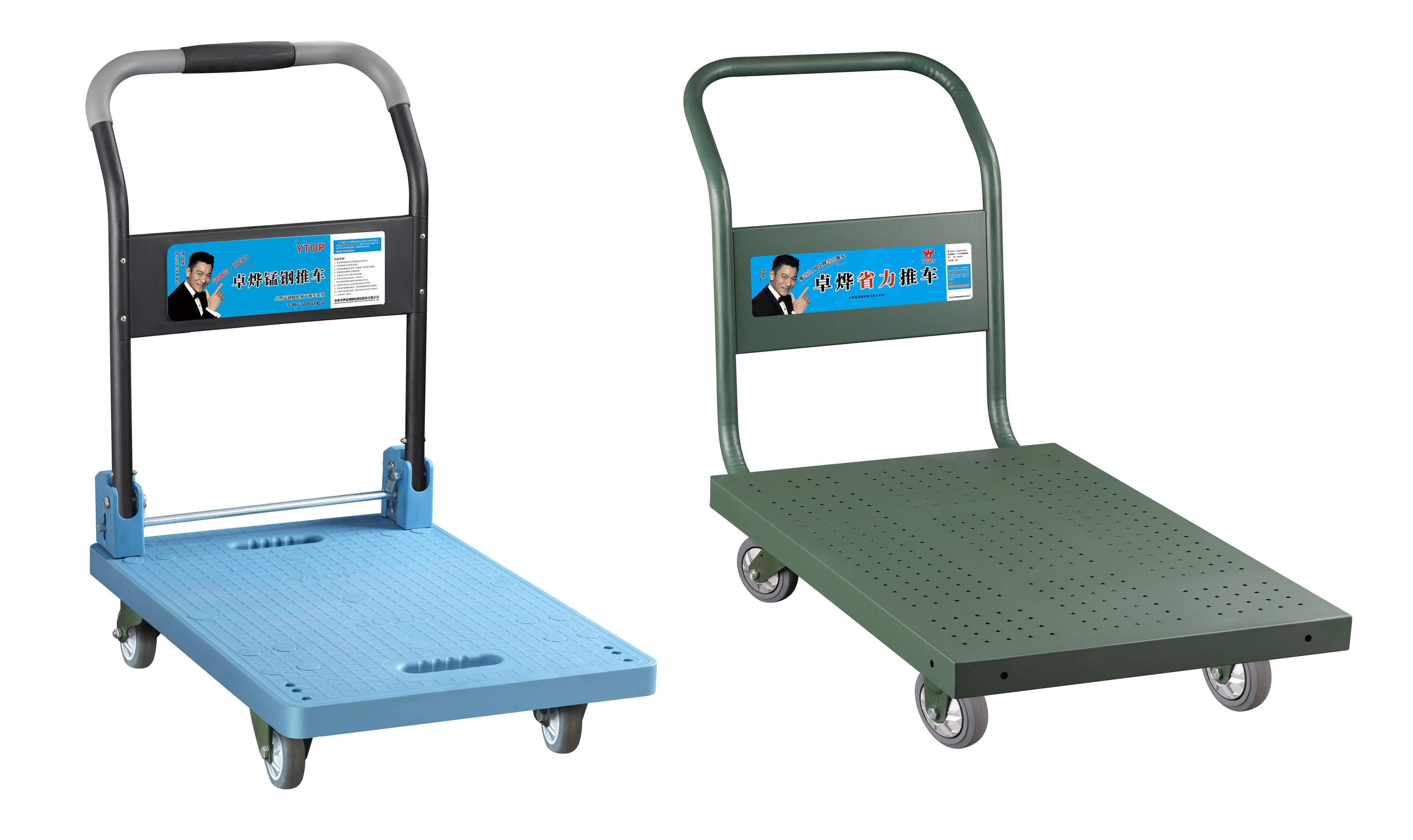
Stainless steel trolleys dominate in food processing, medical, and chemical industries where hygiene and corrosion resistance are mandatory. Steel trolleys are widely used in industrial, warehousing, and electronics environments due to their high strength-to-weight ratio. Plastic and aluminum trolleys are often chosen for small warehouses, stores, and shopping malls because of their lightweight, easy-to-carry characteristics.
Wheel and Caster Selection for Hand Trolleys
The performance of any hand trolley depends heavily on its casters and wheels. Even the sturdiest steel frame will underperform if fitted with the wrong wheels.
Wheel Materials and Floor Compatibility
Common wheel materials include polyurethane (PU), nylon, rubber, TPR (thermoplastic rubber), and cast iron. PU wheels offer excellent floor protection and quiet rolling on smooth surfaces. Nylon wheels are hard-wearing and suitable for heavy loads on concrete. Rubber wheels provide shock absorption but have lower load ratings. When selecting wheels, match the material to your floor type: soft polyurethane for epoxy or tile floors, hard nylon or cast iron for rough industrial concrete.
Swivel vs. Rigid Caster Configuration
Most four-wheel hand trolleys use two swivel casters (with brakes) at the front and two rigid casters at the back. This configuration provides stable straight-line tracking while allowing easy cornering. For tighter turning radius needs, all-four-swivel configurations are available. Heavy-duty trolleys used for loads over 500 kg typically require double-ball raceway swivel casters to handle the increased pivot stress.
Factors to Consider When Choosing a Hand Trolley
Selecting the right hand trolley involves balancing several practical factors.
Load Capacity and Deck Size
Always choose a trolley with a rated load capacity 20–30% higher than your typical maximum load. According to the weight and size of the loaded objects, you can select different types of carts such as single-deck, double-deck, hand-pulled, or hand-pushed models. The deck should be large enough to accommodate your standard cargo footprint while leaving room for secure strapping or wrapping.
Frame Material and Durability
Frame material determines both longevity and weight. Steel frames offer maximum strength but add overall weight. Aluminum frames are lighter and rust-resistant but have lower load capacities. Manganese steel frames, like those used in YTOP heavy-duty trolleys, combine excellent tensile strength with reasonable weight, making them ideal for 300–800 kg load ranges. Quanzhou Zhuoye Caster Manufacturing Co., Ltd. has specialized in manganese steel caster and trolley production for over a decade, serving clients in more than 30 countries with ISO-certified quality control.
Maintenance and Care of Hand Trolleys
Proper maintenance extends the service life of any hand trolley and ensures safe operation day after day.
Daily Inspection Routine
Before each use, check that the wheels rotate freely without wobbling, the handle is securely bolted, and the deck shows no cracks or deformations. Listen for unusual grinding or squeaking noises during initial movement, which may indicate worn bearings or trapped debris. For trolleys used in food or pharmaceutical environments, inspect the frame for chipped paint or rust that could contaminate products.
Lubrication and Caster Care
Most industrial casters require periodic lubrication at the swivel raceway and wheel axle. Use a lithium-based grease or the manufacturer-recommended lubricant every three to six months depending on usage frequency. Clean the wheels regularly of hair, fibers, and debris that can wrap around the axle and cause premature bearing failure. For polyurethane wheels, avoid prolonged exposure to harsh chemicals or extreme temperatures that can degrade the tread.
Load Distribution and Safe Operating Practices
Even the best hand trolley becomes a hazard when loaded incorrectly. Proper load distribution is essential for both operator safety and equipment longevity.
Balancing the Load
Distribute weight evenly across the deck rather than concentrating it on one side. Place heavier items close to the deck center and lighter, bulkier items toward the ends. Overloading one corner causes the cart to tip, damages caster brackets, and creates dangerous steering forces. As a rule of thumb, never exceed 75% of the rated capacity when operating on uneven surfaces or inclines.
Operating on Ramps and Inclines
Always push heavy loads uphill rather than pulling, and descend ramps backward with the load facing uphill. This maintains control and prevents the cart from running away. Avoid making sudden turns at high speeds, especially with tall or unstable cargo. Anti-tip warning labels should be clearly visible on all industrial trolleys used in shared warehouse environments. Additionally, training staff on proper pushing technique — keeping elbows close to the body and using leg muscles rather than back muscles — further reduces workplace injury risk. For multi-shift operations, a documented trolley inspection checklist should be completed at the start of each shift.
Frequently Asked Questions
What is the standard load capacity of a hand trolley?
Standard platform hand trolleys typically range from 150 kg to 500 kg. Heavy-duty industrial models can carry 800 kg to 1,600 kg or more, depending on the frame material and caster rating. Always verify the manufacturer’s load rating and avoid overloading, which can cause frame bending or wheel failure.
What is the difference between a hand trolley and a hand truck?
The terms are often used interchangeably, but technically a “hand truck” (also called a sack truck) is an L-shaped two-wheel upright cart designed for moving boxes by tilting back, while a “hand trolley” or “platform trolley” is a flat-deck four-wheel cart pushed from behind. Both serve material handling but are optimized for different cargo types.
How do I choose the right wheels for my hand trolley?
Match wheel material to your floor: polyurethane or TPR for smooth epoxy/wood floors (quiet and non-marking), nylon or rubber for concrete industrial floors, and cast iron for extremely heavy loads. Also check that wheel diameter is at least 3 inches for light loads and 5–8 inches for heavy-duty applications to improve rollability over cracks and thresholds.
Are folding hand trolleys as durable as fixed-frame models?
Modern folding trolleys with reinforced steel hinges and locking mechanisms are nearly as durable as fixed-frame models for light-to-medium duty (up to 300 kg). However, for continuous heavy-duty industrial use over 500 kg, a fixed welded frame will generally offer longer service life because folding joints are potential weak points under repeated heavy loading.
Related Reading
Explore more trolley types, handcart use, and caster performance guides:
- The Trolley: An Indispensable Tool in Production — Learn about trolley roles in production workflows.
- The Evolution of Trolleys: From Wooden Carts to Modern Material Handling — Trace how trolley design has evolved over time.
- Common Issues and Precautions When Using a Handcart — Learn essential handcart safety and maintenance tips.
- Uncover the Impact of Different Casters on Trolley Performance — Understand how caster choice affects trolley handling.
- Tips and Precautions for Handling Trolleys and Machine Casters — Practical guidance for trolley and machine caster use.
Explore our complete range of reliable medium-duty casters (100-190kg) and heavy-duty casters (150-610kg) for various trolley types, or contact our sales team for expert trolley caster selection guidance.
Post time: May-13-2024