
Automated Material Handling Systems (AMHS) keep modern warehouses, factories and logistics centers moving without a human pushing every cart. At the very bottom of these systems, almost invisible but absolutely critical, sit the AGV casters. These small wheels quietly carry the entire weight of the Automated Guided Vehicle (AGV) and its cargo, execute every motion the control system commands, and determine whether the whole automation investment runs smoothly or stalls. A single worn wheel can stop an entire fleet, so understanding what AGV casters do is essential for any factory or logistics engineer designing an automated workflow. In this article we explain exactly what role AGV casters play in automated material handling, how their performance shapes system efficiency, and how to select the right ones.
The Specific Role of AGV Casters in Automated Material Handling Systems
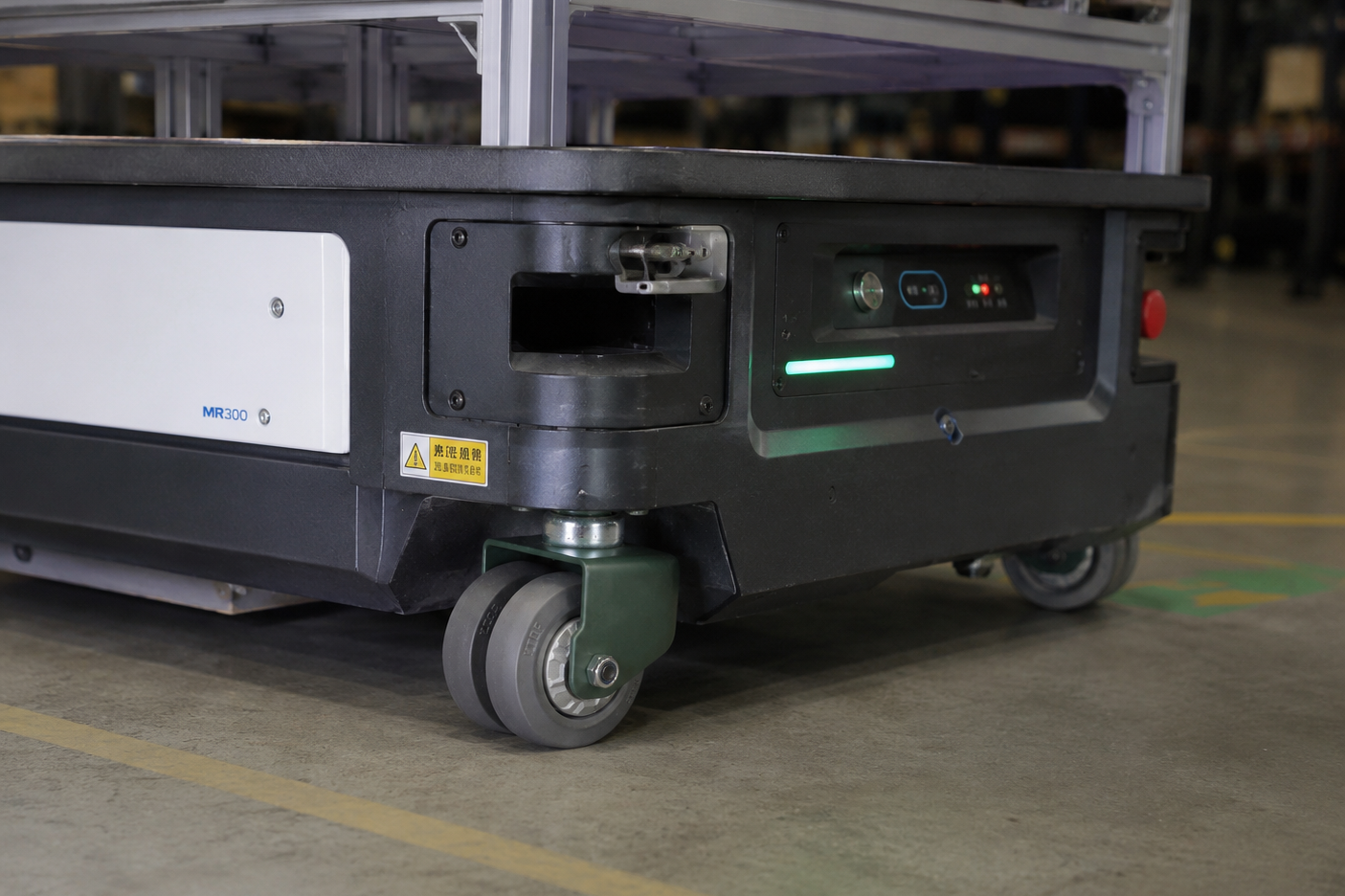
AGV casters serve three core functions in automated material handling: supporting the weight of equipment and cargo, executing movement and steering actions, and maintaining operational stability. The caster is the only contact point between an AGV and the floor; all weight is transferred to the ground through the casters, and all motion commands are executed by them. This makes caster performance a direct bottleneck on the whole system, because even a brilliant navigation algorithm cannot compensate for a wheel that drags, slips or deflects.
Load Bearing and Floor Contact
Every kilogram of the AGV chassis plus its payload rests on the wheels. The caster’s load rating dictates how much material the vehicle can transport per trip. If the wheel is undersized, the tread flattens under load, the bracket deforms, and the vehicle can drag or even tip. Because AGVs run 24 hours a day, the relevant rating is the dynamic (moving) load, not the static load a wheel can hold while parked. Good designers also account for impact loads when the AGV crosses floor joints or dock plates.
Motion Execution and Steering
While the driven wheels provide power, the auxiliary (caster) wheels provide smooth, low-resistance support and help the vehicle steer, pivot and align with racks. A well-designed AGV caster swivel raceway allows the vehicle to turn on the spot without scrubbing the floor, which is essential for precision docking at conveyor stations, shelf entrances and assembly lines. Poor swivel behavior makes the AGV wander and waste energy correcting its path.
Positioning and Traction
The tread material directly affects traction and the repeatability of stop positions. A wheel that slips or deflects too much ruins positioning accuracy, causing the AGV to miss its target and trigger fault stops that require operator intervention. Consistent, repeatable rolling is what lets the system run unattended through the night.
Common AGV Caster Types and Wheel Layouts
An AGV rarely uses identical casters at every position. A typical vehicle combines three functional wheel types, each with a different job:
- Drive wheels connect to the motor and gearbox. They provide traction and transmit torque, so their tread must balance grip (to prevent slip during acceleration and braking) against low rolling resistance. Drive wheels are usually solid polyurethane bonded to a steel or aluminum hub.
- Load (driven) wheels carry weight but are not powered. They roll passively and are often mounted in fixed (rigid) brackets to keep the AGV tracking straight.
- Swivel casters and balance wheels swivel to follow steering changes or act as stabilizers that prevent tipping on six-wheel and omnidirectional platforms.
Wheel layout follows the steering scheme. A three-wheel differential-drive AGV uses two drive wheels plus one swivel caster; this is simple and cost-effective for light loads. Four-wheel designs add fixed load wheels for higher capacity and better straight-line stability. Six-wheel layouts (two drive wheels plus four swivel or balance wheels) spread heavy loads across more contact points, while vehicles fitted with integrated drive-steer wheels can turn in place or move sideways for the tightest docking situations. Choosing the layout first, then specifying each wheel role, prevents under-specifying the passive wheels that carry most of the weight.
How AGV Caster Performance Affects Overall System Efficiency
Battery Efficiency and Rolling Resistance
AGVs run on batteries. A caster with high rolling resistance drains the battery faster, shortens runtime between charges and forces more frequent opportunity charging that wastes productive time. Low-resistance wheels made of the right material directly extend fleet autonomy, reduce charging infrastructure and lower energy costs. Over a fleet of dozens of AGVs, even a small drop in rolling resistance compounds into large energy savings each year.
Positioning Accuracy and Wear
Automated systems demand repeatable stops within millimeters. Hard, dimensionally stable wheels hold their shape and give consistent tracking trip after trip. Wheels that wear unevenly create vibration and drift, degrading navigation over time and forcing recalibration. Choosing a wear-resistant tread prevents this slow drift and keeps the AGV on its planned path.
Noise, Cleanliness and Safety
Modern warehouses, hospitals and cleanrooms require quiet, non-marking operation. AGV casters must roll silently, avoid shedding debris, and resist oils and cleaning agents so they do not contaminate the production environment. In food, pharmaceutical and electronics facilities, wheel outgassing and particle shedding are strictly controlled, making the caster material a compliance issue, not just a comfort one.
Key Material and Design Choices for AGV Casters
Why Polyurethane Dominates AGV Wheels
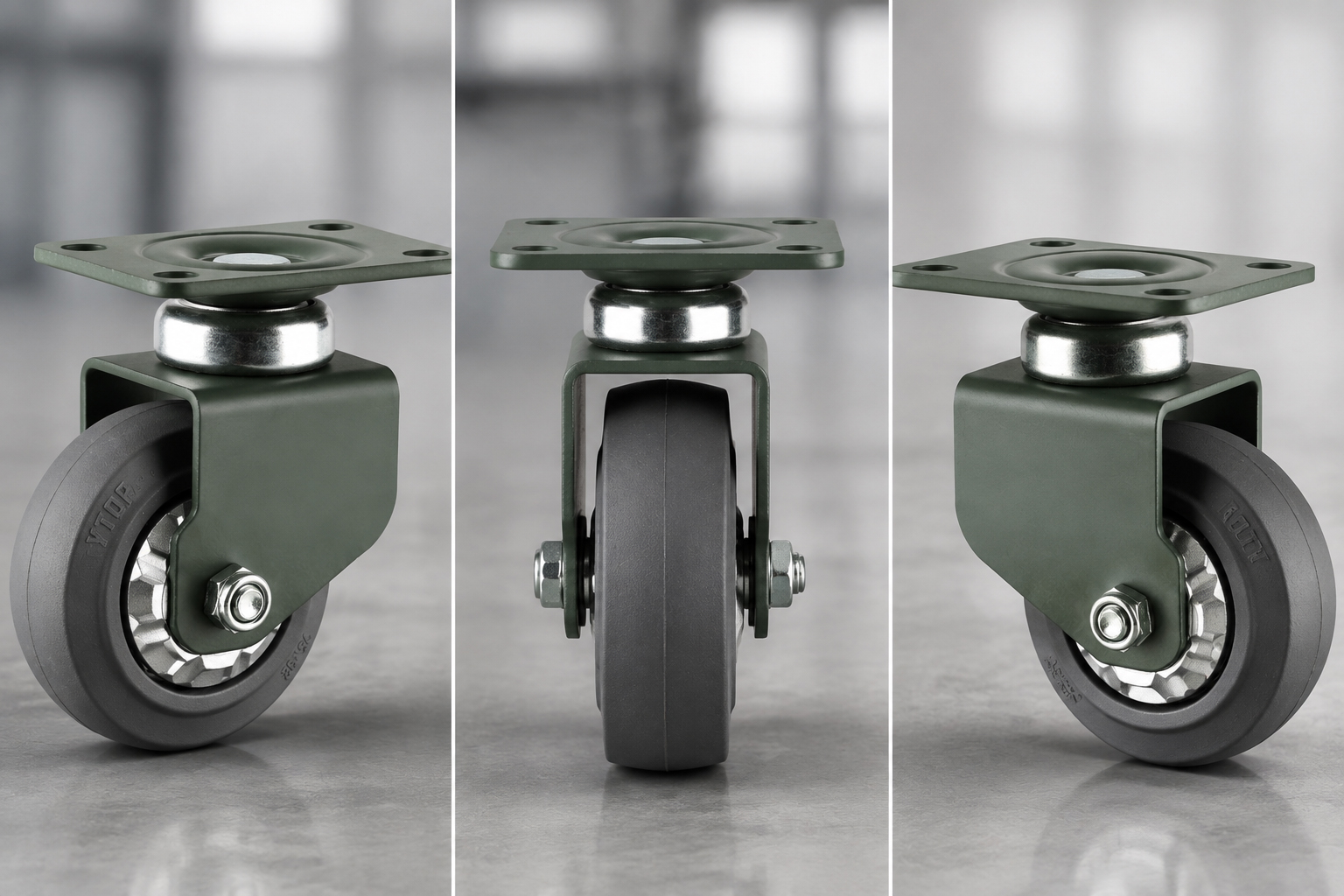
Polyurethane (PU) is the industry standard for AGV casters because it balances low rolling resistance, high load capacity, floor protection, quiet rolling and long wear life. Bonded to an aluminum or cast iron core, PU wheels carry heavy AGV loads without marking epoxy floors and last far longer than rubber under constant 24/7 use. The exact PU formulation can be tuned for hardness, grip and resistance to specific chemicals, which is why integrators specify the tread grade as carefully as the bearing.
Precision Bearings and Double-Wheel Swivel
AGV casters use precision sealed ball bearings for true rolling, and double-ball raceways for smooth, free swiveling. For ultra-heavy loads, a double-wheel (dual-wheel) bracket distributes force across two treads, reducing floor pressure and preventing single-point deformation. Dust covers keep warehouse grit out of the bearings, which is one of the cheapest ways to extend caster life.
How to Evaluate AGV Caster and System Compatibility
Match Load, Speed and Floor
Add the AGV weight and payload, divide by the number of support wheels, and confirm each wheel exceeds that figure with a safety margin. Match the tread to the floor: PU on epoxy and smooth concrete, reinforced nylon only on rough industrial floors where abrasion wins over quiet rolling. Account for the AGV’s travel speed, since faster rolling generates heat and accelerates wear, and check whether the path includes ramps, thresholds or temperature extremes.
Plan for Maintenance and Replacement
Even the best AGV caster wears out. Choose standardized, replaceable wheels and keep a spare stock so a worn wheel never stops the fleet. Schedule periodic tread-depth and swivel checks, and replace wheels before they cause a positioning drift. Lubrication-free sealed bearings and dust covers reduce routine maintenance to almost nothing between replacements.
Why YTOP AGV Casters Keep Systems Running
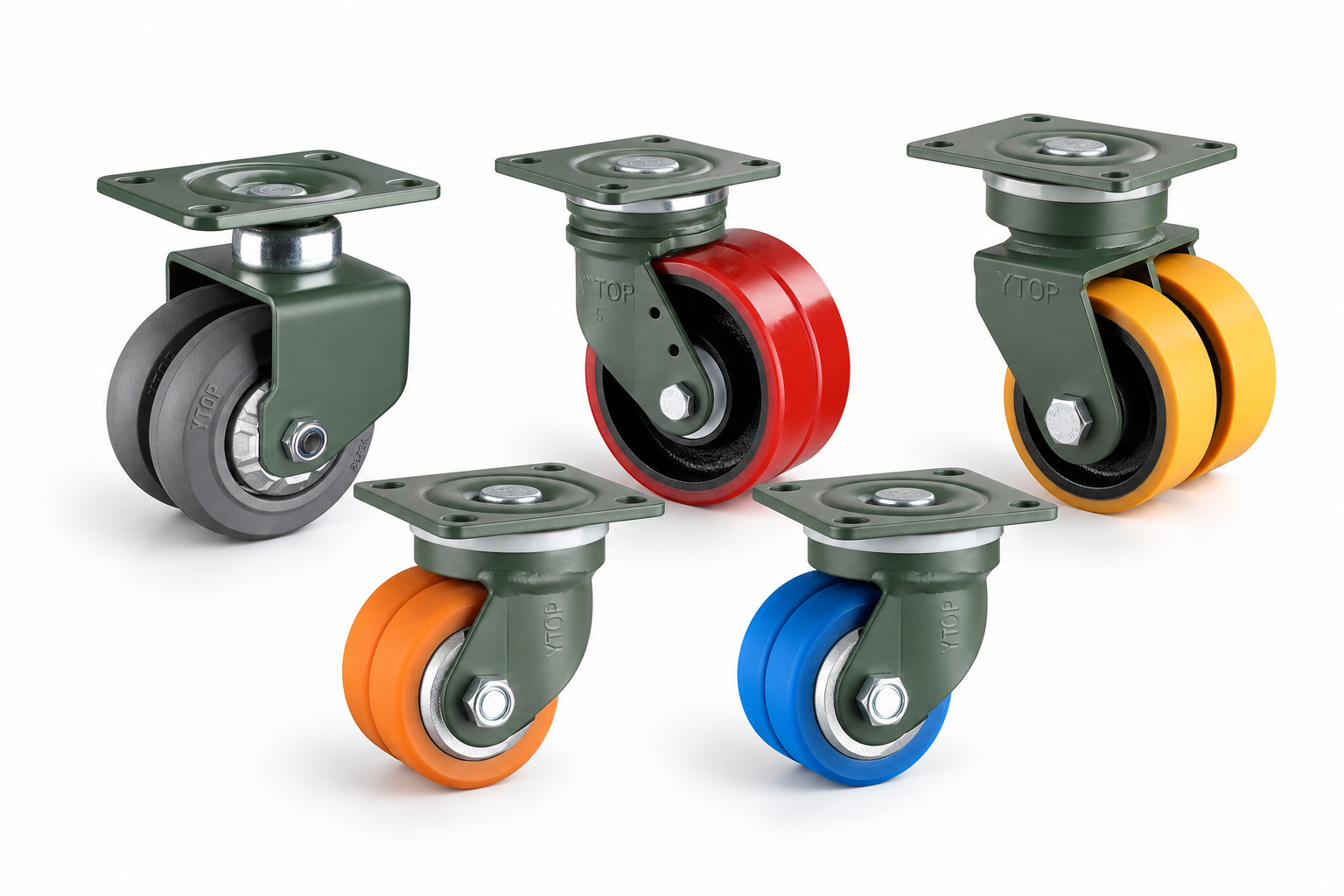
YTOP manufactures AGV casters in Quanzhou under ISO9001 quality control, using precision-molded polyurethane treads, sealed precision bearings and manganese steel brackets tested for 24/7 duty. Every wheel is validated for load, wear and noise before shipment, so integrators and warehouse owners can specify with confidence. We help AGV builders match load, speed, floor and cleanroom requirements to the exact wheel, so the automated material handling system stays online shift after shift.
Common AGV Caster Failures and How to Prevent Them
Tread Flat-Spotting and Cracking
When an AGV is loaded beyond the wheel rating or left parked under heavy load for a long time, the tread develops a flat spot that bumps and vibrates on every revolution. Choosing the correct dynamic load rating and avoiding long static overloading prevents this. PU wheels should also be matched to the ambient temperature, because excessive heat softens the tread and causes permanent deformation.
Seized Swivel Raceways and Bearing Noise
Dust and grit entering the swivel raceway is the second most common failure. Sealed, shielded swivel bearings and dust covers keep contaminants out and keep the caster spinning freely. A noisy or stiff swivel is an early warning that maintenance is overdue and should be addressed before it disturbs navigation.
Uneven Wear Across the Fleet
Because AGVs run on fixed loops, one corner of the vehicle often wears faster than the others. Rotating wheels between corners and replacing them in pairs keeps the whole vehicle balanced and the tracking consistent across the fleet.
In practice, the most successful automated material handling projects treat AGV casters as an engineered system component rather than a spare part ordered off a shelf. Working closely with the caster manufacturer during the AGV design phase prevents costly field failures and ensures the wheels match the vehicle’s duty cycle. When load, speed, floor, temperature and cleanroom requirements are all specified up front, the casters quietly deliver years of trouble-free service.
Frequently Asked Questions
What do AGV casters actually do?
AGV casters carry the vehicle and its cargo, support smooth steering and pivot, and provide consistent traction and stop positioning. They are the only part of the AGV that touches the floor, so they directly determine load capacity, battery life and positioning accuracy.
Why do AGV wheels use polyurethane?
Polyurethane combines high load capacity with low rolling resistance, quiet rolling and non-marking floors, which maximizes battery runtime while protecting epoxy warehouse floors. It also resists oils and wear under continuous operation.
How do I calculate the right AGV caster load?
Add the AGV chassis weight and the maximum payload, then divide by the number of support wheels. Specify a dynamic load rating with at least a 20 to 30 percent safety margin, because uneven floors momentarily overload one wheel.
How often should AGV casters be replaced?
Inspect tread wear every few months in heavy-duty service. Replace a wheel once the tread is worn flat, cracked or noisy, to protect battery efficiency and positioning accuracy before a fault stop occurs.
Can I replace one AGV wheel at a time?
For passive load wheels this is possible, but drive wheels should be replaced in matched pairs. A new wheel paired with a worn one has a different effective diameter, which causes differential-drive navigation errors and makes the vehicle veer off its programmed path.
Do AGV swivel casters need brakes?
Usually not while the vehicle is operating, because braking is handled by the drive system. Manual locks are useful only for maintenance, when an AGV is pushed by hand, or on manually operated transfer carts that share the same caster platform.
Related Reading
Learn more about selecting and caring for AGV and industrial casters:
- How to Select AGV Casters? Which Parameters Need Key Confirmation
- Advantages and Disadvantages of Nylon Wheels for AGV Casters
- Polyurethane vs Nylon Swivel Casters: Wear Resistance and Load Comparison
- How Much Load Can 8-Inch Heavy-Load Casters Bear?
- What Core Parameters Need Attention in Industrial Caster Selection?
- Browse Medium-Duty AGV Casters (100-190kg)
- Browse Heavy-Duty AGV Casters (150-610kg)
- Contact YTOP for AGV Caster Sizing Help
Post time: Sep-08-2026