
Choosing polyurethane or nylon for swivel casters is a recurring problem in purchasing.
People who hesitate are usually in two scenarios: disliking nylon wheels too hard and noisy when running, or disliking polyurethane wheels expensive and afraid not cost-effective. The two materials are not one good one bad, but each manages its own working conditions. Comparing by dimensions of wear resistance, load, resilience, and applicable floors, which to choose depends on your floor and load.
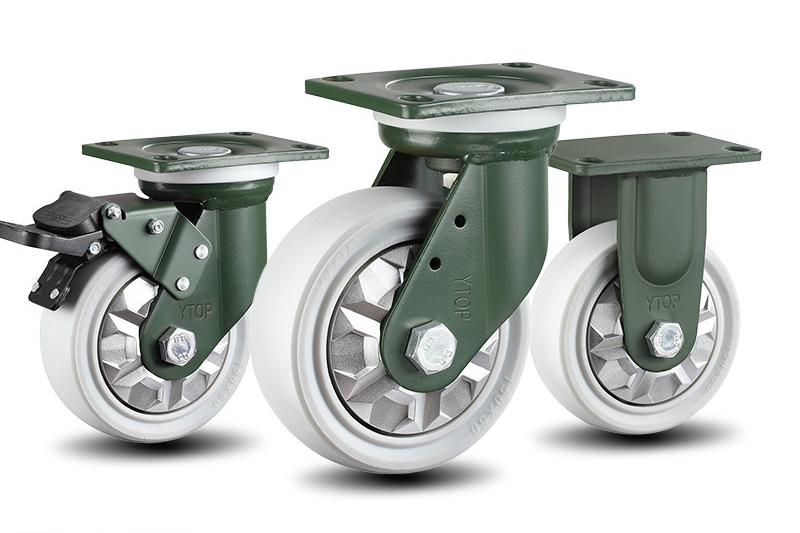
Polyurethane Wheels: Smooth and Quiet, Stable Travel
The advantages of polyurethane tread (PU) are wear resistance, good resilience, and stable travel.
It has elasticity, cushions when running, low noise, and good fit with floors. For AGVs, precision equipment, and scenarios with requirements for noise and travel stability, PU wheels are the mainstream choice. It is relatively friendly to smooth floors such as epoxy flooring, not easy to slip nor scratch floors.
The disadvantage is relatively more expensive, and particularly fears sharp object cuts — handling sites with iron chips and metal scrap edges need attention to protection.
Nylon Wheels: Hard and Load-Bearing, Labor-Saving Rolling
The characteristics of nylon tread are hard, large load, and small rolling resistance.
It doesn’t fear pressure, doesn’t deform under heavy load, and long-distance straight travel on hard floors (concrete, asphalt) is labor-saving. Price is also more affordable than polyurethane. The disadvantage is almost no elasticity, poor cushioning, obvious impact feeling when crossing floor joints and small pits, relatively loud noise, and may also damage floors.

Three Treads Horizontal Comparison
| Comparison Item | Rubber Wheels | Polyurethane Wheels (PU) | Nylon Wheels |
|---|---|---|---|
| Wear resistance | Average | Good | Very good |
| Load capacity | Light-medium load | Medium-heavy load | Heavy load |
| Resilience cushioning | Good | Good | Poor |
| Noise | Low | Low | High |
| Rolling resistance | Large | Medium | Small |
| Floor requirements | Lenient | Smooth floor better | Hard floor |
| Typical scenarios | Light-load furniture, tool carts | AGVs, precision equipment, warehouses | Heavy-load handling, hard-floor straight travel |
Hardness Is a Hidden Variable
The difference in treads invisible to the eye is in hardness. High Shore hardness means wheels hard, large load, labor-saving rolling, but poor cushioning; low hardness means good elasticity, good cushioning, but limited load capacity.
Same marked polyurethane, 90A and 80A usage feel differ by a lot. So wheel selection cannot only report “polyurethane,” must report hardness, wheel diameter, and load together, only then can the manufacturer match accurately.
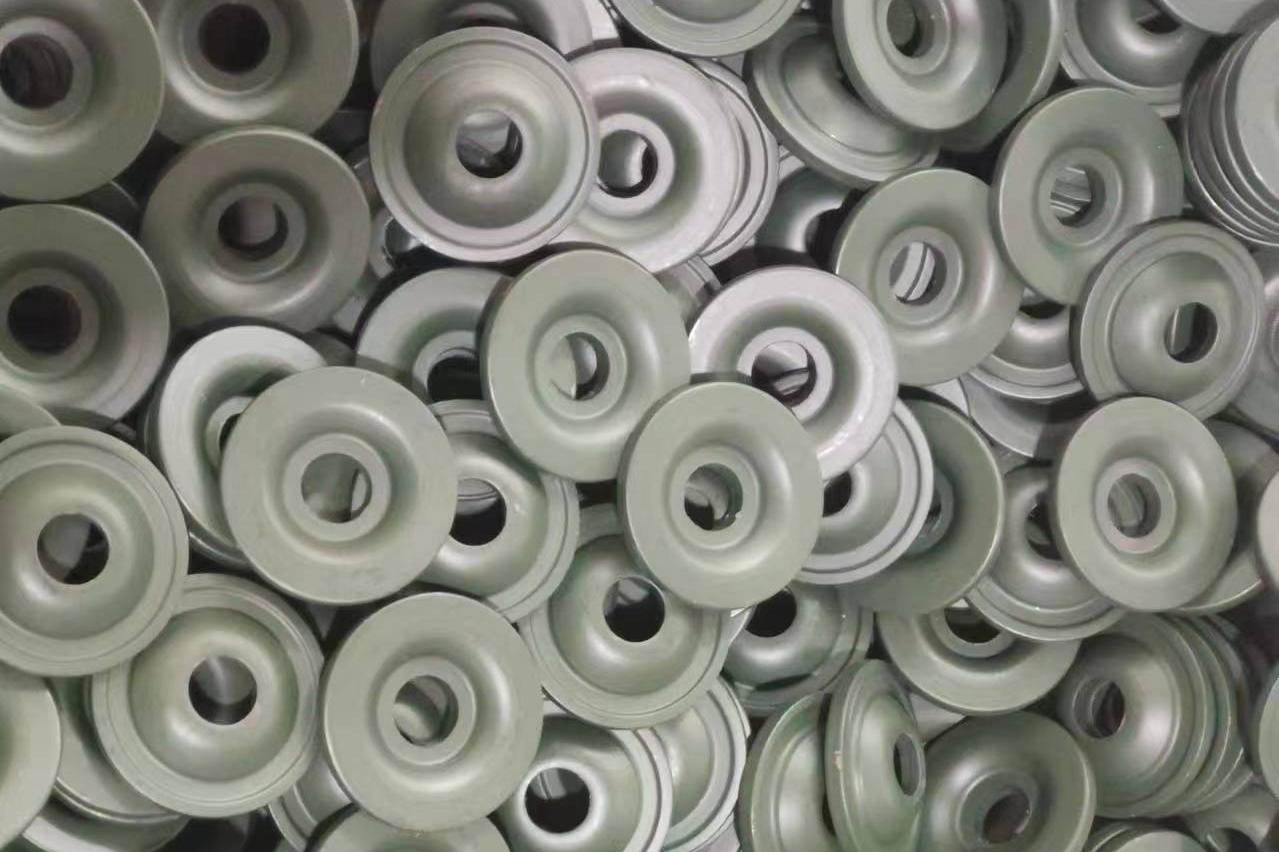
No matter which tread is selected, bracket strength must also keep up. Tread is responsible for contacting the floor, bracket is responsible for supporting the vehicle body — no matter how wear-resistant the tread, bracket deformation is equally useless. Zhuoye manganese steel casters, in the matching of tread and bracket, also need to confirm overall configuration according to load working conditions.
Different Workstations Can Select Different Materials
In actual workshops, it is very common for the two types of wheels to each perform their own duties. Carts at assembly workstations use polyurethane wheels — people walk back and forth in the workshop, wheels quiet, don’t damage floors, and pushing is stable. Heavy-load carts in the shipping area use nylon wheels — long-distance straight travel on concrete floors, small rolling resistance, workers can push.
Same batch purchase, two materials ordered together, first look at floor and scenario then determine material — not either-or, but each in its proper place.
Purchase Recommendations
Want smooth quiet, stable travel, select polyurethane; want hard heavy-load, hard-floor long-distance, select nylon.
The final decision depends on three conditions: floor material, load, noise requirements. Report these three answers to the manufacturer, along with wheel diameter and tread hardness needs, far more useful than hesitating over brand names.
Related Reading
Explore more caster material comparison and selection guides:
- Nylon Wheels for AGV Casters: Advantages & Disadvantages — Detailed analysis of nylon wheel properties and AGV applications.
- Polyurethane Materials: Applications in Caster Production — Learn about PU material properties and industrial caster applications.
- Industrial Caster Selection: 10 Core Parameters — Complete guide to caster selection including tread material.
- How to Select AGV Casters: Key Parameters — Complete guide to AGV caster selection including material choice.
- Mainstream Application Scenarios of Industrial Casters — Overview of caster applications across different floor conditions.
Explore our complete range of medium-duty casters (100-190kg) and heavy-duty casters (150-610kg) with polyurethane and nylon wheel options, or contact our engineering team for expert material selection guidance.
Post time: Sep-15-2026