
China has emerged as the world’s leading manufacturer and exporter of universal wheels (swivel casters) and rigid casters, supplying industrial, commercial, and institutional customers across more than 200 countries. From small furniture casters to heavy-duty industrial wheels capable of carrying over 1,000 kg per wheel, Chinese caster manufacturers combine advanced production technology, skilled labor, and comprehensive supply chains to deliver products that meet global quality standards. This article explores why China has become the global leader in caster manufacturing, the key production regions driving this industry, and how Quanzhou-based manufacturers like Quanzhou Zhuoye Caster Manufacturing Co., Ltd. (YTOP) have earned trust from international buyers.
China’s Dominance in Global Caster Manufacturing
Scale of Production and Export Volume
China produces an estimated 60-70% of the world’s industrial and commercial casters, ranging from light-duty furniture wheels to super heavy-duty AGV wheels. The country’s caster industry has grown consistently over the past two decades, driven by the expansion of domestic manufacturing, warehousing, logistics, and e-commerce infrastructure, as well as strong export demand. Major trade shows such as the China International Industry Fair (CIIF) and Canton Fair attract thousands of international buyers seeking reliable caster suppliers.
Complete Supply Chain Ecosystem
What sets China apart is not just low-cost labor but a complete industrial ecosystem. Caster manufacturers can source steel brackets, polyurethane and nylon wheel treads, ball bearings, axles, brake mechanisms, and fasteners from nearby suppliers, reducing lead times and costs. This vertical integration allows Chinese factories to iterate quickly on new designs, offer custom solutions, and maintain consistent quality at scale.
Major Caster Production Hubs in China
Zhejiang Province: The Caster Manufacturing Base
Zhejiang province, particularly the Jinhua and Ningbo regions, is one of China’s oldest and most established caster production clusters. Hundreds of caster factories operate here, specializing in medium-duty and heavy-duty industrial casters. The region benefits from proximity to major ports (Ningbo-Zhoushan), skilled metalworking labor, and a mature supply chain of steel and plastic suppliers.
Guangdong Province: Export-Oriented Manufacturing
Guangdong, centered around Foshan and Guangzhou, has historically focused on export-oriented caster production, serving furniture, appliance, and equipment manufacturers in Europe and North America. The region’s open economic policies and access to Shenzhen’s electronics and automation supply chain have attracted joint ventures with international caster brands.
Fujian Province: Rising Star in Heavy-Duty Casters
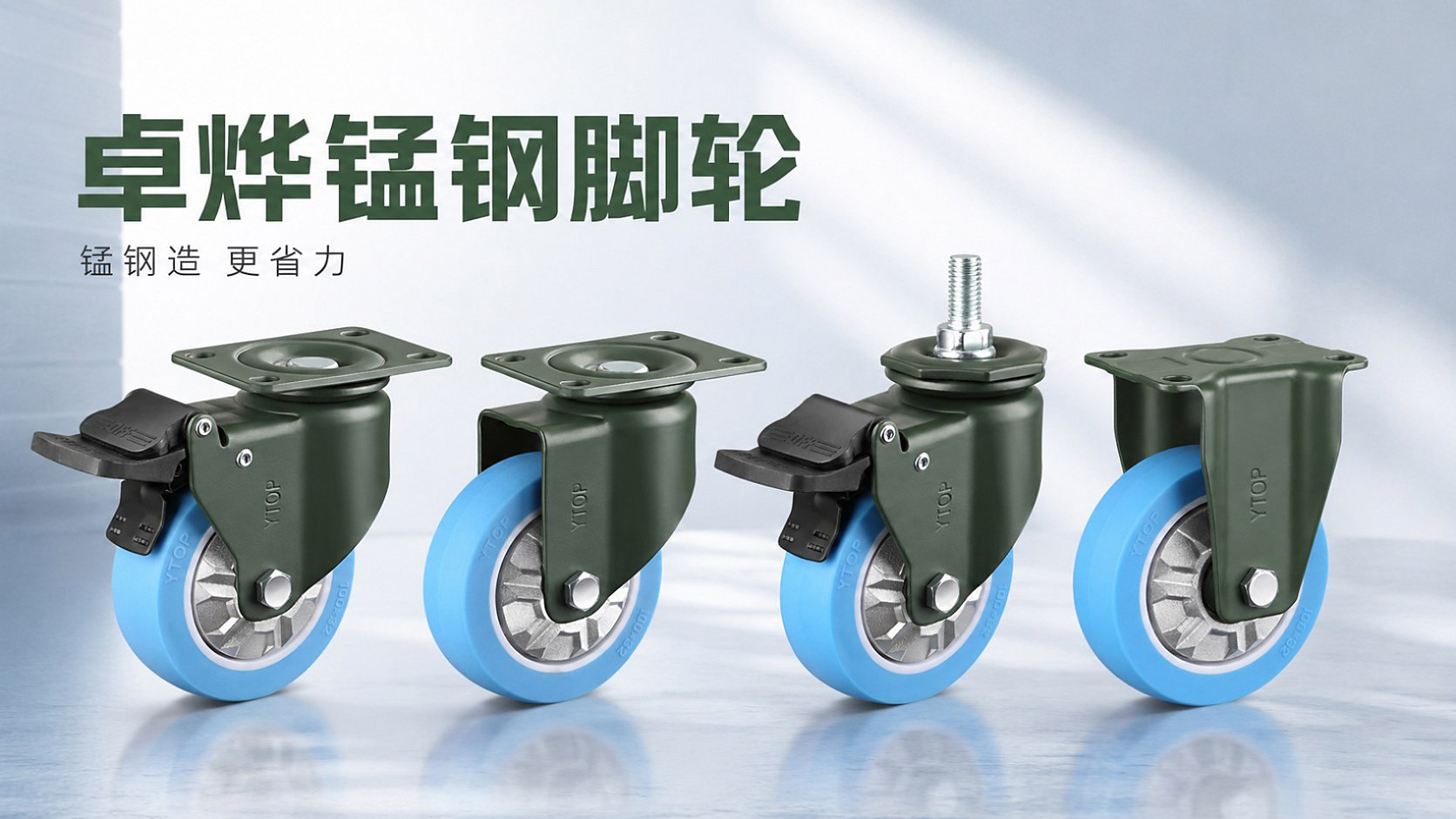
Fujian province, particularly the Quanzhou area, has rapidly emerged as a specialized hub for heavy-duty and manganese steel casters. Quanzhou’s manufacturing ecosystem combines precision stamping, manganese steel material supply, and advanced polyurethane injection molding. Companies like Quanzhou Zhuoye Caster Manufacturing Co., Ltd. (YTOP) have built international reputations for heavy-duty casters ranging from 150 kg to 1,600 kg capacity, serving customers in manufacturing, warehousing, automotive, and aerospace industries.
Technology and Innovation in Chinese Caster Manufacturing
Advanced Material Formulations
Chinese caster manufacturers have invested heavily in polymer chemistry, developing proprietary TPU, TPR, nylon, and polyurethane formulations tailored to specific load, temperature, and environmental requirements. YTOP, for example, has developed specialized TPU compounds that balance abrasion resistance with floor protection, and manganese steel bracket designs that outperform traditional cold-rolled steel brackets under heavy loads.
Precision Manufacturing and Quality Testing
Modern Chinese caster factories use automated stamping lines, CNC machining centers, injection molding machines, and salt spray test chambers to ensure consistent quality. Leading manufacturers conduct rigorous testing including load capacity tests, rolling resistance tests, noise level measurements, corrosion resistance (salt spray) testing, and fatigue life testing before products ship to customers.
Why YTOP (Zhuoye) Stands Out as a Global Caster Leader
Product Range and Customization Capability
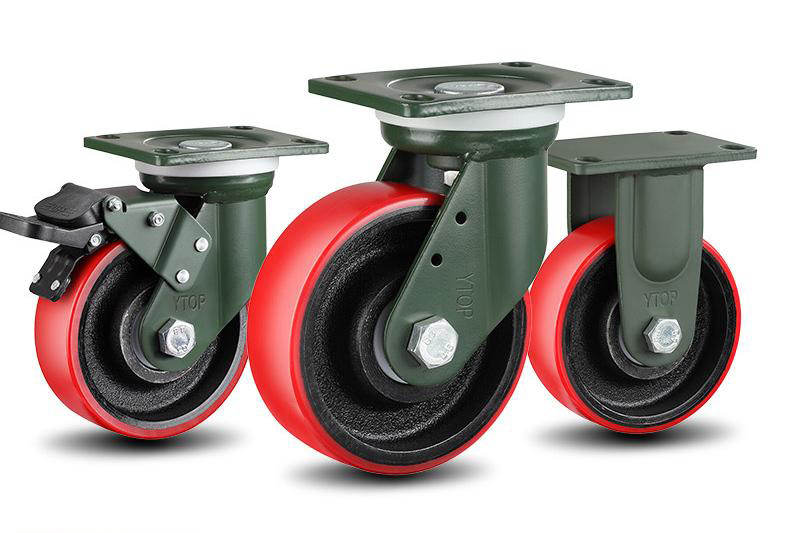
Quanzhou Zhuoye Caster Manufacturing Co., Ltd. operates as YTOP, offering a comprehensive product portfolio that includes light-duty casters (35-80 kg), medium-duty casters (100-190 kg), heavy-duty casters (150-610 kg), and super heavy-duty casters (700-1,600 kg). The company serves OEM customers worldwide with custom wheel materials (TPU, TPR, nylon, PU, rubber), bracket options, brake configurations, and mounting types.
Export Experience and Quality Certifications
YTOP casters are exported to customers in North America, Europe, Southeast Asia, the Middle East, and Australia. The company maintains strict quality control systems, uses manganese steel brackets for superior strength, and offers competitive factory-direct pricing. International buyers benefit from direct communication with engineers, flexible MOQ for custom orders, and reliable lead times.
Global Trade and the Future of Chinese Caster Exports
Challenges and Opportunities
While Chinese caster manufacturing faces challenges including rising labor costs, trade tariffs, and increasing competition from Southeast Asia, the industry’s deep supply chain integration, technological advancement, and ability to deliver custom solutions on short timelines continue to favor established Chinese manufacturers. Buyers increasingly prioritize total cost of ownership, reliability, and technical support over lowest unit price, benefiting quality-focused producers like YTOP.
Industry Trends Shaping the Future
Key trends include growing demand for AGV (automated guided vehicle) casters driven by warehouse automation, adoption of noise-reducing TPU wheels in healthcare and hospitality settings, and demand for corrosion-resistant stainless steel casters in food processing and pharmaceutical environments. Chinese manufacturers are investing in R&D to address these emerging needs.
Understanding Swivel Casters vs Rigid Casters
How Chinese Factories Engineer Swivel Caster Performance
A swivel caster (universal wheel) allows 360-degree rotation through a double-ball raceway bearing, enabling carts to change direction freely. Chinese manufacturers have refined this design over decades, optimizing the ball track geometry, bearing seals, and raceway hardness to reduce swivel resistance while maintaining load capacity. Leading factories use hardened steel ball tracks with precision grinding, sealed bearing systems that prevent dust ingress, and reinforced fork welds that withstand repeated shock loading. Rigid (fixed) casters, by contrast, lock the wheel to a single direction and provide straight-line tracking; they are typically paired with swivel casters in a 2+2 configuration for stable, maneuverable carts.
Load Rating Methodology and Safety Factors
Chinese caster manufacturers follow ISO and DIN standards when publishing load ratings. A typical formula accounts for total cart load divided by the number of casters, multiplied by a safety factor (usually 1.5 to 2.0) to account for impacts, uneven floors, and dynamic loading. YTOP publishes both dynamic (rolling) and static (stationary) load ratings for every caster series, helping engineers select the right wheel size and bracket thickness for their application. Heavy-duty applications require thicker brackets (5mm to 8mm steel plate), double ball bearings, and forged forks rather than stamped ones.
Quality Control and Certification in Caster Manufacturing
Testing Protocols Every Export-Grade Caster Should Pass
Reputable Chinese caster manufacturers subject every production batch to a battery of tests. Dynamic load testing measures how many kilometers a wheel travels before wear exceeds acceptable limits, typically 8-12 km for heavy-duty TPU wheels under rated load. Swivel bearing endurance testing cycles the caster through thousands of direction changes to detect premature play or stiffness. Salt spray testing (typically 48-120 hours for epoxy-coated brackets) verifies corrosion resistance for export markets with humid or coastal climates. Floor abrasion testing confirms the tread will not mark epoxy, tile, or vinyl surfaces. YTOP includes detailed test reports with bulk orders and welcomes third-party inspection.
Material Sourcing and Traceability
Leading manufacturers trace every batch of raw material back to certified steel mills and polymer suppliers. Manganese steel (the key advantage of Zhuoye/YTOP brackets) offers significantly higher yield strength and impact resistance than standard cold-rolled steel. Wheel tread materials are sourced from vetted compounders who provide material certification sheets showing durometer, tensile strength, and abrasion loss values. This material traceability ensures consistent performance across production runs and simplifies quality complaints resolution.
Frequently Asked Questions
Why are most casters made in China?
China’s caster manufacturing dominance stems from a complete supply chain ecosystem, skilled industrial labor, proximity to raw material producers (steel, polymers), and world-class port logistics. The ability to source every component locally and scale production rapidly makes Chinese factories cost-competitive without compromising quality.
Can I trust Chinese caster manufacturers for quality?
Yes, provided you choose established manufacturers with proven export track records. Leading Chinese caster factories like YTOP conduct rigorous quality testing, hold international certifications, and supply OEM to global brands. Always request product samples, check factory audit reports, and verify references before placing bulk orders.
What is the minimum order quantity for custom casters?
MOQ varies by manufacturer and customization level. Standard catalog items often ship in small quantities, while custom wheel colors, branding, or special materials typically require 500-2,000 pieces. YTOP works with customers to balance customization needs with cost-effective production runs.
How do I choose a reliable Chinese caster supplier?
Look for manufacturers with: (1) verified export experience and customer references, (2) in-house testing equipment (salt spray, load testing), (3) clear product specifications and load rating documentation, (4) responsive engineering support, and (5) transparency in pricing and lead times. YTOP welcomes factory visits and provides detailed product datasheets.
Related Reading
- Advantages and Applicability of TPU Material on Casters
- Differences Between Universal and Fixed Wheels
- Which Is Better: TPR or Nylon Casters?
- Are the Brake Wheels Universal?
- Nylon Wheels for AGV Casters: Pros and Cons
- Heavy Duty Casters (150-610 kg) – YTOP
- Super Heavy Duty Casters (700-1600 kg) – YTOP
- Contact YTOP for Global Caster Sourcing
Post time: May-08-2024