
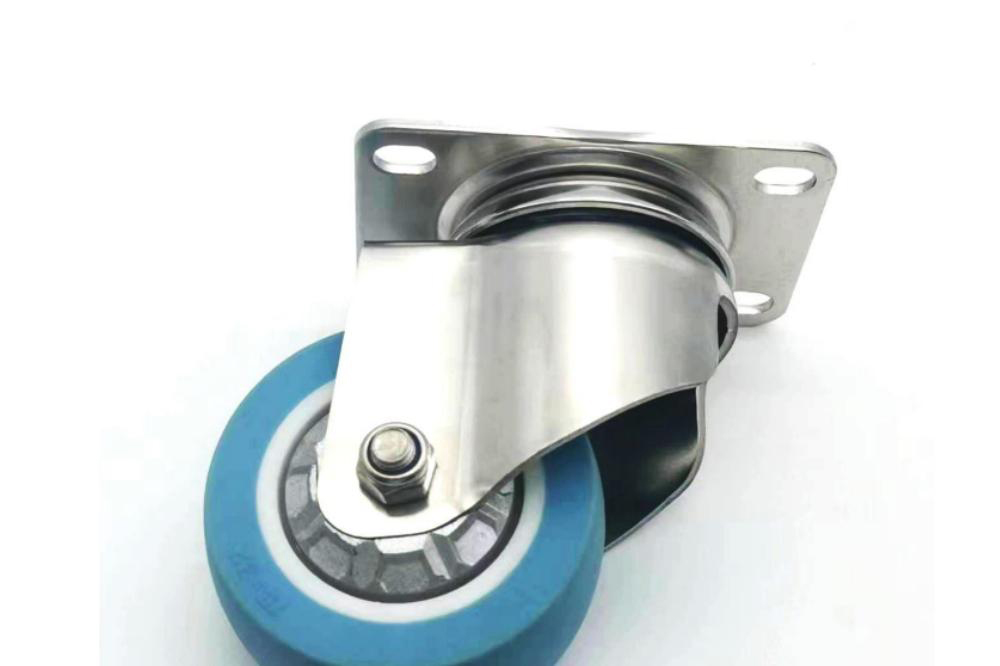
Choosing the appropriate caster material is crucial, then TPU as an emerging material, used in casters, how will the effect be? Thermoplastic polyurethane (TPU) has become increasingly popular as a caster wheel material due to its exceptional combination of performance characteristics including abrasion resistance, load capacity, noise reduction, floor protection, and chemical resistance. This article explores the advantages and applicability of TPU material in caster applications, helping purchasers and engineers understand when and why to choose TPU casters.
Introduction to TPU Material in Casters
What Is TPU and How Is It Manufactured?
Thermoplastic polyurethane (TPU) is a versatile engineering polymer that has gained significant traction in the caster industry as a high-performance wheel tread material. TPU belongs to the family of polyurethane materials, but it is specifically formulated to be thermoplastic, meaning it can be melted and reshaped when heated and solidifies when cooled, unlike thermoset polyurethanes that undergo irreversible chemical curing. This thermoplastic property enables efficient manufacturing processes including injection molding, extrusion, and compression molding, allowing for consistent, high-volume production of caster wheels with precise dimensional control and consistent material properties.
TPU materials can be formulated across a wide range of hardness levels (durometer), from relatively soft elastomeric grades to harder, more rigid grades, allowing caster manufacturers to tailor the material properties to specific application requirements. This versatility, combined with TPU’s inherent performance advantages including excellent abrasion resistance, good load capacity, quiet operation, floor protection, and chemical resistance, has made TPU an increasingly popular choice for caster wheel treads across a wide range of industrial, commercial, and institutional applications. As an “emerging” material in the caster industry, TPU represents a significant advancement over traditional materials such as rubber, nylon, and polypropylene, offering a superior balance of performance characteristics that addresses many of the limitations of those older materials.
Key Advantages of TPU Material
Why TPU Outperforms Traditional Caster Materials
TPU material offers a comprehensive set of performance advantages that make it exceptionally well-suited for caster wheel applications. These advantages stem from the unique molecular structure of polyurethane, which combines the flexibility and elasticity of rubber with the strength, durability, and processability of engineering plastics. The result is a material that delivers exceptional performance across multiple dimensions simultaneously, without the significant trade-offs that characterize many other caster wheel materials.
The key advantages of TPU include excellent abrasion resistance that extends service life, high load capacity that supports heavy equipment, low rolling resistance that reduces pushing effort, quiet operation that improves workplace comfort, non-marking properties that protect floors, good shock absorption that cushions impacts, oil and grease resistance that suits industrial environments, wide temperature range capability, and excellent elastic recovery that maintains wheel shape under repeated loading. This combination of properties is difficult to achieve with other single materials, which typically excel in one or two areas but have significant limitations in others. TPU’s balanced performance profile makes it a versatile choice that can meet the requirements of many different applications without the need for specialized or compromise solutions.
Abrasion Resistance and Durability
Wear Testing and Longevity Data
Abrasion resistance: TPU has excellent abrasion resistance, which enables the casters to slide smoothly on a wide range of floors and is not easy to wear. Especially in the frequent use of occasions, TPU casters can maintain stable performance over extended periods. The exceptional abrasion resistance of TPU is one of its most significant advantages, directly impacting caster service life and total cost of ownership. In high-frequency use applications such as warehouses, distribution centers, hospitals, and retail environments, caster wheels are subjected to continuous rolling friction with floor surfaces, which gradually wears away the tread material. TPU’s molecular structure, with its strong urethane linkages and flexible hard segment/soft segment morphology, provides outstanding resistance to this abrasive wear, maintaining wheel dimensions and performance characteristics far longer than softer materials like rubber or less wear-resistant materials like polypropylene.
The durability benefits of TPU’s abrasion resistance are substantial. In applications where casters are used continuously throughout the workday, TPU casters can provide 2-5 times the service life of rubber or polypropylene casters, significantly reducing replacement frequency and associated maintenance costs. This extended service life also reduces equipment downtime for caster replacement, improving overall operational efficiency. Furthermore, because TPU maintains its tread dimensions and surface finish over time, the caster continues to provide consistent rolling resistance, noise level, and floor protection throughout its service life, unlike materials that wear unevenly or develop flat spots that can cause vibration, noise, and increased rolling resistance. The combination of exceptional abrasion resistance and consistent long-term performance makes TPU an excellent choice for high-frequency, high-duty-cycle applications where caster durability and low maintenance are critical priorities.
Load Capacity and Rolling Performance
Dynamic Load Ratings and Rolling Resistance
TPU material provides excellent load capacity combined with low rolling resistance, making it suitable for medium to heavy duty caster applications. The load capacity of TPU caster wheels depends on factors including wheel diameter, tread width, material hardness (durometer), and core material, but properly designed TPU wheels can support loads ranging from tens to thousands of kilograms per wheel. TPU’s high tensile strength, tear resistance, and resistance to permanent deformation under load enable it to support substantial loads without the tread flattening, cracking, or delaminating from the core, which are common failure modes for lower-performance materials under heavy loads.
Rolling resistance is another critical performance characteristic where TPU excels. Rolling resistance refers to the force required to keep a caster wheel rolling once it is in motion, and it directly impacts the effort required to move equipment, the energy consumption of powered equipment, and the wear on both the caster and the floor. TPU’s balanced hardness and elastic properties provide relatively low rolling resistance, particularly compared to softer materials like rubber that have higher hysteresis (energy loss) during rolling. This lower rolling resistance means that equipment on TPU casters is easier to push and maneuver, reducing operator fatigue and improving productivity. For powered equipment such as AGVs (Automated Guided Vehicles) or electric carts, lower rolling resistance translates to reduced energy consumption, longer battery life, and lower operating costs. TPU also provides good starting resistance (the force required to initiate rolling from a stationary position), which is important for equipment that needs to be started and stopped frequently. The combination of good load capacity and low rolling resistance makes TPU an excellent choice for medium to heavy duty applications where both load support and ease of movement are important requirements.
Noise Reduction and Floor Protection
Non-Marking Tread for Delicate Floors
Noise reduction is a significant advantage of TPU casters, particularly in environments where quiet operation is important such as hospitals, schools, offices, hotels, libraries, laboratories, and residential settings. TPU’s elastic properties and material damping characteristics absorb vibrations and reduce the noise generated when wheels roll over floor surfaces, expansion joints, thresholds, or small debris. Compared to harder materials like nylon, polypropylene, or steel, which can generate significant noise especially on hard floors, TPU provides substantially quieter operation, creating a more comfortable and productive working environment. Compared to rubber, which is also quiet but has higher rolling resistance and lower durability, TPU provides comparable noise reduction with better wear resistance and load capacity, offering a superior balance of quiet operation and performance.
Floor protection is another key benefit of TPU casters. TPU is typically formulated to be non-marking, meaning it does not leave scuff marks or stains on floor surfaces, even under heavy loads or during sharp turns. This is particularly important for finished floors such as hardwood, tile, epoxy, terrazzo, vinyl, and polished concrete, where scuff marks from caster wheels can be unsightly and difficult or costly to remove. TPU’s elastic properties also provide a cushioning effect that reduces the impact force on floors when casters roll over obstacles or uneven surfaces, potentially reducing floor damage such as chipping, cracking, or surface wear. The combination of non-marking properties and impact cushioning makes TPU an excellent choice for applications where floor protection is a priority, such as commercial buildings, healthcare facilities, educational institutions, hospitality venues, and residential environments. Unlike some materials that require special formulations or coatings to achieve non-marking properties, TPU is inherently non-marking in most standard formulations, providing consistent floor protection without additional cost or complexity.
Chemical and Environmental Resistance
Temperature Range and UV Stability
TPU material offers good resistance to a wide range of chemicals and environmental factors, making it suitable for use in challenging industrial and commercial environments. TPU is inherently resistant to oils, greases, and many petroleum-based products, which is a significant advantage in industrial environments such as manufacturing facilities, automotive plants, machine shops, and garages where oil and grease contamination of floors is common. Unlike rubber, which can swell, soften, or degrade when exposed to oils and greases, TPU maintains its physical properties and dimensional stability, ensuring consistent caster performance even in contaminated environments. This oil resistance also contributes to longer caster service life in industrial settings, as oil exposure is a common cause of premature failure for rubber caster wheels.
In addition to oil and grease resistance, TPU provides good resistance to many solvents, fuels, and chemicals, although resistance can vary depending on the specific TPU formulation and the chemical in question. TPU also performs well across a wide temperature range, typically remaining flexible and functional from approximately -40°C to +80°C (-40°F to +176°F), with some specialized formulations extending this range further. This wide temperature capability makes TPU suitable for use in both cold storage environments and moderately hot industrial settings, where materials like rubber may become too stiff in cold or too soft in heat. TPU also provides good resistance to UV radiation and weathering, particularly in stabilized formulations, making it suitable for outdoor or near-outdoor applications where exposure to sunlight and weather is a concern. While TPU is not as chemically resistant as some specialty materials like nylon or PEEK in all chemical environments, its broad resistance to common industrial chemicals, oils, and environmental factors, combined with its other performance advantages, makes it suitable for the vast majority of caster applications. For highly specialized chemical environments, specific TPU formulations can be selected or alternative materials considered, but for general industrial and commercial use, TPU provides excellent chemical and environmental resistance that contributes to reliable performance and long service life.
Application Scenarios for TPU Casters
Industries That Rely on TPU Casters Daily
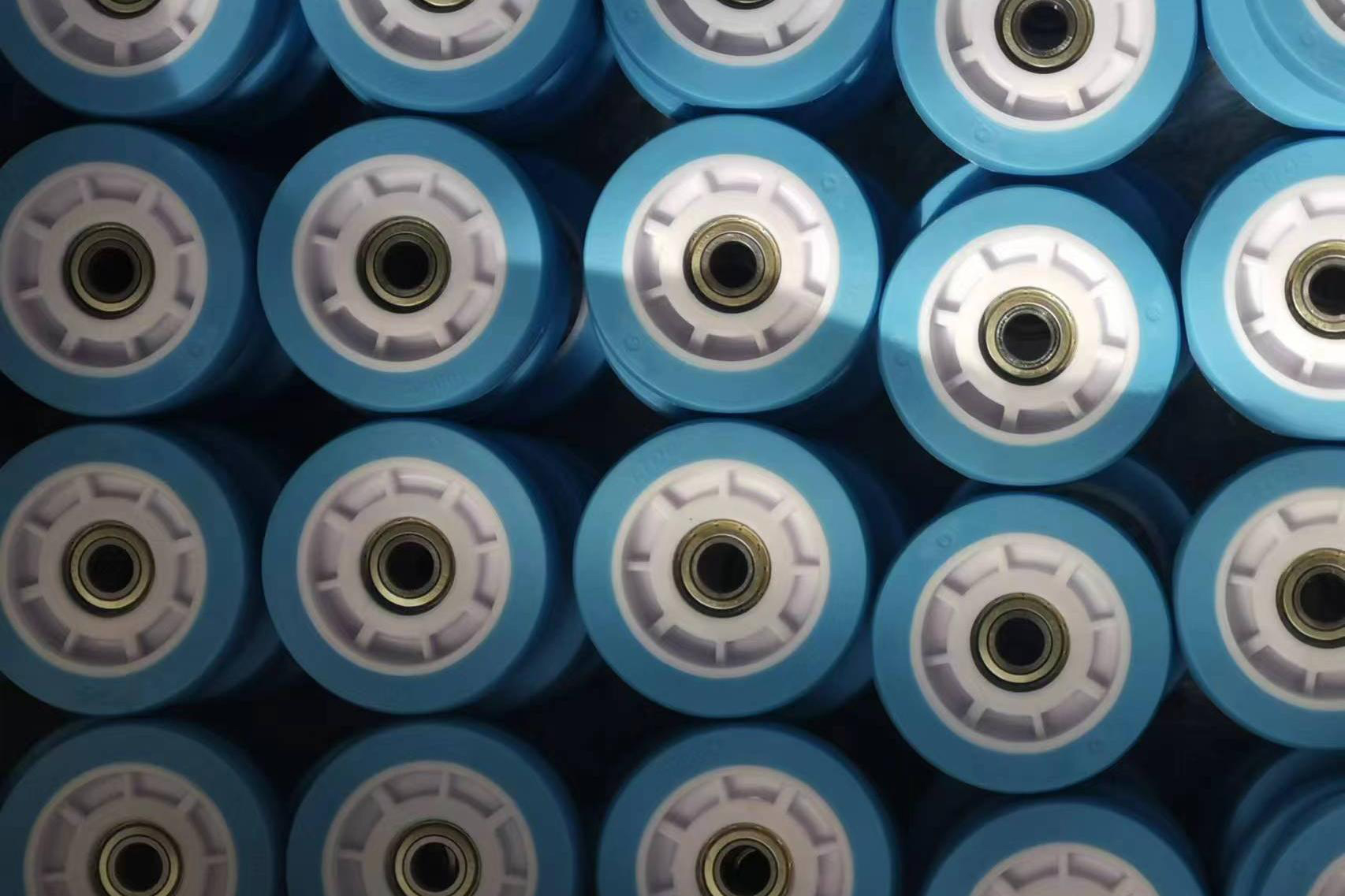
TPU casters are suitable for a wide range of applications across diverse industries, reflecting the versatility and balanced performance of the material. In industrial and manufacturing environments, TPU casters are used on material handling carts, workbenches, tool chests, assembly line equipment, and industrial racks, where their load capacity, abrasion resistance, oil resistance, and durability provide reliable performance in demanding conditions. In warehouses and distribution centers, TPU casters are used on picking carts, pallet jacks, order picking equipment, and storage racks, where their high abrasion resistance handles continuous use on concrete floors, while their low rolling resistance reduces operator fatigue and improves productivity.
In healthcare and medical facilities, TPU casters are used on medical carts, hospital beds, examination tables, diagnostic equipment, and laboratory instruments, where their quiet operation, non-marking floor protection, and ease of cleaning contribute to a safe, comfortable, and hygienic patient care environment. In food and beverage processing and service, TPU casters are used on food carts, kitchen equipment, serving carts, and storage racks, where their non-marking properties, ease of cleaning, and resistance to food-related contaminants provide safe and reliable performance. In commercial and retail environments, TPU casters are used on display fixtures, retail carts, checkout counters, and storage units, where their quiet operation, floor protection, and aesthetic appearance contribute to a pleasant customer experience. In office and institutional settings, TPU casters are used on office chairs, desks, file cabinets, computer carts, and AV equipment, where their quiet operation, non-marking floor protection, and smooth rolling provide comfortable and reliable use. In hospitality and food service, TPU casters are used on hotel luggage carts, restaurant serving carts, housekeeping carts, and banquet equipment, where their quiet operation and floor protection are essential for guest comfort and facility maintenance. In educational and research environments, TPU casters are used on lab benches, classroom furniture, library carts, and AV equipment, where their durability, quiet operation, and floor protection support effective learning and research environments. These diverse applications demonstrate that TPU casters are a versatile solution that can meet the requirements of virtually any medium to heavy duty caster application, providing a superior balance of performance characteristics that addresses the key requirements of each environment.
TPU Compared to Other Caster Materials
TPU vs Nylon, Rubber, and Polypropylene
Understanding how TPU compares to other common caster wheel materials helps clarify when TPU is the optimal choice and when alternative materials may be more appropriate. Compared to rubber, TPU offers superior abrasion resistance (typically 2-5 times better), higher load capacity, lower rolling resistance, better oil and chemical resistance, and comparable or slightly better noise reduction and floor protection. Rubber’s primary advantages are lower cost for basic applications and potentially better shock absorption for very rough surfaces, but TPU’s superior durability and performance typically result in lower total cost of ownership despite higher initial cost. Compared to nylon, TPU offers significantly better noise reduction (nylon can be quite noisy on hard floors), superior floor protection (nylon can mark or damage soft floors), better shock absorption, and comparable load capacity and chemical resistance. Nylon’s primary advantages are higher load capacity for very heavy applications, lower rolling resistance on smooth surfaces, and potentially lower cost for high-volume production, but TPU’s superior noise and floor protection characteristics make it preferable for most indoor environments.
Compared to polypropylene (PP), TPU offers dramatically better abrasion resistance, higher load capacity, better noise reduction, superior floor protection, and better chemical and temperature resistance. Polypropylene’s primary advantage is very low cost, but its poor abrasion resistance and limited load capacity make it suitable only for light duty, infrequent use applications where TPU’s performance advantages are not needed. Compared to steel or cast iron wheels, TPU offers vastly superior noise reduction, floor protection, and shock absorption, with lower load capacity and abrasion resistance in extreme heavy duty applications. Steel wheels are suitable only for very heavy loads on rough industrial floors where noise and floor damage are acceptable, while TPU provides a much more balanced performance profile for the vast majority of applications. Compared to phenolic resin wheels, TPU offers better noise reduction, floor protection, and shock absorption, with comparable load capacity and abrasion resistance. Phenolic wheels are known for their high load capacity and heat resistance, but they can be noisy and may damage floors, making TPU preferable for most indoor applications. In summary, TPU occupies a unique position among caster wheel materials, offering a balanced combination of abrasion resistance, load capacity, noise reduction, floor protection, chemical resistance, and durability that no other single material can match. For applications requiring this balanced performance, which represents the majority of medium to heavy duty caster applications, TPU is often the optimal material choice, providing superior overall performance and value compared to alternative materials.
Selection Considerations and Conclusion
Choosing the Right TPU Caster for Your Needs
When selecting TPU casters for a specific application, several key factors should be considered to ensure optimal performance and value. First, determine the required load capacity per caster by calculating the total equipment and cargo weight, dividing by the number of casters, and applying an appropriate safety factor (typically 25-50%). Select TPU wheels with sufficient load capacity for the application, considering that load capacity varies with wheel diameter, tread width, and material hardness. Second, evaluate the floor surface and environmental conditions. For delicate or finished floors, ensure the TPU formulation is non-marking (most standard TPU formulations are). For oily or chemically contaminated environments, verify TPU’s resistance to the specific chemicals present. For extreme temperature environments, select TPU formulations rated for the expected temperature range. Third, consider the required noise level and floor protection. TPU generally provides good noise reduction and floor protection, but softer TPU formulations (lower durometer) will provide better noise reduction and floor protection at the cost of slightly higher rolling resistance and lower load capacity, while harder formulations (higher durometer) will provide lower rolling resistance and higher load capacity with slightly less noise reduction. Select the durometer that best balances these factors for the specific application.
Fourth, evaluate the frequency and duration of use. For high-frequency, continuous use applications, TPU’s excellent abrasion resistance will provide significant benefits in terms of extended service life and reduced maintenance, making the potentially higher initial cost of TPU casters a worthwhile investment. For infrequent, light duty use, lower-cost materials may be sufficient, but TPU’s performance advantages may still provide value in terms of improved user experience and longer service life. Fifth, consider the total cost of ownership rather than just initial purchase price. While TPU casters may have a higher initial cost than rubber or polypropylene casters, their significantly longer service life, reduced maintenance and replacement costs, and improved equipment performance typically result in lower total cost of ownership over the life of the equipment. By carefully evaluating these factors and selecting TPU casters that match the specific application requirements, purchasers and engineers can ensure optimal caster performance, reliability, and value.
In conclusion, TPU (thermoplastic polyurethane) is an exceptional caster wheel material that offers a unique and highly desirable combination of performance characteristics including excellent abrasion resistance, good load capacity, low rolling resistance, quiet operation, non-marking floor protection, good shock absorption, oil and chemical resistance, wide temperature capability, and long service life. As an “emerging” material in the caster industry, TPU represents a significant advancement over traditional materials, offering a balanced performance profile that addresses many of the limitations of rubber, nylon, polypropylene, and other older materials. TPU casters are suitable for a wide range of applications across industries including industrial manufacturing, warehousing and distribution, healthcare, food service, commercial retail, office and institutional, hospitality, and education, providing reliable performance and value in virtually any medium to heavy duty caster application. When selected appropriately based on load requirements, environmental conditions, noise and floor protection needs, usage frequency, and total cost of ownership considerations, TPU casters deliver superior overall performance compared to alternative materials, making them an excellent choice for caster applications where balanced performance, durability, and value are priorities. As TPU material technology continues to advance and new formulations are developed, the applicability and performance of TPU casters will only continue to improve, further solidifying TPU’s position as a leading caster wheel material for the future.
Frequently Asked Questions
What is the difference between TPU and PU caster wheels?
TPU (thermoplastic polyurethane) is a subset of polyurethane that can be melted and reshaped through injection molding, allowing for consistent, high-volume production. Standard PU (thermoset polyurethane) undergoes irreversible chemical curing and is typically cast. TPU casters generally offer more consistent quality, better dimensional control, and wider hardness range options compared to cast PU, while both share excellent abrasion resistance and floor protection characteristics.
Can TPU casters be used outdoors?
Yes, TPU casters perform well outdoors. TPU offers excellent resistance to moisture, mild chemicals, and varying temperatures. However, prolonged UV exposure can slightly harden the material over time. For outdoor applications involving heavy loads or extreme temperature ranges, we recommend selecting a TPU formulation specifically rated for outdoor use and confirming the durometer rating matches your environmental conditions.
How much weight can TPU caster wheels carry?
Load capacity depends on wheel diameter, tread width, and durometer. TPU casters typically support 80 kg to 610 kg per wheel depending on size and series. Medium-duty TPU casters (100-190 kg per wheel) suit carts and equipment, while heavy-duty TPU casters (150-610 kg per wheel) handle industrial machinery and warehouse racks. Always consult the manufacturer’s load rating chart and apply a safety factor of at least 1.5 for dynamic loads.
Do TPU caster wheels mark or scratch floors?
No, properly formulated TPU casters are non-marking and will not scratch or discolour hard floors including epoxy, tile, marble, vinyl, and sealed concrete. The elastomeric nature of TPU provides a cushioned tread that protects floor surfaces while maintaining excellent wear resistance. This makes TPU ideal for healthcare facilities, clean rooms, retail environments, and any setting where floor aesthetics and cleanliness matter.
How do I choose between TPU and nylon casters?
Choose TPU if you need noise reduction, floor protection, shock absorption, or chemical resistance. Choose nylon if you need higher load capacity per wheel, lower cost for light-duty applications, or operation in extreme chemical environments. TPU is the better all-around choice for medium-to-heavy duty applications where quiet rolling and floor care matter, while nylon excels in ultra-heavy-duty, chemical-exposed scenarios. For detailed comparison, read our guide on TPR vs Nylon casters.
Related Reading
- Which Is Better: TPR or Nylon Casters? Complete Material Comparison
- Differences Between Universal and Fixed Wheels: A Practical Guide
- Are Brake Wheels Universal? Everything You Need to Know
- Universal Wheels and Casters: A Global Leader Made in China
- Advantages and Disadvantages of Nylon Wheels for AGV Casters
- Medium Duty Casters (100-190 kg) – YTOP Zhuoye
- Heavy Duty Casters (150-610 kg) – YTOP Zhuoye
- Contact YTOP for Custom TPU Caster Solutions
Post time: Dec-15-2023