
Semiconductor cleanrooms set demands on handling equipment that ordinary workshops never approach. Cleanliness is controlled by particle count, and the dust generation of AGV carts and their wheels must be held at an extremely low level — one speck settling on a wafer can scrap an entire batch. The selection logic for wheels in this environment is therefore completely different from a standard industrial plant, where load capacity and wheel diameter are the first questions. In a cleanroom, those parameters still matter, but dust generation, outgassing, and electrostatic conduction decide whether the wheel is allowed on the floor at all. This guide explains which parameters to check, how to choose a low-dust tread, why sealing and surface treatment matter, and what information to give the supplier.
The Parameters That Actually Matter in a Cleanroom
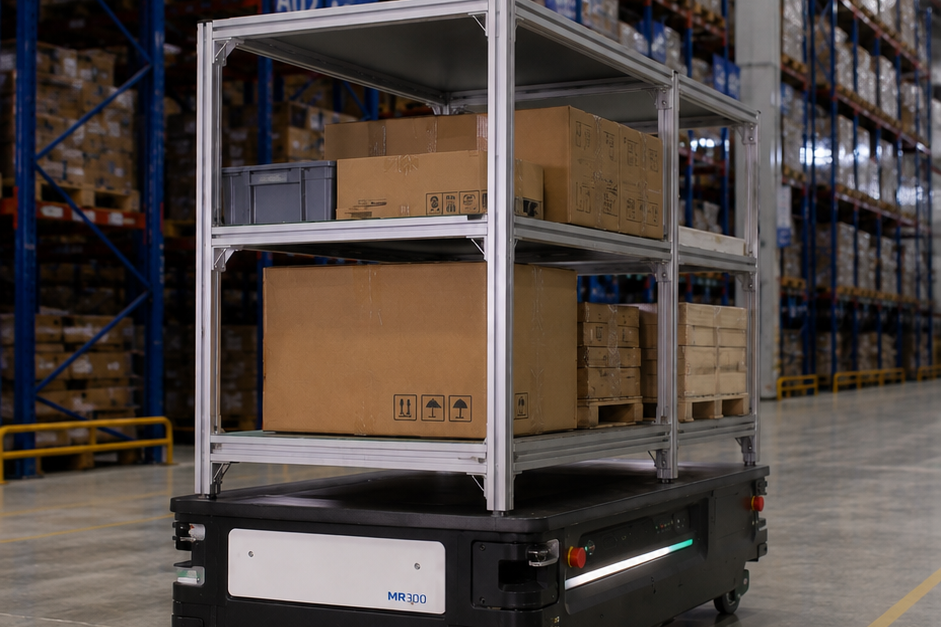
Procurement for cleanroom wheels starts from a different checklist. Load capacity and wheel diameter are still reviewed, but three further parameters carry more weight, and any one of them failing can disqualify a wheel even if its load rating is perfect. Treat these three as the entry criteria; everything else is fine tuning.
Dust generation is the first indicator: the particles shed during wheel operation must be held to the lowest possible level, because ordinary tread materials shed far more than a cleanroom tolerates. Outgassing is the second: tread compounds must not volatilize organic compounds into a controlled atmosphere, or air quality and precision processes suffer — low-outgassing performance must be confirmed on test data before purchase, not assumed from reputation. Anti-static performance is the third: the cleanroom itself requires controlled static, and the charge generated by wheel friction must be conducted away, otherwise static attracts and holds dust. The conductive path must be complete, with every link from tread to floor connected.
Choosing a Low-Dust Tread Material
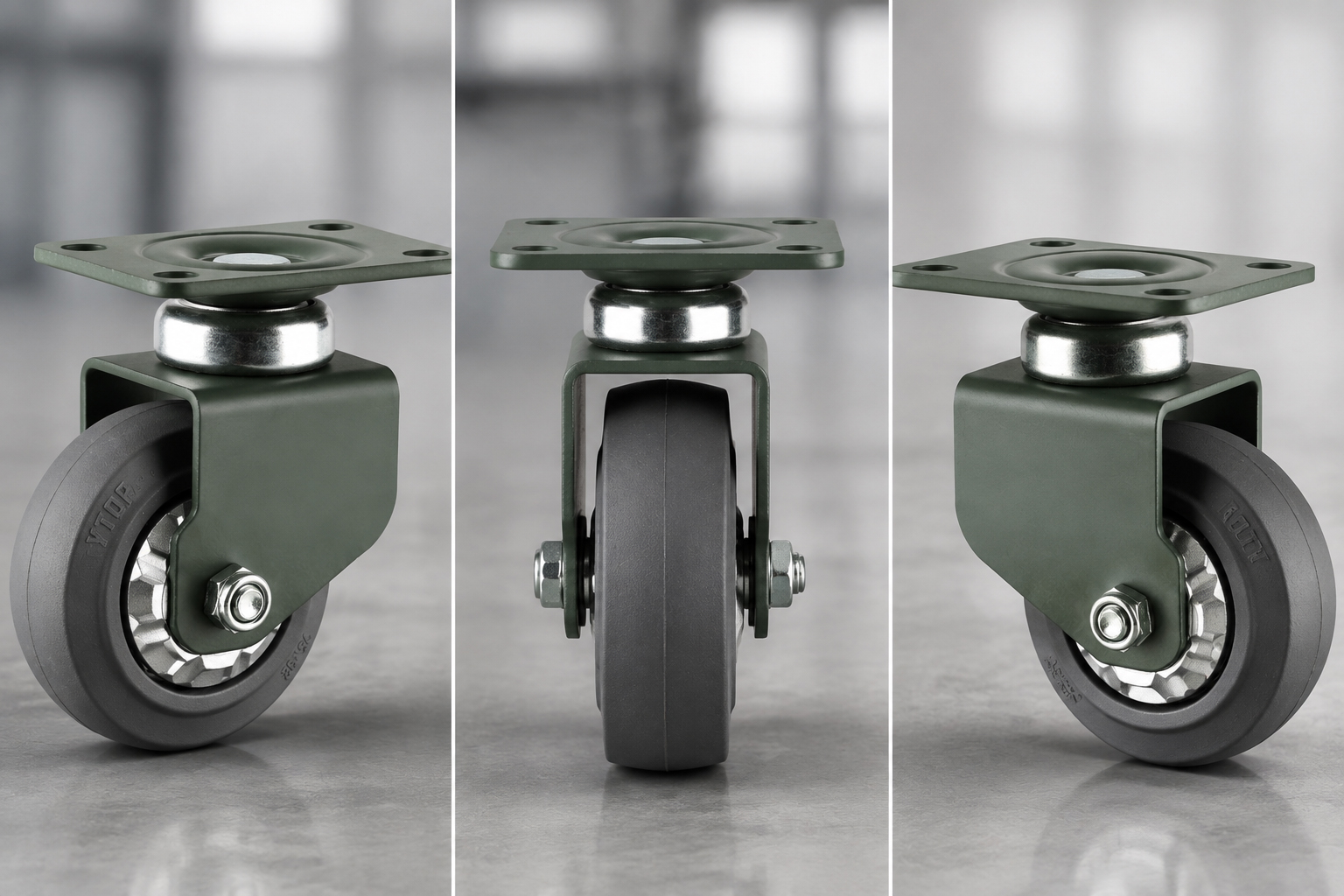
Ordinary rubber treads are excluded immediately: their dust generation is too high. Semiconductor cleanrooms most commonly use polyurethane-type low-dust materials, which shed few particles while running, wear well, and therefore generate little dust from wear itself, with smooth surfaces that do not trap dust. Tread hardness must also match the duty: too soft and the tread wears fast and sheds particles; too hard and operation becomes noisy and the floor may be marked.
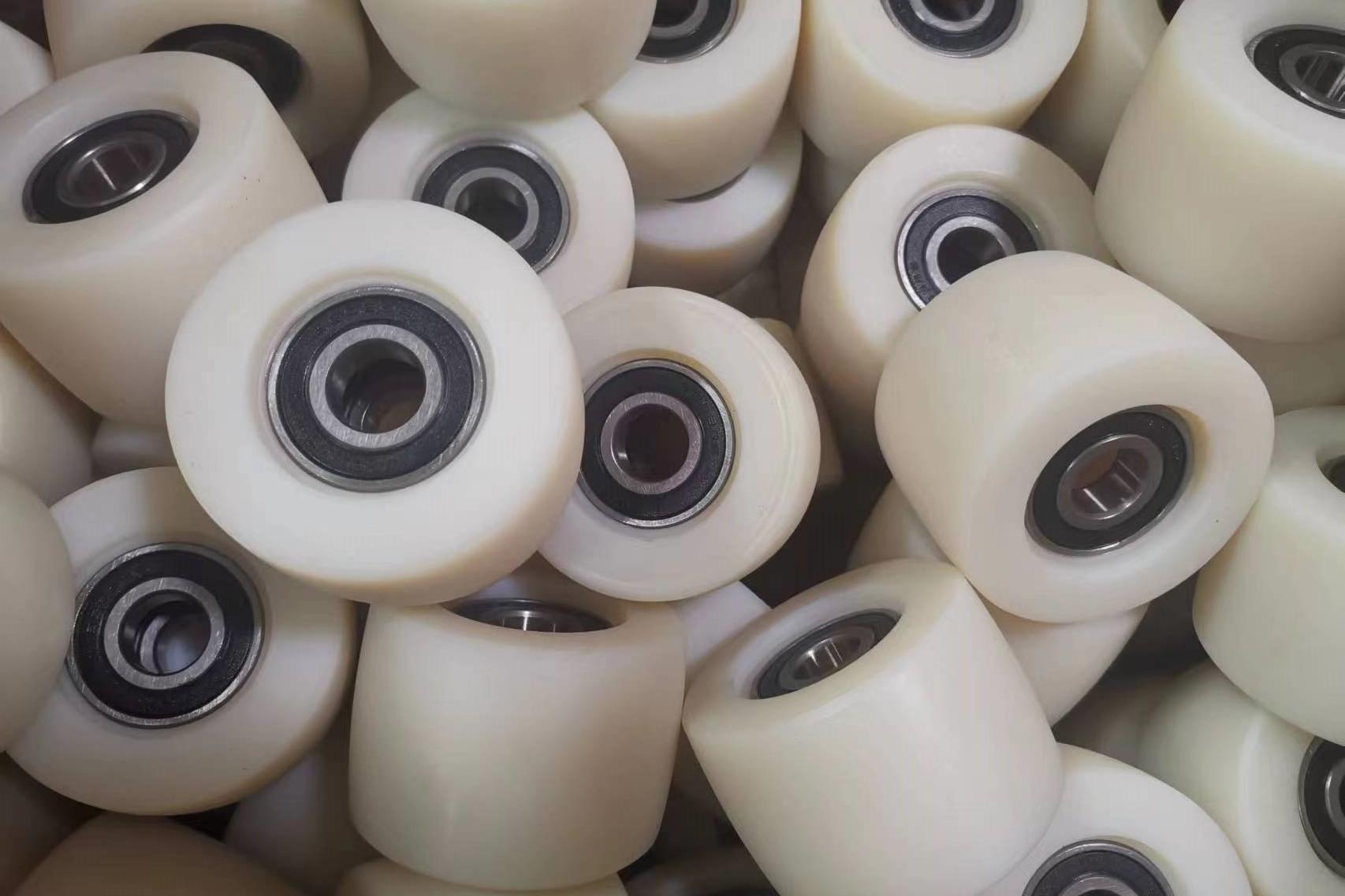
“Low dust” is never the property of one material alone — it is the result of material, hardness, and structure working together. During selection, ask the supplier for the tread material’s dust generation test data, outgassing data, and wear resistance; these figures determine whether the wheel can run long-term in the target cleanliness class, such as ISO Class 5. Nylon wheels are sometimes considered for cleanrooms because of their smooth surface and low particle shedding, but they run hard and noisy and offer no cushioning, so they suit only specific, low-noise-sensitive lanes; weighing the trade-offs is worthwhile before specifying them, because a wheel that passes the particle test but disrupts neighboring processes is not a cleanroom solution.
Sealed Structure: Keeping Wear Particles Inside the Wheel
The largest dust source on a wheel is the friction and wear of its rotating parts. Sealed bearings contain wear particles inside the bearing rather than letting them escape into the clean environment, and when this is combined with grease-sealed design, the particles generated by rotating components are controlled at source. The wheel set needs an overall sealed design so that every dust source of the complete wheel is managed internally.
This is the fundamental difference between a cleanroom wheel and an ordinary one: on an ordinary wheel, wear products shed freely; on a cleanroom wheel, they must be digested internally. The integrity of the sealed structure directly determines how long the wheel can stay in the cleanroom — a seal that fails turns the wheel into a continuous particle emitter, and the only recovery is replacement. Inspect seal condition during routine cleanroom maintenance and replace wheels whose seals have hardened or cracked, because once particles escape, the cleanliness class of the whole zone is affected.
Brackets, Surface Treatment, and Precision Travel
Brackets and their surface finish are themselves potential dust sources. Brackets with grade-8 powder coating carry a dense, smooth film that does not shed flaking debris and is convenient for daily wiping in cleanrooms; a properly treated surface produces no coating particles, and the substrate underneath neither rusts nor sheds powder. The bracket structure must stay stable under load, with no deformation and no friction noise at the swivel joint.
AGVs carrying wafer boxes also demand precise, stable travel. Stable wheel-set load bearing means the AGV moves without shaking and positions accurately; a conductive tread conducts away the static generated by movement; and a smooth, sealed rotating structure means start and stop are steady, with no jerk during acceleration and deceleration — which has real protective value for precision cargo such as wafers. When communicating with the supplier, provide the cleanliness class (for example ISO Class 5), the AGV load, the anti-static requirement, and operating frequency, so the matched grade of low-dust configuration can be selected. YTOP Manganese Steel Casters recommends confirming specifications against the cleanliness class and dust generation requirement rather than applying ordinary industrial wheel standards, which do not transfer to cleanroom duty.
Related Reading
Looking for more in-depth caster guides and industrial mobility resources? Explore these related articles:
- Nylon Wheels for AGV Casters — Compare the advantages and disadvantages of nylon wheels to determine if they suit your cleanroom or industrial AGV application.
- Why Polyurethane for AGV Casters? — Material analysis explaining why polyurethane is the dominant wheel choice for AGV and automated guided vehicle systems.
- What Is an AGV Caster? — Understand the key differences between AGV casters and ordinary casters, and why precision matters in cleanroom environments.
- How to Select AGV Casters — A complete parameter guide covering load, speed, floor, and environment requirements for AGV caster selection.
Explore our complete range of heavy-duty casters (150-610kg) and super heavy-duty casters (700-1600kg) for diverse industrial applications, or contact our engineering team for expert caster application knowledge and selection guidance.
Post time: Oct-12-2026