
AGV caster selection cannot rely solely on rated load capacity. Selection requires simultaneous consideration of total machine weight, number of wheel sets, operating speed, floor conditions, operating frequency, steering method, and ambient temperature. Core parameters include per-wheel load, wheel diameter, tread material, bearing type, offset distance, mounting method, and bracket strength. The basic logic of selection is to first determine working conditions, then match parameters item by item, and finally leave a safety margin.
What Working Condition Information Should Be Organized Before Selection
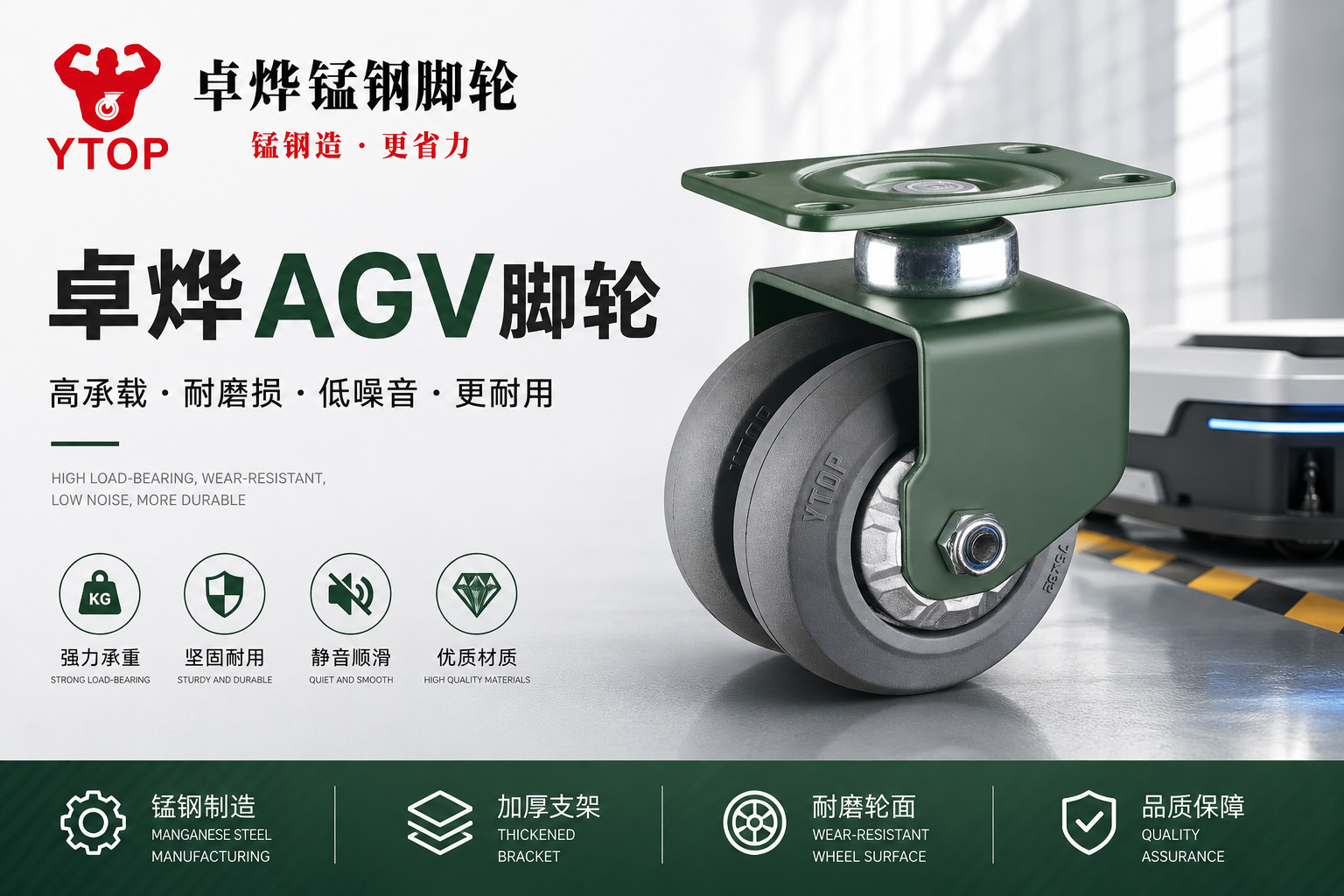
Selecting AGV casters is not about flipping through a product manual to find a model — it is about first organizing clear information about the equipment and usage scenario.
Total machine weight: AGV empty weight plus maximum cargo weight yields the total mass. This is the starting point for load calculation.
Number of wheel sets: AGVs typically have 3 to 4 wheels. The number of wheels determines per-wheel load distribution. More wheels mean smaller per-wheel load, but a more complex structure.
Operating speed: Speed affects caster rotational speed and bearing life. High-speed operation places higher demands on bearing precision and dynamic balance.
Floor conditions: Floor material (epoxy flooring, concrete, anti-static PVC, etc.), flatness, joint width, and slope all affect selection.
Operating frequency: Daily operating hours, weekly operating days. Continuous operation and intermittent operation impose different requirements on caster life.
Steering method: Differential steering, omnidirectional steering, or fixed-path steering determines the configuration of swivel wheels and offset distance selection.
Environmental conditions: Temperature range, humidity, presence of oil, dust, corrosive substances, etc.
How to Confirm Core Parameters
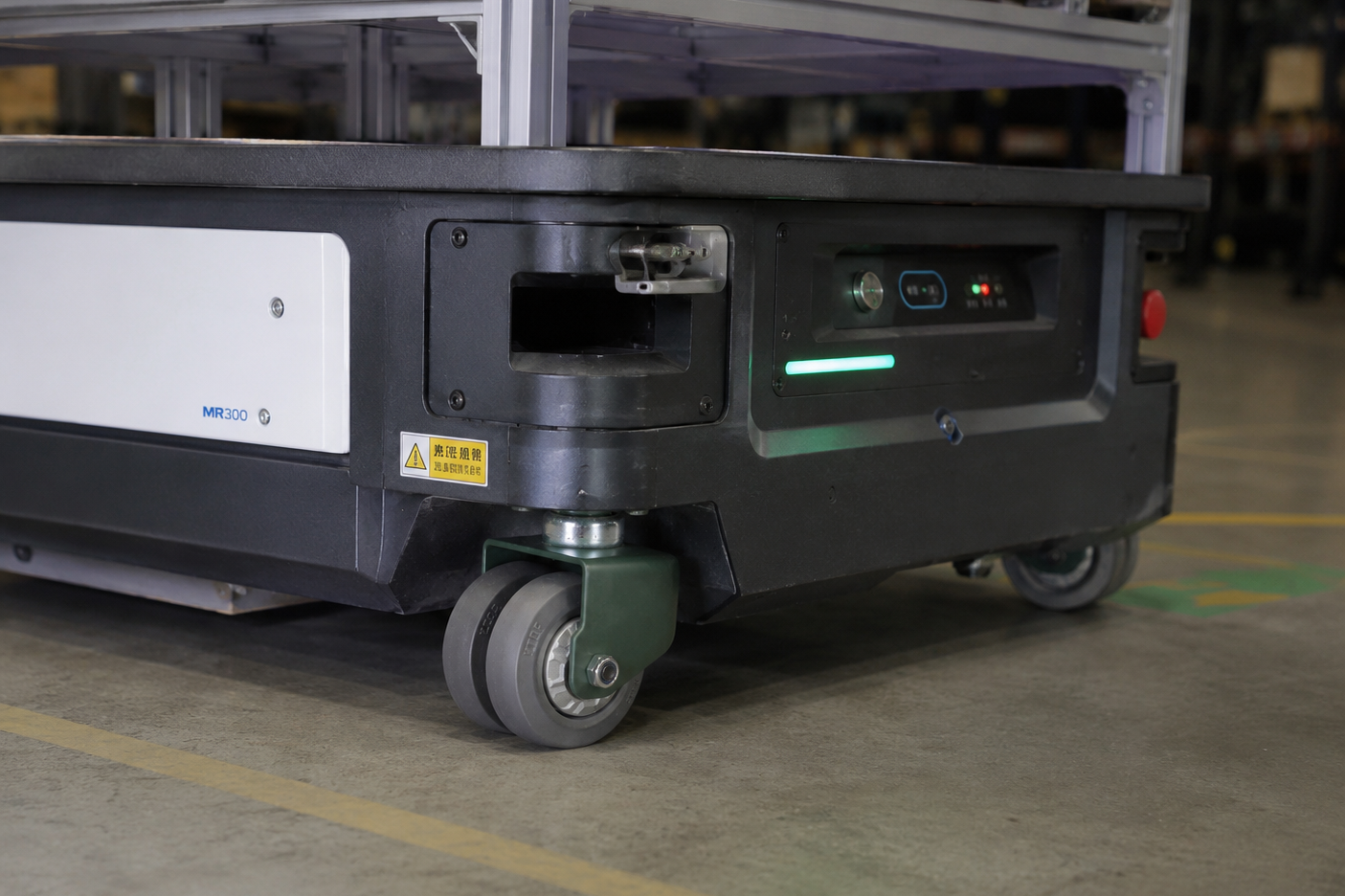
In terms of per-wheel load, the theoretical per-wheel load equals the AGV total mass divided by the actual number of load-bearing wheels. Actual selection needs to consider uneven load distribution (usually multiplied by a factor of 1.2 to 1.3) and dynamic load (acceleration/deceleration impact, usually multiplied by a factor of 1.3 to 1.5) on this basis. It is recommended that working load not exceed 75% of the caster’s rated load, i.e., leave a 25% margin. For example, if the per-wheel working load is 100kg, select casters with a rated load of 135 to 145kg.
In terms of wheel diameter, larger diameters offer better obstacle crossing and lower rolling resistance, but require greater mounting height and raise the center of gravity; smaller diameters are compact and lower the center of gravity, but have poorer obstacle crossing and greater resistance. AGV commonly uses wheel diameters ranging from 100 to 200mm, and heavy-load AGVs may use 250mm or more. Wheel diameter selection needs to consider floor joint width and equipment mounting space. For floor joints of 5mm or more, it is recommended that wheel diameter be no less than 100mm.
In terms of tread material, polyurethane (PU) is the most commonly used tread material for AGVs — wear-resistant, low-resistance, and elastic, suitable for most floors. Nylon has high hardness and strong load capacity, but is noisy and non-cushioning, suitable for flat hard floors under heavy load. Rubber offers good cushioning and strong grip, but is less wear-resistant than PU, suitable for scenarios requiring shock absorption.
In terms of bearing type, precision ball bearings offer low starting resistance and high running accuracy, making them the first choice for AGVs. Sealed ball bearings are dustproof and waterproof, suitable for dusty and humid environments. Plain bearings are low-cost but high-resistance, and not suitable for AGVs.
In terms of offset distance, the swivel wheel offset affects steering resistance and self-centering characteristics. AGV offset is typically selected at 15 to 30mm. Larger offset prioritizes stability, smaller offset prioritizes maneuverability. The offset of multiple swivel wheels should be consistent, otherwise steering characteristics will be uneven.
Selection Process & Supplier Communication
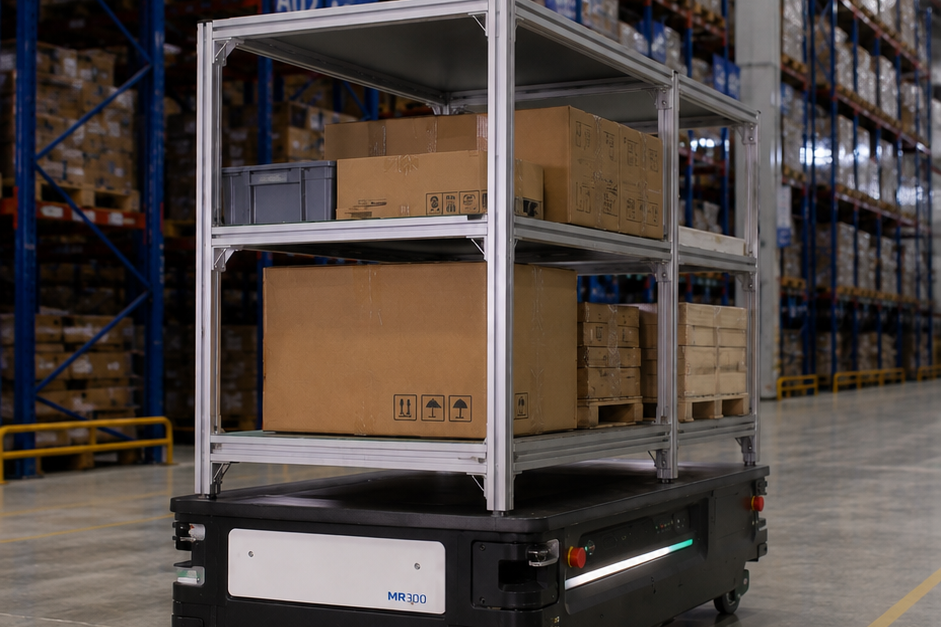
First list the working condition information table (weight, speed, floor, frequency, environment), then calculate the per-wheel working load, multiply by the safety factor to determine the caster rated load requirement. Next, determine wheel diameter based on floor conditions and obstacle-crossing needs, select tread material based on floor material and environmental conditions, select bearing type based on operating speed and precision requirements, and determine swivel wheel offset based on steering method. Finally, confirm mounting method and bracket strength, summarize the parameters, and find a supplier to match products.
The hardest part of selection is not choosing individual parameters, but balancing multiple parameters against each other. For example, large wheel diameter offers low resistance but raises the center of gravity, requiring trade-offs based on overall equipment design. Using the same specification for all wheels may not be reasonable — drive wheels and driven wheels can use different materials, with drive wheels being more wear-resistant.
Temperature factors are easily overlooked. In low-temperature environments, tread material hardens and elasticity decreases; in high-temperature environments, bearing grease may leak out. For standard conditions of -10°C to 60°C, standard PU is sufficient; beyond this range, special formulations are needed.
After selection is complete, it is recommended to conduct running tests on a prototype to verify indicators such as resistance consistency, noise, and temperature rise. Manufacturer parameters are measured under standard conditions, and actual working conditions may deviate — testing and verification can uncover potential problems.
Related Reading
- What Role Do AGV Casters Play in Material Handling?
- Heavy Duty Industrial Casters (150-610kg)
- PU vs TPU Caster Wheels: Which to Choose?
Post time: Sep-18-2026