
When picking casters, the first thing you check is load capacity — but the second is grading: light, medium, heavy, extra-heavy. Price, structure, and usage all follow the grade. Yet grading is not a marketing label; behind each class is a specific structural configuration.
Only by understanding load grading can you avoid “a small horse pulling a heavy cart” or paying for capacity you will never use.
The Mainstream Load Grading Scale
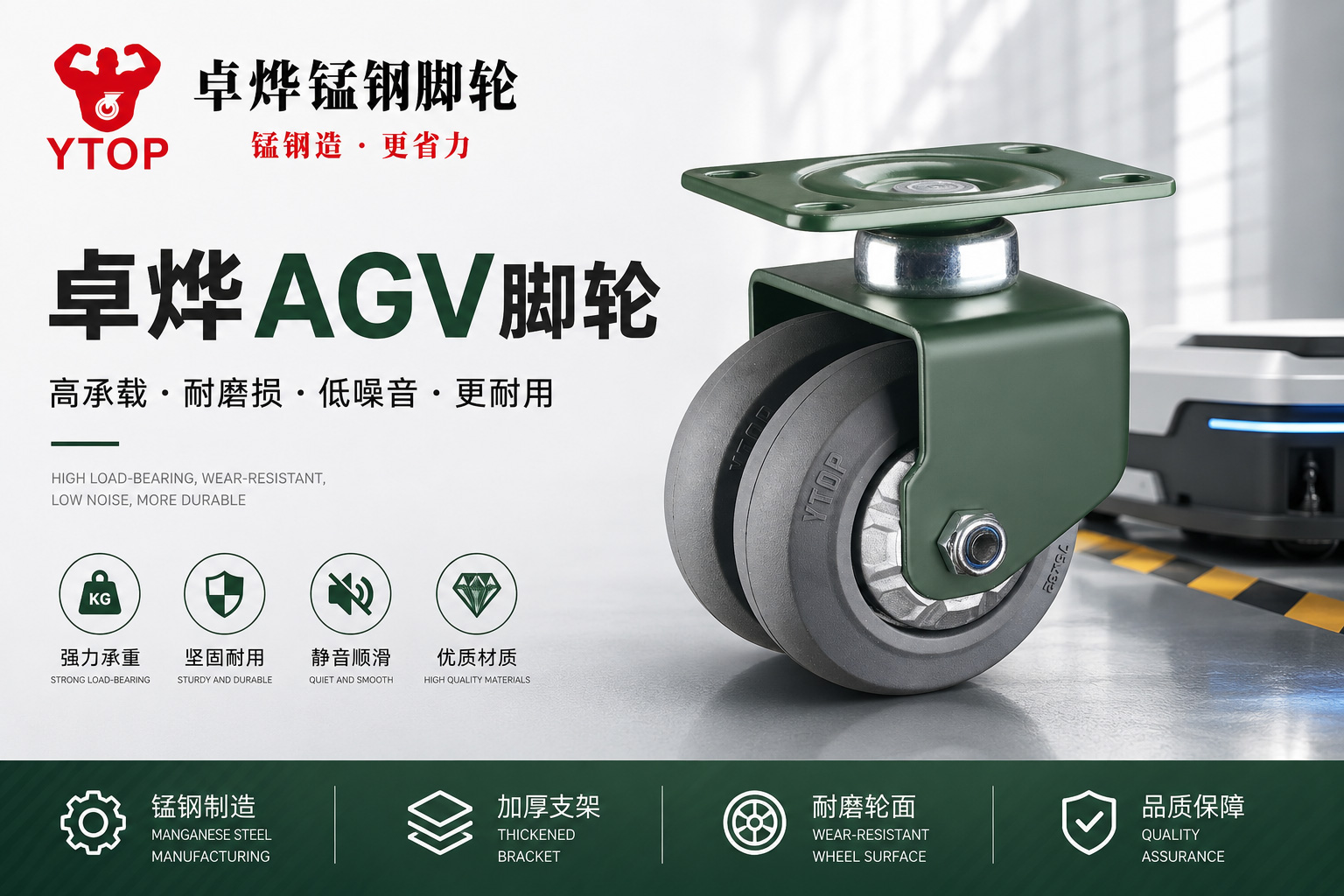
Industrial caster load grading follows rough industry conventions, with exact values varying by manufacturer:
- Light-duty casters — per-wheel load in the tens of kg, suited to light transfer carts, office furniture, and display stands.
- Medium-duty casters — per-wheel load around 100–200 kg, suited to standard workshop carts, tool trolleys, and supermarket shelves.
- Heavy-duty casters — per-wheel load in the hundreds of kg, suited to heavy workshops, logistics, and equipment handling.
- Extra-heavy-duty casters — per-wheel load approaching 1,000 kg, suited to port loads and large machinery.
Note: these are general ranges. Always check the manufacturer's specification table — one maker's “heavy” is not directly equal to another's. For the math behind the numbers, read our guide on dynamic vs static load calculation.
What Changes Between Grades
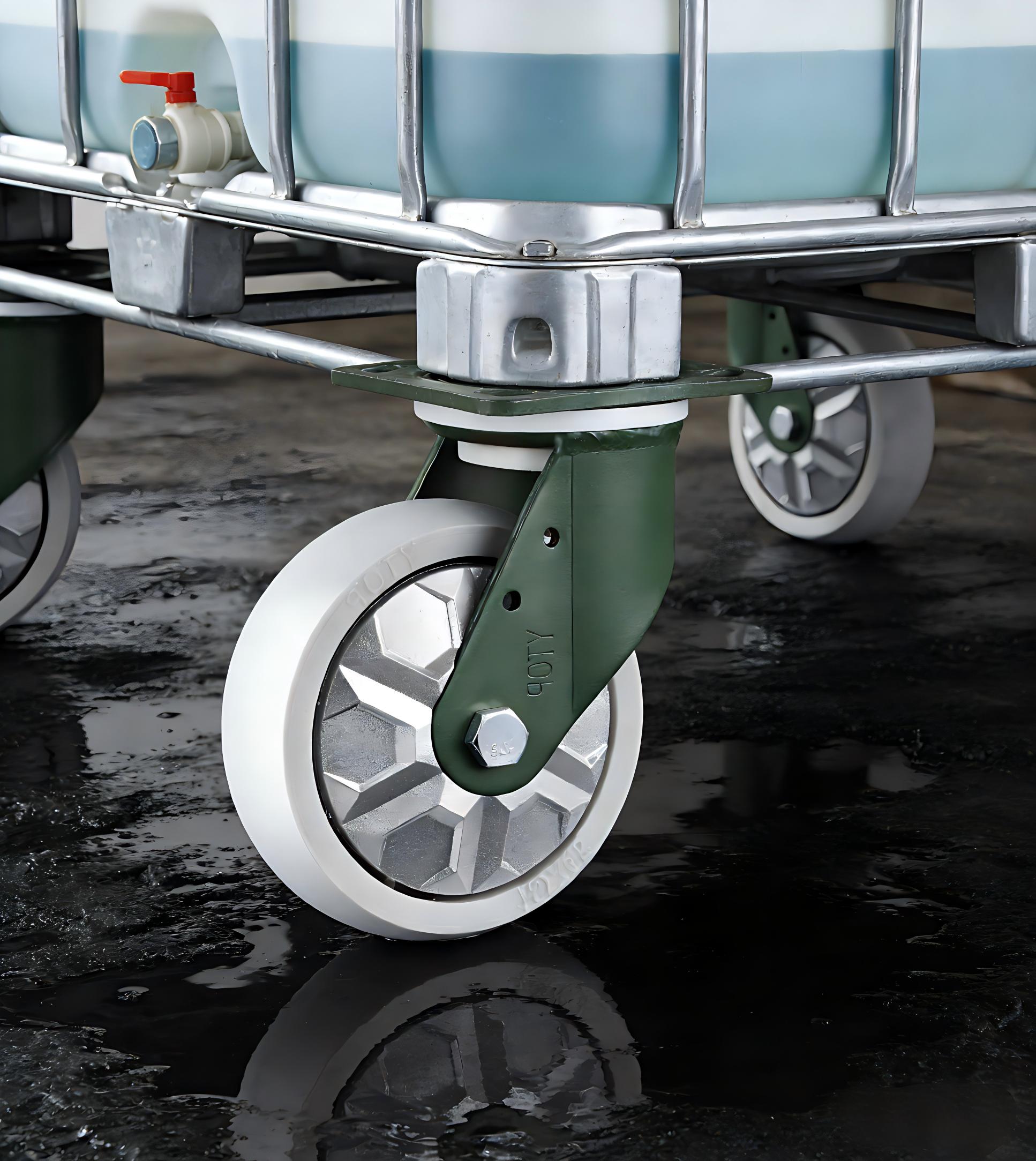
Load grading is not just a number — it is a structural tier:
- Bracket material: light grades use stamped thin-plate brackets; heavy grades use thickened steel plate.
- Hub structure: the higher the load, the thicker the hub and the more reinforced the load path.
- Base plate thickness: heavy-duty casters use thickened mounting plates so the load is dispersed, not concentrated.
- Bearing spec: heavier grades use larger bearings with a bigger operating margin.
- Surface and lubrication: heavy-grade bracket coatings and rotating-part lubrication are more carefully engineered.
Together these structural differences justify the load rating on the label.
Two Common Mistakes When Choosing a Grade
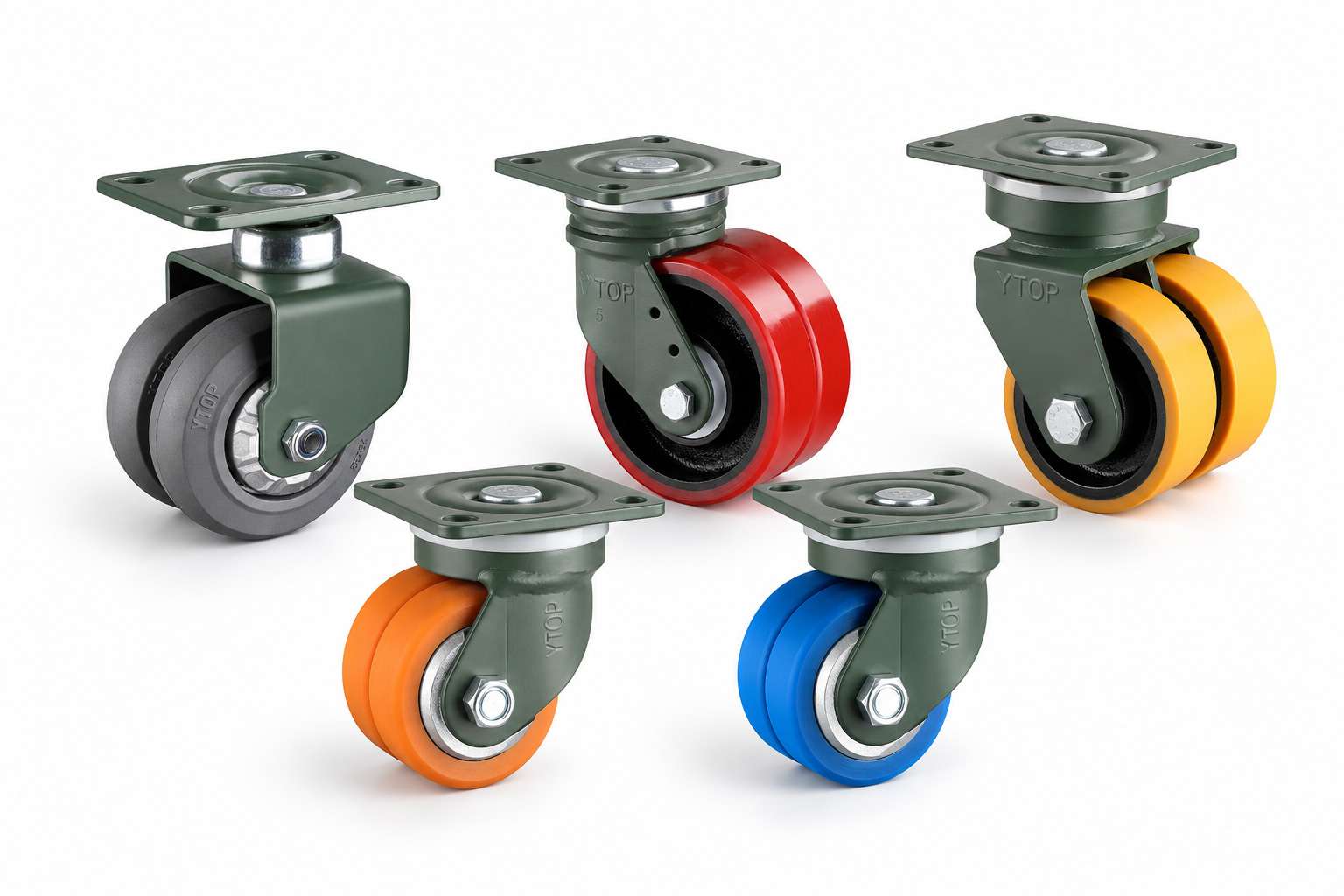
Mistake 1: comparing the equipment's total weight directly to the per-wheel rated load. The correct figure is: total weight divided by wheel count, then multiplied by an uneven-loading factor — that is the real per-wheel load.
Mistake 2: comparing “heavy” across manufacturers. Each maker grades differently; to compare, look at the exact kg values on the spec sheet, not the label. For material options at each grade, see our rubber, PU and nylon comparison.
The Cost of Overloading
The flip side of load grading is safety grading. Overloading causes wheel deformation at best, and caster-set failure mid-transport at worst — equipment tipping, injury or product damage. For heavy-load equipment, choosing one grade higher is the most cost-effective safety investment there is. Browse our heavy-duty caster collection and super-heavy-duty line to match your load.
Related Reading
Looking for more in-depth caster guides and industrial mobility resources? Explore these related articles:
- How to Calculate Load Capacity — Dynamic vs. static load math behind each caster grade.
- Wheel Material Comparison — How material choice pairs with load class for each application.
- Wheel Diameter: Large vs Small — How diameter interacts with load grade and pushing effort.
- Caster Offset and Lead — Steering stability considerations for heavy-duty swivel casters.
Explore our complete range of heavy-duty casters (150-610kg) and super heavy-duty casters (700-1600kg) for diverse industrial applications, or contact our engineering team for expert caster selection guidance.
Post time: Oct-23-2026