
Caster bearings are critical components that significantly affect the performance, durability, and maintenance requirements of casters. The right bearing selection can reduce rolling resistance, extend service life, minimize maintenance, and improve overall caster performance. This article provides a comprehensive analysis of caster bearing selection, examining the different types of bearings available, their characteristics, advantages, limitations, and suitable applications to help purchasers make informed decisions.
Introduction to Caster Bearings
Caster bearings are mechanical components that reduce friction between the rotating wheel and the stationary axle, allowing the wheel to rotate smoothly and efficiently with minimal resistance. Bearings are one of the most critical components of a caster, as they directly affect the caster’s rolling resistance, load capacity, durability, noise level, and maintenance requirements. A high-quality bearing can significantly reduce the effort required to move equipment, extend the service life of the caster, and minimize the need for maintenance and lubrication. Conversely, a low-quality or inappropriate bearing can lead to excessive rolling resistance, premature wear, noisy operation, and premature caster failure.
Caster bearings operate in a demanding environment, supporting radial loads (from the weight of the equipment and cargo) and sometimes axial loads (from turning, impacts, and uneven surfaces). They must operate reliably over a wide range of speeds, temperatures, and environmental conditions, and they must be compatible with the lubricants and contaminants present in the operating environment. There are several types of bearings used in casters, each with its own unique characteristics, advantages, limitations, and suitable applications. The most common types include sleeve bearings (also known as bushings or plain bearings), ball bearings, tapered roller bearings, and roller bearings. In addition to these main types, there are specialty bearings such as thrust bearings, spherical bearings, and sealed or shielded bearings designed for specific applications. In this article, we will analyze the most common caster bearing types in detail, examining their mechanisms, characteristics, advantages, limitations, and typical applications, and providing guidance on selecting the right bearing for specific caster applications.
Sleeve Bearings (Bushings): Simple and Cost-Effective
Sleeve bearings, also known as bushings, plain bearings, or friction bearings, are the simplest and most common type of bearing used in light and medium-duty casters. A sleeve bearing is essentially a cylindrical sleeve made from a low-friction material that is pressed into the wheel hub, with the axle passing through the center of the sleeve. As the wheel rotates, the sleeve provides a low-friction surface between the rotating wheel and the stationary axle, allowing the wheel to rotate with minimal resistance. Sleeve bearings have no rolling elements (no balls or rollers), relying instead on the low-friction properties of the bearing material and a thin film of lubricant between the bearing surface and the axle.
Sleeve bearings are typically made from materials such as oil-impregnated sintered bronze (also known as powdered metal or PM bearings, which are porous bronze impregnated with oil for self-lubrication), cast bronze, nylon, PTFE (Teflon), or composite materials. Oil-impregnated sintered bronze is the most common material for caster sleeve bearings, as it provides good load capacity, low friction, and self-lubricating properties that reduce maintenance requirements. Nylon and PTFE sleeve bearings are used in applications where corrosion resistance, chemical resistance, or non-magnetic properties are required, or where lubrication is not desirable (such as in food processing or cleanroom environments). The key advantages of sleeve bearings include: simplicity of design with no moving parts, making them highly reliable and resistant to damage from impacts and shock; low cost, making them the most economical bearing option; compact size, allowing them to fit in smaller wheel hubs; quiet operation, with no rolling elements to generate noise; and good resistance to contamination, as there are no rolling elements for debris to damage. The main limitations of sleeve bearings include: higher friction and rolling resistance compared to rolling element bearings (ball or roller bearings), particularly under heavy loads or at start-up; higher wear rates, particularly under heavy loads or high speeds; the need for periodic lubrication (although self-lubricating materials reduce this requirement); and lower load capacity compared to rolling element bearings of the same size. Sleeve bearings are ideal for light and medium-duty applications where cost is a primary consideration, where loads are moderate, where speeds are relatively low, and where maintenance is infrequent. Typical applications include furniture casters, office chair casters, light carts, display racks, and general-purpose light and medium-duty casters. They are not ideal for heavy-duty applications, high-speed applications, or applications where minimal rolling resistance is critical.
Ball Bearings: Smooth Rolling and Versatile
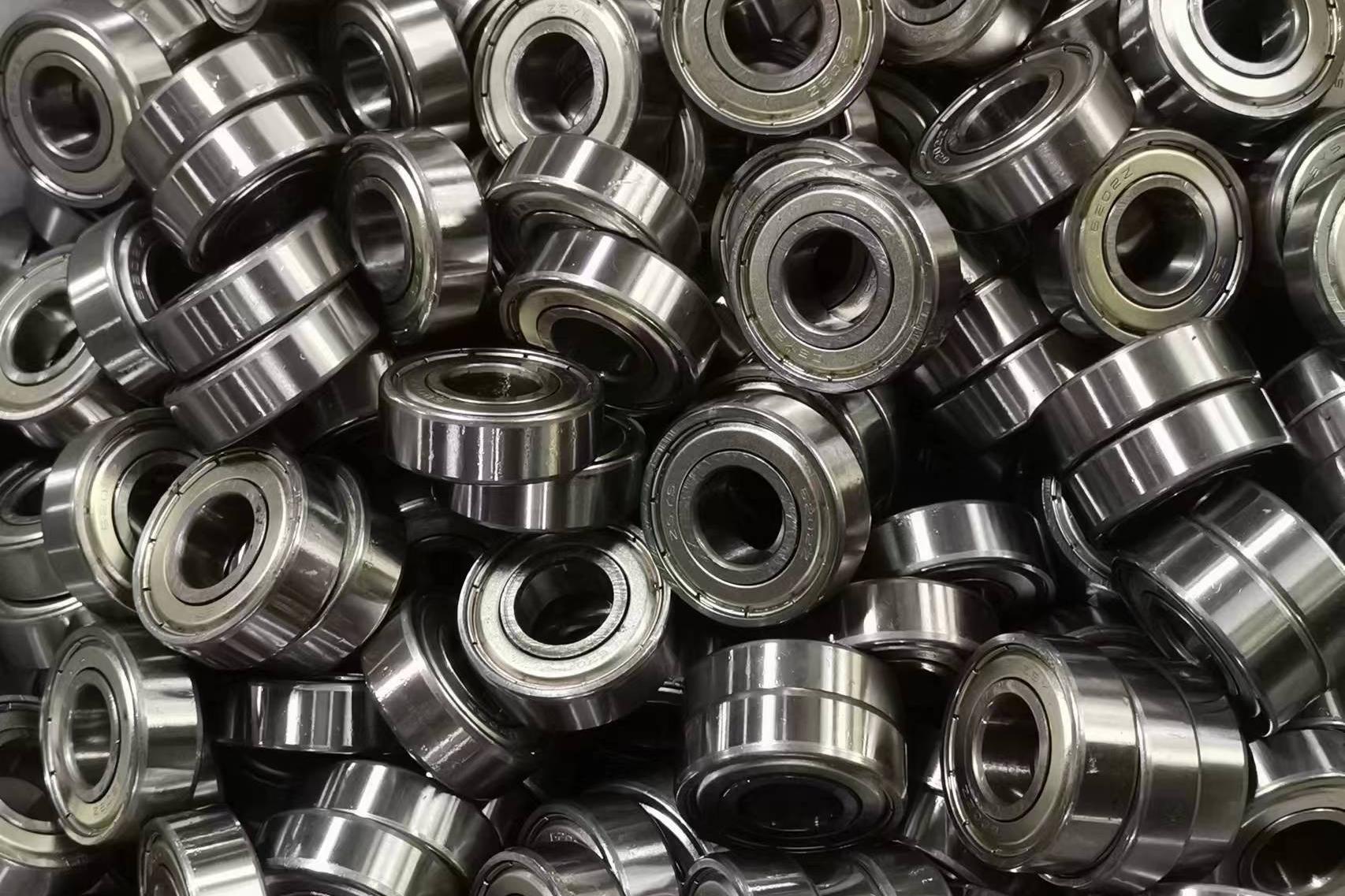
Ball bearings are the most common type of rolling element bearing used in medium and heavy-duty casters, offering a good balance of load capacity, low friction, versatility, and cost-effectiveness. A ball bearing consists of an inner ring (race), an outer ring (race), a set of steel balls that roll between the two rings, and a cage that separates the balls and maintains their spacing. The inner ring is typically mounted on the axle (or the axle passes through it), and the outer ring is pressed into the wheel hub. As the wheel rotates, the balls roll between the inner and outer races, providing very low friction and allowing the wheel to rotate smoothly and efficiently with minimal resistance.
Ball bearings used in casters are typically radial ball bearings (also known as deep groove ball bearings), which are designed to support primarily radial loads (perpendicular to the axle) but can also support moderate axial loads (parallel to the axle). They are available in various sizes and configurations, with the most common caster ball bearing sizes including 6200 series, 6300 series, and various inch-size bearings. Ball bearings may be open (unprotected), shielded (with metal shields on one or both sides to prevent contamination while still allowing some lubricant to escape), or sealed (with rubber or plastic seals on both sides to provide better contamination protection and retain lubricant). Sealed ball bearings are preferred for caster applications because they are pre-lubricated and sealed for life, requiring no additional lubrication and providing better protection against contamination. The key advantages of ball bearings include: very low friction and rolling resistance, making them much easier to start and maintain movement than sleeve bearings, particularly under heavy loads; good load capacity for their size, with the ability to support both radial and moderate axial loads; high-speed capability, allowing them to operate at higher speeds than sleeve bearings; wide availability and standardization, with many common sizes available from multiple manufacturers; and relatively low cost compared to other rolling element bearings such as tapered roller bearings. The main limitations of ball bearings include: lower load capacity compared to tapered roller bearings or roller bearings of the same size; susceptibility to damage from impacts and shock loads (the balls can brinell or dent the races under heavy impact); limited axial load capacity compared to tapered roller bearings; and potential for noise generation if damaged or contaminated. Ball bearings are ideal for medium and heavy-duty applications where low rolling resistance, good load capacity, and versatility are important. Typical applications include industrial carts, warehouse equipment, hospital carts, food service equipment, material handling equipment, and general-purpose medium and heavy-duty casters. They are the most popular bearing type for industrial casters due to their excellent balance of performance, versatility, and cost.
Tapered Roller Bearings: For Heavy Loads and Combined Forces
Tapered roller bearings are a type of rolling element bearing designed to support heavy combined radial and axial loads, making them ideal for the most demanding heavy-duty caster applications. A tapered roller bearing consists of an inner ring (cone) with a tapered raceway, an outer ring (cup) with a tapered raceway, a set of tapered rollers that roll between the two rings, and a cage that separates the rollers. The tapered design of the rollers and raceways allows the bearing to support both radial loads (perpendicular to the axle) and axial loads (parallel to the axle) simultaneously, with the load being distributed across the large contact area of the tapered rollers. This makes tapered roller bearings much more capable of handling the combined forces that occur in heavy-duty caster applications, particularly during turning, cornering, and operation on uneven surfaces.
Tapered roller bearings used in casters are typically configured as single-row tapered roller bearings, with one bearing per wheel side (or two bearings per wheel for very heavy loads). They are available in various sizes and series, with common caster sizes including the 30000 series and various inch-size bearings. Unlike ball bearings, tapered roller bearings are typically not sealed for life, and they require periodic lubrication and adjustment to maintain proper preload and performance. However, some manufacturers offer pre-lubricated, sealed tapered roller bearing units for caster applications that reduce maintenance requirements. The key advantages of tapered roller bearings include: very high load capacity, significantly higher than ball bearings or sleeve bearings of the same size, making them suitable for the heaviest caster applications; excellent ability to support combined radial and axial loads, which is particularly important for heavy-duty casters that experience significant axial forces during turning and cornering; good resistance to shock and impact loads, with the large contact area of the rollers distributing loads more effectively than ball bearings; and long service life under heavy loads, with the ability to operate reliably for extended periods in demanding conditions. The main limitations of tapered roller bearings include: higher cost than ball bearings or sleeve bearings; more complex installation and maintenance, requiring proper preload adjustment and periodic lubrication; larger size and weight, requiring larger wheel hubs and more space; and slightly higher friction than ball bearings at light loads (although they perform well under heavy loads). Tapered roller bearings are ideal for heavy-duty and extra-heavy-duty applications where very high load capacity, combined radial and axial load support, and resistance to shock and impact are required. Typical applications include extra-heavy-duty industrial carts, aerospace manufacturing equipment, shipbuilding equipment, heavy material handling systems, tow-line applications, and any caster application where the loads exceed the capacity of ball bearings. They are the bearing of choice for the most demanding heavy-duty caster applications where reliability and load capacity are critical.
Other Bearing Types and Specialty Bearings
In addition to the three main bearing types discussed above (sleeve, ball, and tapered roller), there are several other bearing types and specialty bearings used in specific caster applications. Roller bearings (also known as cylindrical roller bearings) use cylindrical rollers instead of balls, providing a larger contact area and higher radial load capacity than ball bearings, but with limited axial load capacity. They are used in heavy-duty caster applications where primarily radial loads are present and where higher load capacity than ball bearings is required, but where the axial load capacity of tapered roller bearings is not needed. They are less common in caster applications than ball or tapered roller bearings but are used in some specialized heavy-duty designs.
Thrust bearings are designed to support primarily axial loads (parallel to the axle), and they are sometimes used in caster swivel mechanisms (rather than wheel bearings) to support the axial loads from the equipment weight. Swivel thrust bearings may be ball thrust bearings or roller thrust bearings, and they help reduce the effort required to turn or swivel the caster, particularly under heavy loads. Spherical bearings (also known as self-aligning bearings) are designed to accommodate misalignment between the axle and the wheel, which can occur due to manufacturing tolerances, frame deflection, or uneven loading. They are used in some heavy-duty caster applications where misalignment is a concern, helping to prevent premature bearing failure due to misalignment. Sealed and shielded bearings are not a separate type of bearing but rather a configuration of ball or roller bearings that includes protection against contamination. Shielded bearings have metal shields that prevent large debris from entering the bearing while still allowing some lubricant to escape. Sealed bearings have rubber or plastic seals that provide better contamination protection and retain lubricant, making them “lubed for life” and requiring no additional lubrication. Sealed bearings are strongly preferred for caster applications due to their low maintenance requirements and better contamination protection. Specialty materials bearings include bearings made from stainless steel (for corrosion resistance in food processing, medical, and marine applications), ceramic bearings (for high-speed, high-temperature, or non-magnetic applications), and plastic bearings (for corrosion-resistant, lightweight, or non-lubricated applications). These specialty bearings are used in specific applications where standard steel bearings are not suitable due to environmental or operational requirements. By understanding the range of bearing types and specialty bearings available, users can select the right bearing for even the most demanding and specialized caster applications.

Bearing Selection Guide and Conclusion
Selecting the right bearing for a caster application requires careful consideration of several key factors to ensure optimal performance, durability, and cost-effectiveness. The first and most important factor is the load capacity requirement. The bearing must be able to safely support the maximum expected load (including both static and dynamic loads) with an appropriate safety factor. Sleeve bearings are suitable for light to medium loads, ball bearings for medium to heavy loads, and tapered roller bearings for heavy to extra-heavy loads. The second factor is the type of load, including whether the load is primarily radial, primarily axial, or a combination of both. Ball bearings can support moderate combined loads, tapered roller bearings excel at combined loads, and sleeve bearings are best for primarily radial loads. The third factor is the rolling resistance requirement, which affects the effort required to move the equipment. Ball bearings offer the lowest rolling resistance, followed by tapered roller bearings (under heavy loads), and then sleeve bearings (which have the highest friction, particularly at start-up). For applications where minimal effort is critical (such as ergonomic carts or manually moved equipment), ball bearings are typically the best choice.
The fourth factor is the operating environment, including the presence of contaminants (dust, dirt, moisture, chemicals), the temperature range, and any special requirements (corrosion resistance, washdown compatibility, cleanroom compatibility). Sealed bearings are preferred for contaminated environments, stainless steel bearings for corrosive environments, and specialty bearings for extreme temperatures or cleanroom applications. The fifth factor is the maintenance requirements, including whether the bearing can be periodically lubricated and adjusted, or whether a maintenance-free (sealed for life) bearing is required. Sealed ball bearings offer the lowest maintenance requirements, while tapered roller bearings typically require more maintenance (lubrication and preload adjustment). The sixth factor is the speed requirement, including the maximum speed at which the caster will operate. Ball bearings offer the best high-speed capability, followed by tapered roller bearings, and then sleeve bearings (which are limited to lower speeds). The seventh factor is the cost, including both the initial bearing cost and the total cost of ownership (including maintenance, replacement, and the impact on labor and productivity). While sleeve bearings have the lowest initial cost, ball bearings may offer a lower total cost of ownership due to reduced rolling resistance (less labor effort) and longer service life. By carefully evaluating all of these factors and selecting the appropriate bearing type, configuration, and material for the specific application, users can ensure that their casters provide optimal performance, durability, and value over their service life.
In conclusion, caster bearings are critical components that significantly affect the performance, durability, and maintenance requirements of casters. From the simple and cost-effective sleeve bearing, to the versatile and smooth-rolling ball bearing, to the heavy-duty and load-capable tapered roller bearing, each bearing type offers unique characteristics, advantages, and limitations that make it suitable for specific applications. By understanding the differences between these bearing types and carefully evaluating the specific requirements of the application – including load capacity, load type, rolling resistance, operating environment, maintenance requirements, speed, and cost – purchasers and users can select the right bearing to optimize caster performance and ensure safe, efficient, and reliable operation. Investing in the right bearing for the application is an investment in the performance, safety, and longevity of the entire caster system, and it can provide significant long-term benefits in terms of reduced labor effort, extended service life, minimized maintenance, and improved overall productivity. Whether selecting a simple sleeve bearing for a light-duty furniture caster or a heavy-duty tapered roller bearing for an extra-heavy-duty industrial caster, understanding the characteristics and applications of caster bearings is the key to making an informed decision that ensures optimal performance and value.
Related Reading
Looking for more in-depth caster guides and industrial mobility resources? Explore these related articles:
- Heavy-Duty Casters Selection Guide — Learn how to select the right heavy-duty casters for your equipment, including load calculation, material selection, and braking systems.
- Extra Heavy Duty Casters: Full Analysis — An in-depth look at extra heavy duty casters, including features, load capacity specifications, structural design, and industry applications.
- PP vs TPR Casters: A Complete Comparison Guide — Understand the key differences between polypropylene and thermoplastic rubber caster wheels for industrial applications.
- Rubber vs Nylon Casters: Which is Right for You? — A detailed comparison of rubber and nylon caster wheels, covering performance characteristics and selection criteria.
- Caster Maintenance Tips — Maximize the lifespan of your industrial casters with this comprehensive maintenance guide covering inspection, lubrication, and replacement.
Explore our complete range of heavy-duty casters (150-610kg) and super heavy-duty casters (700-1600kg), or contact our engineering team for expert guidance on selecting the perfect caster solution for your industrial application.
Post time: Dec-23-2024