
Lithium battery production workshops are among the most demanding environments for material handling equipment. Electrode material grinding and drying generate combustible dust, and solvents such as NMP can form flammable gas atmospheres in specific zones. In this setting, static charge built up by wheel rolling friction and then discharged is a potential ignition source. One point must be clear from the start: anti-static casters are a component of the workshop’s overall explosion-proof system — they are not “explosion-proof casters,” and they cannot replace the workshop’s overall explosion-proof design. This guide explains where the static risk comes from, how anti-static casters work, why the anti-static and explosion-proof concepts must not be conflated, and what supporting configuration and ongoing inspection are required.
Where the Static Risk Comes From in Lithium Battery Workshops
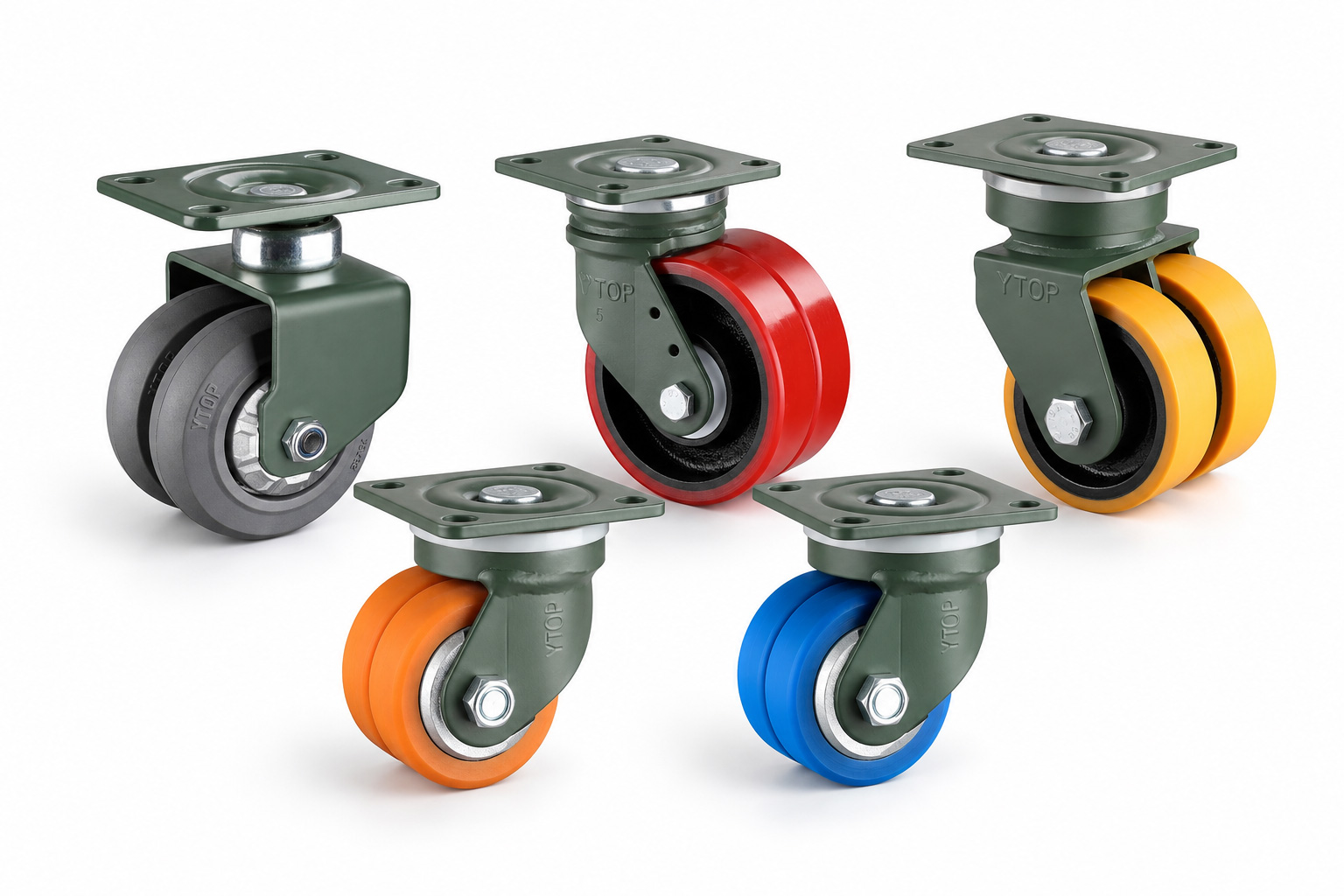
The static risk in these workshops stacks three factors at once. First, electrode material dust is combustible: positive and negative electrode materials produce dust during grinding, mixing, and drying, and at a certain concentration that dust ignites if it meets an ignition source — this is a dust explosion risk, not merely a static nuisance. Second, solvent volatilization forms flammable atmospheres: NMP and similar solvents evaporate during coating and baking, and the resulting gas has a very low minimum ignition energy, easily within the range of a routine electrostatic discharge.
Third, there are many pathways for static to accumulate — wheel friction, handling friction, and personnel walking all generate charge. If anti-static measures leave any pathway uncovered, a single gap can become a hidden danger. This is why wheels cannot be treated in isolation: they are one link in a chain, and the chain’s reliability is set by its weakest link. A cart with ordinary wheels moving through a dust zone turns into a mobile charge source no matter how well the rest of the workshop is grounded.
How Anti-Static Casters Work: The Conductive Path
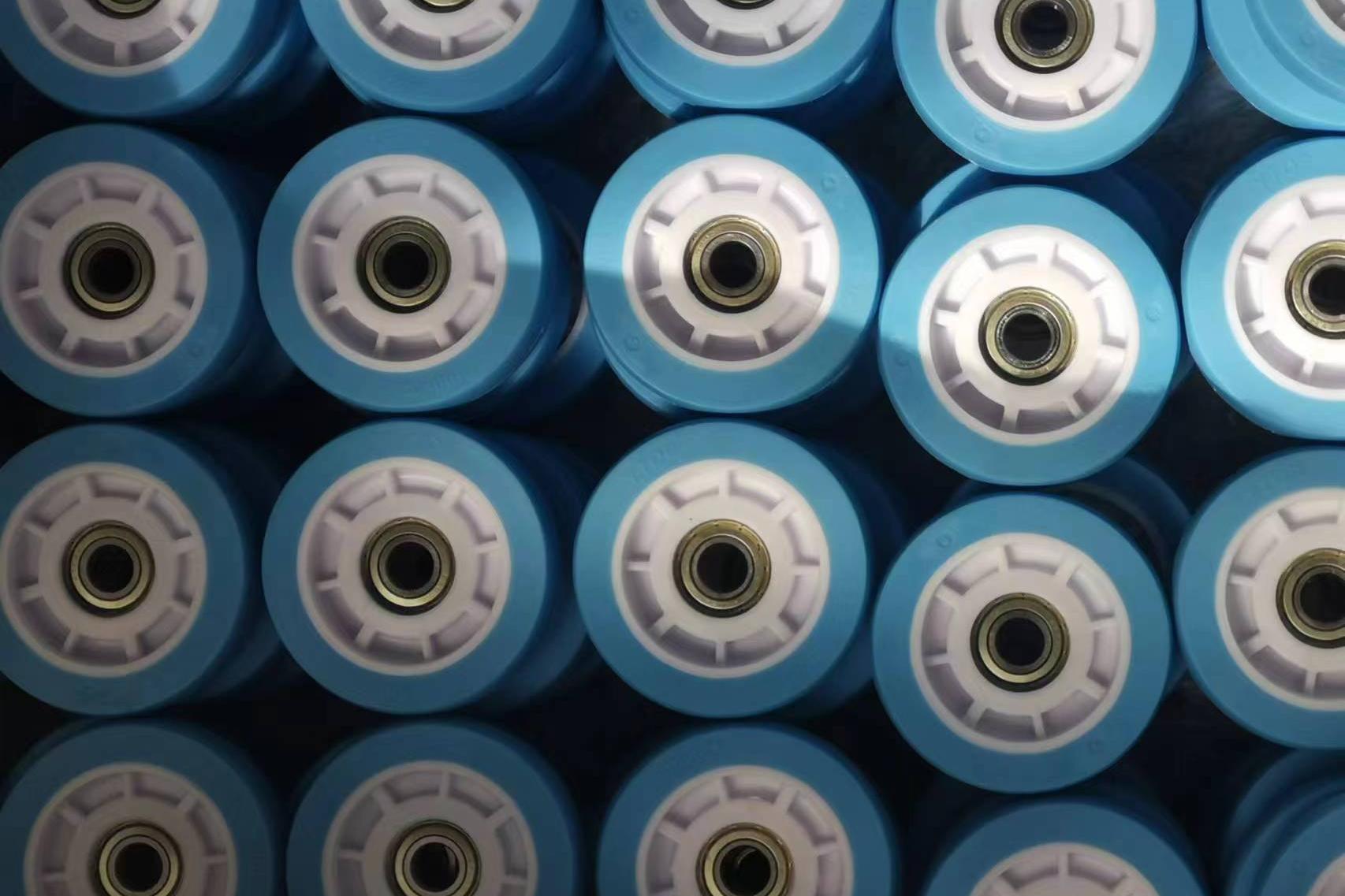
The core mechanism of an anti-static caster is establishing a continuous conductive path from tread to floor. The tread uses an electrically conductive material, and the wheel set structure is designed to keep that conduction continuous. The charge generated by rolling friction is conducted to the floor through this path instead of accumulating on the wheel, so the charge never reaches the discharge threshold.
When selecting anti-static wheels, two points must be confirmed: whether the surface resistance of the tread material meets the required anti-static grade, and whether the wheel set’s overall conductive path is complete. Any break in the pathway — an insulating bearing, or a non-conductive bracket coating — disables the static conduction function, no matter how good the tread material is. Whether the wheel can conduct at all, and whether the path is actually connected, directly decides whether the static electricity generated during operation can be released safely. A wheel that only looks conductive on the tread but sits on an insulating bearing is, in practice, no anti-static wheel at all.
Anti-Static Is Not the Same as Explosion-Proof

This is the concept most often confused in procurement and safety management. “Explosion-proof” carries strict definitions and certification systems in the electrical equipment field, involving specific technical paths such as flameproof enclosures and intrinsically safe circuits. Casters themselves cannot meet the conditions for explosion-proof certification: they are not electrical equipment, and explosion-proof standards govern electrical and electronic equipment.
What anti-static casters do is reduce static risk — they are one part of the workshop’s anti-static system. The workshop’s overall explosion-proof design includes ventilation, grounding, explosion-proof electrical appliances, anti-static flooring, and operating procedures; wheels are only one element. Safety-grade assessment for explosive environments must follow national and industry explosion-proof standards and be evaluated and certified by professional institutions. A caster supplier can provide anti-static performance parameters, but cannot substitute for that professional assessment, and buyers should not describe a caster as “explosion-proof” in documentation on the strength of anti-static data alone.
Supporting Configuration and Ongoing Inspection
Beyond the conductive tread, supporting configuration must match the duty. The bracket load capacity must fit the loads handled — when moving electrode coils and battery modules, the bracket must not deform or feel “floaty” under heavy load. Surface treatment must suit cleanliness requirements: a dense powder-coated film resists dust accumulation and is easy to clean, so wheel surfaces do not become dust traps. Sealed bearings are equally important here: electrode dust entering a bearing not only wears rotating parts but can also interrupt the conductive path, so sealing protects both the bearing and the pathway.
Installing anti-static wheels is not the end of the job, because the effectiveness of the conductive path changes over time — tread wear, contact-surface oxidation, and cleaning-agent residue all degrade conduction. Establish a regular inspection system: check tread anti-static performance with a surface resistance tester, verify pathway integrity with a grounding resistance tester, and promptly replace wheels whose path is broken or whose resistance has climbed too high. When purchasing, give the manufacturer the workshop’s explosion-proof zone classification and grade, the categories of stored and handled materials, the floor anti-static requirement, and the load and frequency of the handling equipment. YTOP Manganese Steel Casters matches tread material and conductive structure to the declared anti-static grade; anti-static wheel selection must always sit inside the workshop’s overall explosion-proof design rather than resting on a single component.
Related Reading
Looking for more in-depth caster guides and industrial mobility resources? Explore these related articles:
- What Role Do AGV Casters Play? — Understand how AGV casters affect navigation accuracy and maintenance in automated material handling systems.
- Why Polyurethane for AGV Casters? — Material analysis explaining the performance advantages of polyurethane wheels for AGV applications.
- How to Calculate Load Capacity — Learn dynamic vs. static load ratings to prevent premature caster failure in lithium battery workshops.
- AGV Caster Selection Guide — Complete parameter guide covering load, speed, floor, and environment requirements.
Explore our complete range of heavy-duty casters (150-610kg) and super heavy-duty casters (700-1600kg) for diverse industrial applications, or contact our engineering team for expert caster application knowledge and selection guidance.
Post time: Oct-13-2026