
Caster braking system, usually inconspicuous, but in heavy-load transport, slope operation, equipment positioning these scenarios, braking reliability directly relates to safety. When selecting casters in workshops, single-brake and dual-brake are two common braking configurations, and their structural principles and applicable scenarios have substantial differences.
Single-Brake Working Principle and Limitations
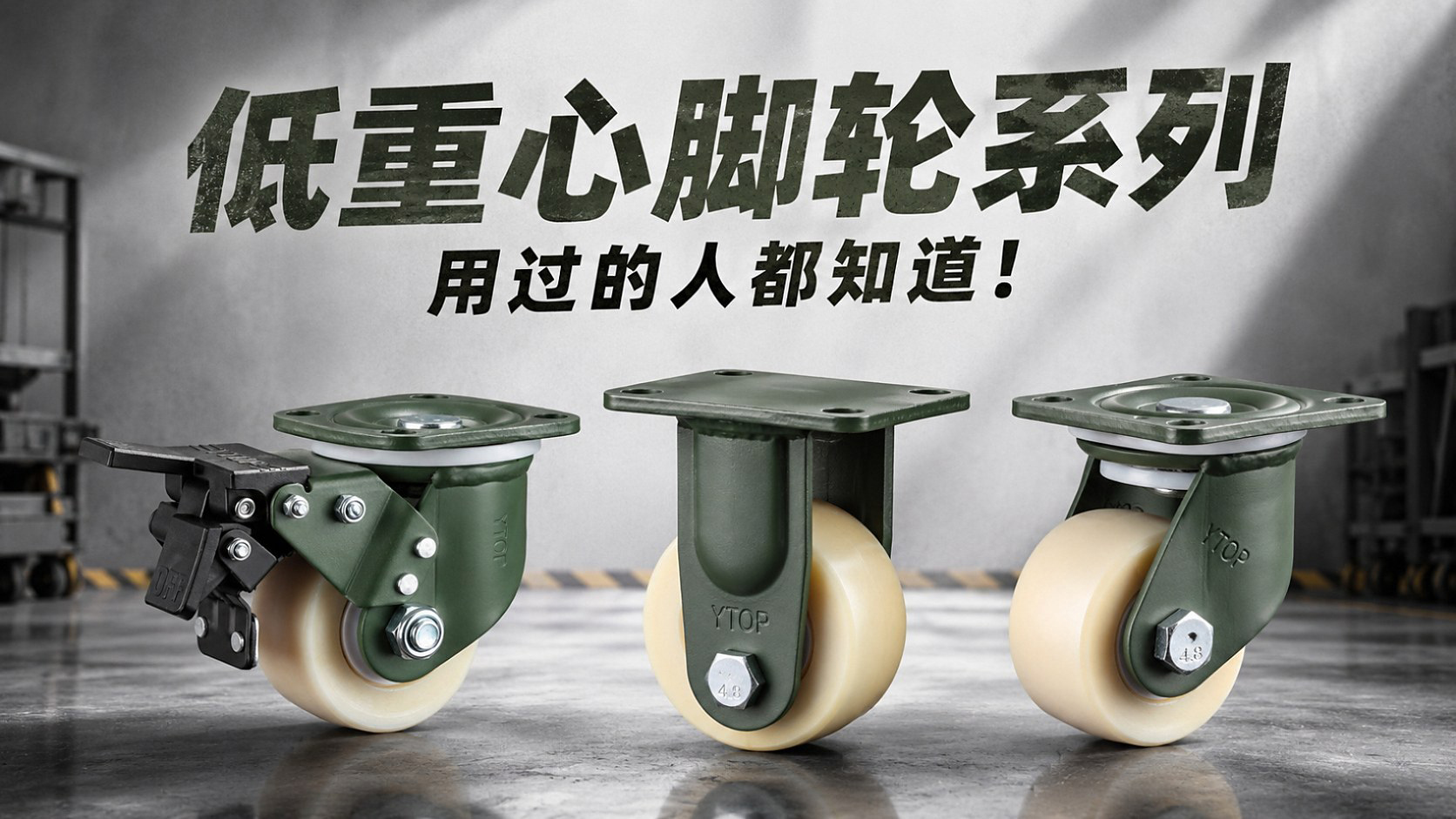
Single-brake caster’s braking device only acts on one side of wheel. After stepping on brake plate, brake pad presses toward wheel single-side tread, relying on single-side friction to lock wheel.
This structure sufficient for light-load flat floors. But when working conditions complex, several limitations will appear:
Braking contact surface limited. Friction generated by single-side contact, under heavy load may not be enough to fully lock wheel. The larger the load, the smaller the single-side braking force margin.
Force asymmetric. Single-side braking时, wheel pushed to one side, may cause wheel deflection. Not to mention pushing direction affected, brake pad and tread contact may also become uneven due to deflection, further reducing braking force.
Slope reliability insufficient. Load plus slope, single-side braking bears larger torque. On slopes single-brake may not hold, or after holding wheel deflects, cart tilts.
Dual-Brake Structural Principle
Dual-brake design is to let brake pad simultaneously press toward wheel both sides tread, both sides simultaneously generate braking force. Compared to single-brake, change is structural:
Braking area doubled. Both sides simultaneously contact, total friction larger, braking force stronger. Under same tread material and pressure, dual-brake braking force approximately twice that of single-brake.
Force symmetric. Both sides balanced force application, wheel not pushed to one side, braking process no deflection. This point especially important under slope and heavy-load scenarios — wheel after braking keeps forward, won’t tilt.
State controllable. Symmetric braking either both sides locked together, or both not fully locked, state consistent, won’t出现 “one side braked one side not braked” intermediate state. After worker steps on dual-brake, no need to repeatedly confirm whether wheel stopped.
| Comparison Item | Single-Brake | Dual-Brake |
|---|---|---|
| Braking contact surface | Single side | Both sides |
| Total braking force | Baseline | Approximately twice |
| Force state | Asymmetric, easy deflection | Symmetric, no deflection |
| Slope reliability | Lower | Higher |
| Applicable scenarios | Light-load flat floor | Heavy load, slopes, positioning |
Physical Comparison of Braking Force
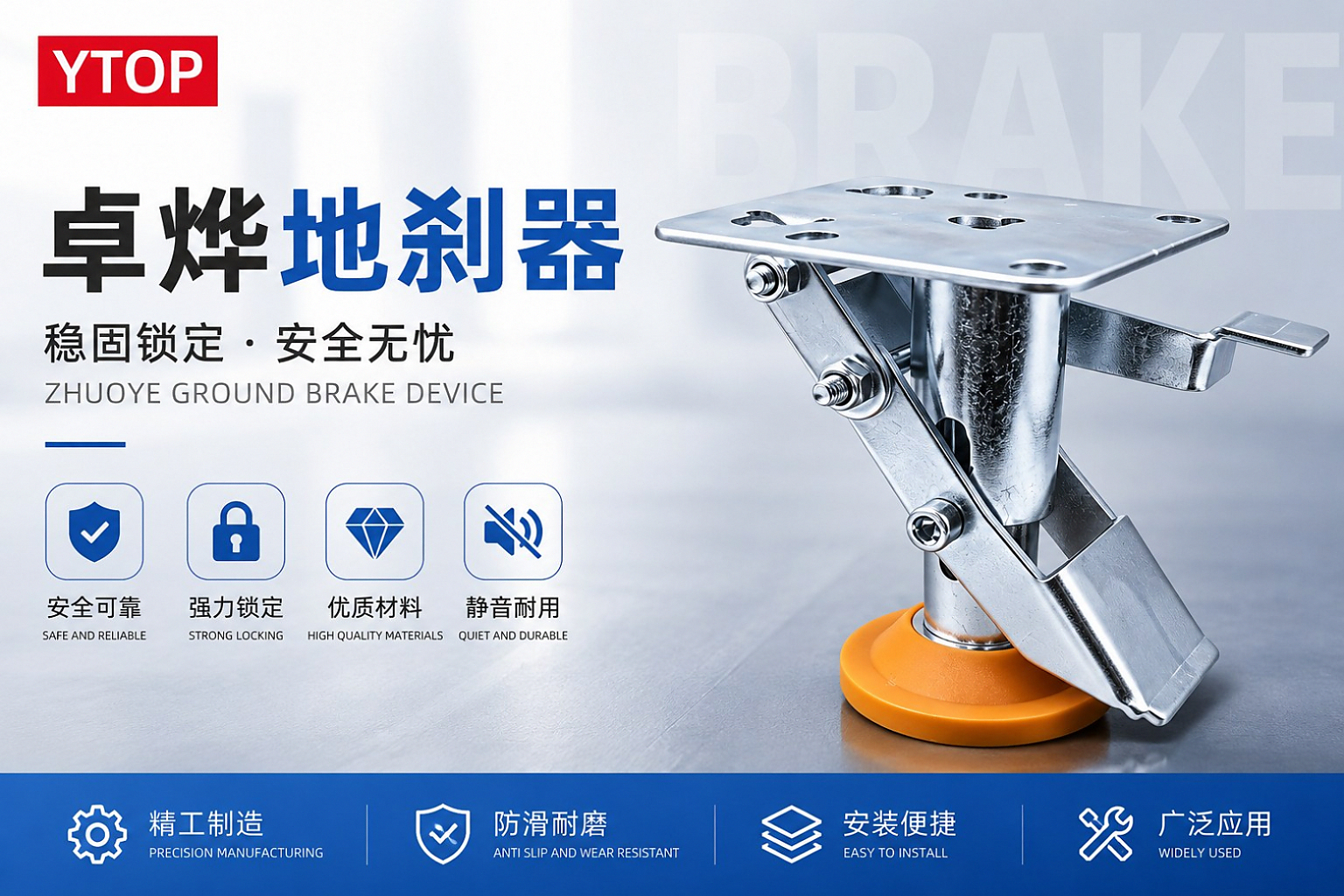
From friction perspective, basic formula of braking force is friction coefficient multiplied by normal pressure. Single-brake and dual-brake friction coefficient same (same tread material and brake pad material), but dual-brake normal pressure action area twice that of single-brake, total braking force therefore larger.
This difference not obvious under light load — single-brake braking force already sufficient. But under heavy load, single-brake braking force margin may not be enough, dual-brake margin larger, safety margin higher.
Under slope scenarios, gravity component along slope direction increases with load and slope. If single-brake braking force less than this component, wheel will slip. Dual-brake braking force larger, can cope with heavier loads and larger slopes.
Differences in Applicable Scenarios
Single-brake and dual-brake are not simple “good and bad,” but applicable scenarios different:
Light-load flat floor, short-distance transport: single-brake sufficient, cost lower. Office carts, light warehousing transport carts, single-brake braking force enough to cope.
Heavy-load transport: larger load, higher braking force requirements, dual-brake margin more meaningful. Heavy equipment transport carts, full-load material carts, dual-brake more reliable.
Slope and inclined plane operation: slopes are extreme working conditions of braking system. Single-brake on slopes asymmetric force problem more突出, dual-brake symmetric braking on slopes safer.
Mobile equipment positioning: equipment after到位 needs stable parking, dual-brake both-side locking more reliable. Medical equipment, stage equipment, precision instrument transport carts, dual-brake prevents accidental movement.
Crowded places: hospital beds, supermarket carts, exhibition booth equipment, accidental slip may injure people. Dual-brake braking reliability in these scenarios is safety configuration.
Braking Is Only One Part of Safety
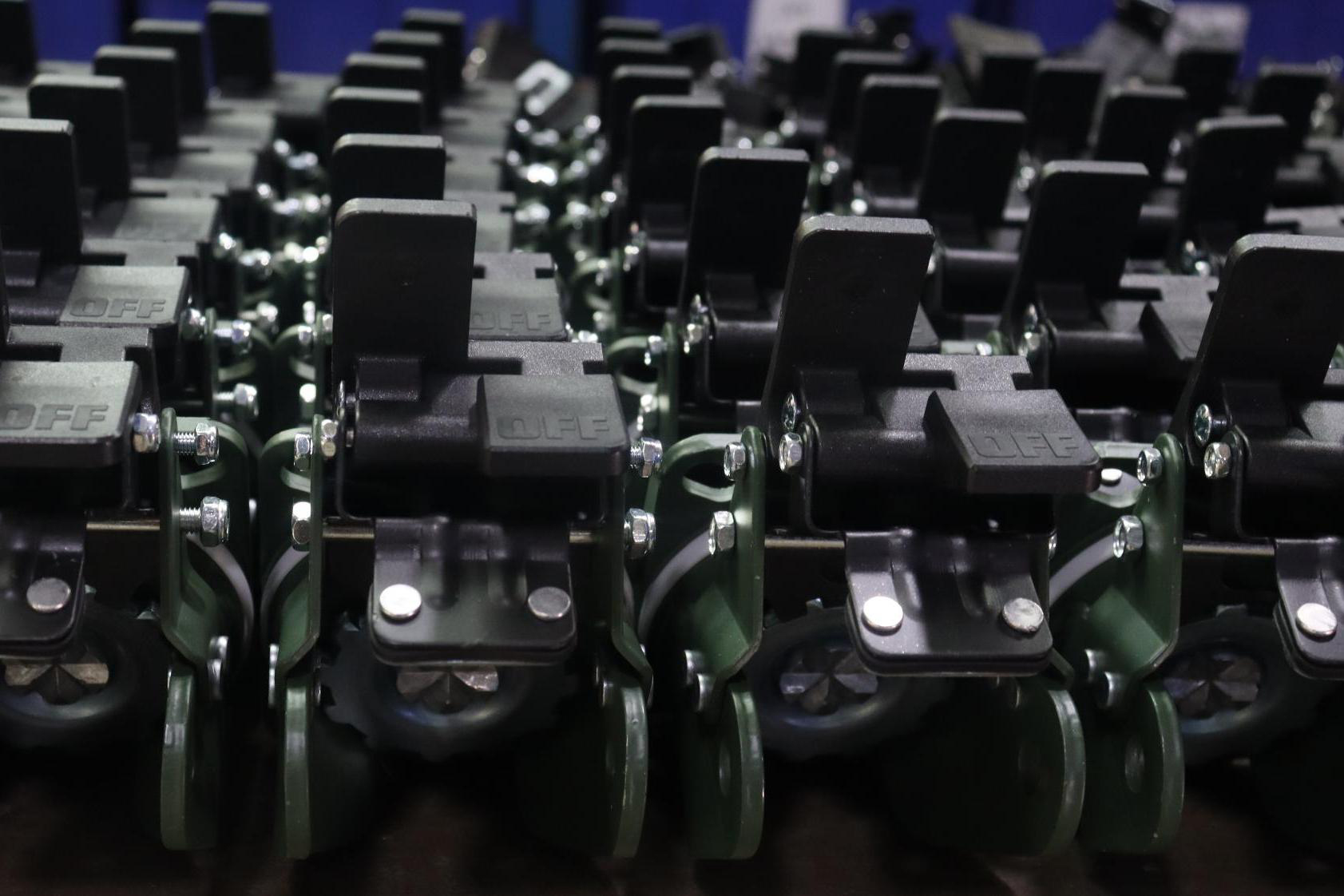
Braking is core of caster safety configuration, but not all. A wheel’s safety is systematic: braking manages “can stop,” bracket strength manages “can carry stably,” surface corrosion protection manages “can withstand environment,” sealed bearings manage “can rotate smoothly.”
When selecting casters, braking configuration needs to be considered together with other configurations. Under heavy-load scenarios dual-brake braking reliable, but if bracket strength insufficient, bearings stiff, dual-brake also can’t save overall failure.
Judgment Standards During Purchase
Selecting single-brake or dual-brake, core judgment basis is working conditions: how much load, whether there are slopes, after stopping whether need long-time stable positioning, whether used in crowded places.
Tell these several conditions to caster manufacturer, have manufacturer recommend braking configuration according to working conditions. Zhuoye manganese steel casters, when handling heavy-load and slope scenario selection, usually recommends dual-brake configuration, but specifically also depends on load and usage environment. Not all scenarios need dual-brake, light-load flat floor using single-brake enough, no need to spend extra money for non-existent risks.
Related Reading
Explore more heavy-duty caster safety and selection guides:
- Heavy-Duty Casters Selection Guide — Learn how to select the right heavy-duty casters including brake configuration.
- Extra Heavy Duty Casters: Full Analysis — In-depth look at extra heavy duty casters and safety configurations.
- Caster Load Capacity Calculation — Learn how to calculate actual per-wheel load for brake selection.
- Dual-Wheel Structure for Ultra-Heavy-Load Casters — Force analysis of dual-wheel casters for heavy loads.
- Mainstream Application Scenarios of Industrial Casters — Overview of caster applications including brake requirements.
Explore our complete range of heavy-duty casters (150-610kg) and super heavy-duty casters (700-1600kg) with dual brake options, or contact our engineering team for expert brake configuration guidance.
Post time: Sep-16-2026