
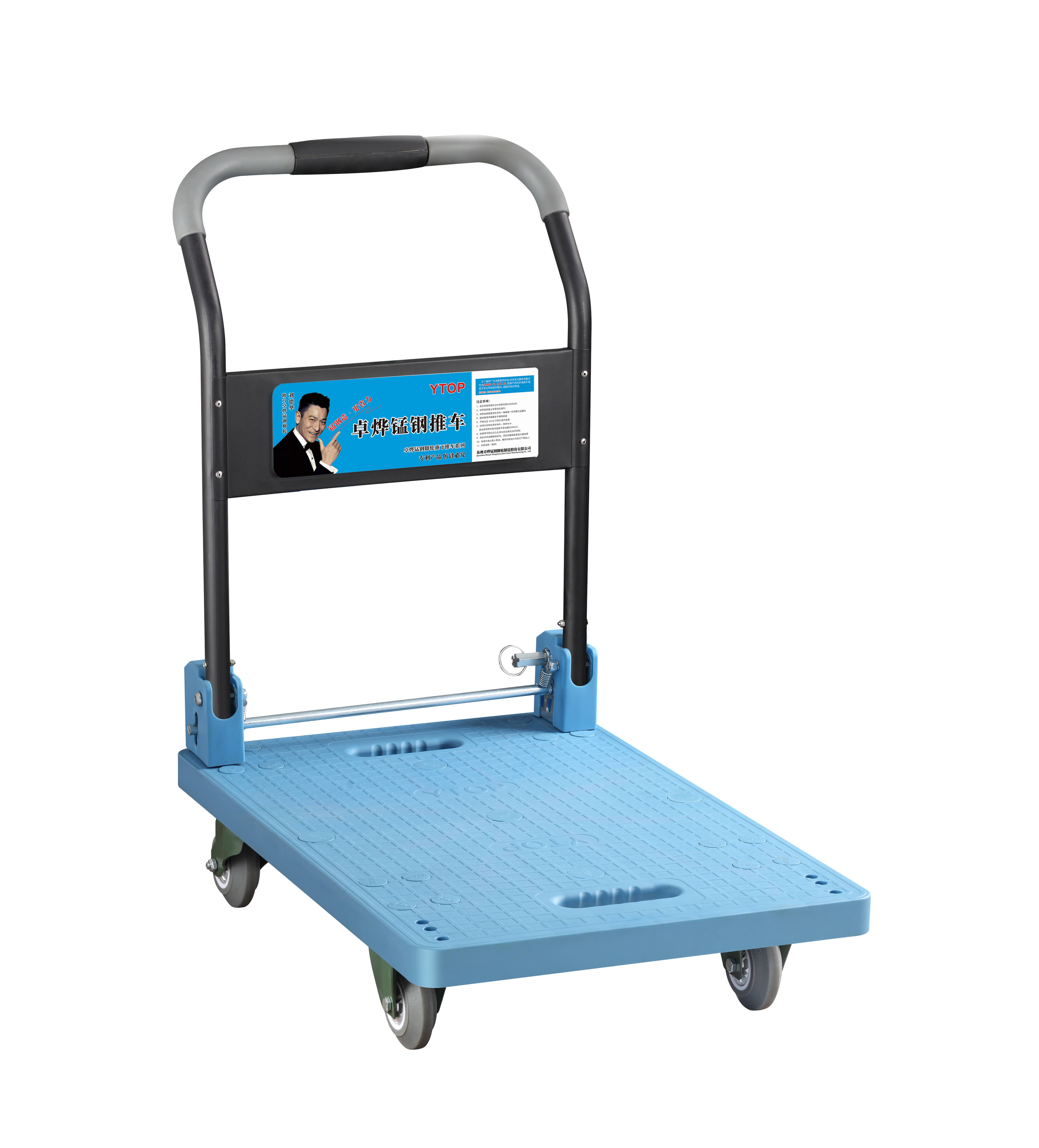
Flatbed carts, as a common tool for transporting and handling goods, are widely recognized for their convenience and practicality. However, in order to ensure safety during use and extend its service life, here are some key considerations for use:

I. Inspection before use for Caster Applications
1. Check the overall condition of the flatbed trolley, including the wheels, whether the surface of the flatbed is flat, and whether all the nuts and bolts are tight.
2. Make sure the loading capacity of the flatbed trolley meets the weight requirements of the items to be handled, and avoid overloading.
Correct operation for Caster Applications
1. When using the flatbed trolley, make sure to keep it in a stable state to avoid tilting or tipping over in the process of traveling.
2. When handling the goods, the goods should be evenly placed on the flatbed, and use ropes, straps or other fixing devices to ensure that the goods are stable and prevent them from slipping or breaking in the process of moving.
3. Special care should be taken when traveling uphill or downhill to avoid excessive speed leading to loss of control. If necessary, additional support devices can be used to assist the operation.
Applicable places for Caster Applications
1. The flatbed trolley is suitable for indoor and outdoor places, but the use should be adjusted according to the specific environment. When it is used indoors, it should avoid colliding with other objects or people; when it is used outdoors, it should pay special attention to the road surface condition and avoid traveling on uneven or slippery ground.
2. According to the use of the place and the size and weight of the goods, choose the appropriate type and size of flatbed trolley.
Maintenance
1. Regularly maintain and repair the flatbed trolley, including checking the status of wheels and axles, keeping the operating lever and connecting parts clean and lubricated, and replacing broken parts.
If necessary, replace poor quality or badly worn tires in time to ensure safety and stability during driving.
V. Safety Precautions for Caster Applications
1. Prohibit the use of flatbed trolleys in crowded places to avoid collision or crushing accidents.
2. Prohibit children from playing under or over the flatbed trolley to prevent accidents.
3. Strictly abide by the flatbed trolley load capacity limitations, not overloaded use.
4. Flatbed trolleys should not be used as a substitute for ladders or scaffolding and other climbing tools.
5. After use, park the flatbed trolley in the designated location in a timely manner to avoid blocking the passage or stairs.
6. Avoid collision with other vehicles or pedestrians during traveling and keep a safe distance.
Follow the above precautions to ensure the safe and efficient use of the flatbed cart, for our life and work to bring convenience.
Related Reading
Explore more handcart safety, usage, and selection guides:
- Guidelines for the Safe Use of Trolleys — Learn about trolley safe use guidelines including handling and precautions.
- How to Use a Handcart — Learn about handcart use including safety, mobility, and heavy load handling.
- How to Choose a Cart for Carrying Heavy Loads! — Learn about heavy load carrying cart selection including load capacity and durability.
- Analysis of the Whole Process of Making a Handcart — Learn about handcart manufacturing including material selection and construction.
- Applications of Hand Trucks Made from Different Materials — Learn about hand truck material applications including various use cases.
Explore our complete range of durable heavy-duty casters (150-610kg) and medium-duty casters (100-190kg) for flatbed cart applications, or contact our sales team for expert handcart caster selection guidance.
Post time: Nov-28-2024