
Buying wheels that can’t be installed when they arrive is the rework procurement fears most: goods arrive, measure hole spacing and it doesn’t match, can’t install on the frame, and going through return and exchange wastes labor and time. The root cause of this kind of rework is mostly that mounting dimensions weren’t measured accurately.
Caster mounting dimensions are the first set of data that must be measured clearly before selection, with the core being top plate dimensions and hole spacing.
What Items Do Mounting Dimensions Include
Caster mounting dimensions mainly look at these items:
- Top plate dimensions, the length and width of the flat plate at the top of the wheel, which bears the entire mounting load, and dimensions must cover the equipment mounting position.
- Hole spacing, the distance between centers of mounting holes on the top plate, measured in both long and short side directions, which is the key to aligning with frame bolt holes.
- Hole diameter, the diameter of mounting holes, must match bolt diameter, and bolts passing through cannot be too loose.
- Mounting height, the total height from mounting plane to floor, matches equipment reserved height.
- Mounting method, top plate type, stem type, bolt hole type — different mounting structures have different dimension logic.
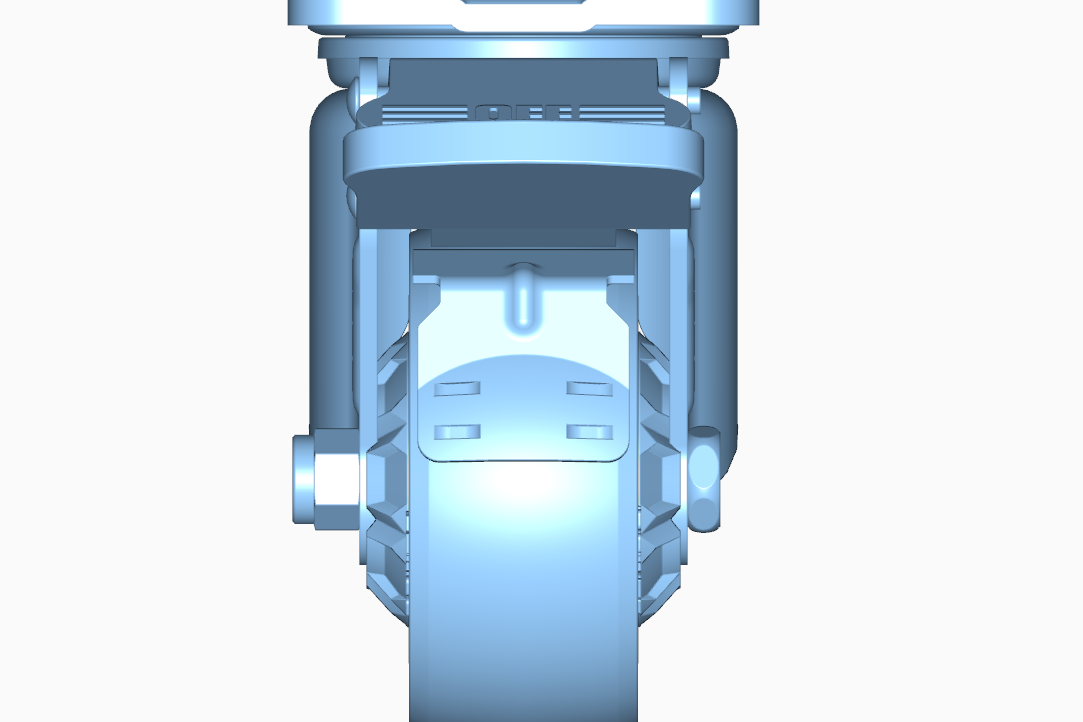
In actual procurement, the most common cause of inability to install is hole spacing.
Measuring Hole Spacing Accurately Like This
Hole spacing should note that both directions are measured: long-side hole spacing and short-side hole spacing.
The measurement method is not complicated: use a ruler to measure the center-to-center distance between two adjacent mounting holes. Note it is hole center to hole center, not hole edge to edge — measuring from edges will differ by one hole diameter, causing mismatch.
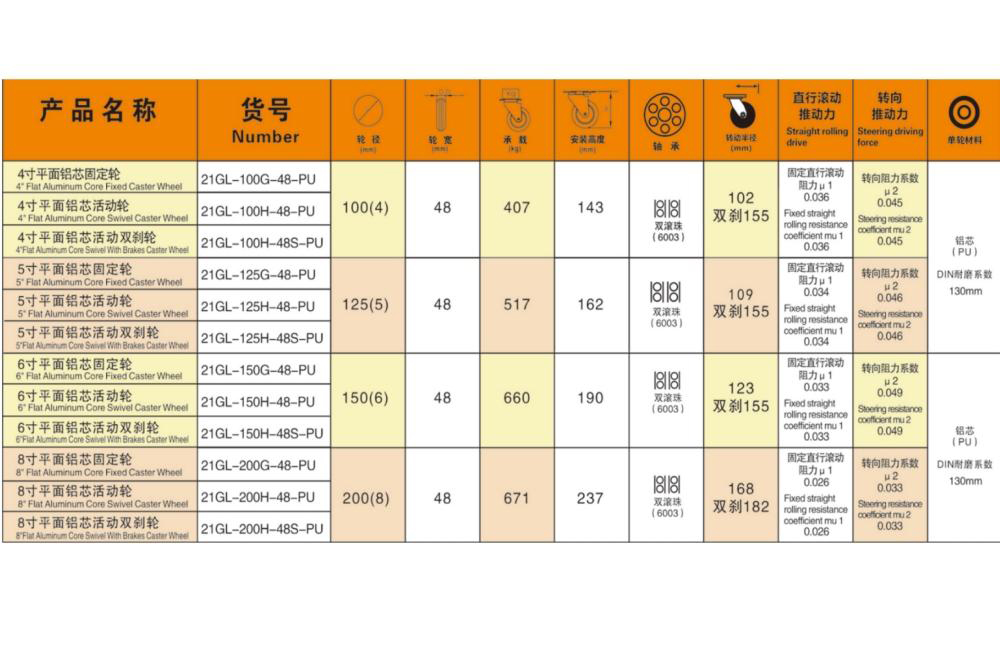
For example, if a top plate mounting hole has three holes in a row, long-side hole spacing measures from the leftmost hole center to the rightmost hole center, and short-side hole spacing measures from the frontmost hole center to the rearmost hole center. Write down these two numbers and report them to the manufacturer, and the matching rate increases by more than half.
Three Mounting Methods, Different Focus Points
Top plate type: focus on top plate dimensions, hole spacing, hole diameter. Most widely used, workshop carts and equipment assemblies mostly use the top plate type.
Stem type: focus on stem diameter, stem length, thread specification, used for occasions needing to screw into equipment threaded holes.
Bolt hole type: focus on stem diameter, stem length, and anti-detachment structure, plug-in installation, mostly used for specific equipment structures.
State the mounting method clearly when reporting specifications, and only then can the manufacturer match according to the corresponding system.
Verification Steps for Replacing Old Wheels
When replacing old wheels, don’t skip several verification steps:
First, measure the old wheel’s top plate dimensions, bidirectional hole spacing, and hole diameter.
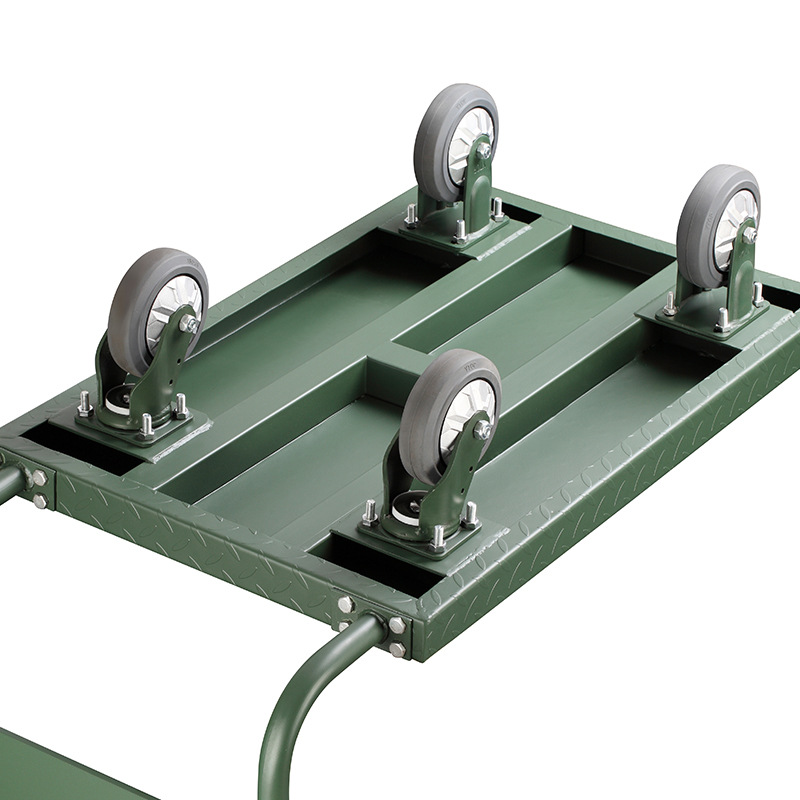
Second, measure total height — old and new wheel total heights must be consistent, otherwise equipment posture changes and operation tabletop height all change along.
Third, verify load grade — new wheel load capacity cannot be lower than the old wheel’s rated working condition.
Fourth, do a trial installation of one on site, confirming hole alignment, smooth bolts, and normal brake function.
After these verification steps, replacement is stable. Especially total height — a slight difference between old and new may make the worker’s operation height awkward for a long time.
Report Fully When Reporting Numbers to the Manufacturer
During selection communication, state clearly the mounting method (top plate, stem, or bolt hole), top plate dimensions and hole spacing, and equipment load — and wheels arriving can basically be installed directly. Zhuoye’s caster mounting dimensions are designed according to common industrial standards, with top plate dimensions and hole spacing covering the mounting needs of mainstream carts and equipment, heavy-load grades equipped with thickened base plates, and mounting surfaces flat and rigid, not deforming after bolt locking.
After installation, conveniently verify the brakes — cart stops stably without rolling away, a matter of seconds. Measuring dimensions accurately once saves both rework money and time.
Related Reading
Looking for more in-depth caster guides on installation, dimensions and selection? Explore these related articles:
- Removal and Installation of Universal Wheels: An Easy-to-follow Guide — step-by-step instructions for taking off old wheels and fitting new ones correctly.
- How to Read Caster Nameplates? Model, Load and Material Codes — decode the model, load and material markings printed on each caster.
- Caster Structure: Wheel Diameter, Wheel Width and Load Capacity — how the key structural dimensions relate to rated load and performance.
- AGV Caster Replacement: Replace the Wheel or the Whole Caster? — how to decide between swapping the wheel and replacing the complete caster.
Explore our complete range of heavy-duty casters (150-610kg) and super heavy-duty casters (700-1600kg) with standardized top plate mounting dimensions, or contact our engineering team to confirm dimensions before you order.
Post time: Oct-30-2026