
When AGV casters wear to the point where replacement becomes unavoidable, maintenance engineers face a recurring question: should you replace just the wheel, or the entire caster? The answer has little to do with which option is cheaper and everything to do with the caster’s structural type and the condition of its bracket. If the bracket is damaged, the whole caster must be replaced; if the bracket is intact and the structure allows separate disassembly, a wheel-only replacement is usually the most economical and fastest choice. This guide walks through the exact criteria, a step-by-step decision process, and the precautions that keep AGV operations safe and stable after replacement.
When Can You Replace Just the Wheel?
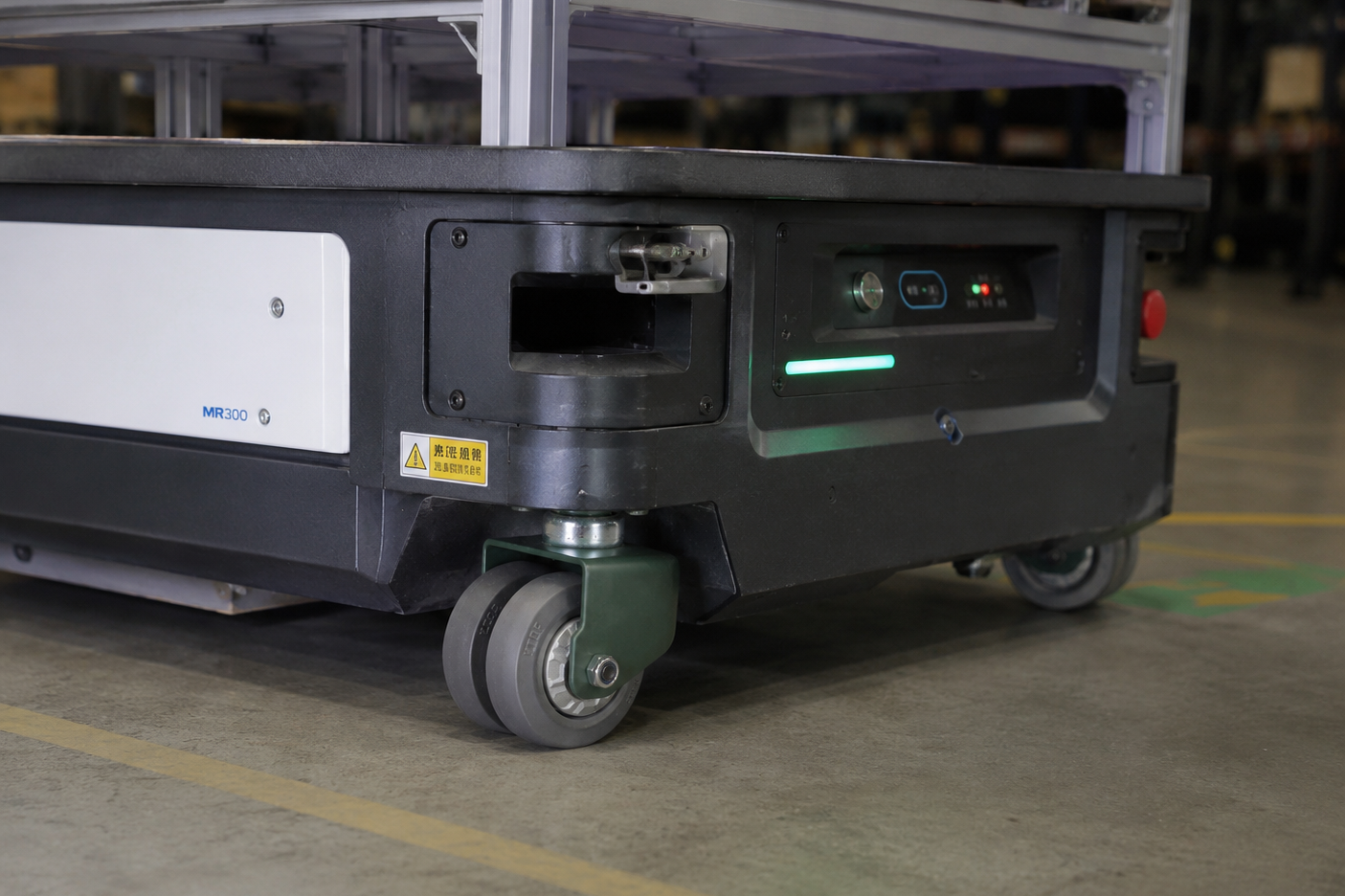
Replacing only the wheel is a valid option only when several conditions are met at the same time. First, the bracket must be intact: no deformation, bending, or cracking, with a flat mounting base plate and undeformed bolt holes. Any bracket damage disqualifies wheel-only replacement, because a deformed bracket makes the new wheel wear unevenly and fail again within a short period. Second, the caster must have a split-type structure. Many industrial casters fix the wheel assembly (tread, bearing, and axle) to the bracket with bolts or retaining clips, which allows separate removal; some designs are one-piece, and those cannot be disassembled at all.
The third condition is the availability of a matching replacement wheel with the same wheel diameter, wheel width, tread material, bearing model, and axle diameter as the original. Wheels from different manufacturers are generally not interchangeable, so replacement wheels should be sourced from the original manufacturer. Finally, for swivel casters, the swivel bearing must still be in good condition; if steering is already noisy or stiff, replacing only the wheel leaves the root cause untouched. The advantage of wheel-only replacement is lower cost and shorter labor time, since the bracket does not need to be removed; its limitation is that accessory compatibility must be confirmed and not every caster supports it.
When Do You Need to Replace the Whole Caster?
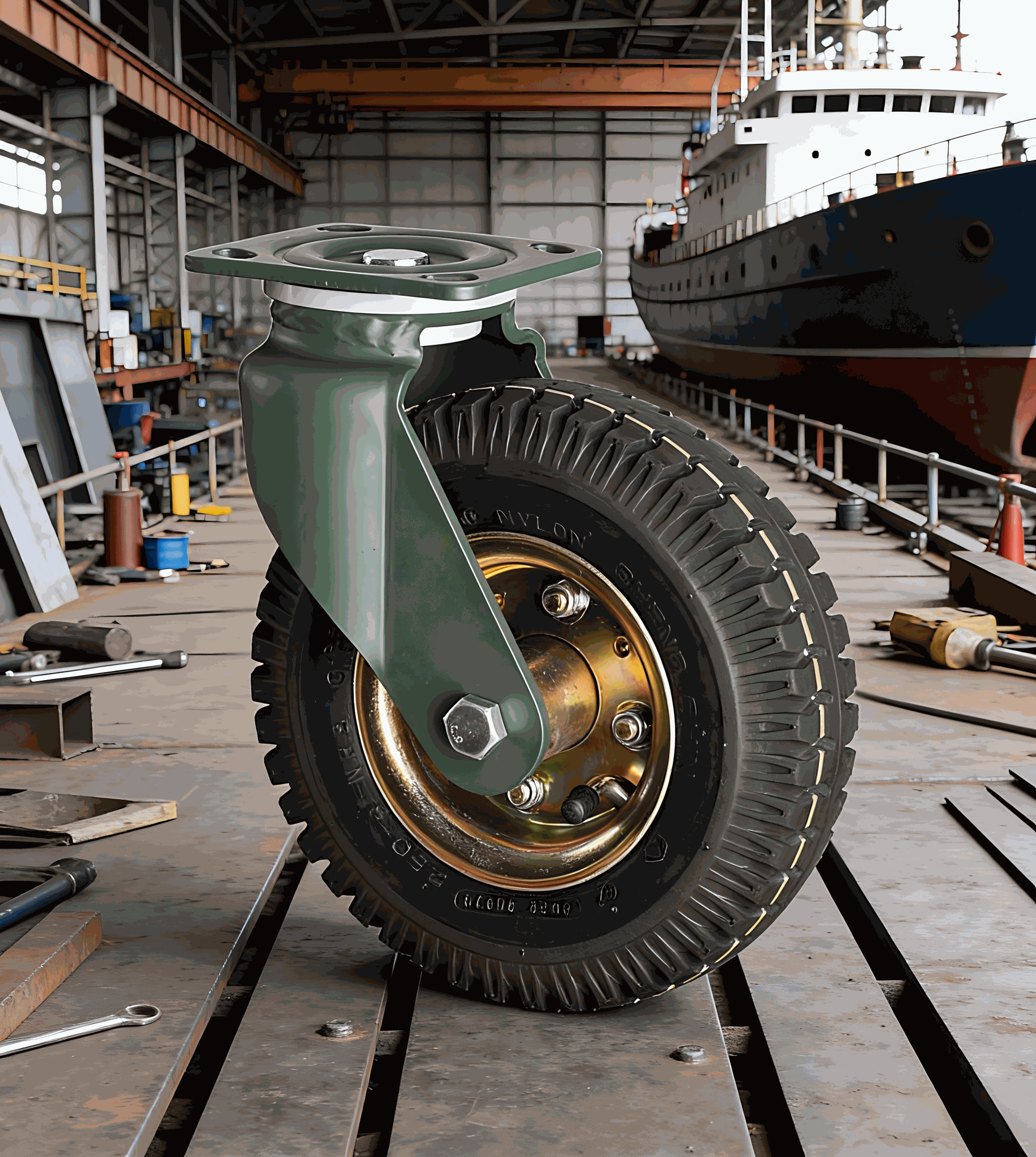
Whole-caster replacement is mandatory when the bracket is deformed or damaged, which covers bending, base plate deformation, weld cracking, and deformed bolt holes. Using a damaged bracket without repair will transfer the problem to the new wheel, which then wears quickly and unevenly. It is also required when the swivel bearing of a swivel caster has seized or worn severely, because replacing the wheel alone cannot restore steering. One-piece caster designs, where the wheel cannot be separated from the bracket, likewise force a complete replacement, as does the absence of a same-specification replacement wheel on the market.
Beyond damage, replacement time is also the right moment to correct a wrong original selection. If the previous caster was undersized for the load or mismatched to the working conditions, installing an identical wheel solves nothing — the problem lies in the selection itself, and upgrading to a more suitable product is the meaningful move. Long service time is another trigger: even an undamaged bracket that has carried high operating intensity for more than two years may suffer hidden fatigue, and a complete replacement is the safer choice. Whole replacement guarantees all components are new and risk-free and allows a specification upgrade; its trade-offs are higher cost, longer labor time, and the need to recheck mounting height after installation.
Decision Process: Five Steps
Follow these five steps in order when an AGV caster needs replacement:
- Check the bracket condition. Inspect visually and by touch for deformation, cracking, or looseness. If damaged, replace the whole caster; if undamaged, continue.
- Check the swivel bearing. Rotate the bracket to confirm smooth steering. If abnormal, replace the whole caster or overhaul the swivel bearing; if normal, continue.
- Confirm the caster structure. If the wheel can be removed from the bracket, continue; if the design is one-piece, replace the whole caster.
- Confirm accessory supply. Contact the manufacturer to verify that a matching replacement wheel is available. If yes, replace the wheel only; if no, replace the whole caster.
- Evaluate service time. If the caster has run more than two years or under very high intensity, choose whole replacement; if service time is short and the bracket is intact, wheel-only replacement is sufficient.
Precautions During Replacement
Wheel diameter consistency matters. If only one wheel is replaced and the new and old diameters differ, the AGV will veer toward the smaller side during operation. Replace all four wheels together, or at least the front pair or rear pair, and measure the total height of every caster after installation to confirm consistency; excessive height differences affect AGV levelness and stability, and shims should be used to adjust where necessary.
Tighten all bolts to the manufacturer’s specified torque. Overtightening can crush the base plate, while undertightening causes loosening under vibration. After replacement, run a low-speed test to verify consistent rolling resistance, the absence of abnormal noise, and no veering, then record the replacement date, wheel specification, and batch number for future tracking and management.
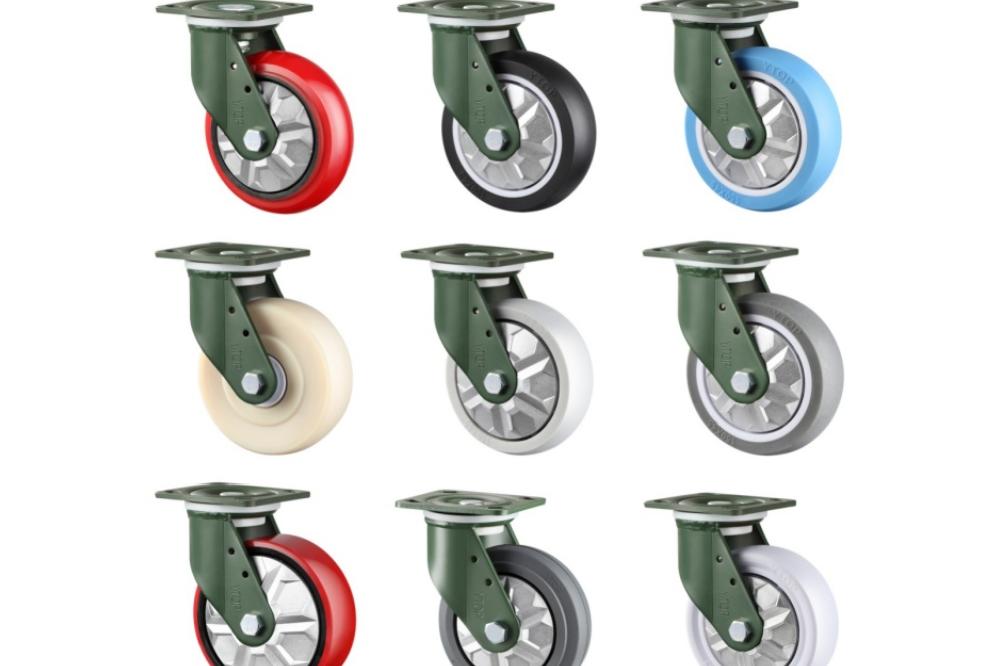
If the original caster selection was mismatched to the working conditions and caused repeated wear, confirm the structural type and replacement-wheel supply with the manufacturer before purchasing. YTOP Manganese Steel Casters provides both replacement wheels and complete casters across its product line; if the selection itself needs adjustment, share the working-condition data with the manufacturer to obtain a better-matched product solution.
Related Reading
- What Is an AGV Caster? The Difference from Ordinary Casters
- Removal and Installation of Universal Wheels: An Easy-to-Follow Guide
- How to Calculate Caster Load Capacity: Dynamic vs. Static Load
- 10 Core Parameters for Industrial Caster Selection
Post time: Oct-09-2026