
According to market research data, the casters market is expanding, and the global casters market has reached USD 2,523 million in 2019. As people’s requirements for quality of life and convenience continue to improve, casters are increasingly used in various fields, including office furniture, warehousing and logistics, medical equipment, household appliances, construction machinery and other fields. However, with the increase in the use of time, casters will also appear some problems, such as fixed instability, rotation is not smooth, etc., so how to distinguish between good and bad casters is a noteworthy problem. Usually casters can be distinguished from the following aspects:
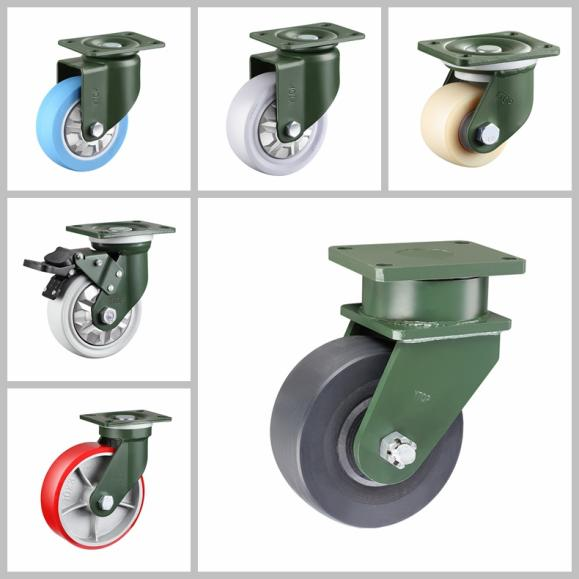
First, material quality
The material quality of casters is an important factor that affects their service life and bearing capacity. Usually, the material of casters is divided into metal and plastic, metal casters usually have higher carrying capacity, while plastic casters are lighter and easier to clean. Different application scenarios and needs need to be considered in the selection of materials to achieve the best results. Compared with ordinary steel, casters made of manganese steel have been popular in the industry in recent years due to their stronger load bearing capacity and greater safety.
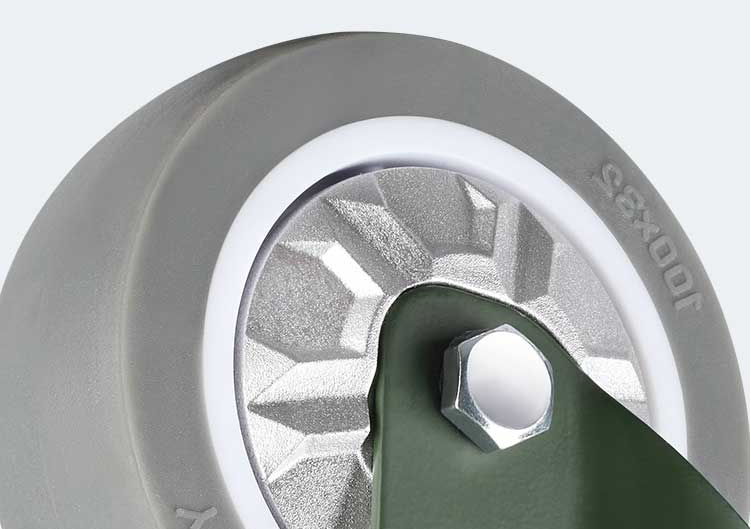
Second, smooth rotation
The smooth rotation of the caster is one of the important indexes of its goodness. Usually, the smoothness of casters can be determined by their bearing design and material quality. If casters do not rotate smoothly or appear to be stuck, shaking and other phenomena, then these casters may have been damaged or need to be cleaned and maintained. According to statistics, millions of casters are damaged and replaced each year due to poor rotation.
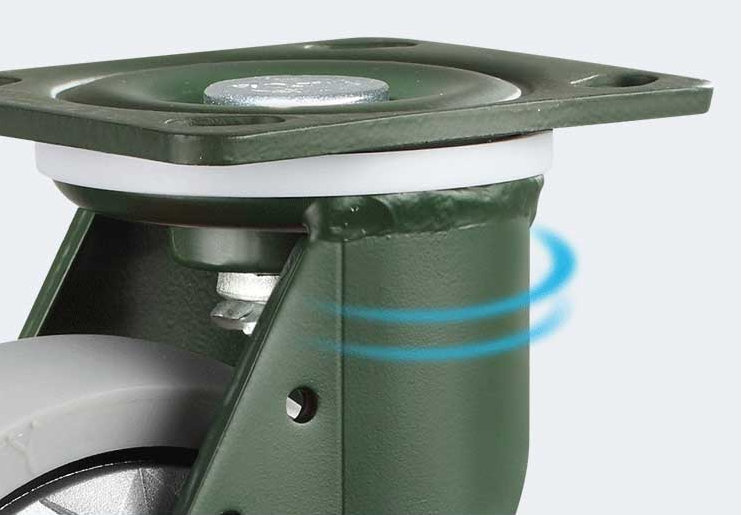
Third, fixed stability for Caster Applications
The fixed stability of casters is very important, because if the casters are loose or unstable, it will lead to danger in the process of use. The fixed stability of casters can be fixed by screws or buckles, etc. It is usually necessary to check whether the installation of casters is stable and reliable, and whether it is easy to loosen or fall off. According to statistics, there are millions of casters damaged and accidents caused by poor fixing every year.
Four, load-bearing capacity
The load capacity of a caster is the maximum weight it can bear. Different kinds of casters have different load-bearing capacity, some light load applications can use low load-bearing capacity of the wheel, but for heavy load applications, you need to choose a higher load-bearing capacity of the caster. Usually, the load capacity of a caster is labeled on its manual or packaging for users to make their choices.
Fifth, bearing quality and wheel core
The bearing is the heart of every caster, and it determines how smoothly and quietly the wheel rotates under load. Quality casters typically use sealed ball bearings or precision roller bearings, which keep friction low and extend service life. Cheaper casters often rely on plain oil-impregnated bushings that wear out quickly and create noise and play over time.
To check bearing quality, spin the wheel by hand and listen. A good caster rotates freely with no grinding, no wobble, and no lateral play. Also inspect the wheel core: injection-molded nylon cores are light and corrosion-resistant, while cast-iron or forged-steel cores are stronger and better suited to heavy loads. A weak core cracks under impact, even when the tread looks fine.
Sixth, surface finish and corrosion resistance
The bracket finish determines how well a caster survives moisture, chemicals, and daily wear. Quality casters are protected with electro-galvanizing, hot-dip galvanizing, or powder coating. These finishes resist rust and keep the swivel raceway clean, which directly affects long-term smoothness.
Inspect the bracket surface for even coating, sharp edges, and welding quality. Rough welds, chipped plating, or rust spots are clear warnings of short service life. For humid or wash-down environments such as food processing or pharmaceutical plants, ask for stainless-steel or zinc-plated options with an explicit corrosion guarantee.
Seventh, certifications and testing
Reliable manufacturers back their products with documented quality systems and test results. Look for suppliers with ISO 9001 quality management certification and ask for load-test and endurance-test reports on the specific model you plan to buy.
Reputable suppliers test each series for rated load capacity, impact resistance, rolling resistance, and swivel durability under simulated real-world cycles. If a manufacturer cannot provide test evidence or a clear specification sheet, treat the caster’s claimed load capacity with caution. Always confirm the rated load per caster and apply a safety factor of at least 1.25 for dynamic applications.
Eighth, common signs of low-quality casters
Knowing the warning signs helps you reject poor products before they enter your operation:
- Abnormally low price compared with similar load-rated casters from established brands.
- Wheels that wobble or click when spun by hand, or brackets with rough welds and uneven plating.
- Tread made from recycled rubber with visible bubbles, cracks, or an off smell.
- Load ratings printed on the package without any test certificate or specification sheet.
- Swivel that sticks after a short period of use, or a kingpin that loosens during rotation.
Frequently Asked Questions
How long should a quality caster last?
Service life depends on load, floor condition, and maintenance. A quality caster under correct load on a clean floor typically lasts 3-5 years of daily use, while poor casters may fail within months.
Which wheel material is the most durable?
For heavy loads, nylon and cast-iron wheels offer the best durability; for quiet, floor-friendly movement, polyurethane (PU) and TPR offer a good balance of wear resistance and low noise.
How do I verify a caster’s load capacity?
Ask the manufacturer for the rated dynamic and static load per caster, plus the endurance-test report. A reliable supplier will provide both without hesitation.
Choosing casters with high quality, stable performance, sufficient load carrying capacity and smooth rotation will ensure their service life and use. In the purchase and use of casters, you need to pay attention to the selection of appropriate materials and load-bearing capacity, to ensure that the casters are fixed and stable, smooth rotation, as well as pay attention to the maintenance of casters. Especially for the frequent use of casters, you need to regularly check its installation and fixation, clean the wheel surface and bearings to ensure its normal use. In addition, when the service life of the casters expires or obvious damage occurs, it is necessary to replace them in time to avoid accidents.
Related Reading
Explore more caster quality and selection guides:
- Always Say NO to Poor Quality Casters — Learn how to identify and avoid low-quality caster products.
- Dangers of Inferior Industrial Casters — Learn why distinguishing good from bad casters matters for safety.
- Key Technical Standards for Caster Production — Understand technical standards for distinguishing good quality casters.
- How to Judge Caster Quality by Appearance — Learn how to distinguish good from bad casters through visual inspection.
- Heavy-Duty Casters Selection Guide — Learn how to select high-quality heavy-duty casters.
Explore our complete range of quality-certified heavy-duty casters (150-610kg) and medium-duty casters (100-190kg), or contact our quality team for expert caster quality distinction guidance.
Post time: Dec-06-2023