
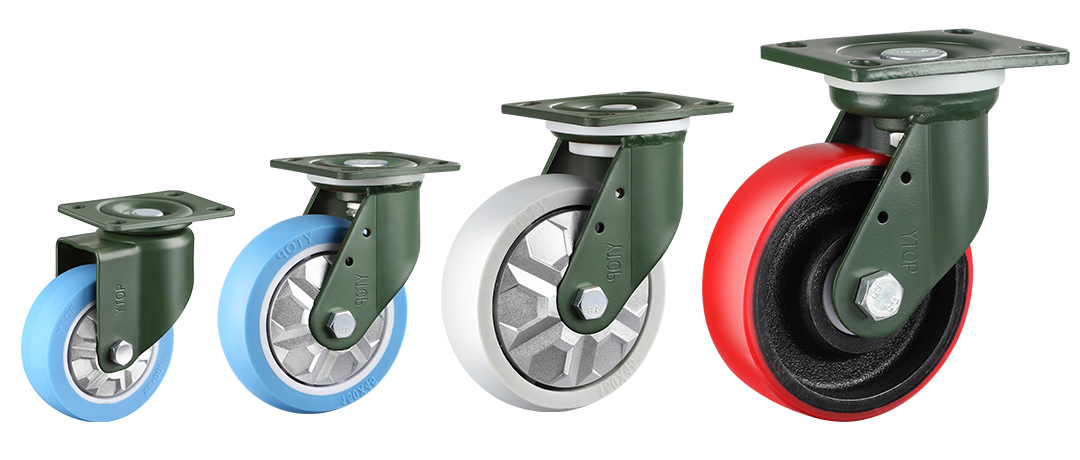
Inferior industrial casters have multiple safety hazards and risks. Uneven stress can easily cause equipment and carts to tip over, creating serious safety risks for workers and potential damage to equipment and products. In industrial environments where heavy loads are routinely moved, the consequences of caster failure can be catastrophic, leading to workplace injuries, equipment damage, production downtime, and significant financial losses. This article provides a comprehensive analysis of the dangers of inferior industrial casters, examining the common problems, safety risks, financial impacts, and how to identify and avoid inferior casters to ensure safe and reliable material handling operations.
Introduction: The Hidden Dangers of Inferior Industrial Casters
Industrial casters are critical components of material handling equipment, providing the mobility that allows carts, trolleys, workstations, and equipment to be moved efficiently and safely. While high-quality industrial casters are designed and manufactured to rigorous standards, providing years of reliable service even under demanding conditions, inferior industrial casters are a significant safety and financial risk that is often overlooked. The dangers of inferior industrial casters are not always immediately apparent – they may appear similar to high-quality casters at first glance, and they may even function adequately for a short period. However, over time, under load, and in demanding industrial environments, the deficiencies of inferior casters become apparent, often with serious consequences.
The problems with inferior industrial casters stem from several factors including the use of low-quality materials, poor manufacturing processes, inadequate quality control, insufficient engineering and testing, and cutting corners to reduce costs. These deficiencies can manifest in various ways including structural failure, wheel degradation, bearing failure, swivel mechanism problems, brake failure, and premature wear. Each of these failure modes can create safety hazards and operational problems that affect the safety of workers, the integrity of equipment and products, and the efficiency of operations. In this article, we will analyze the various dangers of inferior industrial casters in detail, examining the common failure modes, their safety and financial impacts, how to identify inferior casters, and best practices for selecting and using high-quality industrial casters to ensure safe and reliable material handling operations.
Structural Failure: The Most Catastrophic Danger
One of the most dangerous failure modes of inferior industrial casters is structural failure, where the caster bracket or other structural component breaks, bends, or collapses under load. Structural failure can occur suddenly and without warning, causing the equipment or cart to drop, tip, or collapse, which can lead to serious injuries to workers, damage to equipment and products, and significant operational disruption. Inferior casters may use brackets made from thin, low-quality steel that lacks the strength and rigidity needed to support heavy loads. They may use inadequate welding or fastening methods that fail under stress. They may have poorly designed swivel mechanisms with insufficient load capacity or inadequate raceway construction. Any of these deficiencies can lead to catastrophic structural failure when the caster is subjected to its rated load or to dynamic loads such as impacts, shocks, or uneven loading.
The consequences of structural failure can be severe. When a caster bracket breaks or collapses, the equipment it supports can suddenly drop or tip, potentially crushing or striking workers nearby. Heavy loads can shift or fall, creating additional hazards. The equipment itself can be damaged, sometimes beyond repair. Products being transported can be damaged or destroyed. In extreme cases, structural failure can lead to fatalities, particularly in applications involving very heavy loads or equipment at height. Even in less severe cases, structural failure can cause significant financial losses from equipment damage, product loss, production downtime, workers’ compensation claims, and potential liability. Structural failure is particularly dangerous because it can occur suddenly and without warning, giving workers no time to react or evacuate. Unlike gradual wear or degradation, which may be noticed during routine inspection, structural failure can happen instantaneously when a component reaches its breaking point. This makes it essential to use high-quality casters with robust structural design and adequate safety factors, and to never exceed the rated load capacity of casters. Inferior casters that cut corners on structural design, material quality, or manufacturing quality are a ticking time bomb that can fail catastrophically at any time.
Wheel Degradation and Failure
Wheel degradation and failure is another common problem with inferior industrial casters, and it can create significant safety hazards and operational problems. The wheel is one of the most critical components of a caster, as it is responsible for supporting the load, providing rolling mobility, and withstanding contact with the floor surface. Inferior casters may use wheels made from low-quality materials that degrade quickly under load, exposure to the environment, or contact with chemicals or other substances. They may use wheels with poor bonding between the tread and core, leading to tread separation. They may use wheels with inadequate hardness or durability, leading to flat spotting, chunking, or excessive wear. Any of these problems can lead to wheel failure, which can cause the equipment to become unstable, difficult to maneuver, or completely immobile.
One common wheel problem with inferior casters is flat spotting, where the wheel develops a flat spot from being left stationary under heavy load for extended periods, particularly in warm environments. Flat spots cause the caster to vibrate and bounce when rolling, creating an unstable and uncomfortable ride that can damage sensitive cargo and make the equipment difficult to control. Another common problem is tread separation, where the polyurethane or rubber tread separates from the wheel core, often due to poor bonding processes or low-quality adhesive. Tread separation can cause sudden loss of traction and control, and the separated tread can create a tripping hazard or become entangled in equipment. Wheel chunking, where pieces of the wheel tread break off, is another problem that can occur with inferior wheels, particularly when subjected to impacts, heavy loads, or contact with sharp objects or rough surfaces. Excessive wear is also common with inferior wheels, which may wear out in a fraction of the time expected for high-quality wheels, leading to frequent replacement and increased costs. The consequences of wheel degradation and failure include: unstable equipment that is difficult to control and may tip; increased rolling resistance that makes equipment harder to move and increases the risk of worker strain or injury; damage to floor surfaces from degraded or failed wheels; damage to cargo from vibration and instability; and increased maintenance and replacement costs. In severe cases, complete wheel failure can cause the equipment to drop or tip, creating serious safety hazards. Using high-quality casters with properly formulated wheel materials, robust bonding processes, and adequate load capacity is essential to avoid these problems and ensure safe, reliable wheel performance.
Bearing and Swivel Mechanism Failures
Bearing and swivel mechanism failures are common problems with inferior industrial casters that can create safety hazards and operational difficulties. The bearings and swivel mechanism are critical components that allow the caster wheel to rotate smoothly and the caster to swivel (pivot) for easy maneuvering. Inferior casters may use low-quality bearings that are not properly sized, rated, or lubricated for the application, leading to premature bearing failure. They may use inadequate swivel raceway designs with insufficient load capacity or poor construction, leading to swivel mechanism problems. They may lack proper sealing or protection for bearings and swivel mechanisms, allowing dirt, dust, moisture, and contaminants to enter and cause premature wear and failure. Any of these deficiencies can lead to bearings or swivel mechanisms that seize, bind, or fail, making the caster difficult or impossible to roll or swivel.
Bearing failure can manifest in several ways including: increased rolling resistance that makes the equipment much harder to move, increasing the risk of worker strain and injury; noisy operation that creates an unpleasant and potentially unsafe working environment; wheel wobble or play that creates instability and makes the equipment difficult to control; and complete seizure where the wheel stops rotating entirely, making the caster immobile and potentially causing the equipment to tip or become uncontrollable. Swivel mechanism failure can manifest as: difficulty turning or maneuvering the equipment, requiring excessive force to change direction; swivel binding or sticking that causes the caster to remain in a fixed orientation, making it difficult to move the equipment in anything other than a straight line; excessive play or wobble in the swivel that creates instability; and complete swivel seizure where the caster can no longer pivot at all. The consequences of bearing and swivel mechanism failures include: increased physical effort required to move equipment, leading to worker fatigue, strain injuries, and reduced productivity; difficulty maneuvering equipment in confined spaces, leading to collisions, property damage, and safety hazards; unstable equipment that is difficult to control and may tip; and increased maintenance and replacement costs as failed components need to be repaired or replaced. In severe cases, sudden bearing or swivel failure while equipment is in motion can cause loss of control, leading to collisions, injuries, and damage. Using high-quality casters with properly sized and rated bearings, robust swivel raceway designs, adequate sealing and protection, and proper lubrication is essential to ensure smooth, reliable operation and avoid the safety hazards and operational problems associated with bearing and swivel mechanism failures.
Brake Failure and Safety Hazards
Brake failure is a particularly dangerous problem with inferior industrial casters, as brakes are a critical safety feature that prevents equipment from moving when it needs to remain stationary. Inferior casters may use low-quality brake mechanisms that are poorly designed, made from inadequate materials, or subject to premature wear and failure. They may use brake pads that wear out quickly or do not provide sufficient friction to hold the load. They may use weak or poorly designed brake actuating mechanisms that do not apply sufficient force to engage the brake properly. They may use brakes that are not properly rated for the load or application, leading to insufficient holding power. Any of these deficiencies can lead to brake failure, where the brake does not hold the equipment securely, allowing it to drift or roll unintentionally.
The consequences of brake failure can be severe. Equipment that is supposed to be stationary but drifts or rolls due to brake failure can: collide with workers, other equipment, or structures, causing injuries and damage; roll into traffic or other hazardous areas, creating additional safety risks; cause loads to shift or fall, creating hazards and potential product damage; make it difficult to perform tasks that require the equipment to remain stable, such as working at a workstation or performing maintenance; and create liability issues if the drifting equipment causes injury or damage. Brake failure is particularly dangerous in applications where equipment is used on sloped floors, where even a small amount of drift can lead to significant movement and potential accidents. It is also dangerous in applications where workers are working on or around the equipment, as unexpected movement can catch them off guard and cause injuries. In addition to complete brake failure, inferior casters may have brakes that are difficult to engage or disengage, requiring excessive force or multiple attempts to operate. This can lead to workers not using the brakes at all (because they are too difficult to operate), which creates the same safety hazards as brake failure. It can also lead to worker frustration and potential injuries from the effort required to operate the brakes. Using high-quality casters with robust, reliable brake mechanisms that are properly rated for the load and application is essential to ensure that equipment remains securely stationary when the brakes are engaged, preventing the safety hazards and operational problems associated with brake failure.
Financial Impact of Inferior Casters
While the safety hazards of inferior industrial casters are the most critical concern, the financial impact is also significant and should not be overlooked. Inferior casters may have a lower initial purchase price, which can make them appear to be a cost-effective choice. However, when the total cost of ownership is considered – including maintenance costs, replacement costs, downtime costs, injury costs, and damage costs – inferior casters are often significantly more expensive than high-quality casters over the long term. Understanding the financial impact of inferior casters is essential for making informed purchasing decisions that consider the true cost of ownership rather than just the initial purchase price.
The financial impact of inferior industrial casters includes several components. First, there are increased maintenance costs. Inferior casters require more frequent maintenance, inspection, lubrication, and adjustment to keep them functioning properly. They may also require more frequent repairs as components wear out or fail. These maintenance activities require labor, parts, and downtime, all of which add to the cost of ownership. Second, there are increased replacement costs. Inferior casters have a shorter service life than high-quality casters, often wearing out or failing in a fraction of the time. This means they need to be replaced more frequently, increasing the total cost of casters over the life of the equipment. While the initial purchase price may be lower, the cost of multiple replacements can quickly exceed the cost of a single high-quality caster. Third, there are downtime costs. When inferior casters fail or require maintenance, the equipment they support may be out of service, leading to lost productivity and revenue. In industrial environments where equipment is critical to production operations, even short periods of downtime can be very costly. Fourth, there are injury and workers’ compensation costs. When inferior casters cause accidents or injuries, the costs can be substantial, including medical expenses, workers’ compensation claims, lost productivity from injured workers, and potential increases in insurance premiums. Fifth, there are equipment and product damage costs. Inferior casters can cause damage to the equipment they are installed on (from excessive vibration, instability, or failure), to the products being transported (from vibration, tipping, or dropping), and to facility infrastructure such as floors, walls, and doors (from difficult-to-maneuver equipment or collisions). Sixth, there are potential liability costs. If inferior casters cause injuries or property damage, the organization may face liability claims and legal costs. When all of these costs are considered, the total cost of ownership of inferior casters can be 2-5 times (or more) the cost of high-quality casters over the same period. This makes investing in high-quality casters a sound financial decision that provides significant cost savings over the long term, in addition to the safety benefits.
How to Identify and Avoid Inferior Industrial Casters
Given the significant safety and financial risks of inferior industrial casters, it is essential to know how to identify and avoid them. There are several key indicators that can help identify inferior casters, and several best practices that can help ensure that you purchase high-quality casters that provide safe, reliable performance. The first step in identifying inferior casters is to examine the materials and construction. High-quality casters use thick, robust steel brackets with clean, strong welds; high-quality wheel materials with proper formulation and bonding; precision bearings that are properly sized and rated; and robust swivel mechanisms with adequate raceway construction. Inferior casters may use thin, flimsy brackets that flex under hand pressure; poor-quality welds with gaps, porosity, or incomplete penetration; wheels made from cheap, low-quality materials that feel soft, brittle, or poorly finished; bearings that feel rough, gritty, or have excessive play when turned by hand; and swivel mechanisms that bind, stick, or have excessive play when rotated.
The second step is to check the load capacity ratings and safety factors. High-quality casters have clearly stated load capacity ratings that are based on rigorous testing and include appropriate safety factors (typically 2-4 times the rated load for dynamic applications). Inferior casters may have inflated or unsubstantiated load capacity ratings that are not based on actual testing, or they may not provide load capacity information at all. It is important to verify that the load capacity rating is appropriate for the application and includes an adequate safety factor. The third step is to look for certifications and quality standards. High-quality caster manufacturers often have their products tested and certified by independent organizations, and they may comply with industry standards such as ISO 9001 for quality management. While certifications alone do not guarantee quality, they are an indicator of a manufacturer’s commitment to quality and consistency. The fourth step is to research the manufacturer and supplier. High-quality caster manufacturers have a reputation for quality, reliability, and customer support, and they typically provide detailed product information, specification sheets, dimensional drawings, and technical support. Inferior caster manufacturers may be unknown, have poor reputations, provide limited product information, and offer little or no technical support or customer service. The fifth step is to consider the total cost of ownership rather than just the initial purchase price. As discussed earlier, inferior casters may have a lower initial price but significantly higher total cost of ownership due to increased maintenance, replacement, downtime, injury, and damage costs. Investing in high-quality casters from reputable manufacturers is almost always more cost-effective over the long term. The sixth step is to request samples or test casters before making a large purchase. Evaluating caster quality firsthand – by examining the construction, testing the operation, and even running a trial in the actual application – can help identify potential problems before committing to a large purchase. By following these steps and being diligent in caster selection, purchasers can avoid the safety and financial risks of inferior industrial casters and ensure that they get high-quality casters that provide safe, reliable, and cost-effective performance.
Conclusion: Invest in Quality for Safety and Value
In conclusion, inferior industrial casters pose significant safety and financial risks that should not be underestimated. From catastrophic structural failure that can cause equipment to collapse and injure workers, to wheel degradation that creates instability and damage, to bearing and swivel mechanism failures that make equipment difficult and dangerous to maneuver, to brake failure that allows equipment to drift unintentionally, inferior casters can cause a wide range of safety hazards that put workers, equipment, and products at risk. The financial impact of inferior casters is also significant, with increased maintenance costs, replacement costs, downtime costs, injury costs, damage costs, and potential liability costs making the total cost of ownership of inferior casters far higher than that of high-quality casters over the long term.
The good news is that these risks can be avoided by investing in high-quality industrial casters from reputable manufacturers. High-quality casters are designed and manufactured to rigorous standards, using premium materials, robust construction, precision components, and thorough quality control. They provide years of reliable service even under demanding conditions, with minimal maintenance and a low total cost of ownership. They include appropriate safety factors in their load capacity ratings, robust brake mechanisms that hold securely, smooth-rolling bearings and swivel mechanisms that make equipment easy to maneuver, and durable wheels that provide stable, reliable performance. By carefully evaluating caster quality, considering the total cost of ownership, researching manufacturers and suppliers, and following best practices for caster selection and maintenance, organizations can ensure that they have safe, reliable casters that protect their workers, their equipment, and their productivity. The initial investment in high-quality casters is quickly repaid through reduced maintenance, fewer replacements, less downtime, fewer injuries, and less damage, making it one of the most cost-effective investments an organization can make for its material handling operations. In the end, when it comes to industrial casters, quality is not an expense – it is an investment in safety, reliability, and long-term value that pays dividends for years to come. Don’t let the false economy of inferior casters put your workers, your equipment, and your bottom line at risk.
Related Reading
Looking for more in-depth caster guides and industrial mobility resources? Explore these related articles:
- What is a Caster Wheel — Complete guide to caster wheels.
- Main Components — What are the main components of a caster?
- Types of Caster Wheels — Explore various caster wheel types.
- Wheel Brackets — Different caster wheel bracket types.
- Types of Mounts — Different caster mount types.
Explore our complete range of heavy-duty casters (150-610kg) and super heavy-duty casters (700-1600kg), or contact our engineering team for expert guidance.
Related Reading
Explore more caster quality control and selection guides:
- Always Say NO to Poor Quality Casters — Learn how to identify and avoid low-quality caster products.
- Key Technical Standards for Caster Production — Understand technical standards for identifying quality casters.
- Experimental Effect of Different Brands of Casters — Objective testing and comparison of caster brand quality.
- Heavy-Duty Casters Selection Guide — Learn how to select high-quality heavy-duty casters.
- Extra Heavy Duty Casters: Full Analysis — In-depth look at quality standards for extra heavy duty casters.
Explore our complete range of high-quality heavy-duty casters (150-610kg) and medium-duty casters (100-190kg), or contact our engineering team for expert quality control and selection guidance.
Post time: Aug-03-2026