
A trolley is only as good as the casters under it — spec them wrong and a lightweight push becomes a workout, or the wheels fail under a loaded shelf. This guide covers casters for trolley selection: how to match casters to a trolley’s load, floor, shape and daily use. Whether it is a kitchen service trolley, a warehouse picking cart, a laundry trolley or a workshop tool cart, the steps below will help you choose suitable casters for a trolley the first time and avoid the most common trolley mistakes.
Trolleys are pushed, turned and stopped many times a day, so their casters take a real workout. Good selection keeps the trolley maneuverable, quiet and safe.
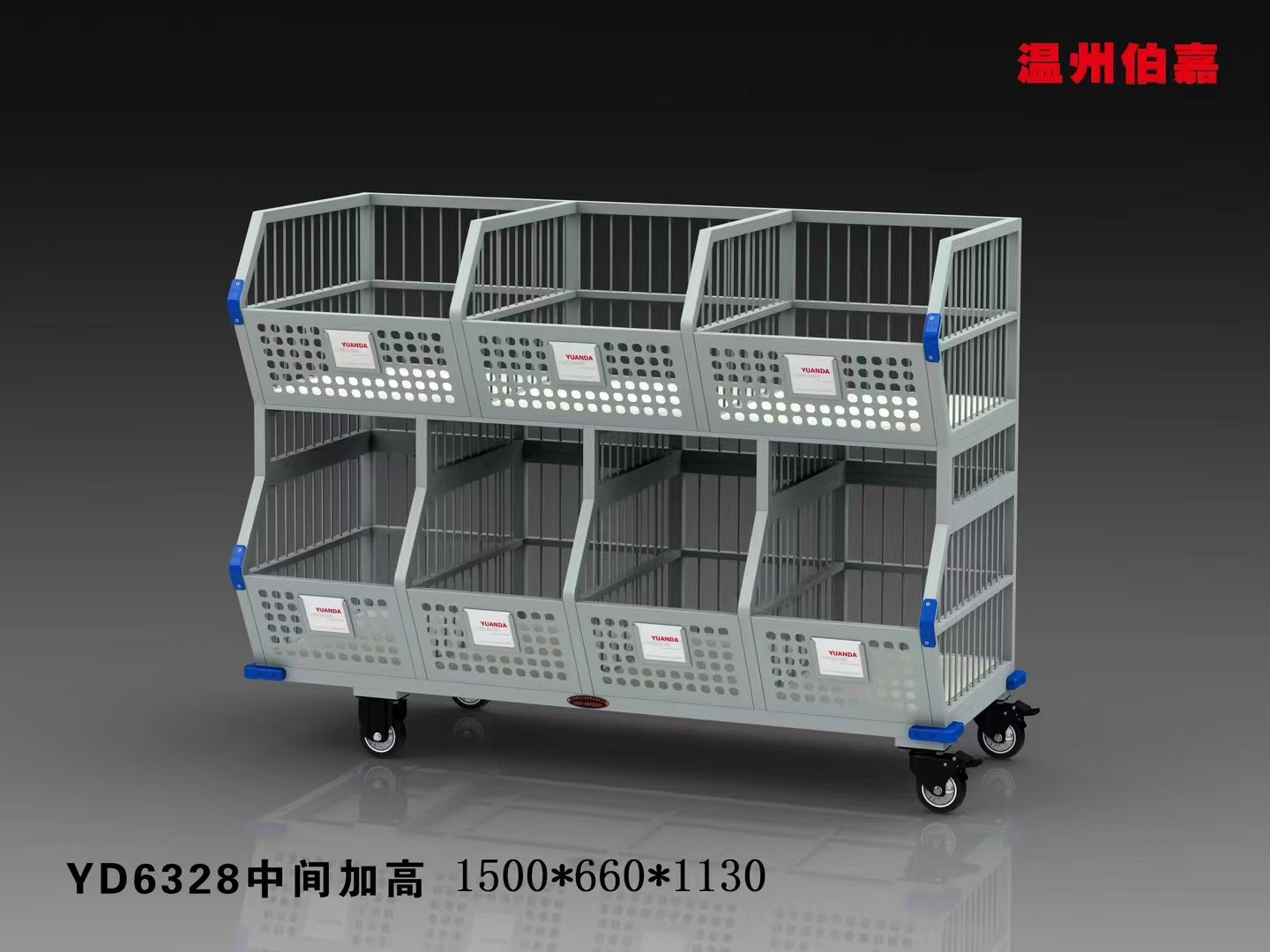
Start with the Trolley’s Real Load
Weigh the empty trolley and estimate the heaviest load it will carry on one shelf. Divide the total by four and add a 20–30% margin. A typical service trolley needs roughly 75–150 kg per wheel; a loaded picking cart may need more. Never under-rate just because the trolley looks small.
Choose the Trolley Caster Configuration
For most trolleys, two swivel casters with brakes at the handle end plus two rigid casters at the far end gives the best balance of stability and steering. Small kitchen trolleys can use four swivel casters to turn in tight spaces, but add brakes to prevent runaway on inclines.
Wheel Material for Trolley Floors
- PU / TPU: quiet, non-marking — best for tile, epoxy and vinyl floors.
- Nylon: hard-wearing — best for rough concrete or wash-down areas.
- Rubber: soft and shock-absorbing — uneven outdoor surfaces.
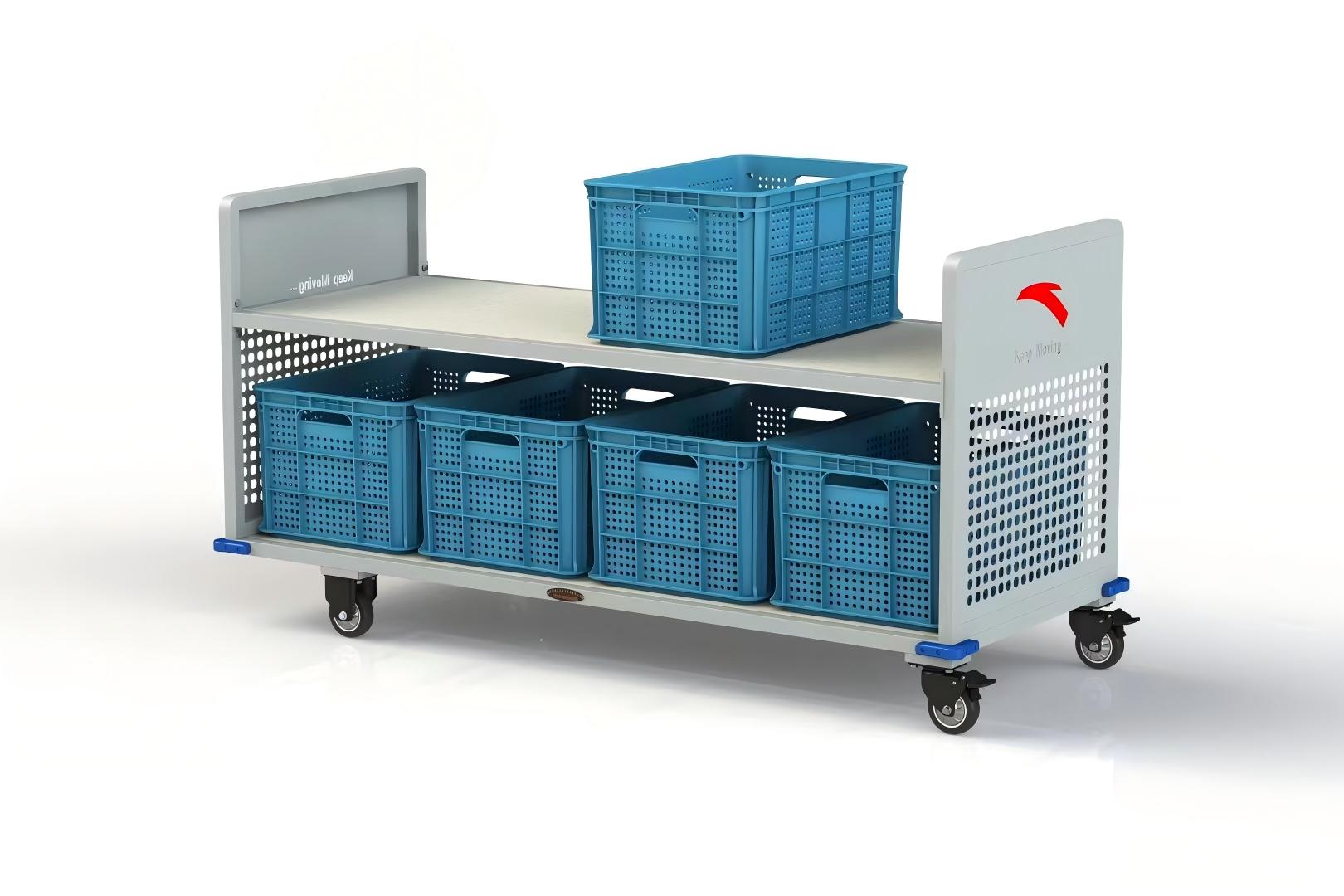
Brake and Mounting Details
Service trolleys often use stem or socket mounts that slide into the trolley frame. Confirm the stem diameter and length match your trolley. A total-lock brake is recommended if the trolley stops on ramps, in elevators or while being loaded.
Step-by-Step Trolley Caster Selection
- Step 1: Weigh loaded trolley and calculate per-wheel load with margin.
- Step 2: Pick tread material by floor type.
- Step 3: Choose 2 swivel + 2 rigid or 4 swivel by space and stability needs.
- Step 4: Add total-lock brakes at the handle end.
- Step 5: Match stem/plate dimensions to the trolley frame.
- Step 6: Check overall height so shelves stay level.
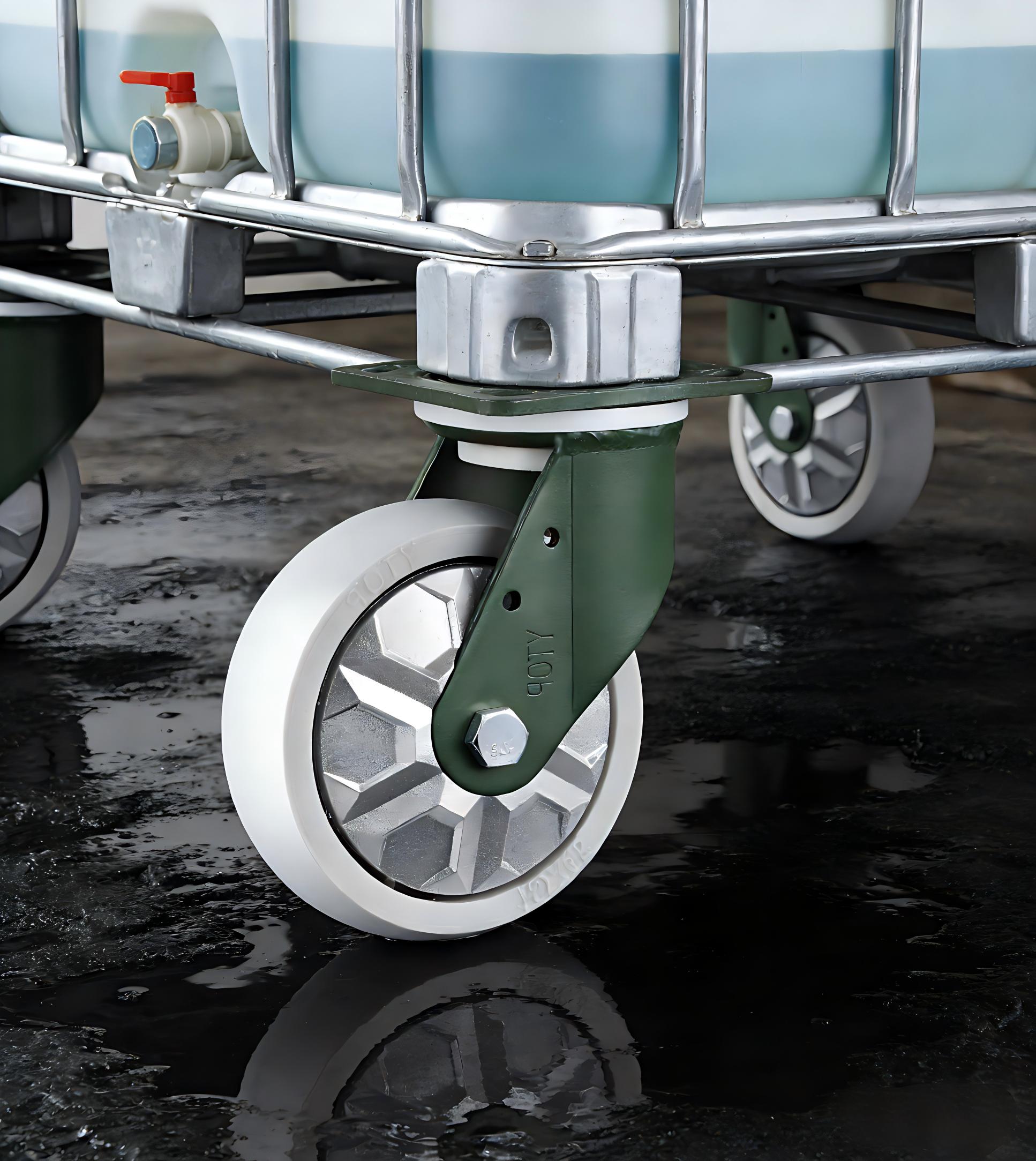
Common Trolley Caster Mistakes
- Too-small wheels that bump over thresholds and elevator lips.
- Hard nylon wheels marking polished tile.
- Four swivel casters with no brakes on a sloped floor.
- Mismatched stems that don’t fit the trolley sockets.
- Replacing one or two wheels at a time — always replace all four in a matched set.
Frequently Asked Questions
How many casters does a trolley need?
Most trolleys use four casters. Two swivel with brakes plus two rigid is the most stable arrangement; use four swivel only in very tight spaces.
What load rating do trolley casters need?
Divide the loaded trolley weight by four, then add a 20–30% safety margin. Most service trolleys need 75–150 kg per wheel.
Should trolley casters have brakes?
Yes — total-lock brakes on the handle-end casters stop the trolley while loading and prevent it rolling on ramps or in elevators.
Can I replace trolley casters with different wheels?
Always replace all four as a matched set, and match the mounting stem/plate and overall height to keep the trolley level.
Worked Example: Casters for a Three-Tier Service Trolley
A hotel service trolley weighs 25 kg empty and carries up to 120 kg across three shelves, a total of 145 kg. On four casters that is roughly 36 kg per wheel, but because the trolley moves daily over tiled hotel corridors and through elevator doors, add a 25% margin to land near 50 kg per wheel — so light-to-medium-duty casters rated 60–80 kg are correct. A polyurethane tread keeps it quiet on tile and avoids scuffing polished floors. Because the trolley turns in tight lift lobbies, four swivel casters are acceptable, but two must carry total-lock brakes to hold position while loading and in the lift. A 75 mm wheel diameter rolls over the elevator threshold without tipping the stacked shelves. The example shows how floor, route and use, not just load, drive the spec.
Why You Should Always Replace All Four Casters Together
When a trolley’s wheels wear, the temptation is to replace only the broken one. This is a mistake. A single new, tall wheel on a cart with three worn, shorter wheels makes the trolley sit crooked, pulls it to one side, and overloads the mismatched pair. Always replace all four as a matched set from the same batch, and keep the same diameter and mounting type. It costs a little more up front and saves months of frustrating steering.
Stem vs Plate Mounting on Trolleys
Many service and kitchen trolleys use a stem or socket mount that slides into a tube welded to the frame. Confirm the stem diameter and length match your trolley exactly — a loose stem wobbles, a too-long stem will not seat. Heavy warehouse platforms usually use a square plate mount, which is the strongest and most stable. Mixing mounting types between wheels on the same trolley is unsafe and should never be done.
Rolling Resistance and Why It Matters for Trolleys
A trolley that takes two hands to push is a trolley that gets overloaded or pushed badly. Rolling resistance is decided by the tread material, the bearing type and the wheel diameter. A precision ball bearing on a polyurethane tread rolls with very little effort; a sleeve-bearing nylon wheel drags noticeably. For trolleys that are pushed by the same operator all day, the difference between a good and a bad caster is felt in the shoulders by mid-shift — a quiet, low-resistance caster is an ergonomic investment.
Choosing Caster Size by Trolley Type
Trolley type strongly dictates caster size. A kitchen or hotel service trolley runs on smooth floors and carries modest loads, so 50–75 mm wheels with quiet polyurethane treads are ideal. A warehouse picking trolley on concrete needs 100 mm or larger wheels to roll over expansion joints without jolting the goods. A laundry or linen trolley holds soft, irregular loads and benefits from four swivel casters so it can be pushed in any direction. A tool or maintenance cart needs heavier-duty casters because the tools are dense and the cart is pulled out several times an hour. Matching wheel diameter and tread to the trolley’s real job, rather than to a generic “trolley” category, is what separates a smooth cart from a frustrating one.
How to Read a Caster Specification for a Trolley
When a supplier hands you a spec sheet, four numbers decide whether it fits your trolley: the per-wheel load rating, the wheel diameter, the mounting size and the overall height. The load rating must clear your calculated per-wheel need with margin. The diameter decides rollability over thresholds. The mounting must match your trolley’s sockets or plate. The overall height must keep all shelves level — a mismatch between new and old wheels, or between brands on one trolley, makes it pull to one side. Confirm all four before you order, and keep a spare set of the exact same casters on hand so a worn wheel never forces a mismatched replacement.
When to Upgrade Beyond Standard Trolley Casters
Standard trolley casters are fine for typical carts, but three situations call for an upgrade. If the trolley carries heavy or dense items like tools or books, step up to medium-duty wheels to avoid overloading the originals. If the trolley travels outdoors or over rough thresholds, choose a larger diameter and a tougher tread. If it is pushed by the same operator all day, invest in precision ball bearings and a quality tread to cut push effort. In each case the upgrade costs a little more per wheel but pays back in a cart that is easy to live with. A trolley is used so often that marginal caster quality becomes a daily frustration — upgrading is almost always worth it.
Bottom Line
Casters for a trolley are chosen by load, floor, route and mounting. Calculate the per-wheel load with margin, match the tread to the floor, choose the swivel/rigid layout by aisle space, add total-lock brakes at the handle end, and replace all four wheels as a matched set. A trolley is pushed dozens of times a day, so a good caster is an ergonomic investment, not a small detail. Spec it once, correctly, and the trolley will roll smoothly for years.
When in doubt, send the trolley’s load, floor and route to a caster supplier for a recommendation. A few minutes of expert advice prevents months of frustration with a trolley that will not steer or rolls away. Treat trolley casters as a real specification, and the cart will serve reliably for years.
Related Reading
More on trolley and cart caster selection:
- Casters Buying Guide — Load and fitting fundamentals.
- Common Casters Selection Guide — Application matching.
- Choose Casters from the Actual Scene — Real scene decisions.
- Caster Selection Strategy — Material and brand balance.
- Heavy vs Medium Duty Casters — Load classes explained.
See our medium-duty trolley casters and light-duty trolley casters, or contact us for trolley catcher recommendations.
Post time: Jun-01-2026