
Why Caster Brakes Are Indispensable for Industrial Safety
When most engineers and facility managers specify a caster, they focus on wheel diameter, load rating, and tread material. Yet one of the most safety-critical components is often overlooked: the caster brake. Brake casters sit at the forefront of handling equipment such as carts, tool trolleys, logistics racks, machinery bases, and hospital furniture, and their only job is to slow or stop movement when required. Without a reliable brake, a loaded cart on even a slight incline can roll away under its own weight, turning a routine task into a workplace injury, product damage, or regulatory non-compliance event.
On ramps, loading docks, and uneven warehouse floors, brake casters allow an operator to stop and lock the trolley in seconds, preventing it from drifting while items are loaded or unloaded. This single function prevents countless near-misses every day across factories, supermarkets, airports, and hospitals. In this guide, we explain why caster brakes matter, how each brake type works, and how to choose, install, and maintain them for maximum service life.
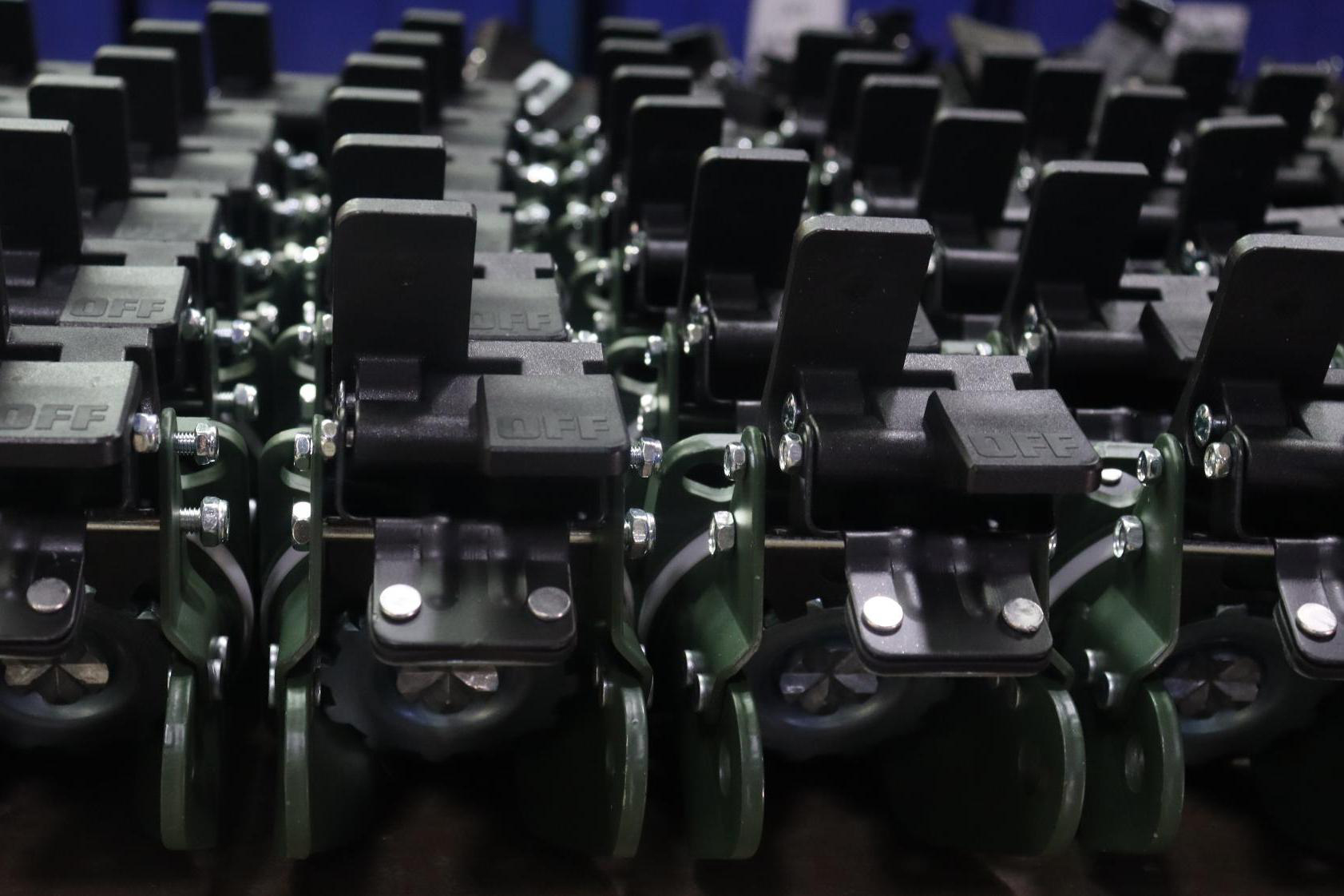
The True Cost of an Uncontrolled Caster
A runaway cart rarely stops on its own. It accelerates down a slope, pins an operator against a rack, knocks over inventory, or collides with pedestrian traffic. Industry injury reports repeatedly point to “unintended movement of mobile equipment” as a leading cause of workplace incidents involving low-load handling gear. A properly selected caster brake costs only a few dollars extra per wheel, but it eliminates the legal, medical, and downtime costs that follow a single incident. For any application where a cart may be stopped on a slope, near a conveyor, or beside a workbench, brakes are not an optional extra — they are a basic safety device.
Slopes, Loads and Human Error
Even a 1 to 2 percent floor grade is enough to set a fully loaded 500 kg cart in motion if the wheels are free-rolling. Operators also forget to chock wheels, leave carts unattended, or assume a colleague will “just hold it.” A mechanical brake removes that reliance on memory. Double-brake casters, in particular, lock both the wheel and the swivel raceway, so the cart stays exactly where it was left — no creep, no spin, no surprise.
How a Caster Brake Actually Works
At its core, a caster brake is a compact mechanical clamping mechanism attached to the fork or top plate. When the operator steps on the pedal, a cam, lever, or friction shoe presses against the wheel tread or the swivel raceway, converting foot pressure into a holding force. Most brakes use stamped steel springs and hardened pins so they survive millions of cycles in dusty, oily, or wet environments. Because they contain no hydraulics, pneumatics, or electronics, they are intrinsically safe in explosive atmospheres and require no power supply.
The Locking Mechanism Explained
When the pedal is depressed, an internal linkage forces a brake pad against the sidewall or tread of the wheel. In double-brake designs, a second arm simultaneously engages the swivel bearing, preventing the fork from rotating. Releasing the pedal lifts the pad clear of the wheel, restoring free movement. The whole action takes under a second and can be done with the foot while the operator remains standing, which is why foot-actuated brakes dominate industrial settings.
Main Types of Caster Brakes
Not every brake does the same job. Understanding the three common architectures is essential when specifying a caster for a real application.
Double-Brake (Total Lock) Casters
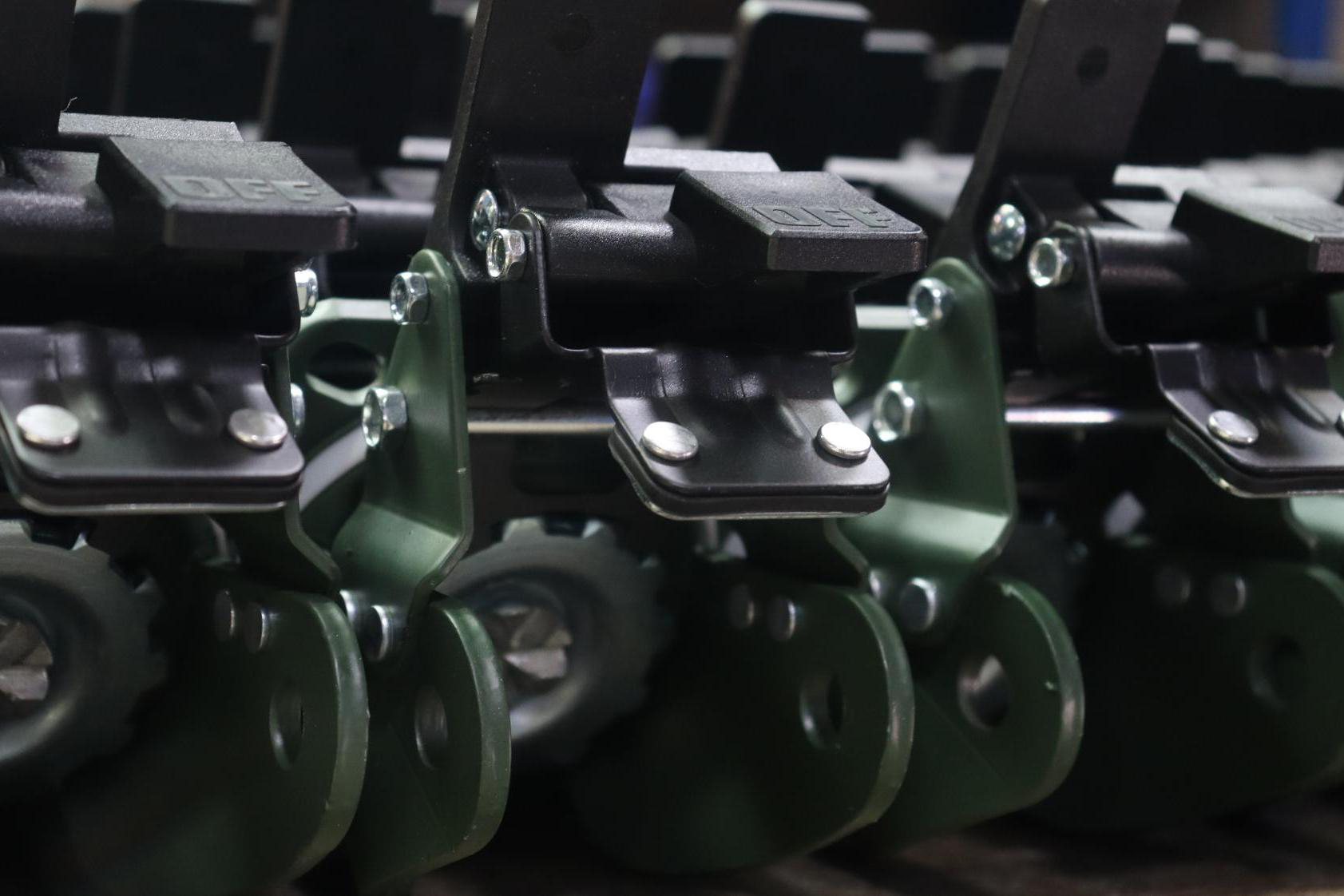
A double brake — also called a total lock or four-position brake — clamps both the wheel and the swivel bearing at the same time. When the pedal is depressed, the wheel cannot rotate and the fork cannot turn, so the entire caster is rigidly locked in place. This is the safest option for carts used on slopes, in automated lines, or anywhere the loaded equipment must remain perfectly still. On a four-wheel cart, fitting double brakes on two opposite corners is common practice; on heavy machinery, all four wheels are braked.
Single-Brake and Side-Brake Casters
A single brake locks only the wheel tread. The fork can still swivel freely, so the cart will not roll forward or backward, but it can still rotate around the locked caster. A side brake is mechanically similar but mounted on the outer side of the fork, saving vertical space and giving a visible external pedal. These are lighter, cheaper, and ideal for flat-floor carts, dollies, and furniture where total immobility is not required. Among the three, double brakes provide double insurance, while single and side brakes are sufficient for level indoor use.
How to Choose the Right Brake Caster
Selecting the correct brake starts with the application, not the catalog. Ask four questions before ordering.
Match Brake Type to Application
If the cart will sit on an incline, bridge a dock plate, or hold a heavy load near moving machinery, choose double-brake casters. If the cart moves only on a perfectly flat factory floor and needs a quick park-and-stop function, a single brake is enough. For trailers, platform trucks used outdoors, or equipment that must withstand lateral forces, always specify total lock.
Load Capacity and Floor Surface
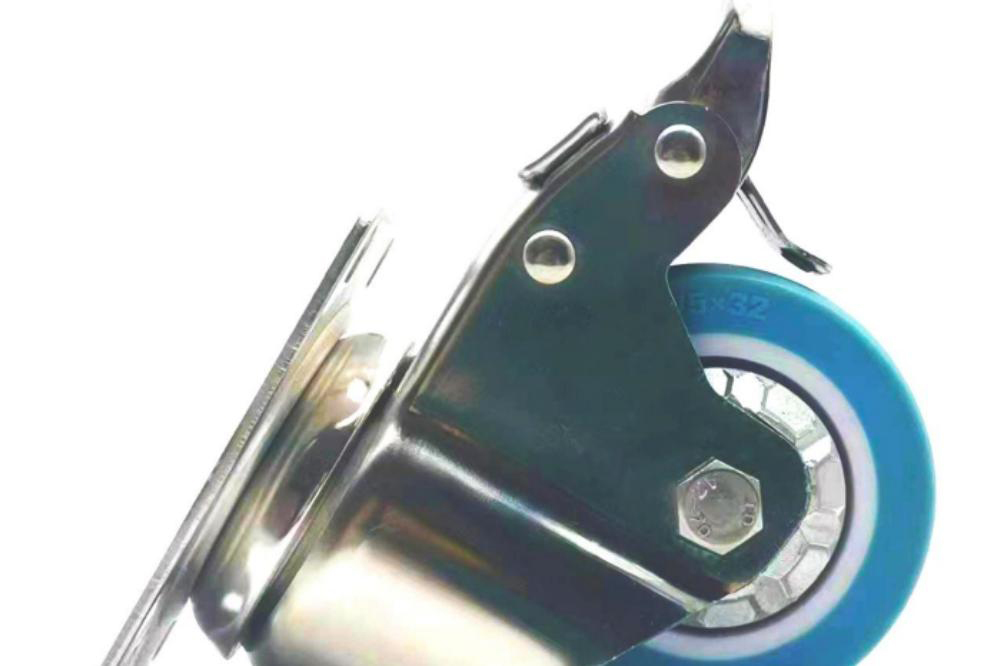
A brake is only as strong as its weakest component. Verify that the brake mechanism’s rated holding force exceeds 15 to 20 percent of the caster’s dynamic load rating, with a safety margin for the actual gross cart weight divided by four wheels. The wheel tread also matters: polyurethane treads grip better on wet concrete than hard nylon, while rubber treads offer quieter braking. TPU brake casters, such as the blue models shown below, combine elastic grip with low rolling resistance and are a popular choice for medium-duty logistics trolleys.
Installation and Maintenance Best Practices
Even the best brake will fail prematurely if installed incorrectly or neglected. A few simple habits dramatically extend brake life.
Correct Installation Checklist
Mount brake pedals on the side most accessible to the operator, typically the pulling direction. Ensure the top plate or stem is fully seated and that all fasteners are torqued to the caster manufacturer’s specification. Do not over-tighten the swivel bearings, as this can bind the brake linkage. Finally, test each brake by pushing hard on the loaded cart before it enters service.
Routine Maintenance Schedule
Every 30 to 90 days, depending on duty cycle, inspect brake pads for wear, clear debris and hair from around the pedal, and lubricate the pivot points with a light industrial grease. If the brake feels spongy or the pedal travel changes, replace the return spring or pad set before failure. Keep brake surfaces free of oil and water, which dramatically reduce friction holding power.
Troubleshooting Common Brake Problems
Brake Slipping or Not Holding
If a locked caster still allows the cart to creep, the usual causes are a worn brake pad, a weakened return spring, or oil contamination on the tread. Clean the wheel, inspect the pad thickness, and replace the pad set if it is below half its original height. Also confirm that the actual cart load is within the caster’s rated capacity.
Stiff or Noisy Brake Pedal
A pedal that will not depress fully usually indicates a bent linkage, a foreign object wedged under the pedal, or a dried-out pivot. Clear the obstruction and lubricate the pivot points. A squealing or grinding sound while braking often means the friction pad has hardened or glazed; replace the pad rather than trying to sand it.
Frequently Asked Questions
Do all casters need brakes?
No. Free-rolling swivel casters are sufficient for hand trucks, dollies that are always attended, and mobile equipment used only on perfectly level floors. Brakes become essential whenever the cart is stopped on a slope, left unattended, or positioned near moving machinery, pedestrians, or product lines.
What is the difference between total lock and wheel lock?
A wheel lock (single brake) stops the wheel from rotating but leaves the swivel fork free to turn. A total lock (double brake) locks both the wheel and the swivel bearing, so the caster cannot rotate in any direction and the cart stays exactly where it was parked.
Can I add a brake to existing casters?
In most cases no. The brake mechanism is integral to the fork and top plate and cannot be retrofitted reliably. The correct solution is to replace the un-braked casters with matched braked replacements of the same mounting pattern, diameter, and load rating.
How long do caster brakes last?
With normal indoor duty, a well-maintained caster brake typically lasts two to five years or 50,000 to 200,000 actuation cycles. Heavy use, wet or corrosive environments, and infrequent lubrication shorten life. A visual inspection every 90 days is usually enough to catch wear early.
Related Reading
Want to dive deeper into caster braking systems and industrial mobility? Explore these related guides:
- Double vs Single Brake — detailed comparison of brake architectures.
- Double vs Side Brakes — how side-mount brakes differ from top-mount brakes.
- Brake Principle Analysis — the physics behind caster brake holding force.
- Brake Precautions — do’s and don’ts for safe brake caster use.
- Single vs Dual Brake Casters — application scenario comparison.
Browse our heavy-duty caster range (150-610 kg) and medium-duty braked casters (100-190 kg), or contact our engineering team for a tailored brake caster recommendation.
Post time: Jan-12-2024