
Nylon Casters: An Overview and Their Core Advantages
Nylon casters have become one of the most widely specified wheel types in warehouses, assembly lines, retail display fixtures, material handling carts, and industrial equipment. Their popularity comes from a rare combination of high load capacity, low rolling resistance, chemical resistance, and a relatively low purchase price compared with forged steel or custom polyurethane alternatives. Because nylon is a thermoplastic that can be injection-molded at high precision, manufacturers can produce wheels in large volumes with tight tolerances, consistent hardness, and smooth running surfaces that protect floors while carrying surprisingly heavy loads.
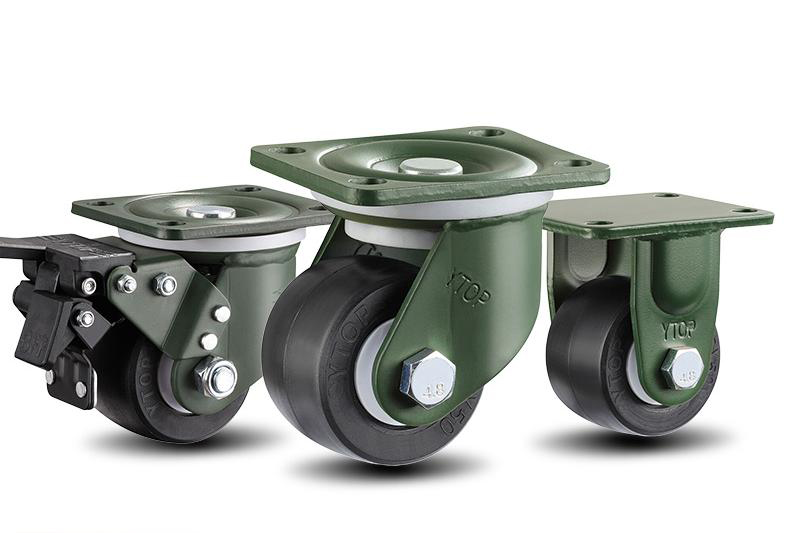
For buyers who source casters at scale-OEMs, system integrators, distributors, and equipment manufacturers-the material itself is only half the story. A nylon caster is only as good as the manufacturer behind it. Two wheels that look nearly identical on a product photo can differ dramatically in weight capacity, dimensional stability, noise level, abrasion resistance, and service life. That is why understanding who makes good quality nylon casters, how they are made, and how to evaluate a supplier is essential before placing a bulk order.
What Makes Nylon a Preferred Caster Material
Nylon (polyamide) offers several inherent advantages for caster applications. It has a high strength-to-weight ratio, so a relatively small wheel diameter can support a heavy load without deformation. It resists oils, greases, solvents, and many industrial chemicals better than rubber or soft plastics, which makes it a natural fit for food processing, chemical plants, and machine shops. Nylon also rolls quietly on smooth surfaces, does not mark floors, and performs reliably across a wide temperature range in indoor environments. These properties explain why nylon is frequently chosen over PP, TPR, or even rubber when load rating and durability matter more than floor cushioning.
However, not all nylon wheels are equal. The exact polymer grade, glass-fiber loading, molding density, and the quality of the bearing or bushing pressed into the hub all determine whether a wheel reaches its rated load or cracks after a few months of use. This is where the manufacturer’s know-how begins to matter.
MC Nylon vs. PA6: Understanding the Difference
Two nylon grades dominate industrial caster production: MC nylon (cast nylon, usually monomer-cast Nylon 6) and PA6 (injection-molded Nylon 6). Buyers often ask which one is “better,” and the honest answer depends on the application.
MC nylon is produced by casting monomer into molds under controlled conditions. It typically offers higher molecular weight, lower mold shrinkage, excellent wear resistance, and strong performance at heavier loads and larger wheel diameters. It is often the material of choice for super heavy-duty applications where wheels must carry 700 kg or more per caster. PA6, by contrast, is injection-molded at high pressure, which allows faster production, tighter geometry, and more consistent small to medium-sized wheels at a lower unit cost. PA6 wheels are common in light and medium duty casters used for carts, racks, and display equipment.
A reputable manufacturer will clearly state which polymer grade is used, the glass-fill percentage, and the tested load rating rather than simply labeling a product “nylon.” If a supplier cannot distinguish between MC nylon and PA6, that is usually an early warning sign.
What Defines a High-Quality Nylon Caster Manufacturer
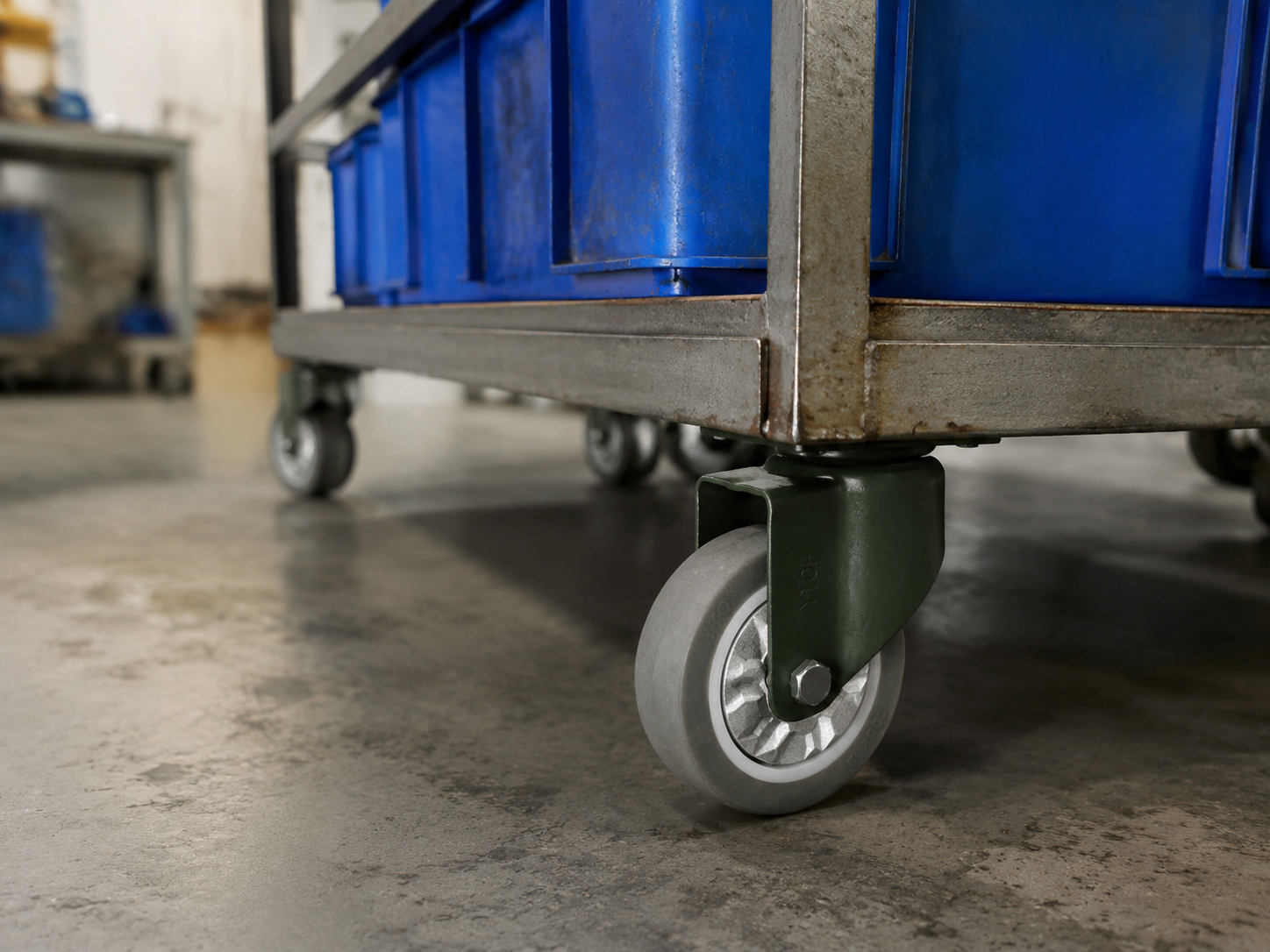
When buyers compare nylon caster manufacturers, the product photo and price are the easiest things to compare-and the least useful. The manufacturers that consistently deliver good quality share a set of internal capabilities that are harder to see from a website.
Rigorous Quality Control and Material Selection
Good manufacturers control the polymer that enters the workshop. That means using virgin resin of a certified grade rather than a high percentage of regrind, adding stabilizers and fillers in measured proportions, and drying the material before molding to prevent moisture-induced brittleness. On the shop floor, this translates to in-process checks on wheel hardness, dimensional tolerance, hub roundness, and swivel play. Many quality problems with nylon casters-premature cracking, uneven rolling, seized bearings-trace back to poor raw material control rather than bad design.
Material selection also extends beyond the wheel itself. The bracket (fork) should be made from stamped steel of known thickness, the kingpin and bearings should be chosen for the load, and the bolts should be grade-marked. A nylon wheel mounted on a flimsy bracket will fail at the weld long before the wheel wears out.
Production Technology, Testing Capability and Certifications
The molding process itself separates serious manufacturers from trading companies. Injection-molded nylon wheels require precise temperature control, adequate clamping force, and controlled cooling cycles to avoid internal stress that causes warping or cracking. Manufacturers with their own tooling, in-house mold maintenance, and experienced molding technicians can adjust parameters when a batch drifts; those relying on outside sub-contractors cannot.
Testing capability is equally important. A quality manufacturer should be able to demonstrate static load, dynamic load, drop impact, fatigue, salt-spray corrosion (for zinc-plated brackets), and rolling-resistance test data. Industry certifications such as ISO 9001, and compliance with standards such as EN 12532 (Europe) or the relevant wheel-load safety requirements, give buyers an objective baseline. Customer references in similar industries, and a willingness to share test reports, are stronger signals than a long list of logos on a website.
Major Nylon Caster Manufacturing Regions Around the World
The global nylon caster industry is geographically concentrated, and understanding where a manufacturer sits helps buyers set realistic expectations on lead time, cost, and quality control.
China: The World’s Production Hub
China manufactures the largest share of the world casters by volume, including a very large portion of nylon wheels. The supply chain is mature.
Europe, North America and Southeast Asia
European and North American manufacturers generally command higher prices but offer strong engineering support, short domestic lead times, and products designed around local standards and ergonomic regulations. They often lead in specialty wheels-conductive, high-temperature, cleanroom, or shock-absorbing designs-but their nylon commodity wheels are usually priced at a premium. Southeast Asian producers, mainly in Vietnam, Thailand, and Indonesia, are growing as companies diversify supply chains away from a single country. Quality varies widely, and buyers should audit factories carefully, because the region is still building its technical workforce and testing infrastructure.
How to Select a Reliable Nylon Caster Supplier
Once the technical criteria are clear, the selection process is a practical exercise in reducing risk. Four steps cover most of what a buyer needs to check.
Factory Audits, Sample Testing and Capacity Evaluation
First, ask for a factory audit-either a video walkthrough, a third-party audit report, or an on-site visit if order value justifies it. Confirm that the molding machines, welding stations, and testing equipment are actually on site. Second, always test samples in your own application before mass production. Measure the wheel under real load on your actual floor, check rolling effort at the expected temperature, and inspect the bracket welds and swivel action. Third, evaluate capacity: ask for monthly output figures, current customer load, and lead times, and compare them with your own forecast. A supplier that can deliver 500 pieces per month cannot suddenly support 50,000.
After-Sales System and Long-Term Partnership
Finally, look at the after-sales system. Does the supplier respond quickly when a batch fails? Are defects replaced, credited, or analyzed? Is there a named technical contact who can discuss load ratings, wheel diameters, or bracket drawings? Long-term partnerships reduce cost per unit because tooling is amortized, specifications are documented, and both sides learn each other quality expectations. A supplier that treats every order as a one-off transaction is rarely the cheapest option over a five-year horizon.
Why Ytopcaster Nylon Casters Stand Out
As a manufacturer focused on manganese-steel caster solutions, Ytopcaster has built its nylon caster range around the same principles used for its heavy-duty product lines: a strong steel bracket, a precisely molded wheel, and load ratings verified by testing rather than estimated from dimensions.
One-Piece Injection Molding and Load-Bearing Performance
Ytopcaster nylon wheels are produced in one-piece injection molding, which removes the weak weld lines and layered structures that cause delamination in cheaper wheels. The molding parameters are controlled to keep the polymer density consistent across the wheel face, so the load distributes evenly rather than concentrating at a weak point. This design supports heavy-duty applications where each caster must carry 150-610 kg, and super heavy-duty designs reach 700-1600 kg per caster when paired with the appropriate bracket and bearing arrangement.
Toughness, Wear Resistance and Steel Structure
The nylon grade selected balances hardness and toughness: hard enough to roll smoothly and resist abrasion under heavy loads, but with enough flexibility to absorb impacts that would shatter a brittle plastic wheel. The manganese-steel bracket is stamped, welded, and surface-treated to resist corrosion, while the swivel bearing and kingpin are sized for the rated dynamic load rather than the static one. The result is a caster that holds its adjustment, rolls true over years of use, and keeps replacement intervals predictable-an important advantage for maintenance teams that want to plan, not react.
Sourcing Tips and Common Pitfalls to Avoid
Several practical pitfalls repeatedly catch buyers of nylon casters. First, do not choose a wheel by price alone. A wheel that is 10% cheaper but fails 30% sooner costs more in labor and downtime. Second, always specify the load per caster, not the total cart load. As a rule of thumb, divide the total load by the number of casters and add a safety margin-many engineers use 20-50%-because not every caster shares the load equally on uneven floors. Third, confirm the floor condition: nylon is excellent on smooth concrete but can be noisy and abrasive on rough, debris-covered floors, where a polyurethane tread may be a better match. Fourth, ask for dimensional drawings and swivel radius data before sampling; a wheel that fits the load but does not clear the machine frame in a turn is a costly surprise on the assembly line.
Finally, document the specification. A written record of polymer grade, wheel diameter, bearing type, plate or stem size, and surface finish prevents substitution when the supplier changes production batches. Good manufacturers welcome this kind of documentation; reluctant ones are a warning sign.
Frequently Asked Questions
What is the difference between nylon and polyurethane casters?
Nylon casters are harder, more load-bearing, and more resistant to chemicals and oils, but they can be noisier and may mark soft or delicate floors. Polyurethane casters are quieter, gentler on floors, and have good chemical resistance, but they usually have a lower load capacity per wheel size and can be more expensive. Choose nylon for heavy, dry, smooth-floor environments; choose polyurethane when floor protection and noise control are priorities.
Are nylon casters suitable for outdoor use?
Nylon casters can be used outdoors in mild conditions, but prolonged UV exposure, moisture, and wide temperature swings can accelerate aging and reduce toughness. For outdoor use, confirm that the bracket has adequate corrosion protection (zinc plating or stainless steel), and consider whether a rubber or polyurethane tread would tolerate the floor and weather better.
How do I know which nylon caster load rating I need?
Divide the total weight of your loaded equipment by the number of casters, then add a safety margin of at least 20-50% to account for uneven floors, shocks during loading, and future load increases. Select a wheel whose rated dynamic load meets this figure, not the static load rating, because rolling loads and impact loads are more demanding than standing loads.
Can nylon casters resist chemicals and oils?
Yes, nylon generally resists oils, greases, and many solvents well, which is why it is common in machine shops and food-processing environments. However, resistance varies with the specific chemical, concentration, and temperature. For aggressive chemicals, ask the manufacturer for a chemical compatibility chart before sampling.
How do I verify a nylon caster manufacturer before placing a bulk order?
Request test reports, ISO or equivalent certification, and customer references; conduct a factory audit or video tour; and run your own sample test under real operating conditions. Confirm monthly capacity, lead times, and the after-sales replacement process. A manufacturer that provides all of this transparently is usually a safer long-term partner.
Related Reading
- What Is the Difference Between Rubber Casters and Nylon Casters?
- Which Material Performs Better: Nylon or Polyurethane Casters?
- Plastic Casters vs. Metal Casters: Which Is Better for You?
- What Are the Common Caster Specifications?
- Classification of Casters by Different Criteria
- Heavy Duty Casters (150-610 kg)
- Super Heavy Duty Casters (700-1600 kg)
- Contact Ytopcaster for Custom Nylon Caster Solutions
Post time: Nov-27-2023