
AGV caster abnormal noise is usually an early warning of failure rather than a sudden breakdown, and how it is handled decides whether the fix costs an hour of maintenance or a seized wheel at the worst possible moment. Different sounds correspond to different root causes, so the first job is diagnosis, not disassembly. The correct troubleshooting logic is to identify the type of sound first, then locate which wheel emits it, and only then take the wheel off and inspect it. Jumping straight to removal skips the cheap clues and often ends in misjudgment. This guide matches each common noise to its likely cause, lays out a repeatable five-step procedure, explains how to treat each case, and covers the prevention habits that keep abnormal noise from returning.
How Different Sounds Map to Different Failures
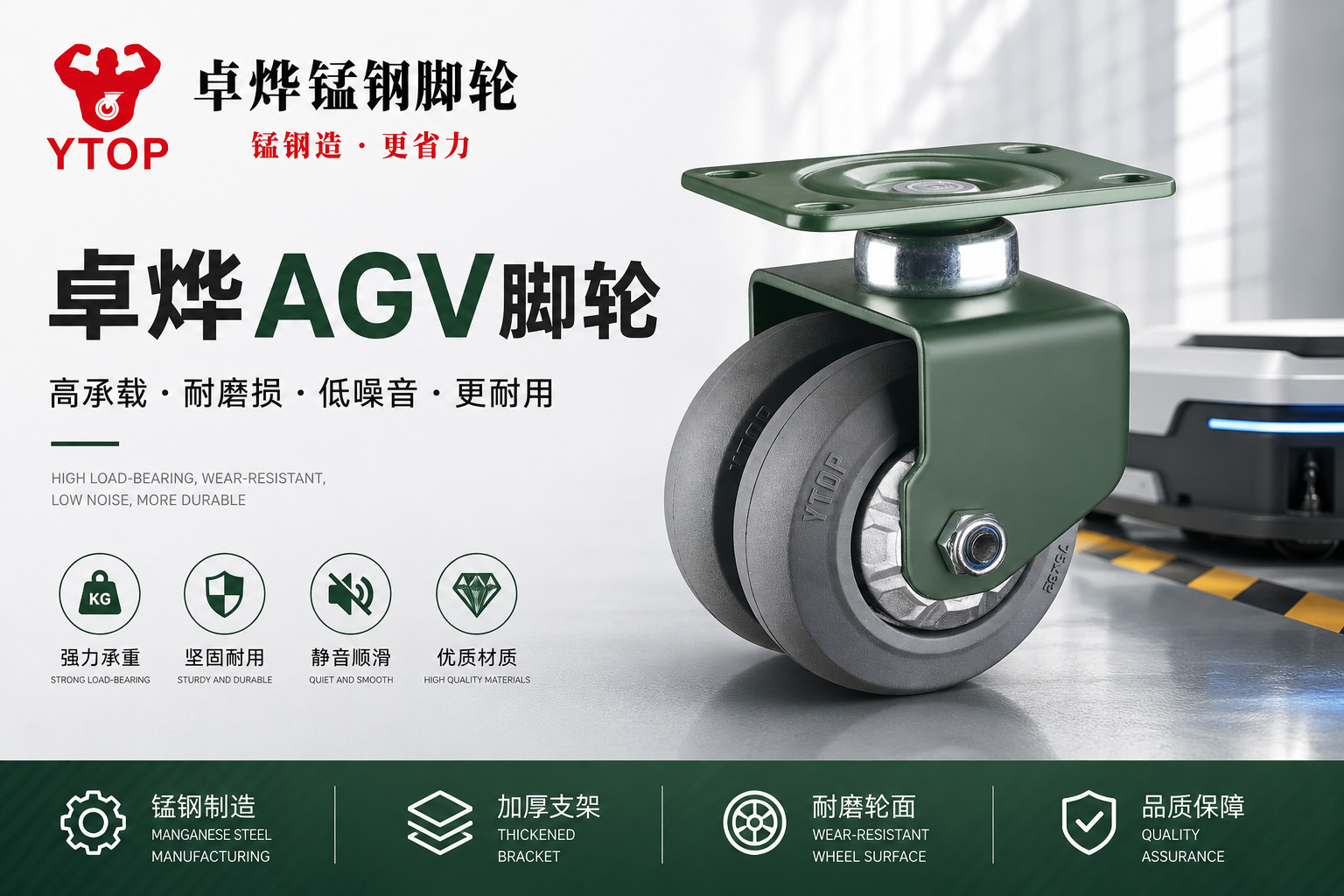
On a running AGV, maintenance teams can sort abnormal noise into roughly six categories, and each category sharply narrows the diagnosis. The table below summarizes the typical sound, its most likely cause, how serious it is, and the first action to take. Learning this sound-to-cause mapping is the fastest way to cut inspection time.
| Typical Sound | Likely Cause | Severity | First Action |
|---|---|---|---|
| Rustling | Grease dried up or dust entered the bearing | Medium; bearing still rotating, lubrication degraded | Clean and re-grease soon |
| Clicking | Bearing raceway peeling or ball fragmentation | High; irreversible damage, seizure risk | Replace the bearing promptly |
| Clunking | Joint-crossing impact or tread flat spots | Medium; flat spots worsen with mileage | Slow down at joints; inspect tread |
| Squealing | Worn brake pads or tread slipping on the floor | Low to medium | Check pads and floor friction |
| Metallic clatter | Loose bracket bolts or bracket deformation | High; structural risk | Stop and inspect immediately |
| Humming | Resonance at a particular rotation speed | Low | Adjust speed out of the resonance zone |
The rustling sound is the most common and the most forgiving: it usually means grease has dried out or dust has worked past the seals, the bearing is still turning, and a clean-and-regrease service often restores normal operation. The clicking sound sits at the other end of the scale — it indicates raceway peeling or broken balls, damage that cannot be repaired in place, and continued running may let the bearing seize and make the AGV lose control. The clunking sound is distinguished by when it appears: if it only occurs when crossing expansion joints, it is impact; if it repeats periodically at constant speed, it points to tread flat spots whose frequency tracks the wheel rotation speed. Squealing that happens during braking points to brake pad wear, while squealing during free rolling points to slip. A metallic clatter is always treated as urgent — loose mounting bolts or a cracked bracket can fail without warning. Humming, by contrast, is usually resonance at one speed range, and simply avoiding that speed is enough.
A Five-Step Troubleshooting Procedure
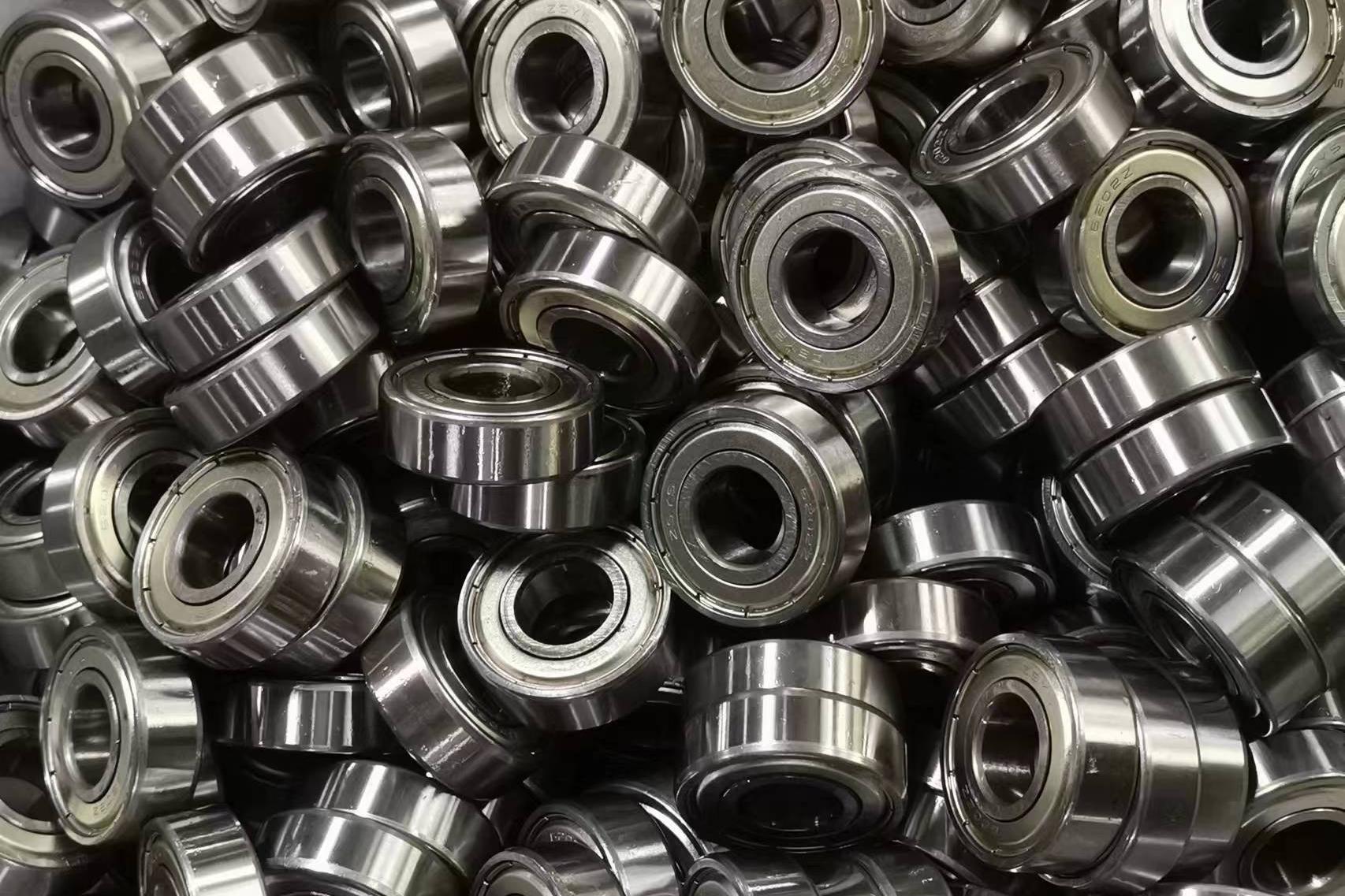
Once the sound type is suspected, follow five steps in order. Each step is cheap, and each one narrows the search before any tool touches a bolt.
- Determine the sound type. Run the AGV under different states — empty load, full load, straight line, turning, braking — and use your ears or a phone recording to classify the noise. Noise that appears only in one state points to one failure area.
- Locate the noisy wheel. In a quiet area, run the AGV slowly and listen at each wheel in turn. In a noisy workshop, use a listening rod: press one end against the bearing housing and hold the other near your ear to isolate the source.
- Lift the AGV and inspect by hand. Rotate each wheel manually, feeling for uneven resistance, listening for rustling or clicking, and shaking the wheel to check for play.
- Disassemble and confirm. Remove the suspect wheel, take out the bearing, and inspect the raceway for peeling, rust, and pitting, the balls for fragmentation, the grease for drying, blackening, or water, and the seals for damage. At the same time check the tread for flat spots, cracks, and uneven wear, and inspect the bracket and its bolts.
- Exclude non-caster causes. Lift the AGV and spin the wheels by hand: if the abnormal noise disappears, the source is the drive motor, reducer, or brake system; if it remains, the problem is in the caster.
How to Handle Each Type of Abnormal Noise
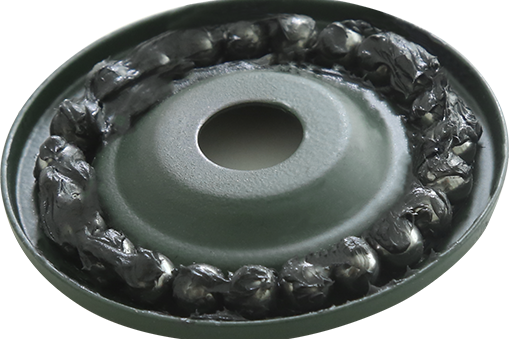
Treatment follows the diagnosis rather than a one-size-fits-all rule. For a rustling sound, remove the bearing, clean it thoroughly, and refill it with grease matched to the working temperature; if the seal ring is damaged, fit a sealed bearing, and if the raceway already shows wear, replace the bearing outright. For a clicking sound, replace the bearing immediately — continued use destroys the cage and risks seizure — and at the same time investigate why peeling occurred, whether overload, impact, or dust ingress, or the new bearing will fail the same way.
For a clunking sound, check the height of expansion joints on the operating path and reduce speed when crossing them; if tread flat spots are found, replace the wheel and check whether overload caused them. For a squealing sound, measure brake pad wear and replace pads that are heavily worn; if the noise comes from slipping on a wet floor, lower travel speed or switch to a higher-friction tread. For a metallic clatter, stop the AGV without delay, tighten every mounting bolt, and inspect the bracket for deformation or cracks — any deformed or cracked bracket must be replaced, because straightening it in the field is never safe. Humming is resolved by adjusting the operating speed so the AGV avoids the resonant range.
Prevention Keeps Noise from Coming Back
Abnormal noise is, at its root, abnormal friction or impact between components, so prevention runs in four directions: maintain lubrication, keep clean, control load, and reduce impact. If the bearings are regreaseable, follow the regreasing cycle; sealed bearings need no fresh grease, but their seals should be inspected regularly. A weekly habit — spinning each wheel by hand and listening — catches problems early, and dust and debris around the bearing and bracket should be cleaned off on the same schedule. Keep the working load within about 75 percent of the rated capacity, slow down at expansion joints, and avoid collisions; handling noise early costs the least, because a small relubrication becomes a seized bearing if it waits.
Frequent abnormal noise is usually a sign that the caster does not match the working conditions or that maintenance has been thin. When replacing casters, review the sealed bearing and lubrication configuration with the supplier and describe the noise type and operating environment rather than ordering an identical part. YTOP Manganese Steel Casters engineers caster assemblies with sealed bearings and matched grease for AGV duty cycles; providing the abnormal-noise history and operating parameters lets the supplier recommend a configuration that addresses the root cause instead of repeating the same failure.
Related Reading
Looking for more in-depth caster guides and industrial mobility resources? Explore these related articles:
- What Role Do AGV Casters Play? — Understand how AGV casters affect navigation accuracy, noise levels, and maintenance in automated material handling systems.
- How to Select Caster Bearings — Compare ball bearings vs. sealed bearings to choose the right bearing type for load capacity and operating environment.
- How to Distinguish Good and Bad Casters — Learn the key visual and structural signs that separate quality casters from low-quality alternatives.
- 10 Core Parameters for Caster Selection — The essential parameters engineers must match when specifying casters for industrial equipment.
Explore our complete range of heavy-duty casters (150-610kg) and super heavy-duty casters (700-1600kg) for diverse industrial applications, or contact our engineering team for expert caster application knowledge and selection guidance.
Post time: Oct-11-2026