
Bearings determine whether casters push labor-saving, how long used, how loud noise. But caster bearing selection, many people only focus on “whether is bearing”, don’t look at differences in rolling method and protection method, result spent money, problem not solved.
Caster bearing selection, core looks at two dimensions: rolling method (ball or needle) and protection method (open or sealed).
Ball Bearings: Mainstream Choice for Industrial Casters

Industrial casters most used are ball bearings. Principle relies on steel balls rolling between inner and outer rings, turning sliding friction into rolling friction, small resistance, pushing labor-saving.
Ball bearing advantages in caster applications relatively clear:
Small startup resistance. Under heavy load light push starts moving, transport labor-saving. This point most meaningful in frequent start-stop transport working conditions — each startup must overcome static friction, and ball bearing low startup resistance reduces pusher’s physical consumption.
Smooth operation. Rolling friction stable, pushing smooth not stiff. During long-time pushing, smoothness differences will accumulate into obvious efficiency differences.
Balanced load. Steel balls uniformly distributed in raceway, load dispersed to multiple contact points, single steel ball small force, wear uniform.
Ball bearing plan mature and reliable, is correct choice for vast majority industrial caster working conditions. Rolling method selection usually doesn’t need overthinking, ball plan covers most application scenarios.
Needle Bearings: When to Use

Needle bearings use needles instead of steel balls, larger contact area, higher load capacity, but friction resistance also larger than ball bearings.
Needle bearings suitable for extreme heavy-load, low-speed, space-limited scenarios. For example some heavy equipment transport wheels, load very large but rotation speed extremely low, needle bearing load advantage meaningful in this working condition.
But needle bearing pushing resistance larger than ball bearings, smoothness worse. For scenarios with not particularly large load and relatively high pushing frequency, ball bearings more suitable. In industrial casters needle bearing application proportion far lower than ball bearings, not mainstream choice.
Open Type vs Sealed Type: Key Dividing Line
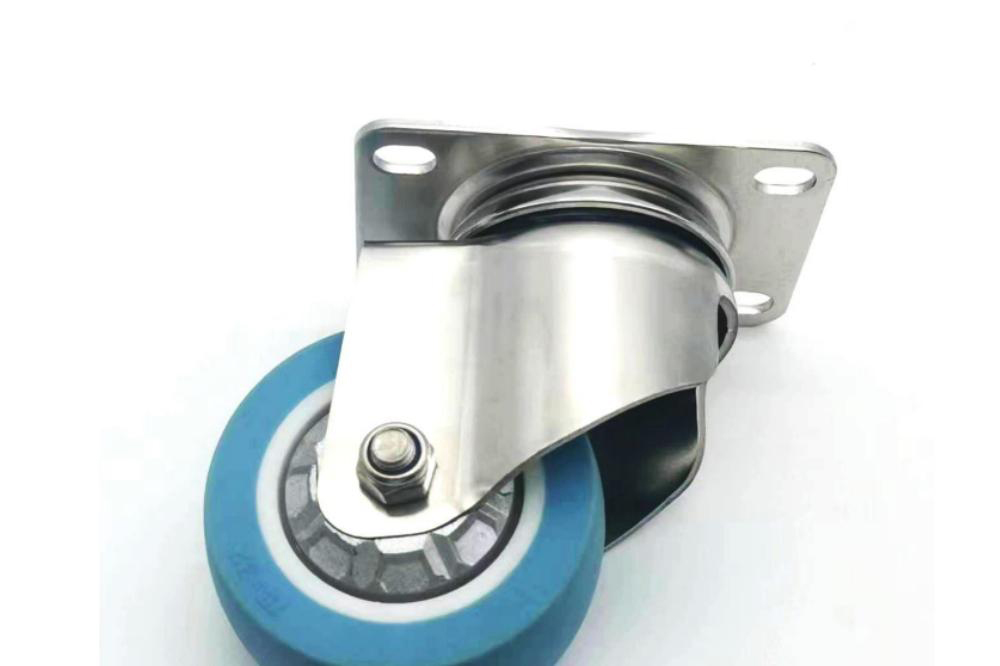
After rolling method determined, protection method is key of selection.
Open bearing structure simple, rotating parts exposed, low manufacturing cost. In clean environments, open bearings can normally work, smoothness also good — no friction resistance of seals.
But once environment complex, open bearings suffer. Workshop dust, metal chips, wood chips, oil stain water vapor drill into bearings, steel balls and raceway wear, and wheels soon from smooth become stiff, abnormal noise. In dust environments, open bearing life may be only a fraction of sealed bearings.
Sealed bearings add protection to rotating core. Seals block dust and liquid outside, combined with grease, rotating parts maintain smooth in dirty environments. Cost of sealed structure is friction resistance slightly increases — contact friction between seal and rotating part will slightly increase pushing resistance. But in dust, humid, corrosive environments, this cost in exchange is life multiplied extension.
Selection Logic by Working Conditions
Cleanrooms, precision equipment transport: Environment clean, low sealing requirements, select high-quality ball bearings. Prioritize smoothness and quiet performance, no need to select sealed structure for non-existent dust risk.
Workshop dust, wood chip environments: Must sealed bearings. Dust is bearing’s number one killer, and open bearings in this environment are short-term consumables. Extra cost of sealed structure, in reduction of bearing replacement frequency soon can recover.
Humid, salt spray environments (aquatic products, chemical industry): Sealed bearings plus corrosion-resistant lubrication. Dual protection, seal blocks external water and corrosive media, grease protects internal rotating surface. Seal material also must be corrosion-resistant, ordinary rubber seals in salt water may age and fail.
A simple judgment standard: is there dust and liquid in environment? Yes, must select sealed structure. No, open type also can, even smoothness better.
Related Reading
- 10 Core Parameters for Caster Selection
- Heavy Duty Industrial Casters
- Caster Noise Troubleshooting Guide
Post time: Sep-23-2026