
Why Caster Use Precautions Matter
Casters look simple. A wheel, a fork, a bracket, and a plate, bolted under a cart. That apparent simplicity is exactly what makes them dangerous. Operators treat them as consumable hardware and forget that a caster failure under a 500 kg load can cause an injury, damage product, or bring a production line to a stop. Most caster-related incidents are not caused by defective casters at all; they are caused by overloading, incorrect installation, neglected maintenance, or operating conditions the caster was never designed for.
This guide consolidates the practical precautions you should follow at every stage of a caster’s life, from the pre-use inspection through daily operation, environmental exposure, and eventual replacement. Follow these steps and most common caster risks disappear.
Industrial safety regulations increasingly treat mobile carts and dollies as light industrial vehicles, not furniture. That means the people who use them, and the maintenance teams who service them, share responsibility for keeping every caster in safe working order. A small investment in inspection time and a handful of correctly selected spare casters prevents injuries, protects inventory, and keeps production running on schedule. The sections below break the precautions down into practical, day-to-day steps you can apply today.
The Hidden Risks of Ignoring Caster Maintenance
A flat-spotted wheel, a cracked fork, a seized swivel bearing, or a worn brake pad rarely announces itself. It fails mid-shift, often under a full load, and the first warning is a loud noise or a lurch. Industrial insurance claims routinely list “mobile handling equipment” as a contributing factor in slip-and-fall and crush accidents. The good news is that nearly all of these failures are predictable and preventable with a 5-minute checklist performed before each shift.
Before You Start: Pre-Use Inspection
Every time you put a loaded cart into service, run a quick inspection. The whole process takes under two minutes and catches problems before they become accidents.
Visual Check List
Look at each wheel for flat spots, cracks, chunking, embedded debris, or sidewall cuts. Check the fork for bending or cracks around the weld. Confirm that all mounting bolts are tight and that no fastener is missing. Spin each swivel by hand; it should turn smoothly without grinding or sticking. Test the brake pedal: it should click firmly into both the locked and released positions, and a locked caster should not move when you push hard on the cart.
Load Verification
Before loading, confirm the gross weight of the cart plus its cargo is within the caster rating. A common mistake is to look at the static weight of the empty cart and ignore the material it will carry. Divide the total loaded weight by three wheels (not four) and compare that number with each caster’s rated capacity. If the per-wheel load exceeds 80 percent of the rating, step up to a heavier caster.
During Use: Operating Safely
Even a correctly specified caster can fail quickly if operators abuse it during daily use.
Loading and Unloading
Never drop a load onto the cart. Shock loads spike wheel stress far above the rated capacity, cracking tires and bending forks. Center the load on the deck, do not stack material to one side, and secure tall or unstable items before moving. When loading a cart on an elevated platform or dock, set the brakes first, and never leave a loaded cart unattended on a slope with the brakes off.
Pushing, Pulling and Turning
Push, do not pull. Pushing keeps the cart between you and any obstruction and gives you better control during an emergency stop. Keep both hands on the handle, look where you are going, and slow down at intersections. Take turns wide and smooth; sharp, fast turns tip carts and stress swivel bearings. For four-wheel carts, never drag them sideways by pushing on the short end.
Environmental and Floor Precautions
The caster environment shapes how long it lasts. Ignore it, and even a premium caster will rust, harden, or crack prematurely.
Corrosion and Outdoor Exposure
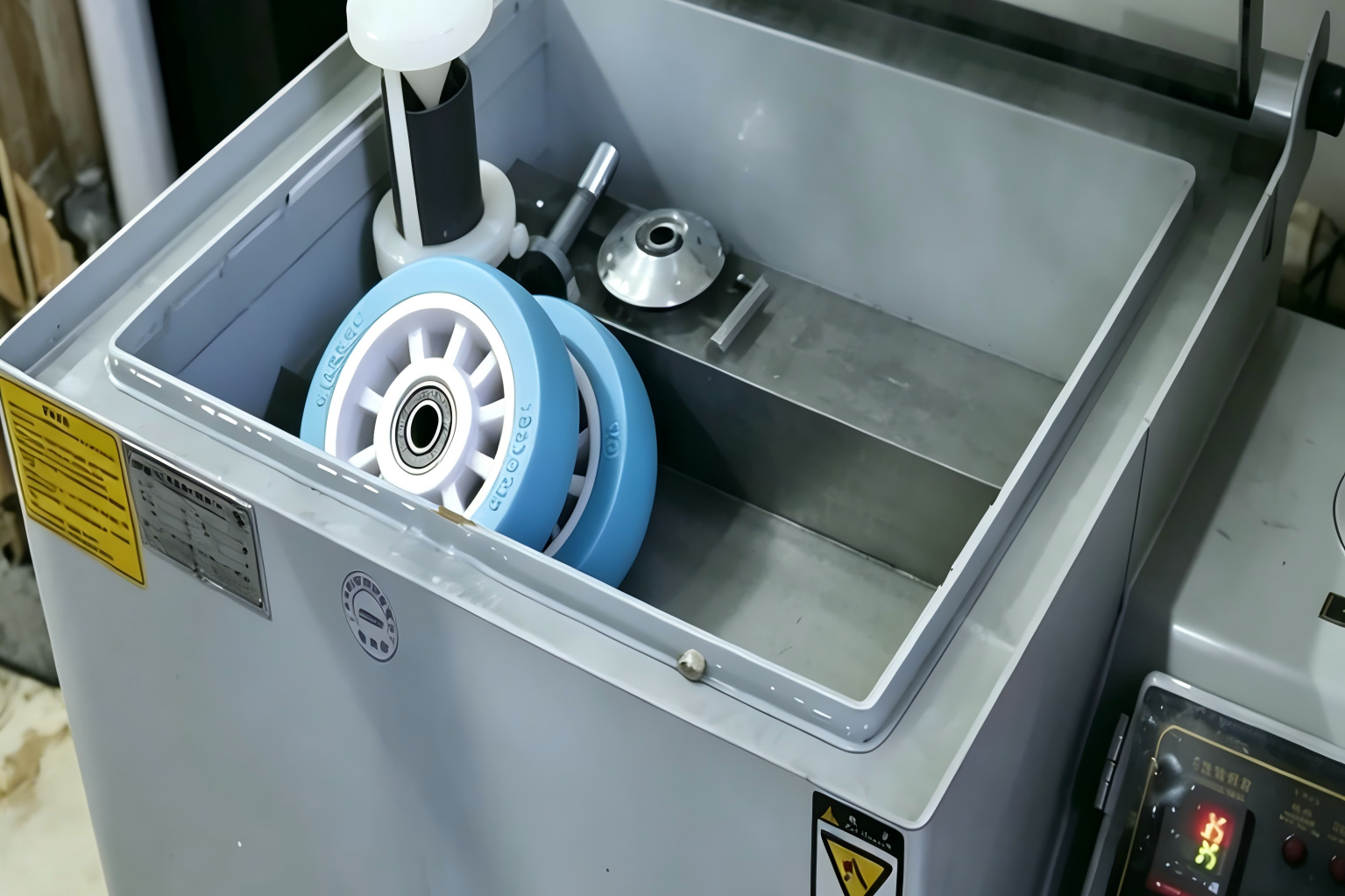
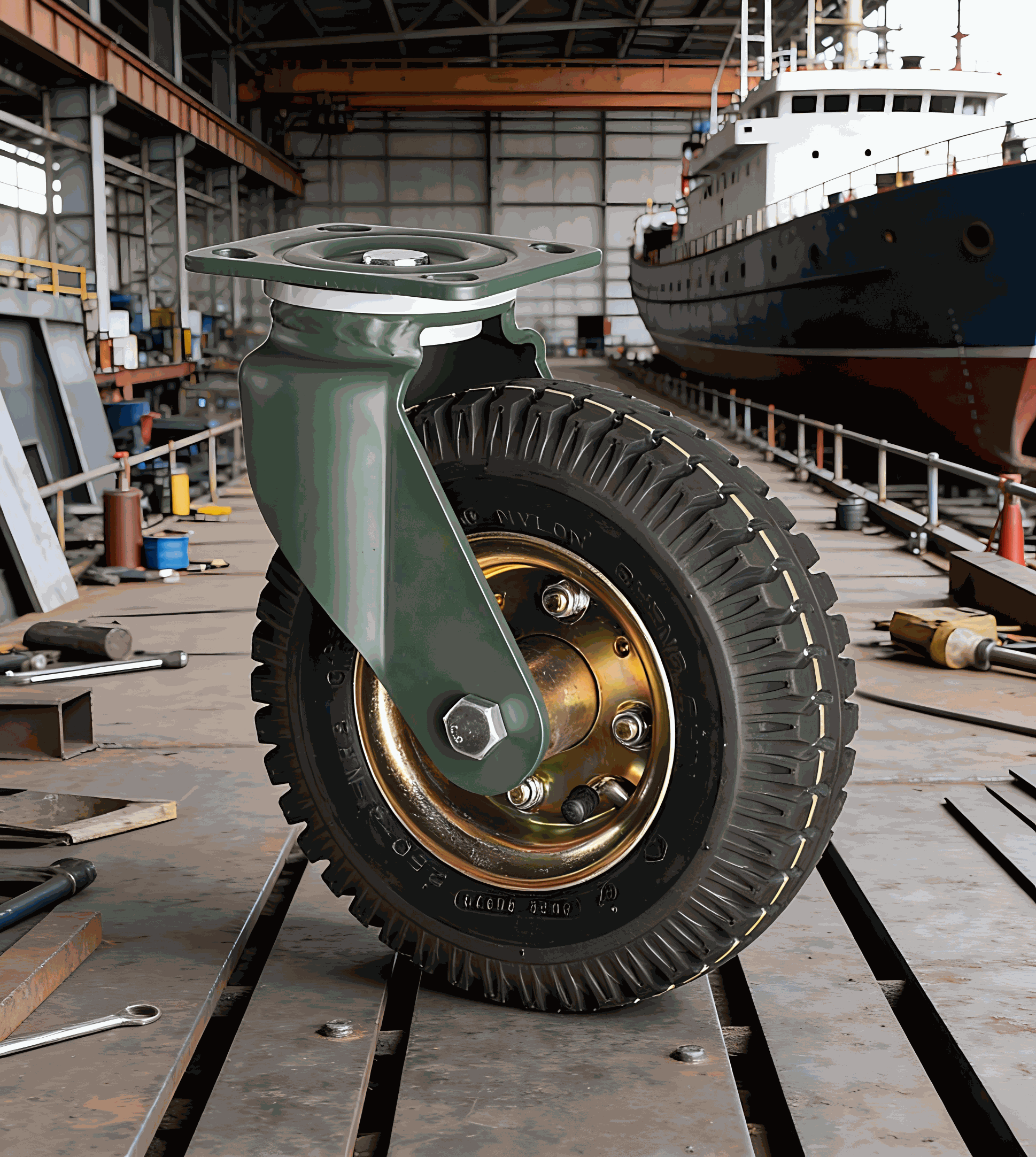
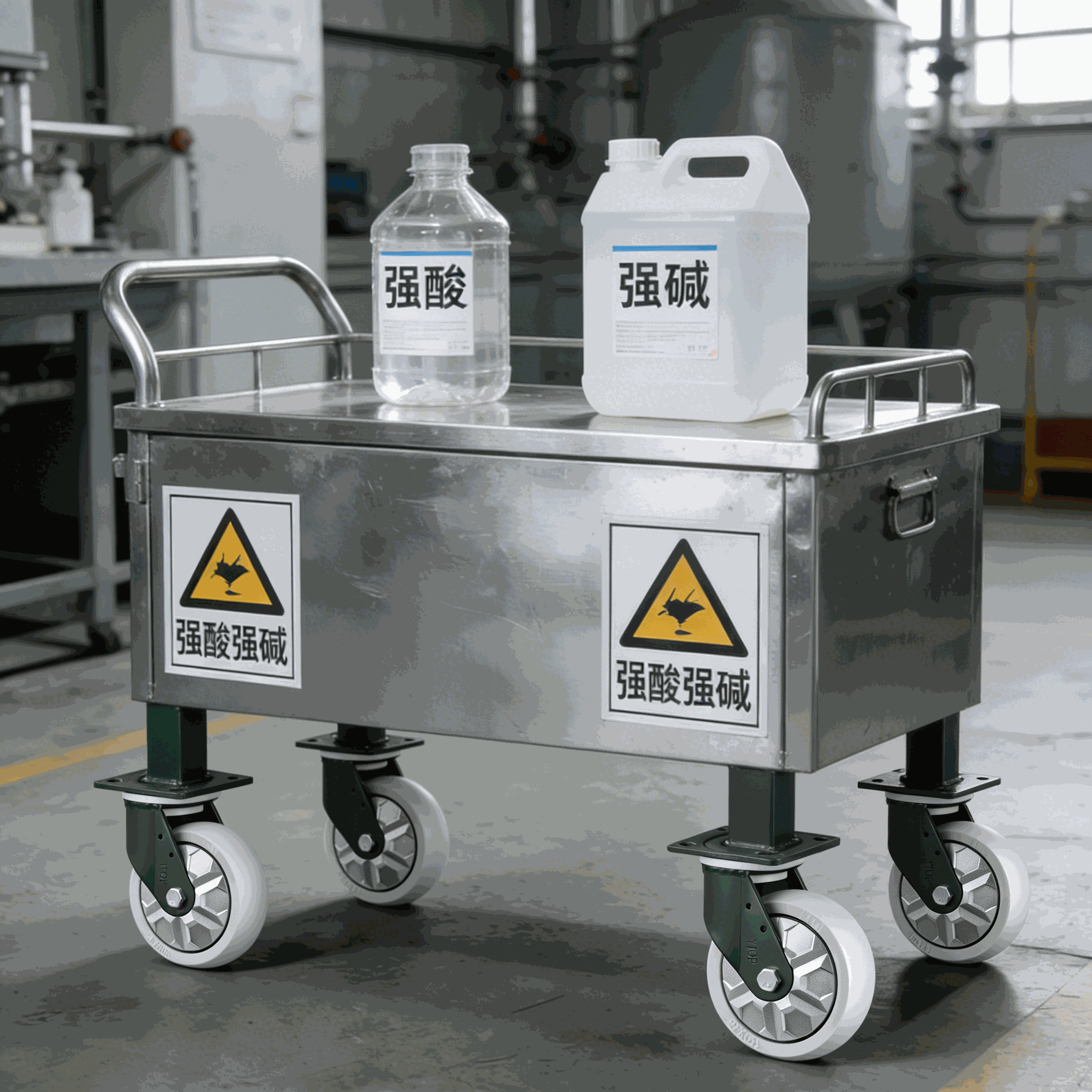
Casters used outdoors, in washdown areas, near chemicals, or in coastal salt air corrode quickly. Zinc-plated brackets offer basic protection; stainless steel brackets are required for food, medical, or coastal applications. Clean casters regularly, wipe off accumulated debris, and inspect the salt-spray resistance of any caster that will be used in corrosive conditions before purchase. A caster that passes a 48-hour neutral salt spray test will usually outlast an unrated caster by years in a damp environment.
Floor Surface Hazards
Broken expansion joints, loose cables, pallet edges, and oily spots are the most common floor hazards. Roll over joints slowly, tape down cables, and clean oil spills immediately. If a floor is regularly wet, choose a non-marking polyurethane or rubber wheel rather than hard nylon, which slips. Never use casters outside their rated temperature range; thermoplastic wheels harden in cold and soften in heat, both of which change load capacity.
Replacement and Maintenance Precautions
A caster is a wearing part. Knowing when to replace it, and how to replace it correctly, prevents most avoidable failures.
When to Replace a Caster
Replace any caster with visible cracks in the wheel or fork, a wheel that is flat-spotted enough to thump, a swivel that will not rotate smoothly, a brake that no longer holds, or mounting holes that are elongated. Replace casters in sets, not one at a time; mismatched wheels roll unevenly and cause steering problems.
Correct Replacement Procedure
Before ordering replacements, measure the old caster: wheel diameter, wheel width, overall height, top plate dimensions, bolt hole spacing, and bolt hole diameter. Match the load rating to the application with the same 30 percent safety margin. When installing, torque all fasteners evenly, and retorque after the first week of use as the seats settle. Keep a written record of replacement dates for each piece of equipment.
Common Caster Failure Modes
Recognizing how a caster fails helps you catch trouble early. Most failures follow a predictable pattern, and understanding them turns a routine inspection into a real safety check.
Wheel Flat-Spotting and Cracking
Flat spots appear when a wheel skids sideways during a turn or when a hard thermoplastic wheel is left under load in cold temperatures. The flat spot thumps on every rotation and, if ignored, cracks the wheel away from its hub. Cracking is irreversible; the caster must be replaced immediately. In high-load applications, choose a wheel with shock-absorbing tread and avoid leaving loaded carts stationary in very cold rooms.
Swivel Bearing Seizure
A seized swivel makes the cart pull to one side and forces the wheel to drag sideways across the floor, wearing the tread quickly. Seizure usually starts as roughness caused by dirt, dust, or a lack of lubrication. If a swivel feels stiff, clean it out and re-grease it before it locks completely. In food or dust-heavy environments, sealed double-ball raceways resist this failure far better than open bearings.
Fork Weld Failure
The fork weld is the strongest point on a well-made caster, but it can crack under repeated shock loads or improper overloading. A cracked fork bends suddenly under load and can drop the wheel out from under the equipment. Never weld a cracked fork yourself; replace the entire caster, because the hidden heat damage from welding weakens the remaining steel. Choosing a manganese steel bracket from the start provides a much larger safety margin for shock-prone applications.
Frequently Asked Questions
How often should casters be inspected?
For daily indoor use, a quick visual check before each shift and a detailed inspection every 90 days is enough. For heavy-duty, outdoor, or high-speed applications, inspect monthly and replace worn parts at the first sign of trouble rather than waiting for failure.
Can I use one wrong-size replacement caster?
No. Mixing diameters changes the height of one corner, tilts the equipment, and puts all the load on the other three casters. Always replace all casters on a piece of equipment with matched sets of the same diameter, mounting pattern, and load rating.
What is the most common caster accident?
The most frequent incident is a runaway cart on a slope or dock plate, caused either by failing to set the brakes or by worn brake pads. The second most common is a wheel failure caused by overloading, where the operator assumes the caster label applies to the whole cart rather than per wheel.
Are brakes mandatory on slopes?
Where local safety codes apply, double-brake casters are mandatory on any cart used on a grade above 1 percent or near docks and conveyors. Even where codes do not require them, double-brake casters are the cheapest insurance against a rolling runaway cart.
Related Reading
Learn more about safe caster selection, use, and maintenance:
- Industrial Caster Brakes and Precautions — braking safety details.
- Trolley and Machine Caster Precautions — practical tips for daily use.
- YTOP Manganese Steel Caster Applications — where heavy-duty casters fit best.
- Caster Load Grading Explained — choose the right duty class for safety.
- Core Caster Selection Parameters — avoid under-specifying from the start.
Explore our heavy-duty casters (150-610 kg) and light-duty casters (35-80 kg) built for safe, reliable use, or contact our engineers for a safety review of your caster specification.
Post time: Nov-18-2023