
When talking caster selection with a manufacturer, the term “offset distance” comes up — and many purchasers freeze. This parameter looks obscure, but it directly determines whether a swivel caster steers smoothly, holds direction under heavy load, and feels stable on the floor. It is unavoidable in swivel caster design.
What Is Offset Distance?
Offset distance is the horizontal distance between the swivel caster’s steering axis (the vertical rotation line) and the wheel-to-floor contact point.
For a swivel caster to rotate 360°, the steering axis cannot pass exactly through the wheel contact point — otherwise the wheel would only spin in place and couldn’t roll and steer. A small gap must exist between the vertical axis and the contact point, and that gap is the offset distance.
This is the physical basis that makes swiveling possible: as the wheel rotates around the vertical axis, the contact point draws a circle around the axis, and floor resistance pushes the wheel to align itself with the rolling direction. The wheel then automatically follows where you push.
Small vs Large Offset: Different Feel
The size of the offset distance changes the steering feel noticeably:
• Small offset: The steering axis sits close to the contact point. The wheel turns easily and responds to light pushes — steering is sensitive. But under heavy load and at speed, straight-line stability weakens and the cart drifts more.
• Large offset: The steering axis sits farther from the contact point. Steering resistance is slightly higher, but straight-line stability is excellent — the cart tracks true and holds direction under load.
It is a trade-off, not a “bigger is better” or “smaller is better” situation. Small offset buys flexibility; large offset buys stability.
Match Offset to Your Working Conditions
Different scenarios favor different offset values:
• Frequent steering, narrow spaces (supermarkets, hospitals, turnover carts): moderate-to-small offset, steering flexibility first.
• Heavy-load long-distance straight travel (ports, conveyor lines): larger offset, straight-line stability first.
• High-speed moving equipment (AGVs, industrial tugs): offset must be finely tuned to speed, balancing flexibility and stability.
Heavy Load Amplifies the Offset Effect
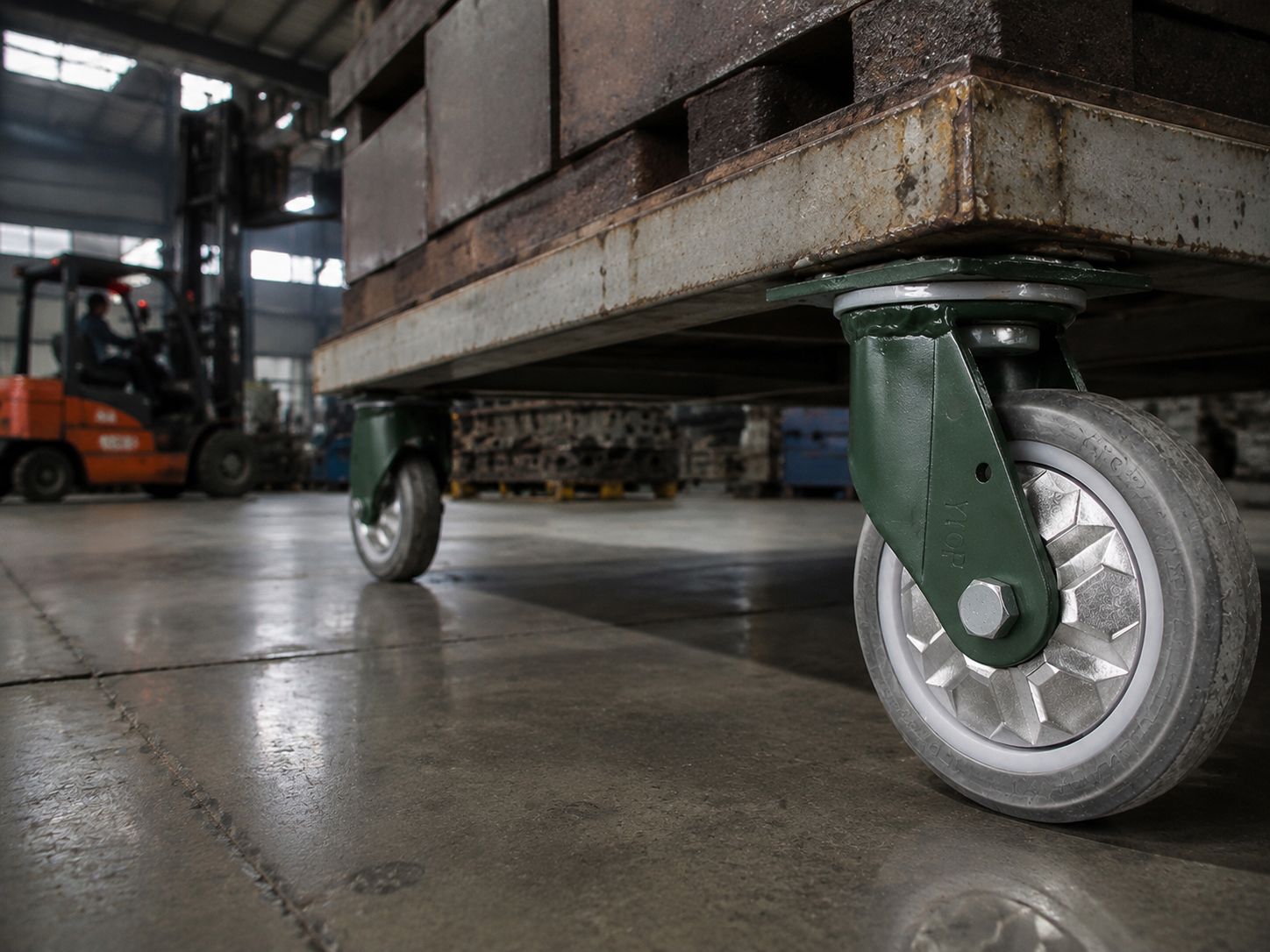
Under heavy load, the offset distance matters even more. Floor resistance at the wheel contact point is large, so a large offset creates high torque on the steering axis — steering feels heavy and hard to turn. Too small an offset under heavy load, and directional stability becomes unreliable.
This is why professional manufacturers design offset separately by load rating, rather than applying a single universal value across an entire product line. The offset must also be considered together with bracket strength — a weak bracket will flex regardless of how well the offset is calculated.
Numbers on Paper vs Feel in the Hand
Offset distance is a design parameter, but the feel depends on structure. Two casters with the same offset value can steer very differently depending on vertical axis tolerance and raceway precision. A well-matched axis and raceway steer smoothly without floating; a loose structure shakes under load, and no amount of offset design fixes that.
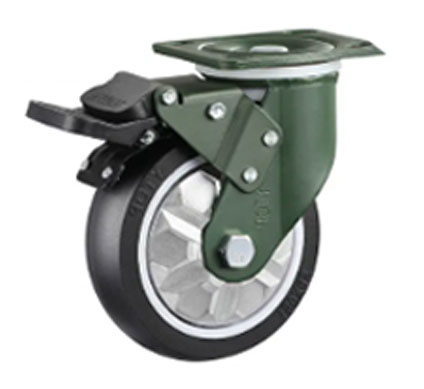
Zhuoye swivel casters use molybdenum disulfide lithium-based grease on the vertical axis and raceway, keeping steering smooth over time. Brackets are engineered for heavy loads, so the rotating mechanism does not deform under pressure. Powder-coated surface treatment prevents rust in oily, dusty environments, preserving steering precision longer.
What to Tell the Manufacturer
You don’t need to calculate offset yourself — but understand the logic: small offset = flexible steering, large offset = stable tracking, heavy load = stability priority. When ordering, tell the manufacturer: do you turn more or go straight more, what is the load, and what is the moving speed. The supplier will match the offset design to your working conditions.
Related Reading
Looking for more in-depth caster guides and industrial mobility resources? Explore these related articles:
- Swivel vs Rigid Casters: How to Choose Direction Control for Your Cart — Understand the wheel type mix that determines how your cart behaves.
- Caster Wheel Diameter: Large vs Small for Obstacle Crossing and Pushing Force — How size affects pushing effort and obstacle performance.
Explore our heavy-duty casters with precision steering design, or contact our engineering team for offset and steering recommendations.
Post time: Nov-06-2026