
Which direction a cart goes is ultimately decided by its wheels. Swivel casters steer, rigid casters run straight — and when the two are matched together, that is when a cart becomes controllable: smooth turning, stable straight tracking, and effortless pushing. Almost no industrial cart uses only one wheel type; the ratio between swivel and rigid is what determines how the cart behaves in your workshop.
Two Types of Wheels, Two Jobs
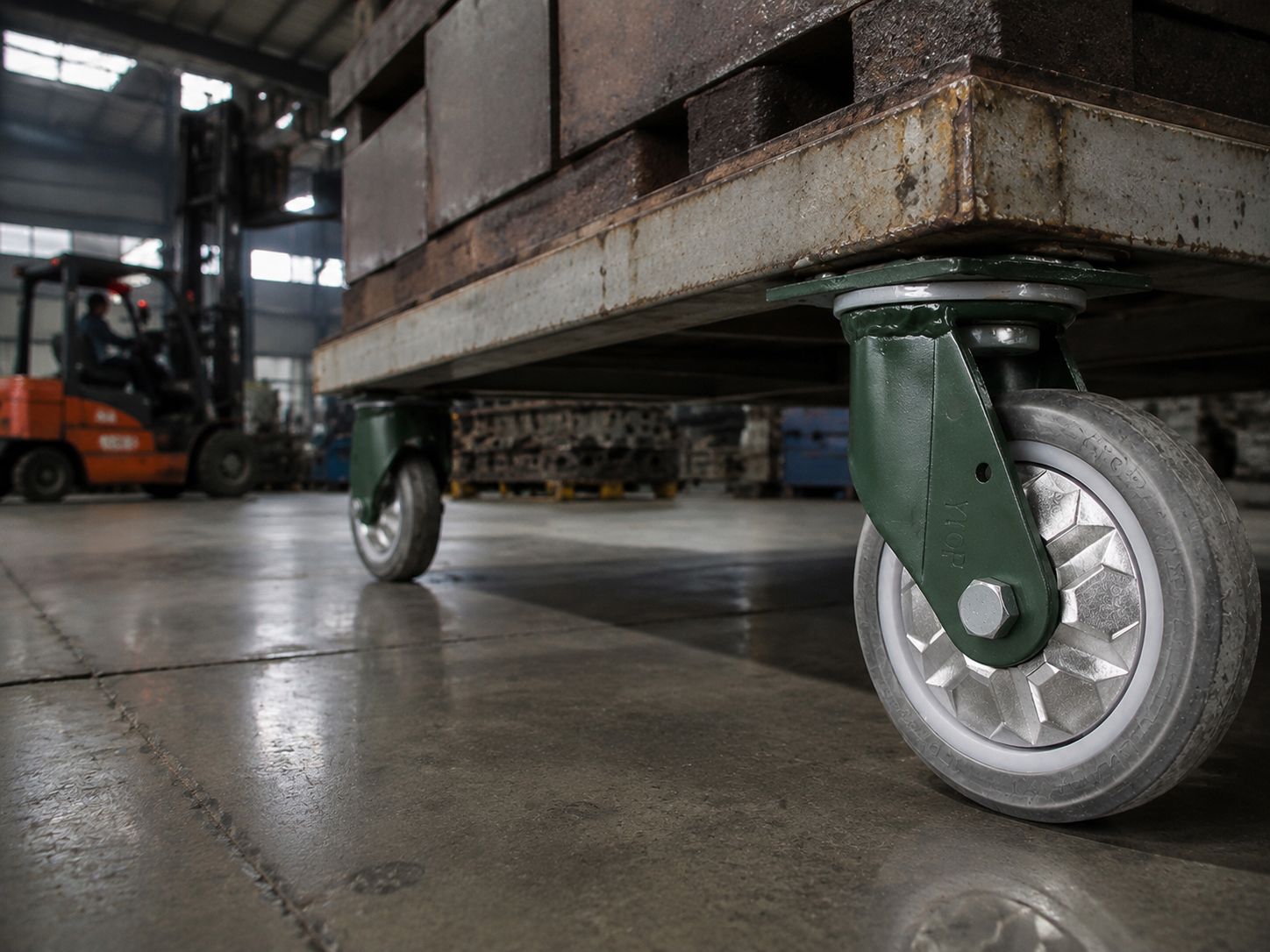
A swivel caster has a wheel assembly that rotates 360° around a vertical axis. The cart can turn in any direction, which is essential for frequent maneuvering in narrow aisles. A rigid caster, by contrast, has a fixed wheel frame that only runs straight ahead — it locks the direction and prevents the cart from wandering.
These two are not substitutes but teammates. Four swivel casters turn freely but wander when you want straight travel; four rigid casters track perfectly but require lifting the entire cart to change direction. Pure configurations always have a clear weakness — which is why mixing them is the standard.

Front-Swivel, Rear-Rigid Is the Default
The most common industrial setup is two swivel casters at the front and two rigid casters at the rear. The front swivels handle steering so the cart turns nimbly; the rear rigid casters stabilize straight-line travel and prevent side-to-side drift.
This configuration delivers three things at once: easy steering, stable straight tracking, and reduced pushing force. It is the default on the vast majority of workshop carts and requires no extra deliberation for standard applications.
Adjust the Ratio to Your Aisle Layout
The ratio is not fixed — it must follow the actual working conditions:
• Narrow aisles with frequent turns (e.g., rack-to-rack picking): increase the proportion of swivel casters for tighter steering.
• Long straight warehouse corridors: keep rear rigid casters for stable, drift-free long-distance travel.
• Equipment requiring in-place rotation and positioning: consider all-swivel or add a dedicated steering mechanism.
• Heavy-load long-distance transport: rigid casters carry the main straight-load force, specified to heavy-duty ratings.
The decision rule is simple: in conditions where turns dominate, lean toward more swivel; where straights dominate, lean toward more rigid.
Why “All Swivel” Is Not Always Better
Swivel flexibility comes at a cost. The more rotational freedom a caster has, the more effort is needed to keep the cart going straight — and the more obvious the rolling resistance feels on long straight runs.
This is exactly why straight-travel carts must retain rigid casters: they exist to “hold the line.” Conversely, maneuverability-demanding environments need more swivel casters. The right balance is neither blindly all-swivel nor all-rigid — it is the ratio that matches your floor plan.
Steering Structure Determines the Push Feel
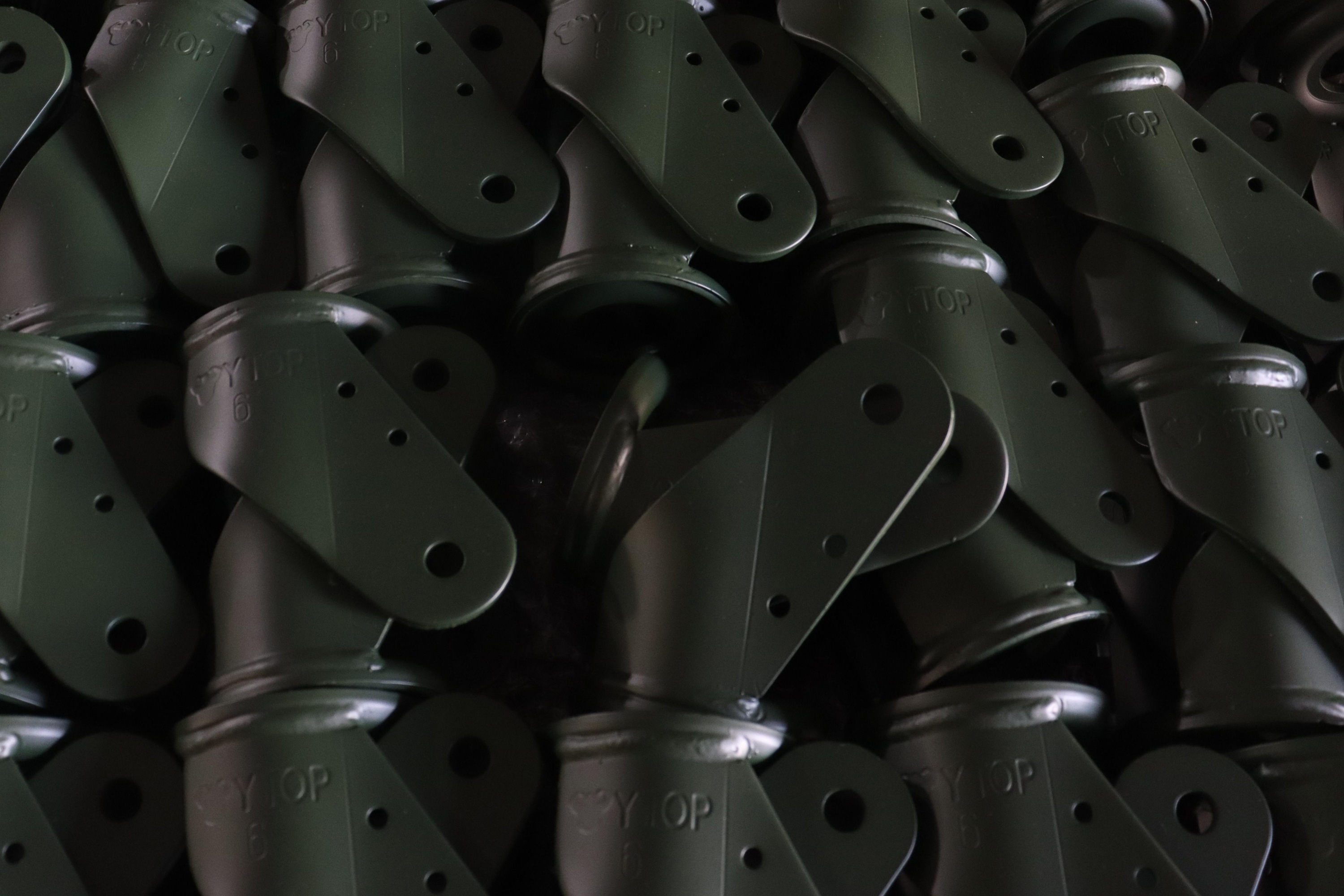
Even with the same wheel type, two swivel casters can feel very different — and the difference lies in the steering mechanism. A well-matched vertical axis and raceway rotate smoothly and steer lightly; a loose structure causes floating and shaking, which becomes pronounced under heavy load.
Precision, lubrication, and corrosion protection in the swivel assembly are what keep steering smooth over time. Zhuoye’s swivel caster sets use heavy-duty steering construction, with the vertical axis and raceway lubricated with molybdenum disulfide lithium-based grease, and the bracket surface treated with powder coating — so in oily, dusty workshop environments, the steering precision holds up longer.
What to Tell Your Caster Supplier
If you are unsure about the swivel-to-rigid ratio, provide the supplier with: cart usage scenario, aisle width, transport route pattern, and single-trip load. The supplier will match the wheel type to your control requirements.
Swivel and rigid are not an either-or choice — they are a tuning problem. When the direction mix is right, the cart truly follows your hands: turns when you turn, goes straight when you push, with no fighting the wheels.
Related Reading
Looking for more in-depth caster guides and industrial mobility resources? Explore these related articles:
- Caster Wheel Diameter: Large vs Small for Obstacle Crossing and Pushing Force — Understand how wheel size affects pushing effort and obstacle performance.
- Why Workshop Carts Are Hard to Push: Bracket, Diameter & Lubrication — Diagnose the three hidden factors behind heavy pushing.
Explore our heavy-duty casters with swivel and rigid options, or contact our engineering team for help matching the right wheel configuration to your cart.
Post time: Nov-04-2026