
Welding workshops have a common wheel failure mode: welding slag splashing onto treads. Rubber treads get burned into pits; slag falls into rotating gaps, jams bearings, and wheels develop abnormal noise and seize. A welding workstation with hundreds of weld points a day creates splatter everywhere — ordinary wheels simply do not survive.
Tread Material Must Handle Instantaneous Heat
For welding workshop wheels, tread material is the first filter. Ordinary rubber has poor high-temperature tolerance — a single splash of welding slag burns a pit into the tread. Multiple pits destroy tread integrity, make pushing bumpy, and accelerate wear. Welding workshops need tread materials with better heat resistance, graded by how dense the sparks are at each station.
Wheels cannot withstand continuous open-flame exposure, but they must survive instantaneous welding slag splatter.
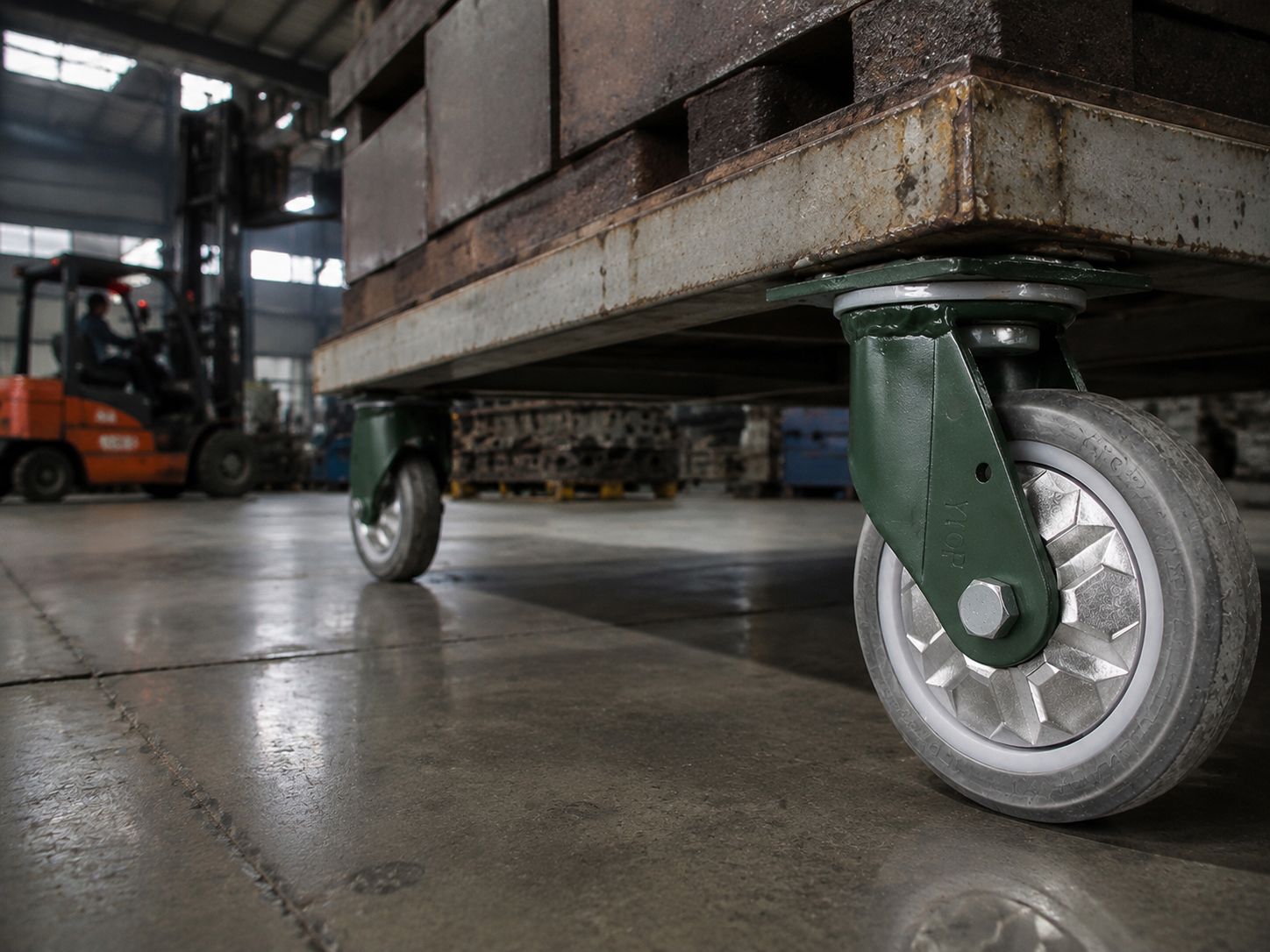
Structure Must Block Welding Slag
Welding slag getting into rotating parts is the second problem. Small particles accelerate bearing wear; large particles directly seize rotation. Select wheel sets with compact gap structures and protective designs. Sealed bearings add another layer of defense — they keep slag out of the bearing interior.
Structural protection is as important as tread material. Both together are what make welding workshop wheels last.
Corrosion Protection Cannot Be Skipped
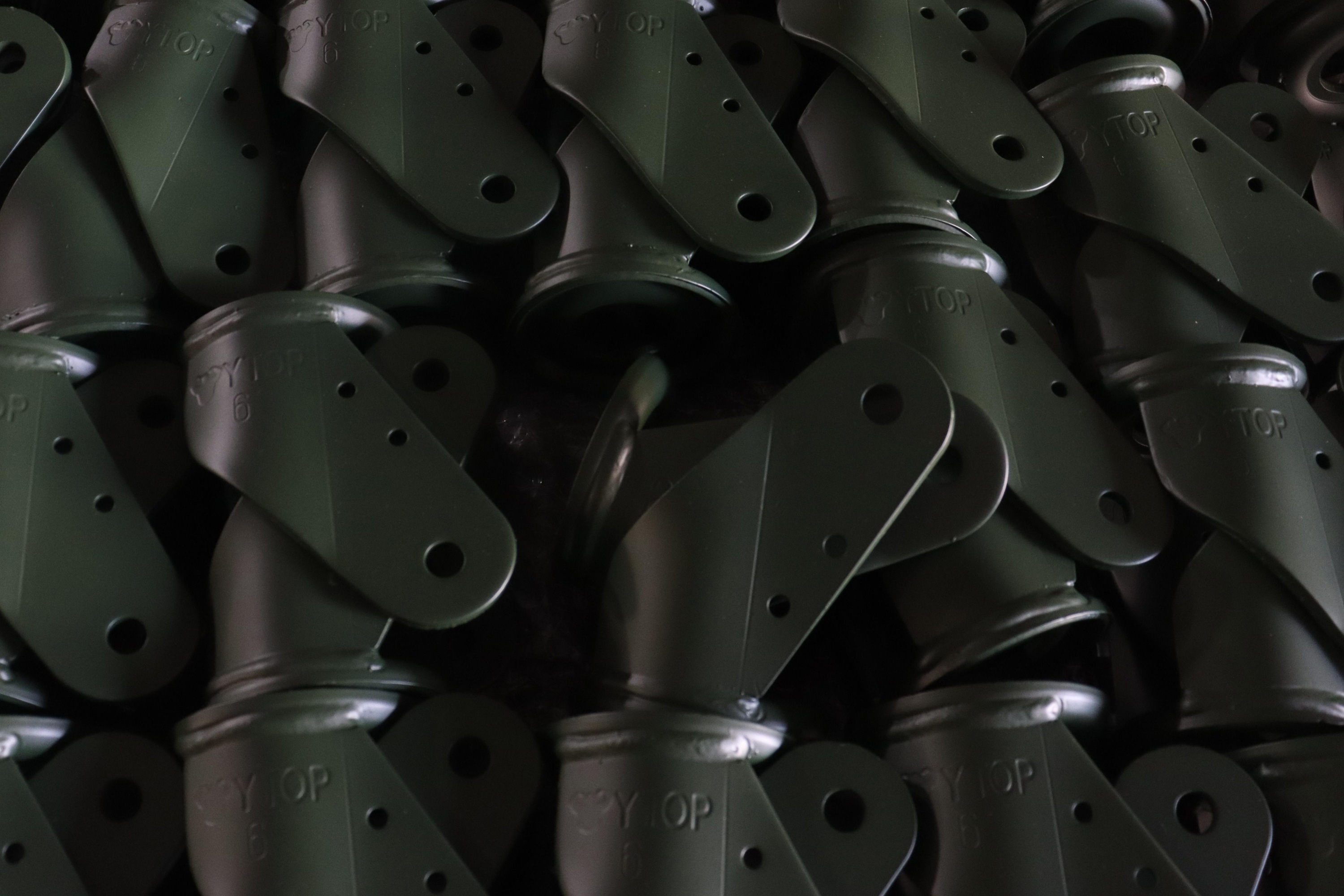
Welding workshops are not just hot — they are humid, with chemical residue from flux. Brackets need sufficient structural strength to resist thermal deformation. Surface treatment should include powder coating, which resists rust in humid and flux-laden environments. A clean, smooth wheel surface is also easier to maintain.
Welding Station Selection Checklist
| Inspection Item | Requirement | Description |
| — | — | — |
| Tread material | Heat-resistant, splash-proof | Avoid ordinary rubber wheels |
| Bearing protection | Sealed, slag-proof | Reduce welding slag entry |
| Bracket strength | High-strength material | No deformation under thermal stress |
| Surface treatment | Corrosion-resistant, easy to clean | Withstand flux and moisture |
| Lubrication | High-temperature grease | Maintain smoothness at heat |
Workshop Management Matters Too
Even the best wheel configuration is discounted by long-term exposure to accumulated welding slag. Regular cleaning of slag near welding stations extends both wheel and equipment life. This is part of wheel maintenance, not an afterthought.
Selection Logic
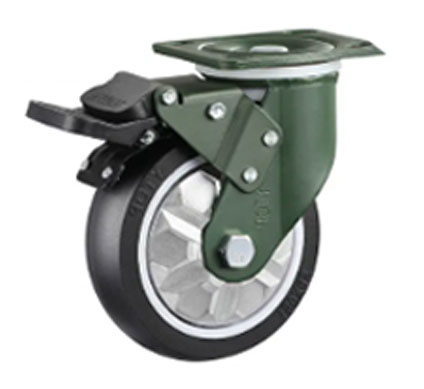
Welding workshop wheel selection comes down to three things viewed together: heat-resistant tread, slag-blocking structure, and corrosion-resistant bracket. Dense-spark positions prioritize heat-resistant tread with sealed bearings and high-strength brackets, and lubrication should use high-temperature grease rated for the conditions. Zhuoye manganese steel casters are configured per welding station density and load — not a one-size-fits-all solution.
Related Reading
Looking for more in-depth caster guides and industrial mobility resources? Explore these related articles:
- Caster Bracket Surface Treatment: Powder Coating vs Electroplating vs Galvanizing — Compare coating processes for corrosion protection.
- Corrosion-Resistant Casters for Electroplating Workshops — Acid, alkali and humidity resistance guide.
Explore our heavy-duty casters with heat-resistant configurations, or contact our engineering team for welding workshop caster recommendations.
Post time: Nov-07-2026