
What is TPR Material?
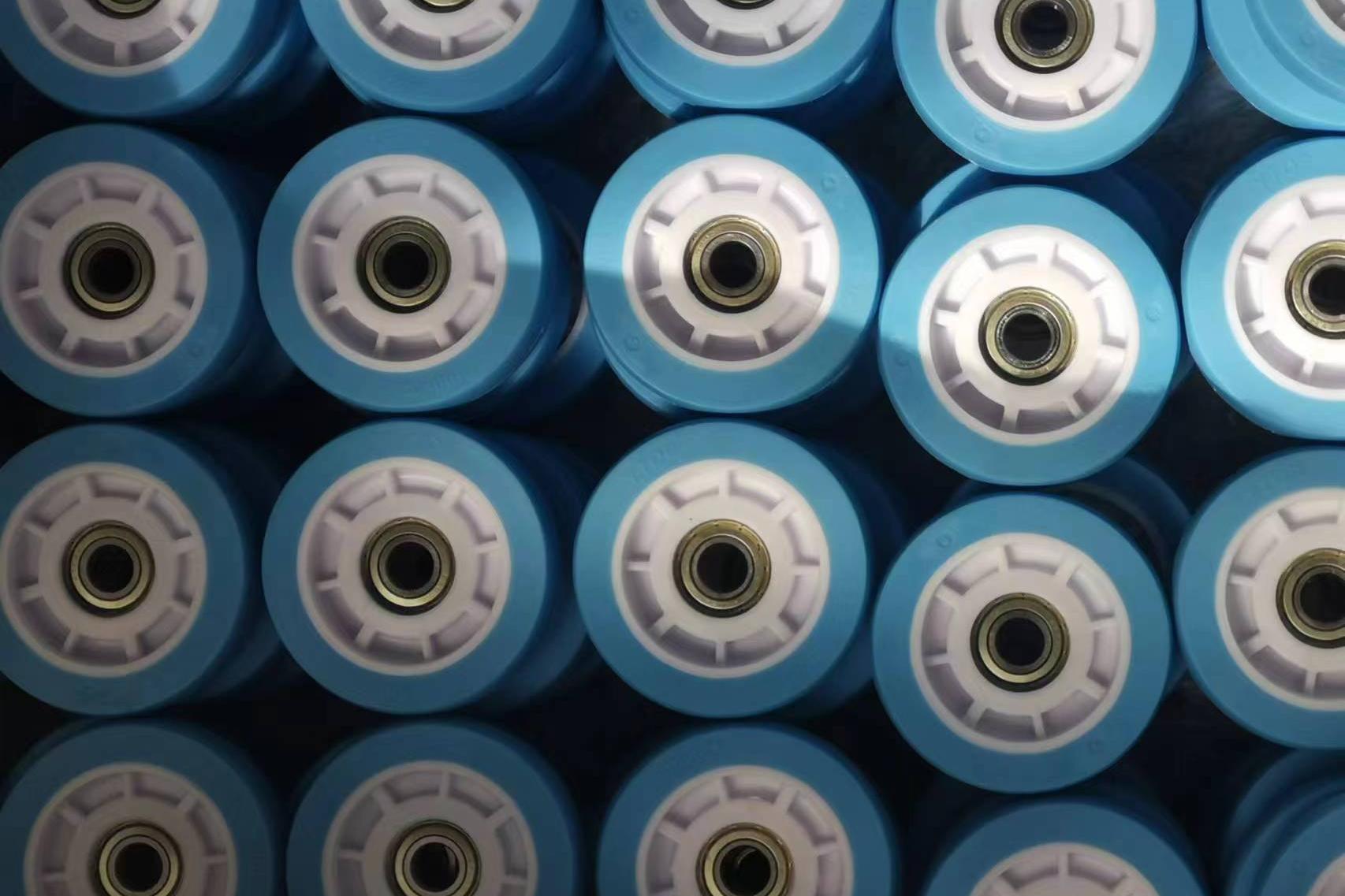
TPR (Thermoplastic Rubber) is a versatile material that combines the elasticity of rubber with the processability of thermoplastics. In the caster industry, TPR has become increasingly popular due to its unique combination of properties that make it ideal for wheel manufacturing.
Chemical Composition of TPR
TPR is typically composed of a blend of styrene-butadiene-styrene (SBS) or styrene-ethylene-butylene-styrene (SEBS) block copolymers with polypropylene (PP) and mineral oil. This composition gives TPR its characteristic rubber-like elasticity while maintaining thermoplastic processability.
Key Properties of TPR Material
TPR exhibits several key properties that make it suitable for caster wheels:
- Excellent elasticity: TPR can stretch up to 300% and return to its original shape
- Good abrasion resistance: Resists wear and tear during rolling
- Shock absorption: Effectively dampens vibrations and impacts
- Non-marking: Leaves no marks on floors
- Chemical resistance: Resists many common chemicals and oils
- Temperature range: Performs well from -40°C to 80°C
Why Do Casters Use TPR Material?
The caster industry has adopted TPR material for several compelling reasons that address common challenges in wheel design and performance.
1. Floor Protection
One of the primary reasons casters use TPR is its excellent floor protection capabilities. TPR wheels are non-marking and gentle on various floor surfaces including:
- Hardwood floors
- Laminate and vinyl flooring
- Tile and marble
- Concrete and epoxy floors
- Carpeted surfaces
Unlike harder materials like nylon or polypropylene, TPR does not scratch or damage delicate flooring, making it ideal for indoor applications where floor aesthetics matter.
2. Noise Reduction
TPR material significantly reduces noise levels during caster operation. The soft rubber-like composition absorbs sound waves and vibrations, resulting in quieter rolling compared to harder wheel materials. This makes TPR casters particularly suitable for:
- Hospitals and healthcare facilities
- Libraries and educational institutions
- Office environments
- Hotels and hospitality
- Residential settings
3. Shock Absorption and Vibration Dampening
TPR’s elastic nature allows it to absorb shocks and dampen vibrations effectively. This is crucial for:
- Protecting sensitive equipment being transported
- Reducing operator fatigue
- Minimizing product damage during transport
- Improving overall ride quality
When rolling over uneven surfaces, cracks, or thresholds, TPR wheels compress and rebound, absorbing much of the impact that would otherwise transfer to the load.
4. Grip and Traction
TPR material provides excellent grip and traction on various surfaces. The rubber-like texture creates friction that prevents slipping, especially on:
- Wet or damp floors
- Smooth surfaces like tile or marble
- Inclined surfaces or ramps
- Oily or greasy environments
This improved traction enhances safety and control when moving loaded carts or equipment.
5. Cost-Effectiveness
Compared to natural rubber or polyurethane, TPR offers a cost-effective solution without sacrificing performance. The thermoplastic nature of TPR allows for:
- Efficient injection molding production
- Lower manufacturing costs
- Consistent quality control
- Recyclability of production scrap
TPR vs. Other Caster Wheel Materials
To understand why TPR is preferred for certain applications, it’s helpful to compare it with other common caster wheel materials.
TPR vs. Nylon
| Property | TPR | Nylon |
|---|---|---|
| Hardness | Soft (60-90 Shore A) | Hard (75-85 Shore D) |
| Floor Protection | Excellent | Poor (can scratch) |
| Noise Level | Quiet | Loud |
| Load Capacity | Medium | High |
| Shock Absorption | Excellent | Poor |
| Chemical Resistance | Good | Excellent |
TPR vs. Polyurethane (PU)
| Property | TPR | Polyurethane |
|---|---|---|
| Hardness Range | 60-90 Shore A | 70-95 Shore A |
| Elasticity | Higher | High |
| Abrasion Resistance | Good | Excellent |
| Load Capacity | Medium | High |
| Cost | Lower | Higher |
| Processing | Injection molding | Casting or injection |
TPR vs. Natural Rubber
| Property | TPR | Natural Rubber |
|---|---|---|
| Processability | Thermoplastic (recyclable) | Thermoset (vulcanized) |
| Consistency | High | Variable |
| Cost | Lower | Higher |
| Weather Resistance | Good | Poor (cracks) |
| Elasticity | Excellent | Excellent |
Common Applications of TPR Casters
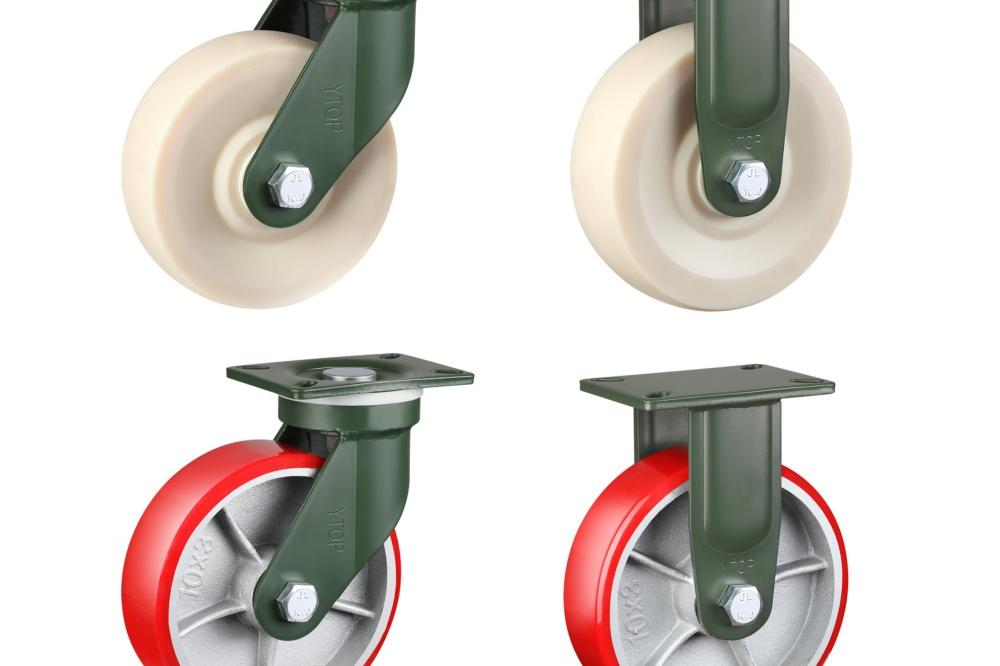
TPR casters find applications across various industries where their unique properties provide specific benefits.
Healthcare and Medical
In hospitals and clinics, TPR casters are used on:
- Medical carts and trolleys
- Hospital beds and stretchers
- Medical equipment stands
- IV poles and infusion stands
- Operating room equipment
The quiet operation, non-marking properties, and shock absorption make TPR ideal for healthcare environments where patient comfort and floor protection are critical.
Office and Commercial
Office environments benefit from TPR casters on:
- Office chairs
- File cabinets and storage units
- Computer workstations
- AV equipment carts
- Cleaning and maintenance carts
Retail and Hospitality
In retail and hospitality settings, TPR casters are used for:
- Shopping carts and baskets
- Display racks and shelving
- Food service carts
- Housekeeping trolleys
- Luggage carts
Industrial and Manufacturing
While TPR is not typically used for heavy-duty industrial applications, it does find use in:
- Light to medium duty material handling
- Workshop trolleys and tool carts
- Assembly line fixtures
- Inspection and testing equipment
- Cleanroom environments
How to Choose the Right TPR Caster
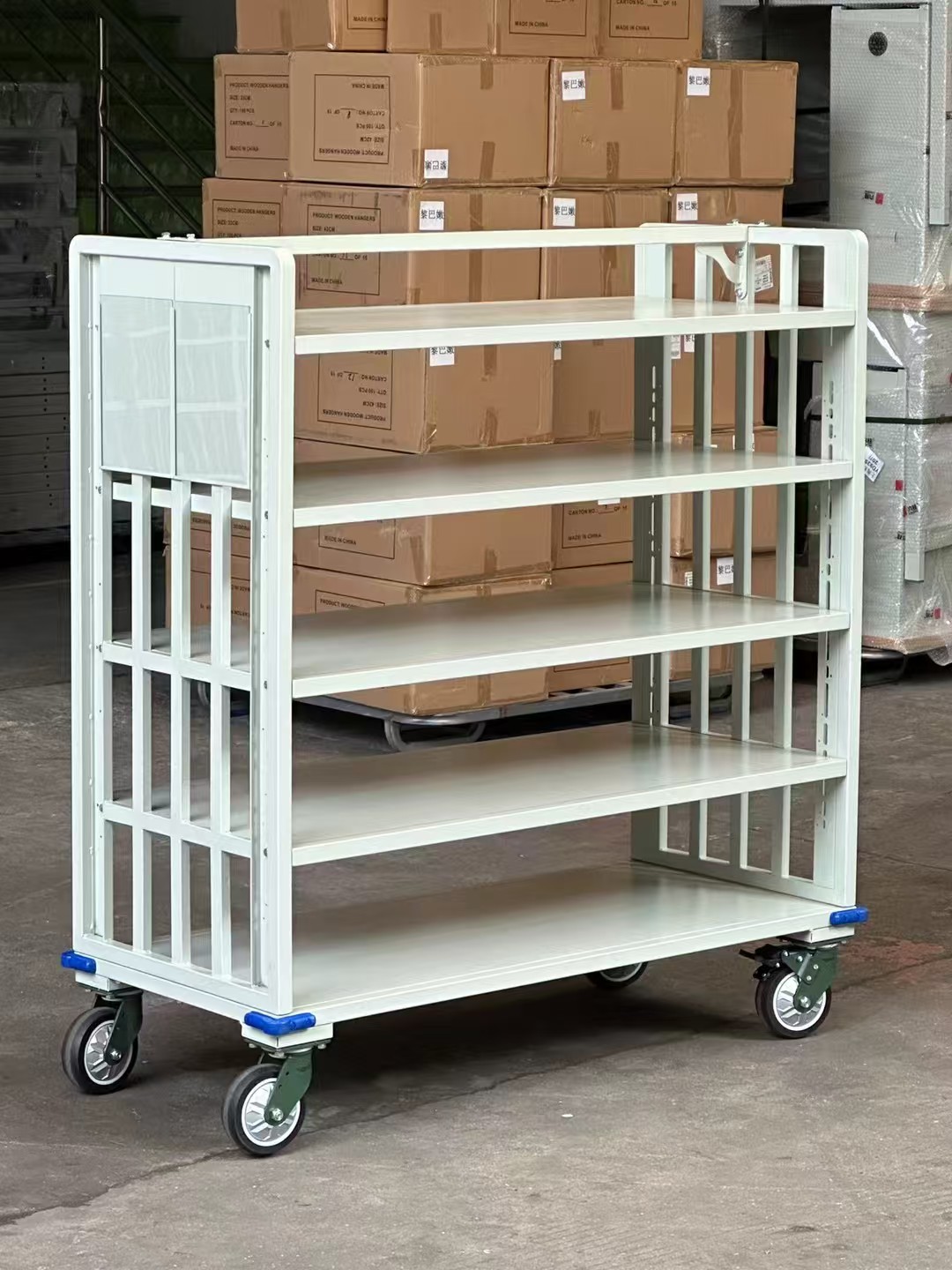
Selecting the appropriate TPR caster requires consideration of several factors to ensure optimal performance and longevity.
1. Load Capacity Requirements
Determine the total weight the caster will need to support, including:
- Weight of the equipment or cart
- Maximum load weight
- Dynamic forces during movement
- Safety factor (typically 25-50% extra capacity)
TPR casters typically handle light to medium loads (50-300 kg per caster depending on size and design).
2. Wheel Size Selection
Common TPR wheel sizes include:
- 50mm (2″): Light duty, low profile applications
- 75mm (3″): Medium duty, general purpose
- 100mm (4″): Medium-heavy duty, better obstacle clearance
- 125mm (5″): Heavy duty, smooth rolling over thresholds
- 150mm (6″): Extra heavy duty, maximum obstacle clearance
Larger wheels roll more easily over obstacles and require less force to move, but increase the overall height of the equipment.
3. Mounting Type
TPR casters come with various mounting options:
- Plate mount: Four-hole mounting plate for secure attachment
- Stem mount: Threaded stem or grip neck stem
- Hole mount: Single bolt hole through the center
- Weld mount: For permanent welding to metal frames
4. Brake Options
Consider whether braking functionality is needed:
- No brake: Free swiveling and rolling
- Total lock brake: Locks both swivel and wheel rotation
- Directional lock: Locks swivel but allows wheel rotation
- Wheel brake: Locks wheel rotation only
Maintenance and Care of TPR Casters
Proper maintenance ensures TPR casters provide long service life and optimal performance.
Regular Cleaning
Clean TPR wheels regularly to remove debris and prevent buildup:
- Wipe wheels with a damp cloth and mild detergent
- Remove any threads, hair, or debris wrapped around axles
- Clean mounting hardware and swivel bearings
- Inspect for flat spots or damage
Lubrication
While TPR wheels themselves don’t require lubrication, the moving parts do:
- Lubricate swivel bearings periodically with silicone-based lubricant
- Grease axle bolts to prevent seizing
- Avoid using petroleum-based lubricants on TPR material
Inspection Schedule
Establish a regular inspection routine:
- Weekly: Visual inspection for damage or debris
- Monthly: Check mounting hardware tightness
- Quarterly: Lubricate moving parts, check wheel wear
- Annually: Complete overhaul, replace worn components
Replacement Indicators
Replace TPR wheels when you notice:
- Flat spots or significant wear
- Cracks or chunks missing from the tread
- Hardening or loss of elasticity
- Excessive noise during rolling
- Reduced floor protection (marking begins)
Environmental Considerations
TPR material offers several environmental benefits compared to alternative materials.
Recyclability
As a thermoplastic, TPR is fully recyclable. Production scrap and end-of-life products can be:
- Ground and reprocessed into new products
- Blended with virgin material for cost savings
- Used in lower-specification applications
Reduced Environmental Impact
TPR production generally has a lower environmental footprint than:
- Natural rubber (requires vulcanization and more energy)
- Polyurethane (more complex chemistry)
- PVC (contains chlorine and plasticizers)
Safe for Indoor Air Quality
High-quality TPR formulations are:
- Low VOC (Volatile Organic Compounds) emissions
- Free from harmful phthalates
- Non-toxic and safe for food contact areas
- Compliant with RoHS and REACH regulations
Frequently Asked Questions (FAQ)
Q: What does TPR stand for?
A: TPR stands for Thermoplastic Rubber, a material that combines the elasticity of rubber with the processability of thermoplastics.
Q: Is TPR the same as TPE?
A: TPR (Thermoplastic Rubber) is a subset of TPE (Thermoplastic Elastomer). TPR specifically refers to styrenic block copolymers like SBS and SEBS, while TPE is a broader category that includes other chemistries like TPU, TPO, and TPV.
Q: What is the typical hardness of TPR caster wheels?
A: TPR caster wheels typically range from 60 to 90 Shore A hardness. Softer wheels (60-70 Shore A) provide better shock absorption and floor protection, while harder wheels (80-90 Shore A) offer better load capacity and wear resistance.
Q: Can TPR wheels be used outdoors?
A: Yes, TPR wheels can be used outdoors, but their performance may be affected by extreme temperatures, UV exposure, and harsh weather conditions. For prolonged outdoor use, look for UV-stabilized TPR formulations or consider polyurethane wheels which generally have better weather resistance.
Q: How much weight can TPR casters support?
A: Load capacity depends on wheel size, design, and mounting type. Typical capacities range from 50 kg for small 50mm wheels to 300 kg or more for large 150mm wheels with robust mounting. Always check the manufacturer’s specifications for exact load ratings.
Q: Are TPR wheels non-marking?
A: Yes, high-quality TPR wheels are non-marking and will not leave black streaks or scuff marks on floors. This makes them ideal for use on delicate flooring surfaces like hardwood, tile, and laminate.
Q: How do I clean TPR wheels?
A: Clean TPR wheels with a damp cloth and mild detergent. Avoid using harsh chemicals, solvents, or petroleum-based cleaners as these can damage the TPR material. Remove any debris wrapped around axles and ensure wheels rotate freely after cleaning.
Q: What is the temperature range for TPR casters?
A: Most TPR casters perform well in temperatures ranging from -40°C to 80°C. For extreme temperature applications, consult the manufacturer for specialized formulations that can handle wider temperature ranges.
Q: Can TPR wheels be used on carpet?
A: Yes, TPR wheels work well on carpeted surfaces. The soft material provides good traction and doesn’t snag carpet fibers. For thick carpets, larger diameter wheels (100mm+) are recommended for easier rolling.
Q: How long do TPR caster wheels last?
A: TPR wheel lifespan depends on usage conditions, load, frequency of use, and maintenance. Under normal indoor use with proper maintenance, TPR wheels can last 3-5 years or more. Heavy use, overloading, or harsh conditions may shorten lifespan.
Conclusion
TPR (Thermoplastic Rubber) has become a preferred material for caster wheels due to its unique combination of properties that address common challenges in wheel design. Its excellent floor protection, noise reduction, shock absorption, and cost-effectiveness make it ideal for a wide range of applications from healthcare to office environments.
When selecting TPR casters, consider your specific load requirements, wheel size needs, mounting type, and environmental conditions. With proper selection and maintenance, TPR casters can provide years of reliable, quiet, and floor-friendly service.
As the caster industry continues to evolve, TPR material will likely remain a popular choice, with ongoing improvements in formulation and manufacturing techniques further enhancing its performance and environmental sustainability.
Related Reading
- Advantages and Applicability of TPU Material on Casters
- Difference Between PP Casters and TPR Casters
- Which is Better: TPR or Nylon Casters?
- What is the Difference Between Rubber Casters and Nylon Casters?
Post time: Jul-03-2023