
What Is a Universal Wheel (Swivel Caster)?
A universal wheel — more technically known as a swivel caster — is a caster designed to rotate 360 degrees in the horizontal plane, allowing equipment to move in any direction without needing to turn the entire vehicle or cart. You encounter universal wheels every day on supermarket shopping carts, office chairs, luggage suitcases, medical trolleys, and industrial material-handling carts. Unlike a rigid (directional) caster that only rolls forward and backward, a universal wheel can pivot around a vertical axis, giving equipment omnidirectional mobility.
Basic Structure of a Swivel Caster
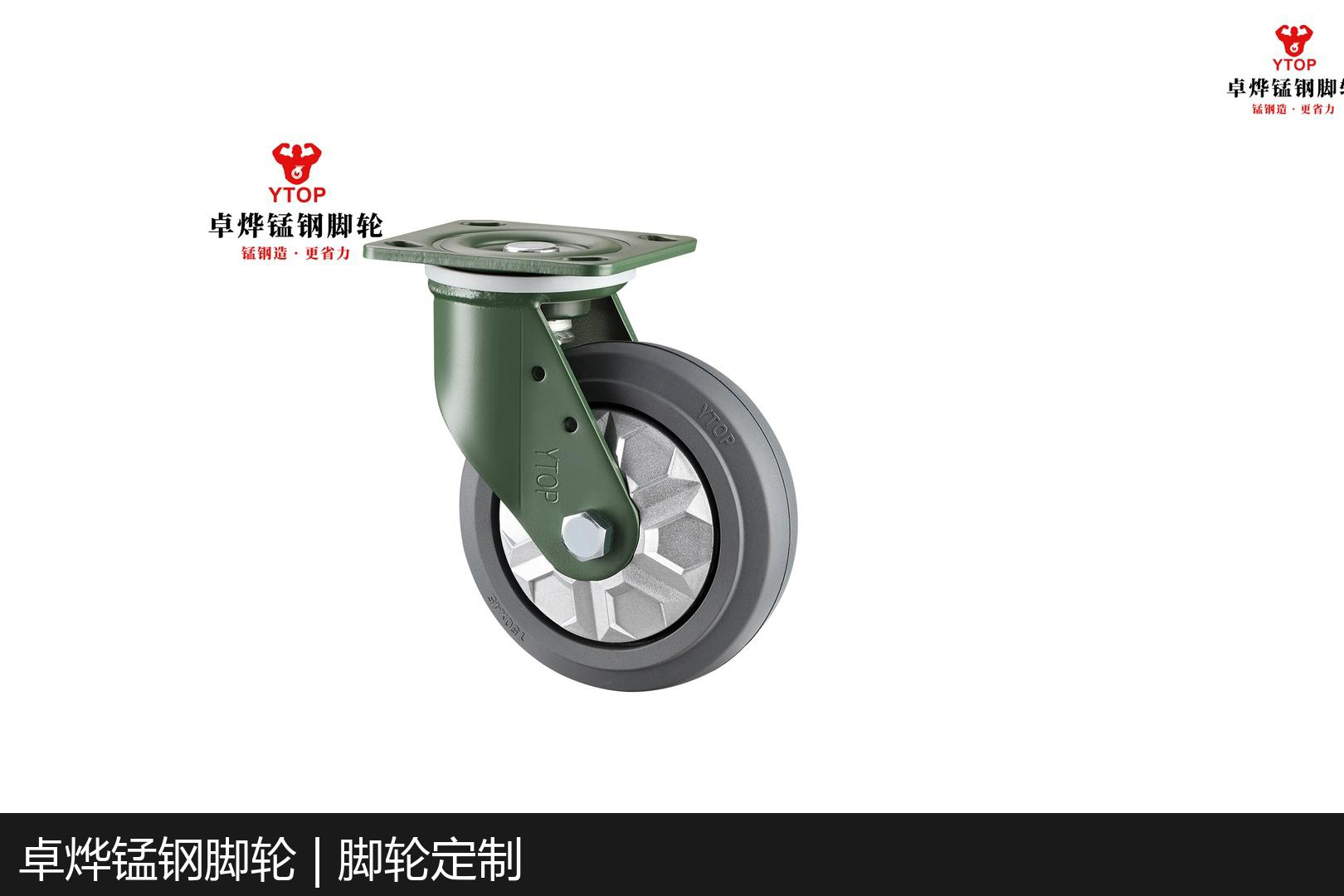
A universal wheel is a more common caster in daily life, used on supermarket trolleys, luggage, and various carts. As a special wheel, it allows an object to rotate freely in a plane without being limited by other axial directions, enabling movement in the horizontal direction. It consists of a mounting plate or stem, a swivel horn (fork), a wheel with bearings, and a raceway assembly. The wheel itself rotates around a horizontal axle, while the entire fork assembly rotates around a vertical swivel axis — this dual-axis rotation is what makes omnidirectional movement possible. This is why a universal wheel is called a ’360-degree caster’ in technical specifications: it offers a full range of rotation in both axes simultaneously.
The Mechanical Working Principle
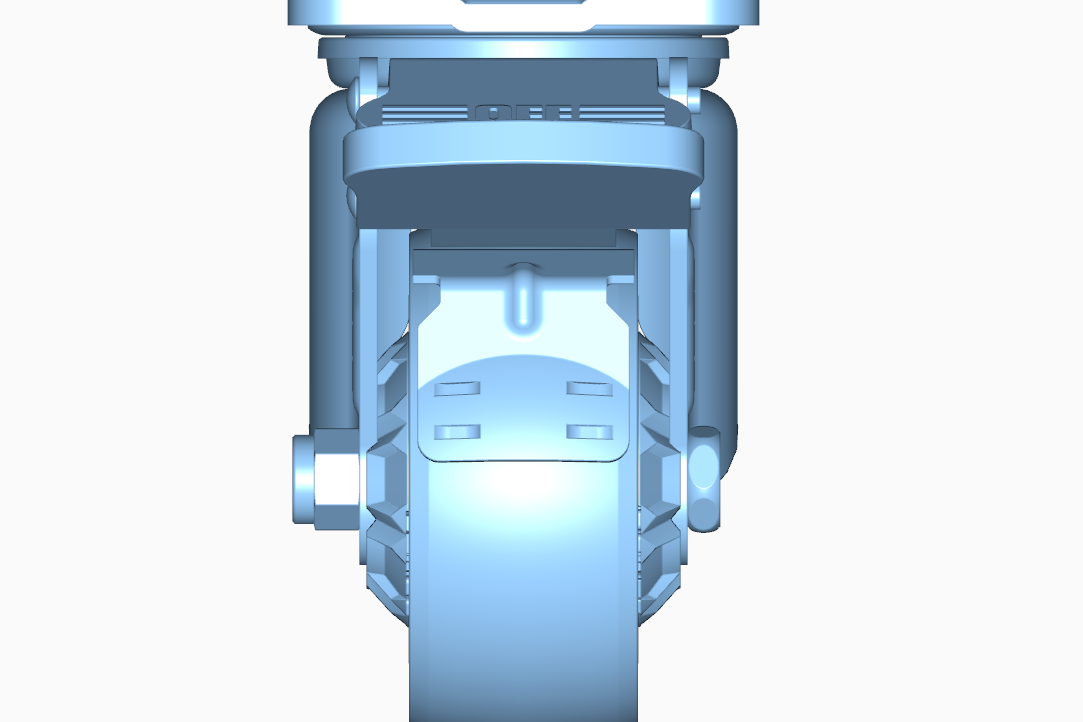
The principle of a universal wheel’s operation is based on its swivel raceway structure. Instead of being attached directly to the wheel axle, the wheel fork of a universal wheel is mounted on a special ring-shaped bracket (the swivel raceway) that allows the fork to rotate freely in a horizontal plane. This construction allows the caster to rotate freely in multiple directions without resistance or restriction.
The Swivel Raceway and Ball Transfer
At the heart of every universal wheel is the swivel raceway — a set of precision steel balls sandwiched between two hardened steel plates (the top plate and the horn plate). When the cart changes direction, the horizontal force on the wheel causes the entire fork assembly to pivot around the vertical axis, and the ball bearings in the raceway roll smoothly between the plates, enabling friction-free 360-degree rotation. This is the fundamental mechanical principle that distinguishes a universal wheel from a rigid caster. The number and arrangement of ball tracks determine the caster’s load rating: single-row ball tracks handle light loads, double-row handles medium, and tapered roller handles extra-heavy loads.
How Casters Rotate 360 Degrees
When an object carries multiple universal wheels, it is free to rotate and move in a flat plane. When one wheel encounters a directional change, it pivots around the vertical axis, changing the orientation of that wheel. The other wheels can remain stationary or adjust their own orientation independently. This independent rotation of each wheel is what allows a four-wheeled cart to spin in place, move sideways, or navigate tight corners — capabilities that rigid-only casters cannot achieve.
The Role of Bearings in Universal Wheel Performance
The smoothness, load capacity, and service life of a universal wheel depend almost entirely on the quality and design of its bearings — both the swivel raceway bearings and the wheel axle bearings.
Ball Raceways vs. Tapered Bearings
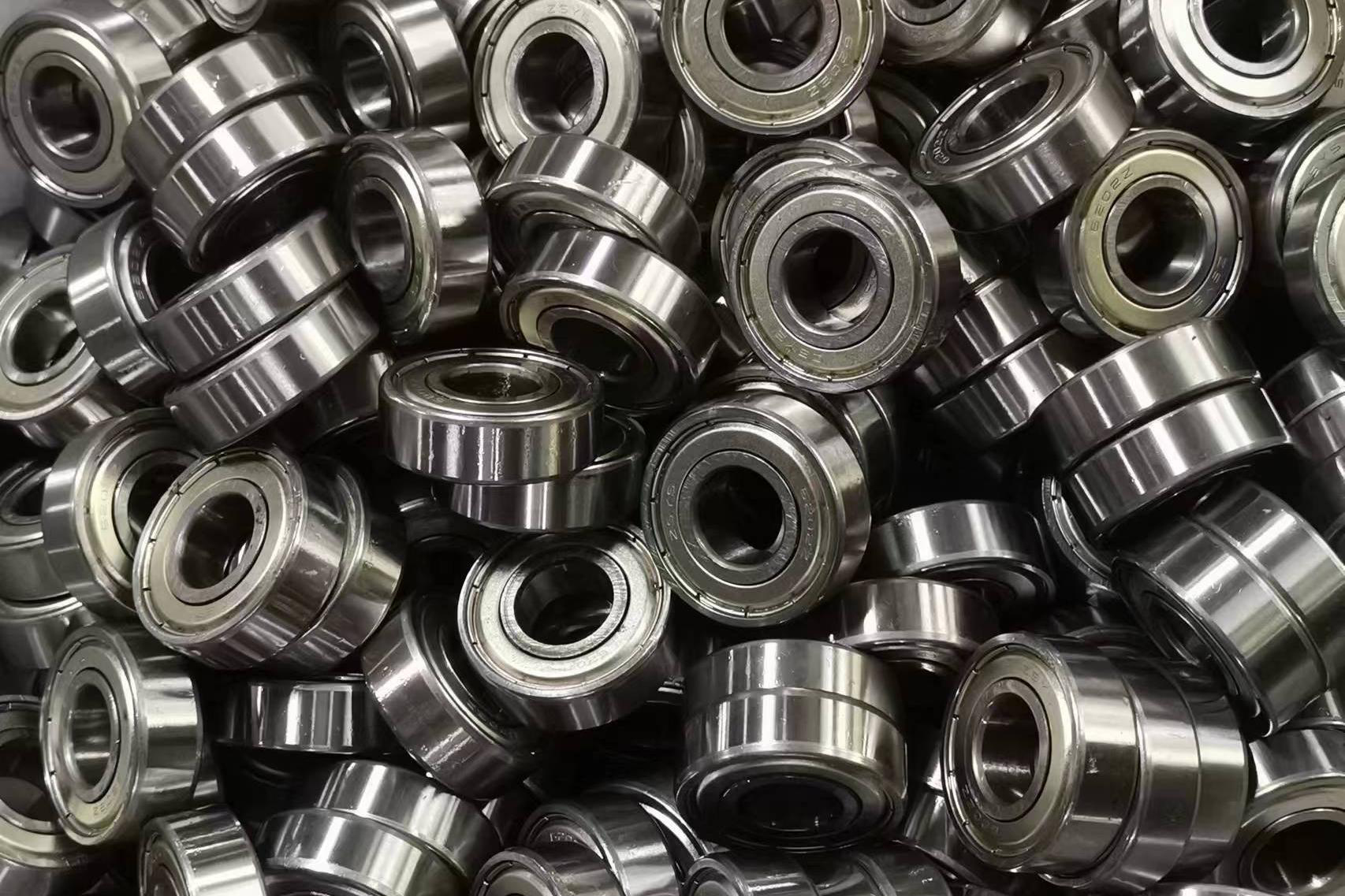
Light-duty universal wheels typically use a single-row ball raceway, which is cost-effective and provides adequate swivel effort for loads up to about 200 kg. Medium and heavy-duty casters use double-ball raceways or tapered roller bearings that can handle both vertical loads and horizontal (thrust) forces. Double-ball raceways distribute the load across two sets of balls, significantly reducing wear and extending service life. Industrial universal wheels used on heavy carts over 500 kg almost universally employ forged steel horn plates with double ball bearings.
Bearing Load and Swivel Resistance
When bearings are new and well-lubricated, the swivel effort remains low regardless of load direction. As bearings wear or collect debris, the swivel becomes stiff and the caster may “shimmy” or wobble at higher speeds. Regular lubrication with lithium-based grease prevents this. Premium industrial casters from manufacturers like Quanzhou Zhuoye Caster Manufacturing Co., Ltd. (YTOP) use hardened 440C stainless steel ball tracks that resist pitting and maintain smooth rotation for years under heavy loads. Zhuoye’s manganese steel caster line, for example, combines forged manganese steel horns with double ball raceways to deliver swivel effort that remains consistent even at 600 kg per caster loads.
Universal Wheel vs. Rigid Caster: Motion Dynamics
Understanding why universal wheels behave the way they do requires examining the geometric relationship between the wheel contact point and the swivel axis. This geometry explains why carts turn smoothly at low speeds but can feel unstable at higher speeds if overloaded or improperly configured.
Swivel Radius and Caster Trail
Every swivel caster has a “trail” — the horizontal offset between the swivel axis and the point where the wheel touches the ground. This trail creates a self-aligning torque: when the cart moves forward, the trailing wheel naturally self-straightens behind the swivel axis. This is why a properly configured set of casters (two swivel at the front, two rigid at the back) tracks straight rather than wandering. Too little trail causes shimmy; too much trail increases steering effort.
Why Four Swivel Casters Can Be Hard to Control
While all-four-swivel configurations offer maximum maneuverability, they can be difficult to steer in a straight line because every wheel independently self-aligns with the direction of travel. This is why most industrial carts use two swivel casters (often with brakes) at one end and two rigid casters at the other — providing both stability and maneuverability. For omnidirectional needs, swivel casters with total-lock brakes or steering locks are employed. The two-swivel-two-rigid configuration is sometimes called a ‘pedestrian steer’ arrangement because the operator naturally guides the cart from the handle end where the swivel casters are located.
Factors Affecting Universal Wheel Performance
Several practical factors influence how well a universal wheel performs in real-world operation.
Load Distribution
Distribute weight evenly across all four casters. Overloading one corner causes that swivel raceway to bind and increases swivel effort. As a rule, each caster should be sized to carry at least one-third of the total load plus a safety margin. Under-floor or uneven floors also affect performance by momentarily increasing load on individual wheels. For industrial installations, floors should be flat within 3 mm per meter to ensure even load distribution across all casters.
Environmental Factors
Temperature extremes, moisture, chemicals, and abrasive debris all affect universal wheel performance. Nylon and polyurethane wheels perform well between -20°C and +80°C. Stainless steel or corrosion-resistant hardware is required in washdown or outdoor environments. Wheels that roll over cables, debris, or expansion joints experience bearing stress that accelerates wear. In cold storage environments below freezing, standard nylon wheels become brittle and should be replaced with cold-resistant polyurethane formulas. Outdoor casters should use galvanized or stainless steel hardware to prevent corrosion.
Common Applications of Universal Wheels
The flexibility of the universal wheel makes it indispensable across countless industries.
Industrial and Warehouse Applications
In warehousing and manufacturing, universal wheels power platform carts, shelf trucks, and material-handling trolleys that move components between workstations. The ability to change direction in narrow aisles significantly improves picking efficiency. Zhuoye Caster Manufacturing supplies heavy-duty swivel casters for 500–1000 kg carts used in automotive parts warehouses and electronics assembly lines throughout Asia, Europe, and North America.
Medical and Laboratory Applications
Medical equipment requires silent, smooth-rolling swivel casters that can navigate hospital corridors without disturbing patients. Stainless steel swivel casters with antibacterial finishes are standard on hospital beds, instrument carts, and lab equipment. The precision swivel mechanism ensures that a 200 kg medical cart can be positioned accurately by a single nurse.
Office, Retail, and Consumer Use
Office chairs, shopping carts, luggage, and display racks all rely on universal wheels. Light-duty casters (35–80 kg capacity) in nylon or thermoplastic rubber are ideal for these applications, offering quiet operation and non-marking wheels. Zhuoye’s medium-duty caster line (100–190 kg) bridges the gap between consumer and industrial use, serving retail display racks, office furniture, and light industrial equipment.
Installation and Selection Best Practices
Choosing and installing universal wheels correctly ensures safe, long-lasting operation.
Mounting Types
Universal wheels come in several mounting styles: plate mount (four-bolt rectangle), stem mount (round or square), threaded stem, and grip-neck stem. Plate mounts are strongest for heavy loads; stem mounts are used on furniture and light equipment. Always verify the mounting hole pattern and bolt size before ordering.
Load Rating and Safety Factor
Select casters with a rated capacity 20–30% above the actual per-wheel load. For four-wheeled equipment, the formula is: total equipment weight divided by three (assuming three wheels touch the ground at any time) multiplied by 1.3 safety factor. This ensures that minor floor irregularities do not overload individual casters. For example, a fully loaded cart weighing 800 kg requires four casters rated at a minimum of 347 kg each. Selecting 500 kg-rated casters provides adequate safety margin for dynamic impacts and uneven surfaces. Always consult the manufacturer’s load rating charts, as static and dynamic capacities differ significantly.
Frequently Asked Questions
What is the working principle of a universal wheel?
A universal wheel (swivel caster) works by mounting the wheel fork on a vertical swivel raceway containing precision steel ball bearings. The wheel rotates around a horizontal axle, while the entire fork assembly can rotate 360 degrees around a vertical axis thanks to the ball raceway. This dual-axis rotation allows the wheel to pivot in any direction, enabling the cart to move forward, backward, sideways, or rotate in place.
Why does my universal wheel wobble or shimmy?
Caster shimmy is usually caused by worn swivel bearings, insufficient caster trail, or overinflated hard wheels. It commonly appears at speeds above 3 km/h on improperly loaded carts. It can also occur when the load is positioned too far behind the swivel axis. Replacing worn bearings, checking that the load is centered, and ensuring proper swivel head torque typically resolves the issue.
What is the difference between a universal wheel and a directional wheel?
A universal wheel (swivel caster) can rotate 360 degrees around a vertical axis, allowing the cart to change direction freely. A directional (rigid) wheel only rolls forward and backward — its fork is fixed. Universal wheels provide maneuverability, while rigid wheels provide straight-line stability; most carts combine both.
How do I maintain the swivel mechanism?
Lubricate the swivel raceway with lithium grease every 3–6 months depending on usage frequency. Inspect the ball tracks for pitting or rust. Clean debris from around the swivel horn. Tighten mounting bolts quarterly. For heavy-duty industrial casters, Zhuoye recommends a quarterly inspection schedule with load testing. For heavy-duty industrial casters, Zhuoye recommends a quarterly inspection schedule with load testing.
Related Reading
Explore more universal wheel basics, applications, and flexibility guides:
- General Knowledge of the Universal Wheel — Learn universal wheel fundamentals and specifications.
- Brake Wheel vs Universal Wheel: Difference and Role Analysis — Compare brake and universal wheel functions.
- Improving Rotational Flexibility of Industrial Universal Wheels — Optimize swivel performance and flexibility.
- Common Types of Hand Trolleys — See how universal wheels power different trolley designs.
- Universal Wheel vs Directional Wheel Comparison — Understand when to use swivel vs rigid casters.
Explore our complete range of versatile light-duty casters (35-80kg) and medium-duty casters (100-190kg) with universal wheels, or contact our technical team for expert universal wheel selection guidance.
Post time: Nov-27-2023