
Laboratory instruments fear bumps less than they fear vibration. High-precision analyzers, electronic balances, microscopes — internal optical components and sensors are vibration-sensitive. A bump during movement means recalibration at best, reading deviation or invalid data at worst. So the job of lab caster wheels is not just “can it be pushed” — it is “pushed steadily, with minimal vibration.”
What Shock-Absorbing Casters Actually Solve
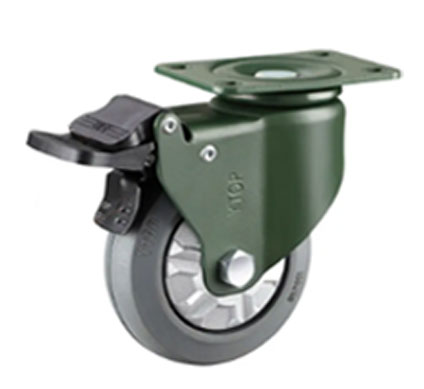
Shock absorption happens in two places: the tread material and the wheel set structure. An elastic tread absorbs small-amplitude vibration from uneven floors, reducing impact transmitted directly to the equipment. A shock-absorbing wheel structure disperses sudden impacts during pushing rather than rigidly transmitting them. The practical difference: the same cart on the same floor, with hard wheels you feel every bump; with shock-absorbing casters the ride is noticeably smoother.
But there is an important limit: shock-absorbing casters handle normal floor impact during short-distance movement indoors — they do not replace precision packaging for cross-building or cross-city transport. For high-precision equipment moving between buildings, use dedicated shock-absorbing packaging or manufacturer transport services. The role of shock-absorbing wheels is stability for short-distance movement within a lab or between floors.
Selection Parameters, Item by Item
Load first. Lab equipment ranges from tens of kilograms to hundreds. The caster load rating must match and leave margin. Overloading kills shock-absorbing performance and stresses the bracket.
Stability. Bracket rigidity and steering precision determine whether the instrument tracks straight, parks firmly, and does not wander while being pushed.
Floor protection. Labs commonly use epoxy and anti-static floors. Hard treads leave pressure marks and scratches; elastic treads are far more forgiving.
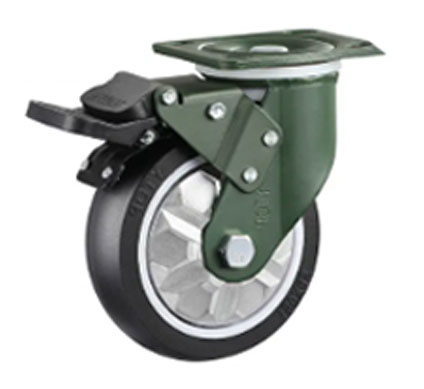
Positioning. Instruments need to park stably once in place. Brakes with bilateral simultaneous locking prevent rolling and reduce bump risk.
Lubrication. Smooth bearings mean startup and stopping are gradual, not jerky. Lab environments are clean, but grease ages when wheels sit unused for long periods — regular greasing maintains smooth starts.
Operation Matters as Much as the Wheels
Before moving an instrument: secure movable parts on the tabletop and remove liquid containers. During pushing: take known flat routes, move at low uniform speed, and slow down for turns rather than cornering sharply. When multiple people cooperate, the person watching the floor leads the way.
Wheels handle shock absorption; operation handles controllability. Both together is what truly lowers the risk of instrument movement.
The Right Way to Specify Lab Casters
The logic for lab movement wheels is: shock-absorbing tread absorbs impact, rigid bracket ensures stability, load margin prevents over-compression, and elastic tread protects the floor. When purchasing, report the equipment weight, movement distance, floor type, and movement frequency to the manufacturer — and select based on shock-absorbing standards rather than by wheel diameter alone.
Zhuoye manganese steel casters are matched to lab stability requirements using this same working-condition framework. Combining equipment and environment is far more reliable than just asking for “shock absorption” without specifying the actual load and floor.
Related Reading
Looking for more in-depth caster guides and industrial mobility resources? Explore these related articles:
- Caster Tread Hardness: Shore A and Shore D Selection Guide — Softer treads absorb more vibration but wear faster; find the right balance.
- Why Workshop Carts Are Hard to Push: Bracket, Diameter & Lubrication — Diagnose the hidden factors behind heavy or jerky movement.
Explore our heavy-duty casters with shock-absorbing tread options, or contact our engineering team for lab instrument caster recommendations.
Post time: Nov-06-2026