
On a caster specification sheet, one inconspicuous number — Shore hardness — determines the tread’s personality: soft or hard, quiet or wear-resistant, easy to push or load-bearing. Beginners look at material; experienced buyers ask hardness first. Understanding Shore hardness is the key to judging tread performance correctly.
What Is Shore Hardness?
Shore hardness is a scale that measures material hardness, expressed as Shore A or Shore D. The higher the number, the harder the material. Shore A is used for softer materials (rubber, elastomers), while Shore D is used for harder materials (hard plastics, nylon). Industrial caster tread materials almost always use the Shore A scale, with hardness typically ranging from Shore A 60 to 100.
Two casters of the same material (e.g., both polyurethane) can behave very differently if their Shore hardness values differ — this is why the number matters more than the material name alone.
How Hardness Changes Tread Performance
Hardness shifts a chain of performance traits in a predictable way:
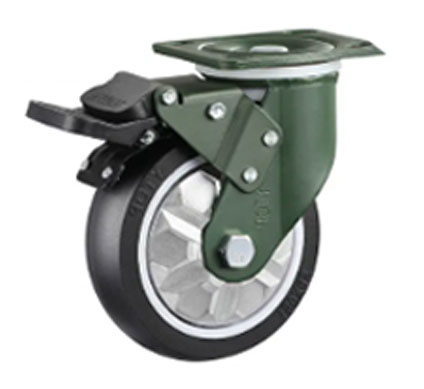
• Soft (Shore A 60–70): Good elasticity, quiet rolling, floor-friendly, but lower wear resistance, more deformation under load, and higher rolling resistance.
• Moderate (Shore A 75–90): The balance zone — elasticity and wear resistance both in check. This is the default landing point for most general industrial treads.
• Hard (Shore A 90+ or Shore D): Strong wear resistance, high load capacity, low rolling resistance, but louder noise, weaker grip, and less floor protection.
There is no universally “best” hardness — only the right match for your working conditions.
Match Hardness to Your Floor and Load
Select hardness by working condition category:
• Heavy-load long-distance transport (ports, conveyor lines): choose a harder tread for wear resistance and low rolling resistance.
• Quiet / floor-protection zones (hospitals, supermarkets, cleanrooms): choose a softer elastic tread.
• General workshop carts: moderate hardness balances wear life and noise.
• Heavy machinery and equipment: hard tread or high-grade polyurethane rated for the specific load.
Heavy Load + Noise: How to Balance
Heavy-load buyers often face a dilemma: hard means loud, soft means not durable. The approach is to clarify the priority first.
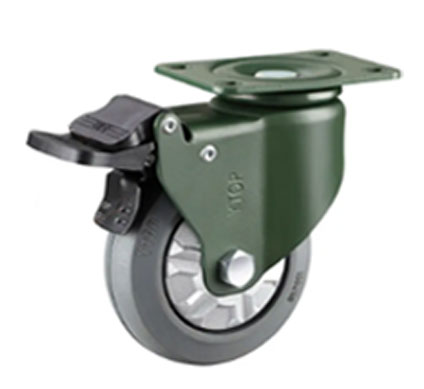
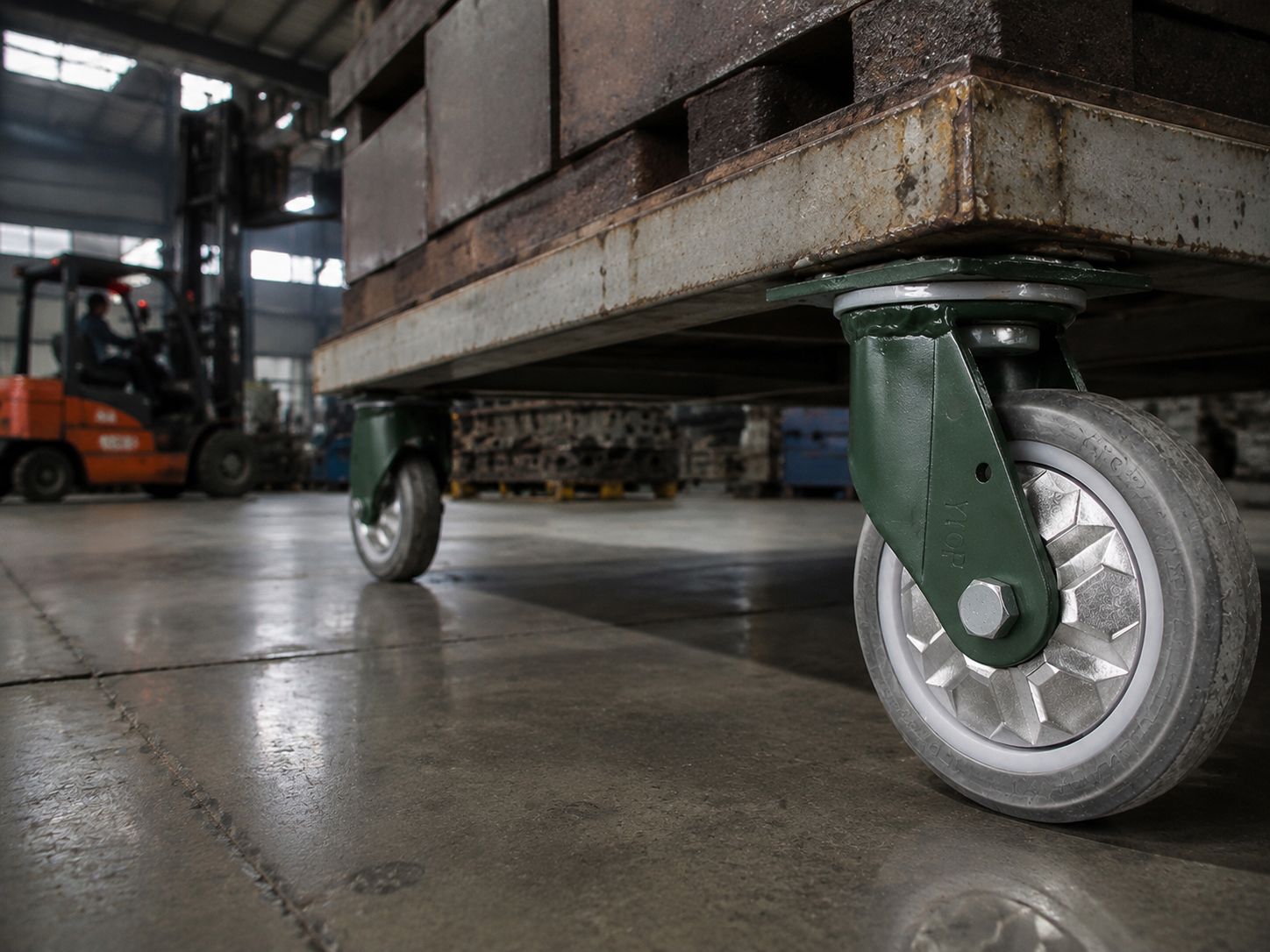
For pure heavy-load long-distance transport, life and load capacity take priority — choose a harder tread. For heavy-load environments near personnel, noise matters, so choose a moderate-to-hard high-strength polyurethane that balances both. Zhuoye manganese steel casters use moderate-to-hard high-strength polyurethane treads in most industrial scenarios — sufficient wear resistance, controllable noise, and stable performance under load.
Hardness Is Not the Whole Picture
Hardness is important but not the only factor. Two treads with the same Shore A number can differ widely in wear resistance, resilience, and temperature resistance depending on the material formula. Inferior “soft” material feels cheap; quality “soft” material is a deliberate formula design. Hard material must also have internal strength — otherwise it cracks under load.
Always read hardness together with material formula and bracket corrosion protection. A great tread on a rusting bracket is still a caster that fails early.
Three Questions to Ask Before Ordering
When selecting tread, confirm three things with the supplier:
1. What is the exact Shore A value? Does it match your working conditions?
2. What is the material formula? Two “polyurethane” casters can differ in both performance and price.
3. What hub structure does it pair with? The hub and tread must be matched for the load to transfer reliably.
Request the parameter table — don’t rely on material names alone. Hardness and material viewed together is how you get the tread right.
Related Reading
Looking for more in-depth caster guides and industrial mobility resources? Explore these related articles:
- Caster Tread Material: Rubber vs Polyurethane vs Nylon Comparison — Compare the three most common tread materials by wear, noise and load.
- Caster Wheel Diameter: Large vs Small for Obstacle Crossing and Pushing Force — Understand how size affects effort and obstacle performance.
Explore our heavy-duty casters with tread options matched to your load and floor, or contact our engineering team for help selecting the right Shore hardness.
Post time: Nov-05-2026