
The floors in machining workshops are greasy year-round. Cutting fluid, machine oil, and cooling oil are spilled everywhere. When wheels operate in this environment, they face not ordinary moisture, but the solvent erosion of oil on materials. Ordinary rubber treads swell and soften after soaking in oil, brackets form oily sludge corrosion after oil adhesion, and slippery floors create handling hazards. These three problems exist simultaneously, and wheel selection needs to address each separately.
Three Layers of Damage from Oil to Wheels
The damage from machine oil and cutting fluid to wheels can be viewed at three levels.
Tread swelling is the first layer. Ordinary rubber, after long-term soaking in oil, will swell, soften, and shed debris — the tread fails after its physical properties decline. This is solvent damage to rubber by oil, not surface contamination, but destruction of the material structure. Bearing failure is the second layer. After oil seeps into the bearing, it dilutes and washes away the original grease, and the bearing, after losing lubrication, runs dry, accelerating wear until it seizes. Slippery floors are the third layer. Friction on oily floors drops sharply, wheels slip, and when handling metal parts and workpieces, slipping and tipping over is a real safety risk.
Oil-Resistant Tread: Material Is the First Barrier
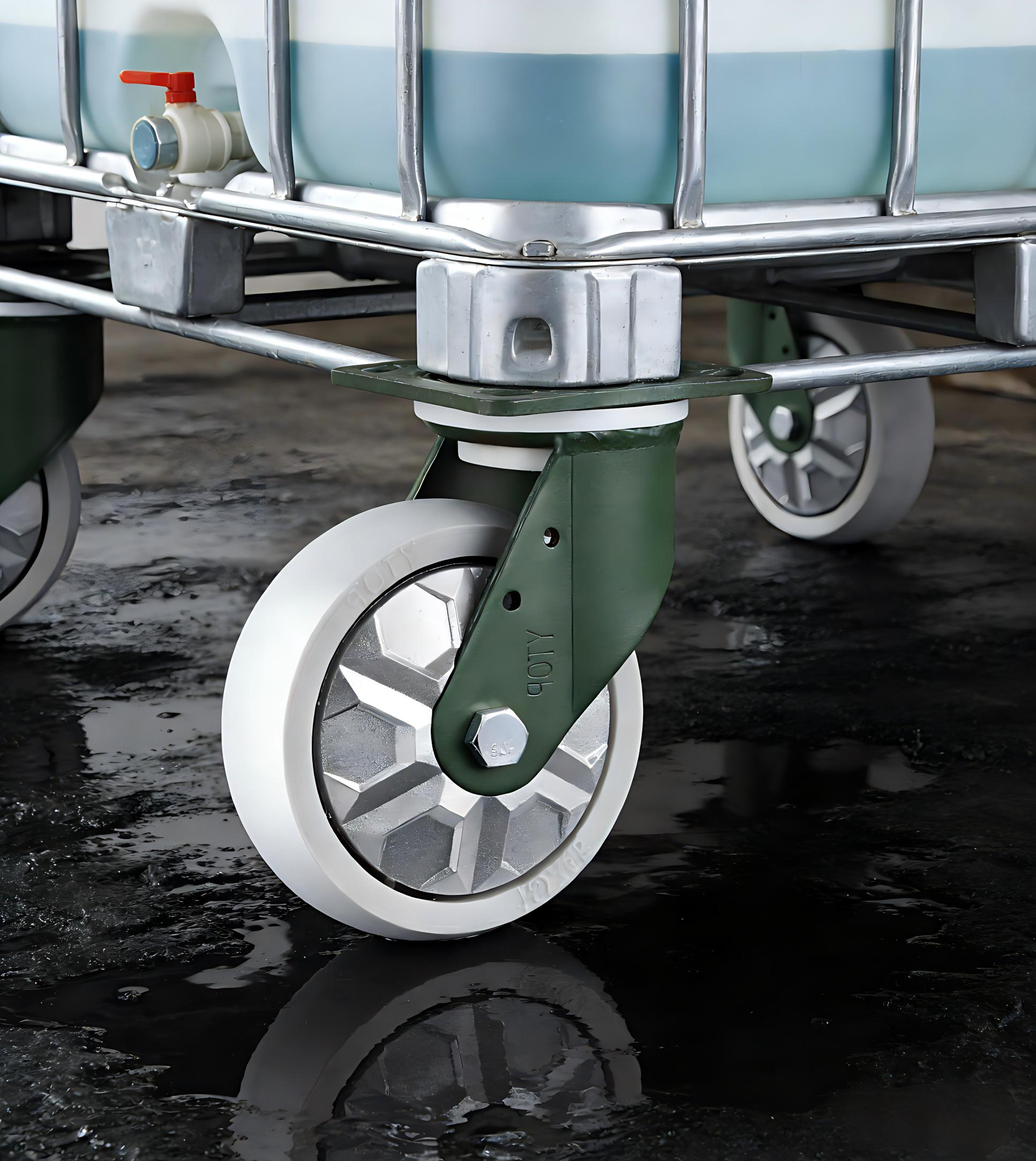
For machining workshop treads, oil resistance is the first indicator. Oil-resistant tread materials do not swell, do not dissolve, and do not shed debris in oil environments, maintaining stable performance after long-term contact with oil.
Both polyurethane treads and nylon treads are stronger in oil resistance than ordinary rubber, and are common suitable choices for machining workshops. Polyurethane treads are oil-resistant while also having elasticity, being friendly to floors; nylon treads are oil-resistant and have high hardness, with strong load capacity but inferior elasticity and floor protection compared to polyurethane. Which one to choose depends on the workshop’s comprehensive needs for load capacity, floor protection, and operating noise. During selection, confirm the oil resistance of the tread material — some treads look like polyurethane in appearance, but their actual formulation has insufficient oil resistance, and swelling can still occur after long-term use in cutting fluid environments.
Anti-Slip: A Safety Requirement on Oily Floors
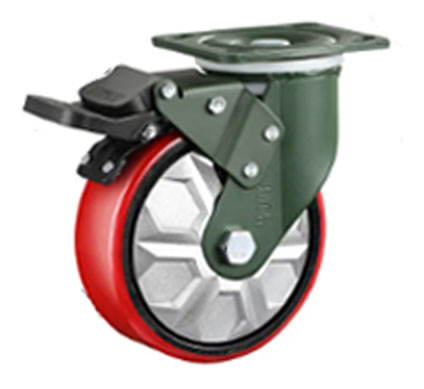
Grip on oily floors is maintained by the tread’s anti-slip performance. Anti-slip treads have sufficient grip in oily environments, so carts do not slip or spin freely, and handling is controllable. Machining workshops mostly handle metal parts and workpieces, which are heavy and hard. After slipping and tipping, metal parts fall and may damage workpieces or injure personnel. Anti-slip is a safety necessity in oily workshops, not an additional performance feature. Tread pattern design affects anti-slip performance — smooth treads generally have less grip on oily floors than treads with anti-slip patterns, but patterns that are too deep easily trap oily sludge, so anti-slip and cleanliness need to be balanced.
Sealed Bearings: More Critical Than in Dusty Environments
The bearing environment in machining workshops is harsher than in dusty workshops. Dust causes abrasive wear, while oil dissolves the lubrication system and then causes dry grinding. Oil dilutes grease faster than dust invades, and bearing failure is also more rapid. Sealed bearings keep oil outside the rotating core, and paired with grease, rotating parts remain smooth in oily environments. Open bearings will develop problems in machining workshops within a few months. Sealed construction is a survival configuration here.
Bracket Corrosion Protection: Hidden Corrosion of Oily Sludge
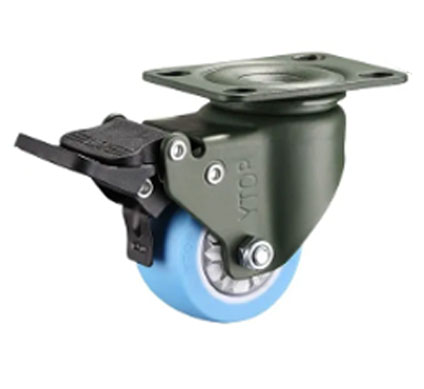
Oil itself does not directly rust metal, but it adheres to dust to form oily sludge. Oily sludge plus moisture in cutting fluid corrodes faster than either oil or water alone. Bracket surfaces with 8-level powder coating treatment make it difficult for oil to penetrate and easy to wipe clean, with a dense plastic layer for corrosion protection. Bracket load capacity must be sufficient — machined parts are not light, and bracket strength and corrosion protection must both be in place.
For machining workshop wheel selection, oil resistance and anti-slip are core: oil-resistant tread material that does not swell or shed debris in oil, anti-slip tread with reliable grip on oily floors, sealed bearings to prevent oil from invading rotating parts, and powder-coated brackets for corrosion protection and stain resistance. Provide the caster manufacturer with the degree of oil contamination, type of cutting fluid, handling load, and floor conditions, and select according to oil resistance standards. Zhuoye manganese steel caster selection for machining workshop conditions is confirmed based on specific oil type and load requirements, and cannot be applied using ordinary industrial workshop specifications.
Related Reading
Working in oily or corrosive environments? Explore these related articles:
- Polyurethane vs Nylon Swivel Casters — compare wear resistance and load resilience to pick the right tread.
- Caster Bracket Surface Treatment — spraying, electrophoresis and galvanization differences for corrosion protection.
Explore our complete range of heavy-duty casters (150-610kg) with oil-resistant polyurethane treads, or contact our engineering team for machining workshop caster selection.
Post time: Nov-02-2026