
The Overall Anatomy of a Caster: Bracket and Wheel
A caster looks like a simple wheel, but it is actually a precision sub-assembly whose geometry determines whether a cart rolls smoothly, turns safely, and survives years of service. At its most basic level, every caster consists of two major systems: the bracket (also called the fork or housing) and the wheel. The bracket fixes the caster to the equipment and carries the load down into the wheel; the wheel translates that vertical load into horizontal motion across the floor. Understanding how these two systems fit together is the foundation for choosing the right caster, diagnosing rolling problems, and estimating service life.
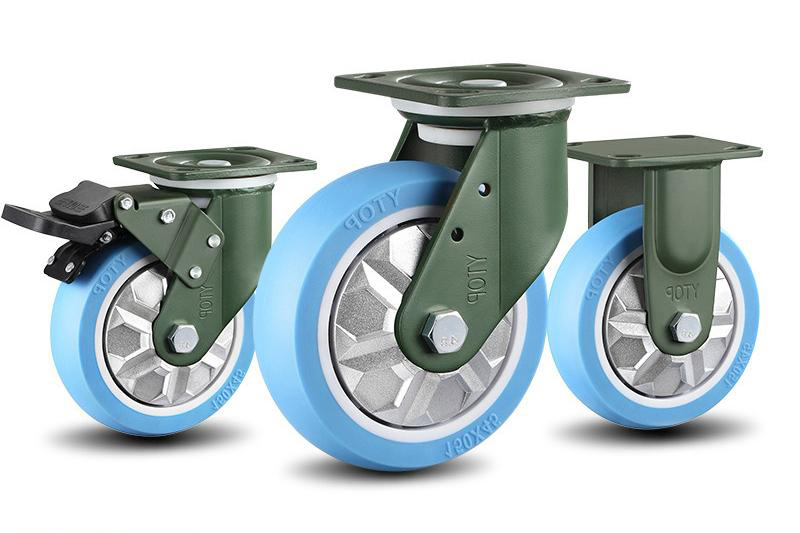
The Bracket (Fork): The Load-Carrying Frame
The bracket is the structural heart of the caster. It typically consists of a top plate or stem that attaches to the equipment, a swivel section that allows the wheel to rotate around a vertical axis, and two side legs (the fork cheeks) that capture the wheel between them. In a stamped-steel caster, these parts are pressed from sheet steel and welded or riveted together; in a forged or heavy-duty caster, the fork may be cast or welded from thicker plate. The bracket also houses the swivel bearings, the kingpin (or center bolt), and, where fitted, a brake mechanism. Bracket thickness, weld quality, and bearing type are the first things to inspect when a caster fails under load, because most structural failures happen at the fork or the swivel joint rather than in the wheel tread.
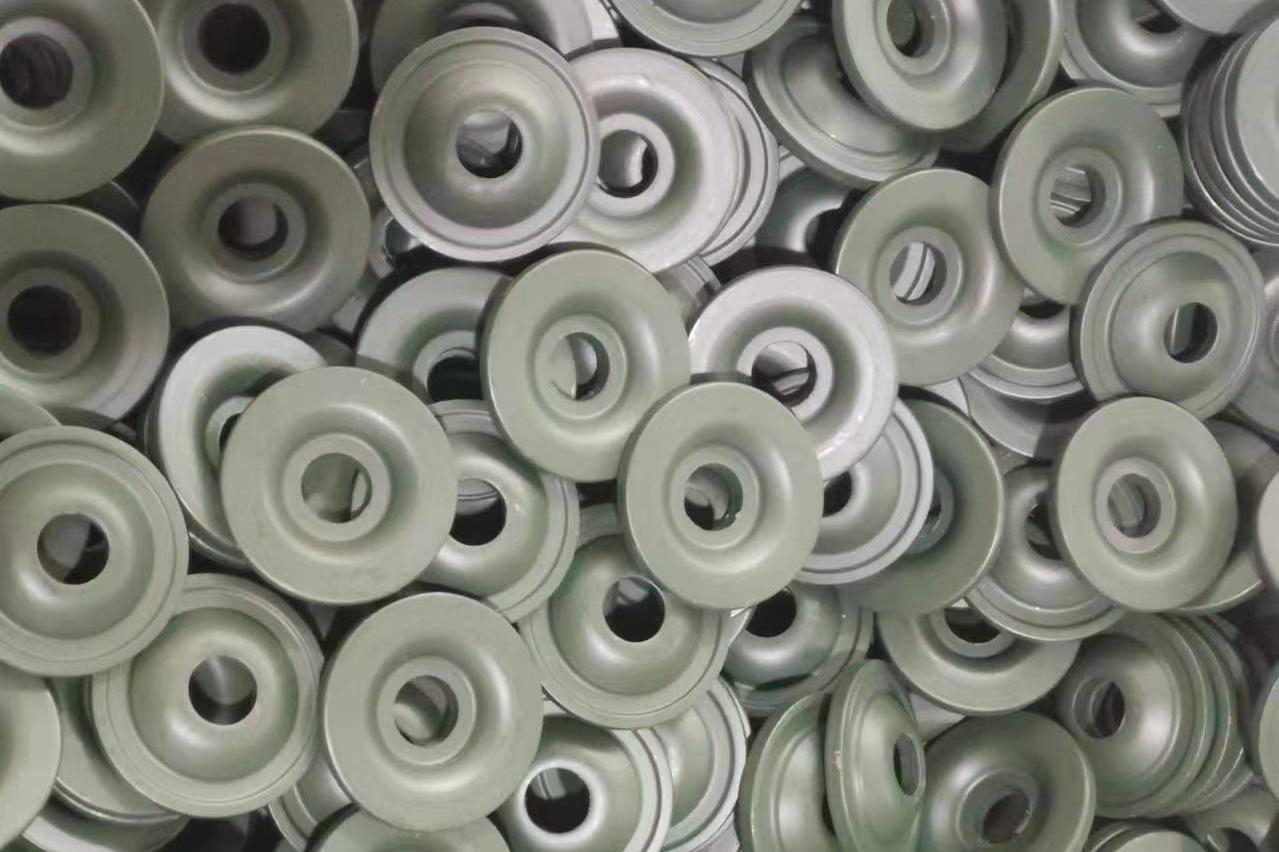
The Wheel: Rolling Under Load
The wheel assembly includes the rolling element itself—nylon, polyurethane, rubber, cast iron, or a composite—and the hub, bearing, and axle that let it rotate around a horizontal axis. The wheel’s diameter, width, tread material, and bearing type together determine rolling resistance, noise, floor protection, and load capacity. A larger wheel rolls over cracks and thresholds more easily; a narrower wheel turns more sharply; a harder tread rolls more efficiently but transmits more vibration. The bearing—plain bore, ball bearing, or tapered roller bearing—decides how freely the wheel spins at low effort and how well it survives side loads during turns.
Rigid Casters vs. Swivel Casters: How They Differ
Choosing between rigid (fixed) and swivel (universal) casters is one of the most important structural decisions in any cart design. A rigid caster holds the wheel in a fixed orientation: it rolls straight forward and backward but cannot turn on its own. A swivel caster allows the wheel to rotate 360 degrees around a vertical axis, so the cart can change direction in place. A typical four-wheel cart uses two rigid casters at the rear and two swivel casters at the front for stable forward tracking and easy steering; more agile platforms may use four swivel casters, while extremely heavy equipment may use swivel casters with total-lock brakes to freeze both the wheel rotation and the swivel rotation.
How the Swivel Bearing Enables Turning
The swivel action is made possible by a set of thrust and radial bearings stacked between the top plate and the fork. These bearings carry both the vertical load and the horizontal forces generated when the cart turns. In light-duty casters, this may be a simple ball race; in heavy-duty and super heavy-duty casters, hardened raceways with precision ball or tapered roller bearings are used to keep swivel effort low even at loads of several hundred kilograms per caster. Worn swivel bearings are a common cause of hard steering, shimmy, or a caster that “locks up” in one direction, and they are a key inspection point during maintenance.
Mounting Height, Swivel Offset and Turning Geometry
Two geometric parameters define how a caster behaves once it is mounted: mounting height and swivel offset.
Mounting Height Explained
Mounting height is the vertical distance from the floor to the mounting surface (the bottom of the top plate or the end of the stem) when the caster is installed. It determines how high the equipment sits above the floor and must be identical across all casters on a cart, or the load will tilt and concentrate on one corner. Mounting height is calculated from wheel diameter, fork geometry, bearing stack-up, and any brake hardware. When replacing casters, matching the original mounting height is more important than matching the wheel diameter alone, because a taller wheel on a low bracket can produce the same overall height but a different turning behavior.
Swivel Offset (Kingpin Offset) and Turning Radius
The swivel offset is the horizontal distance between the vertical kingpin axis and the point where the wheel contacts the floor. This offset is what makes the caster self-align: when the cart moves, the rolling force pulls the wheel behind the kingpin so it automatically points in the direction of travel. A larger offset makes the caster easier to start swiveling but increases the swing envelope the wheel needs around obstacles; a smaller offset is more stable at speed but requires more effort to turn. The turning radius—how much clearance a swivel caster needs to rotate without hitting the machine frame—is directly related to this offset plus half the wheel width. Engineers must check this envelope during design, especially for carts that run tight aisles or pass through door frames.
Factors That Determine Steering Performance and Maneuverability
How easily a cart steers is the combined result of several structural choices, not just the swivel bearing.
What Affects Swivel Effort
Swivel effort is influenced by the load per caster, the swivel bearing design, the offset, and the floor condition. Heavier loads require larger, harder swivel bearings; a too-small bearing will feel stiff and wear quickly. The offset also matters: too little offset and the caster resists turning, too much offset and it shimmies or “chatters” at speed. Floor roughness, debris, and cracks add drag that the swivel bearings must overcome, which is why the same caster that feels effortless in a clean test lab can feel stiff on a warehouse floor with expansion joints.
Rolling Smoothness and Floor Interaction
Rolling effort depends on wheel material, diameter, bearing type, and floor condition. Hard wheels (nylon, steel) roll efficiently on smooth concrete but transmit vibration and noise; soft wheels (rubber, polyurethane) absorb shocks but require more push. Wheel diameter is often the simplest lever: going from a 75 mm wheel to a 125 mm wheel noticeably reduces effort over cracks and thresholds. The bearing type amplifies or dampens these effects—a ball-bearing nylon wheel will feel far smoother than a plain-bore wheel under the same load.
Load Ratings: Static, Dynamic and Impact
Caster catalogs list three load numbers, and confusing them is one of the most common and most costly selection mistakes.
Static Load, Dynamic Load and Impact Load Defined
Static load is the weight the caster can safely support while standing still on a flat floor—warehouse shelving or parked equipment is the typical case. Dynamic load (also called running load) is the weight the caster can carry while rolling at the rated speed over the expected floor; this is the number that matters most for moving carts. Impact load is the brief shock load created when a wheel hits a crack, a threshold, or a drop, and it can be several times the working load for a fraction of a second. A caster may hold its static rating easily but fail quickly if it is repeatedly shocked above its impact rating, even though the average dynamic load looks comfortable.
How the Load Numbers Relate and How to Calculate Them
As a rule of thumb, dynamic load is lower than static load, and impact load capacity is usually expressed as a short-term peak rather than a continuous rating. To select a caster, divide the total loaded weight of the equipment by the number of casters, then apply a safety margin—typically 20–50%—because uneven floors, damaged wheels, and off-center loads mean not every caster carries its fair share. Choose the caster whose rated dynamic load exceeds this figure, and confirm that the expected obstacles (thresholds, expansion joints, pallets) stay within the impact rating. For equipment that may be loaded unevenly or lifted by a forklift, err toward the heavy-duty or super heavy-duty range, where brackets, bearings, and wheel hubs are overbuilt for the task.
How Structural Design Affects Service Life
The difference between a caster that lasts three years and one that fails in three months is usually structural, not material. Forks that are too thin deflect under load, opening the swivel bearing and accelerating play; welds that are not full-penetration crack at the stress concentration; wheels with undersized hubs deform around the axle and seize. Heavy-duty manganese-steel brackets, hardened swivel raceways, and wheel materials matched to the floor and chemical environment all contribute to predictable long life. Conversely, a premium nylon wheel mounted on a thin stamped bracket will not deliver the life its material could offer, because the weak point has simply moved.
Common Failure Points and Design Choices
The most common failure points are the swivel bearing (wear and play), the welds at the fork legs, the wheel tread (abrasion, chunking, or thermal damage), and the axle or retaining ring (loosening under vibration). Design choices that address these include: full-penetration welded forks, swivel bearings sized for the dynamic load, wheels with hubs that match the axle diameter with a proper interference fit, and brakes that clamp the wheel rather than the tread. Specifying these details at the RFQ stage is far cheaper than replacing casters in service.
Maintenance and Inspection Checklist
A small regular inspection program dramatically extends caster life. Check swivel play by rocking the wheel sideways against the kingpin; excessive play means the swivel race is worn. Spin the wheel by hand and listen for roughness or grinding, which points to bearing or axle contamination. Inspect the tread for flat spots, chunks, cracks, or embedded debris, and confirm that the mounting bolts and top-plate screws are still tight. For heavy-duty and super heavy-duty applications, also inspect welds for hairline cracks and confirm that brakes still hold on a slope. Cleaning wheels regularly—removing wrap-around fibers, metal chips, and packaging film—often prevents more failures than upgrading the wheel material.
Frequently Asked Questions
What is the difference between a swivel caster and a rigid caster?
A rigid (fixed) caster holds the wheel in one direction and rolls straight; a swivel caster rotates 360 degrees around a vertical axis so the cart can turn in place. Most carts use a mix: two rigid casters at the rear for straight tracking and two swivel casters at the front for steering. Four swivel casters give maximum maneuverability but can wander at higher speeds.
What does “mounting height” mean, and why does it matter?
Mounting height is the distance from the floor to the equipment’s mounting surface when the caster is installed. It must be the same for every caster on a cart, or the equipment tilts and overloads one corner. When replacing casters, match the mounting height rather than just the wheel diameter, because different fork geometries can produce the same overall height with different handling.
How do static load, dynamic load, and impact load differ?
Static load is the weight a caster holds while standing still. Dynamic (running) load is the weight it can carry while rolling at the rated speed, and is usually lower than the static rating. Impact load is the brief shock from hitting a crack, threshold, or drop. Always select a caster by its dynamic load rating, not its static rating, and add a safety margin of 20–50% for uneven floors.
What is swivel offset and how does it affect turning?
Swivel offset is the horizontal distance from the vertical kingpin axis to the point where the wheel touches the floor. It is what makes the caster self-align behind the direction of travel. A larger offset is easier to start turning but needs more clearance around obstacles; a smaller offset is more stable at speed but requires more steering effort. The offset, combined with half the wheel width, defines the minimum turning envelope the machine frame must clear.
How can I extend the service life of my casters?
Match the wheel material and bracket rating to the actual load and floor, keep mounting height equal across all casters, tighten mounting hardware regularly, clean treads of debris, inspect swivel play and wheel roughness, and replace worn bearings before they damage the fork. Good structural design plus a simple monthly inspection program typically doubles or triples caster life compared with running casters to failure.
Related Reading
- What Are the Common Caster Specifications?
- Classification of Casters by Different Criteria
- How Does the Locking Mechanism of a Caster Work?
- What Are Extra Heavy Duty Industrial Casters?
- What Is the Difference Between Rubber Casters and Nylon Casters?
- Heavy Duty Casters (150–610 kg)
- Medium Duty Casters (100–190 kg)
- Contact Ytopcaster for Caster Structure Advice
Post time: Oct-12-2024