
When purchasing casters, we need to pay attention to the material of the casters, because the material of the casters is directly related to the comfort, durability and safety of use. In this article, we will introduce how to identify the caster material from the two aspects of caster burning characteristics and wear resistance coefficient.
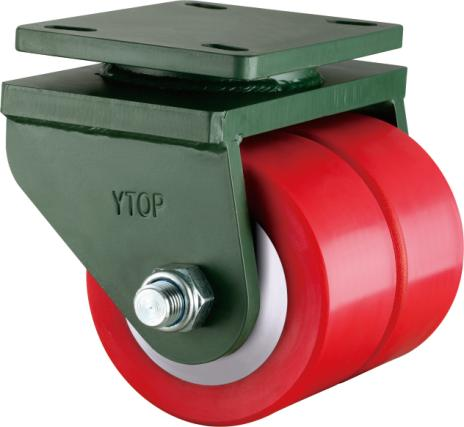
Burning Characteristics
Casters made of different materials exhibit different characteristics when burned, which is an important aspect we can use to identify the material. Specifically:
Nylon (PA): not easy to burn, burning yellow flame, with nail odor, burnt wool smell, and produce white smoke, burning surface blistering, molten droplets.
Polyurethane (PU): easy to burn, burning with a faint white smoke, easy to melt, no irritating odor, sticky silk.
Polyvinyl chloride (PVC): easy to burn, burning with thick black smoke, irritating odor, burning without sticky silk, the surface after burning black carbon powder.
Polypropylene (PP): easy to burn, there is a faint plastic odor, burning surface uniform melting, and sticky silk. Nylon (PA): not easy to burn, burning with the odor of burning hair, after burning the surface has a blistering, and sticky silk.
Abrasion resistance
The wear resistance of casters is also an important factor affecting the service life, and the wear resistance coefficient of casters made of different materials is also different. Specifically:
Nylon wheel: nylon wheel wear resistance is also better, suitable for use on the level road surface, but relative to the rubber wheel is slightly inferior.
Rubber wheel: rubber wheel has good abrasion resistance, can adapt to a variety of road surfaces, longer service life.
PVC wheel: PVC wheel has poor abrasion resistance, easy to be worn and scratched, shorter service life.
Soft rubber wheel: soft rubber wheel has better abrasion resistance, but it is slightly inferior compared with rubber wheel.
Therefore, we can judge the material by observing the wear and tear of the casters in the process of use and understanding the wear resistance coefficients of various materials.
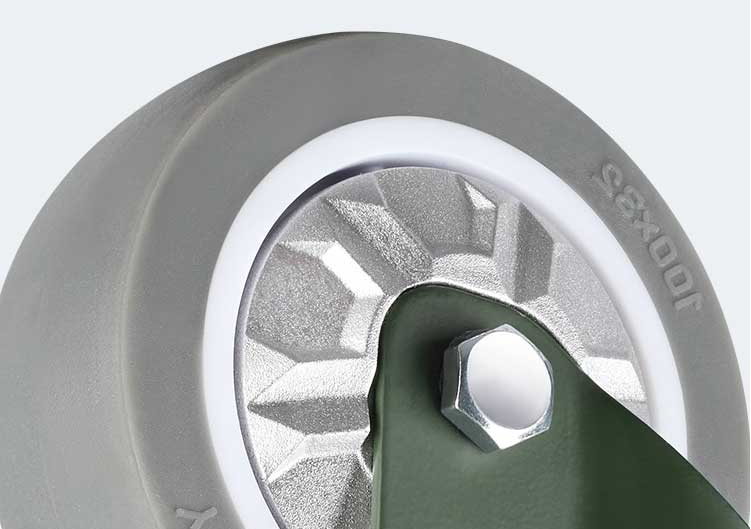
It should be noted that the above are only two aspects of caster material. In fact, there are other aspects of caster material, such as weight and strength, which will also affect the performance of casters. Therefore, when buying equipment, we need to comprehensively consider a number of factors and choose the most suitable material for ourselves.
Related Reading
Explore more caster material identification, wear resistance, and material comparison guides:
- A Trick to Help You Easily Identify the Caster Material — Learn about caster material identification tricks including burning characteristics and wear resistance.
- How Many Types of Caster Materials Are There? — Learn about different caster material types including identification methods and wear characteristics.
- Application of Several Common Materials in Casters — Learn about common caster material applications including wear resistance and burning characteristics.
- Single Wheel Material DIN Wear Test Analysis — Learn about caster material DIN wear test including wear coefficient analysis and material comparison.
- Caster Material: Recycled Materials vs High-Quality Raw Materials — Learn about caster material quality differences including identification methods and wear resistance.
Explore our complete range of material-verified heavy-duty casters (150-610kg) and medium-duty casters (100-190kg) with various high-quality materials, or contact our material engineering team for expert caster material identification and selection guidance.
Post time: Nov-06-2023