
In exploring the different types of urethane wheels, the We have to mention their respective unique characteristics and application scenarios.Polyurethane as a high performance material.With its excellent physical and chemical properties. It occupies an important position in the field of wheel manufacturing.
TPU (Thermoplastic Polyurethane) Wheels
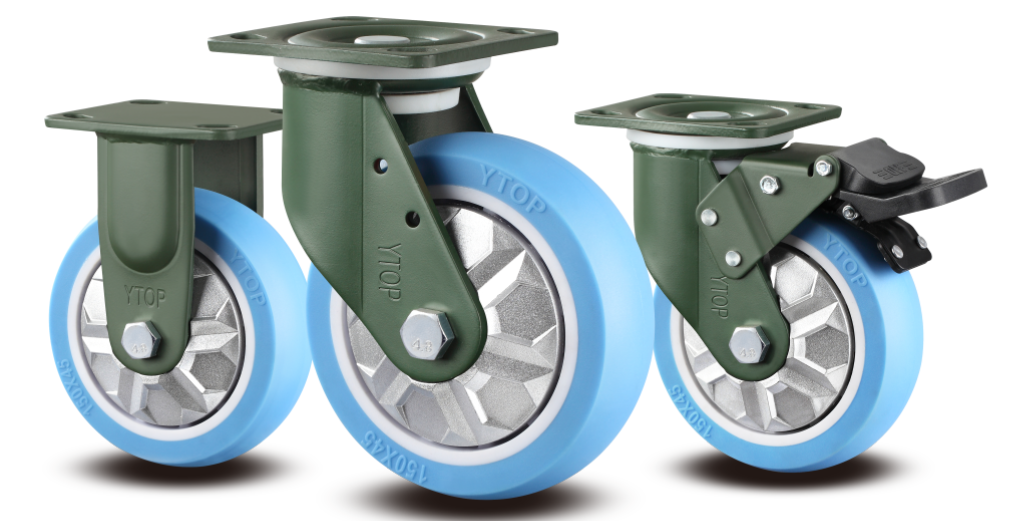
First.Let’s take a look at polyurethane (TPU) wheels.These wheels have a polypropylene or nylon core.Through secondary injection molding technology, the A polyurethane wheel surface is formed on the outer edge of the core.TPU wheels not only have the properties of protecting the floor, absorbing vibrations, being non-marking and non-staining.It also has excellent resistance to friction and corrosion.Ability to roll easily on a variety of surfaces.In addition.Its color can be modulated according to the demand.Adapt to the needs of different occasions.However.It is worth noting that In a hot environment.The load capacity of the TPU wheel will be reduced.
CPU (Cast Polyurethane) Elastomer Wheels
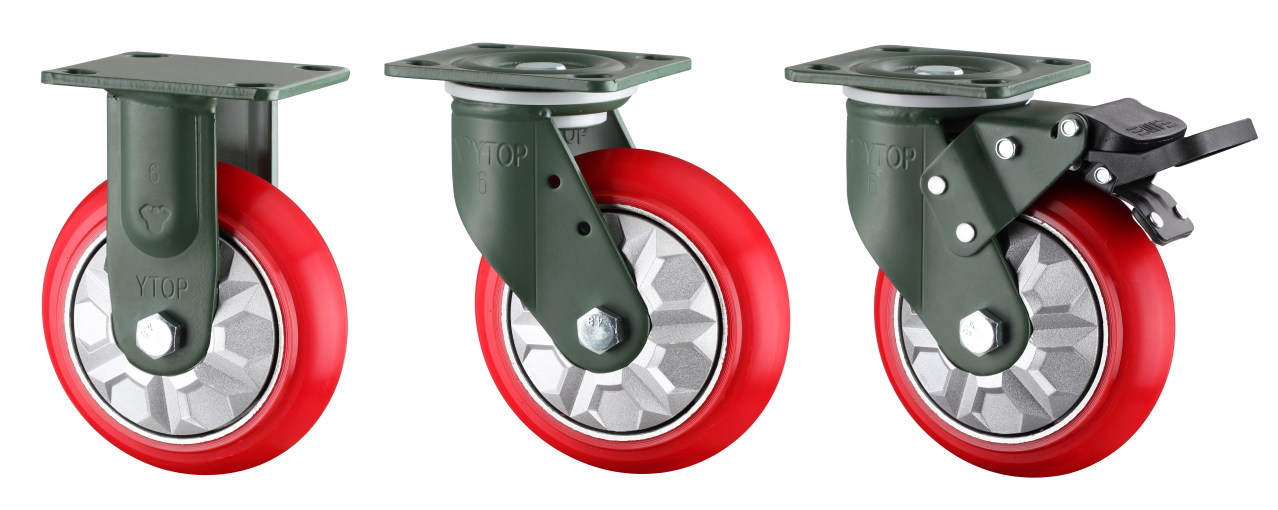
The next step is to pour a polyurethane (CPU) elastomer wheel.These wheels have an iron or aluminum core as the core.thermosetting polyurethane elastomers molded by chemical reaction.Forms a wheel surface after curing at high temperatures.CPU wheels have the same advantages of floor protection, non-marking and non-staining.It is also UV-resistant and friction-resistant, making it ideal for applications that require a high degree of operating comfort.However.It’s not resistant to hot water, water vapor, etc…Therefore caution is needed when using it in specific environments.
High-Speed Cast Polyurethane Wheels
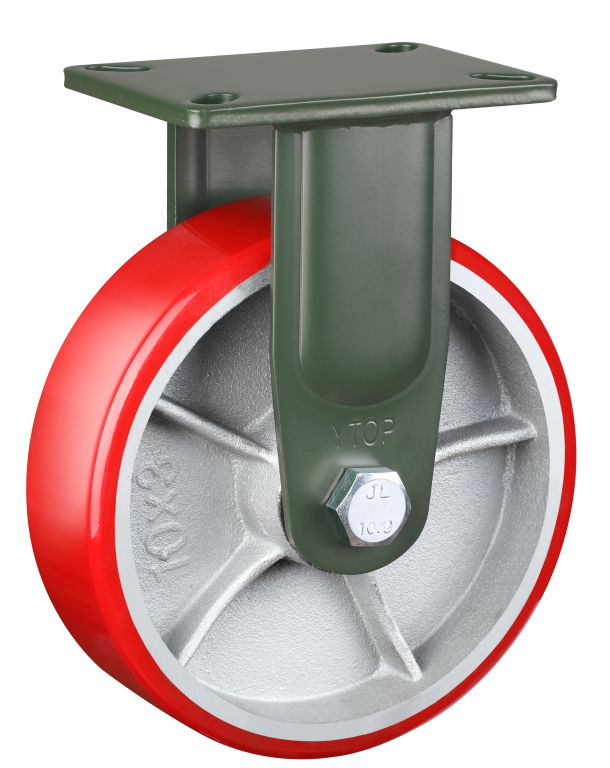
Let’s talk about another cast polyurethane (CPU) wheel.These wheels are also based on chemically reaction-molded thermoset polyurethane elastomers.Having advantages similar to those of the CPU wheel described above, the e.g. to protect the floor, to resist friction, etc.Particularly noteworthy.It has a very low degree of permanent deformation, the Low rolling resistance.Capable of withstanding dynamic loads at high speeds.Ideal for use in high speed situations.
PUE (Foamed Polyurethane) Wheels
Finally.Let’s take a look at the foamed polyurethane (PUE) wheel.With its unique microporous structure, this wheel Exhibiting properties such as low density, light weight and easy deformation.It also has a variety of excellent properties such as high load bearing, high elasticity and folding resistance.These properties of PUE wheels make them an ideal choice of material for casters.Whether it’s sound and energy absorption or vibration damping and cushioning.All of them can show their unique advantages.
Overall.Polyurethane wheels, with their outstanding performance and diverse types of It is widely used in various fields.From TPU wheels that protect the ground and absorb shock.to the UV and friction resistance of the CPU wheel.Further to the low density and light weight of the PUE wheel.Each type of polyurethane wheel plays an integral role in its own field.Choosing the right urethane wheel for your needs.Not only does it increase efficiency.It also provides a more comfortable and safe experience.
Related Reading
Explore more polyurethane caster, PU material, and caster material guides:
- Why Choose Polyurethane for Industrial Casters — Learn about polyurethane caster advantages including different polyurethane types and applications.
- PU Casters – Light and Wear-Resistant Pioneers — Learn about PU caster advantages including polyurethane material characteristics and wear resistance.
- Difference Between Rubber Casters and Polyurethane Casters? Which One is Better — Learn about rubber vs polyurethane caster differences including polyurethane type selection guidance.
- Advantages of Polyurethane Casters for the Logistics Industry — Learn about polyurethane caster advantages in logistics including different polyurethane type applications.
- Analyze the Advantages and Disadvantages of Industrial Iron Core Polyurethane Casters — Learn about iron core polyurethane caster advantages and disadvantages including polyurethane type characteristics.
Explore our complete range of polyurethane-material heavy-duty casters (150-610kg) and medium-duty casters (100-190kg) with different polyurethane options, or contact our engineering team for expert polyurethane caster type selection guidance.
Related Reading
Explore more polyurethane caster, PU material, and caster material guides:
- Why Choose Polyurethane for Industrial Casters — Learn about polyurethane caster advantages including different polyurethane types and applications.
- PU Casters – Light and Wear-Resistant Pioneers — Learn about PU caster advantages including polyurethane material characteristics and wear resistance.
- Difference Between Rubber Casters and Polyurethane Casters? Which One is Better — Learn about rubber vs polyurethane caster differences including polyurethane type selection guidance.
- Advantages of Polyurethane Casters for the Logistics Industry — Learn about polyurethane caster advantages in logistics including different polyurethane types for logistics applications.
- Analyze the Advantages and Disadvantages of Industrial Iron Core Polyurethane Casters — Learn about iron core polyurethane caster advantages and disadvantages including polyurethane type characteristics.
Explore our complete range of polyurethane-material heavy-duty casters (150-610kg) and medium-duty casters (100-190kg) with different polyurethane options, or contact our engineering team for expert polyurethane caster type selection guidance.
Post time: Mar-06-2025