
The rubber casters vs polyurethane casters debate is one of the most common questions in caster selection. Both materials offer excellent floor protection, noise reduction, and load-bearing capabilities, but they differ significantly in durability, chemical resistance, load capacity, and cost. Whether you are outfitting a warehouse, medical facility, or manufacturing plant, choosing between rubber and polyurethane wheels directly impacts equipment performance and total cost of ownership. This detailed comparison will help you select the optimal caster material.
Understanding Rubber Casters
Rubber Caster Material Properties
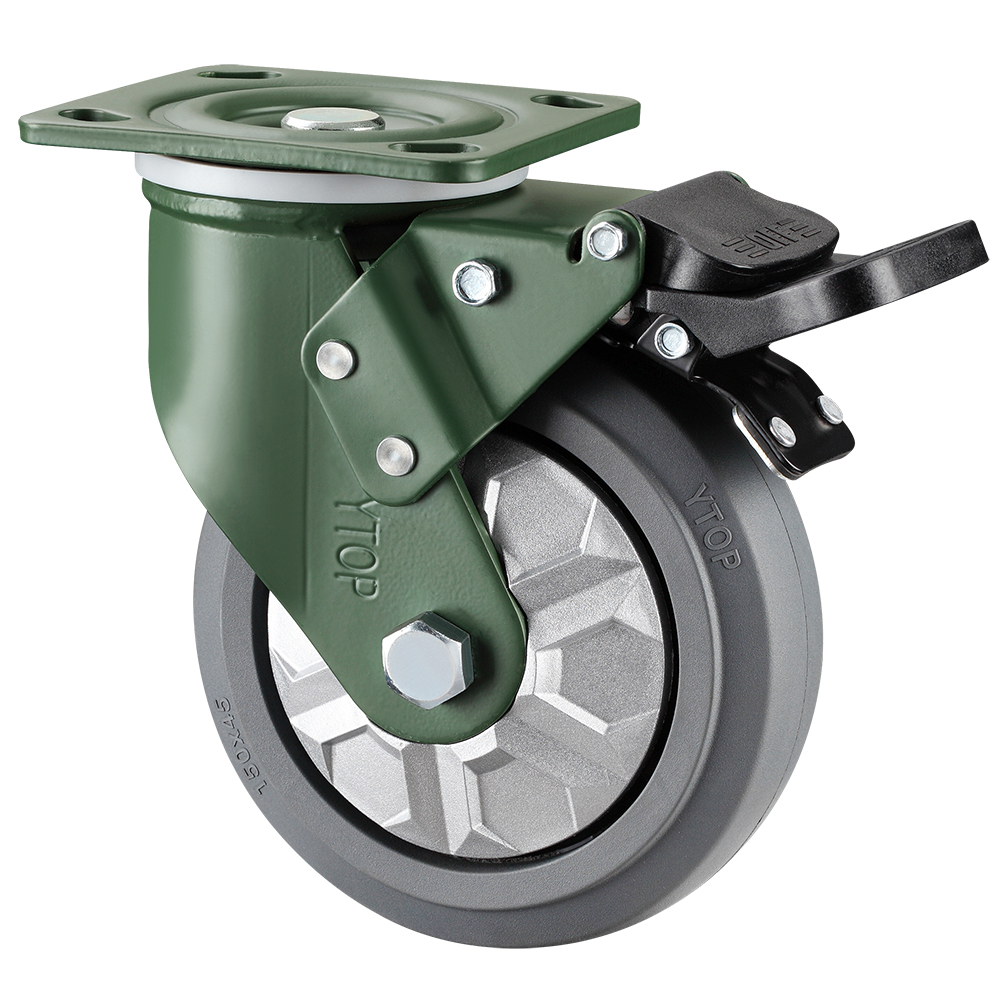
Rubber casters are manufactured from natural or synthetic rubber compounds, typically including BR (butadiene rubber), SBR (styrene-butadiene rubber), or natural rubber. These materials are vulcanized to create durable, elastic wheels that excel at absorbing shocks and reducing noise. Rubber wheels provide excellent traction on smooth and slightly uneven surfaces, making them ideal for indoor applications where floor protection is essential.
Advantages of Rubber Casters
Rubber casters offer exceptional floor protection, leaving no marks or scuffs on hardwood, tile, or epoxy surfaces. They operate quietly, making them perfect for hospitals, offices, and hotels. Rubber also provides good chemical resistance to water, mild acids, and cleaning agents. The natural elasticity of rubber absorbs vibrations, protecting sensitive equipment from impact damage during transport.
Understanding Polyurethane Casters
Polyurethane Caster Material Properties
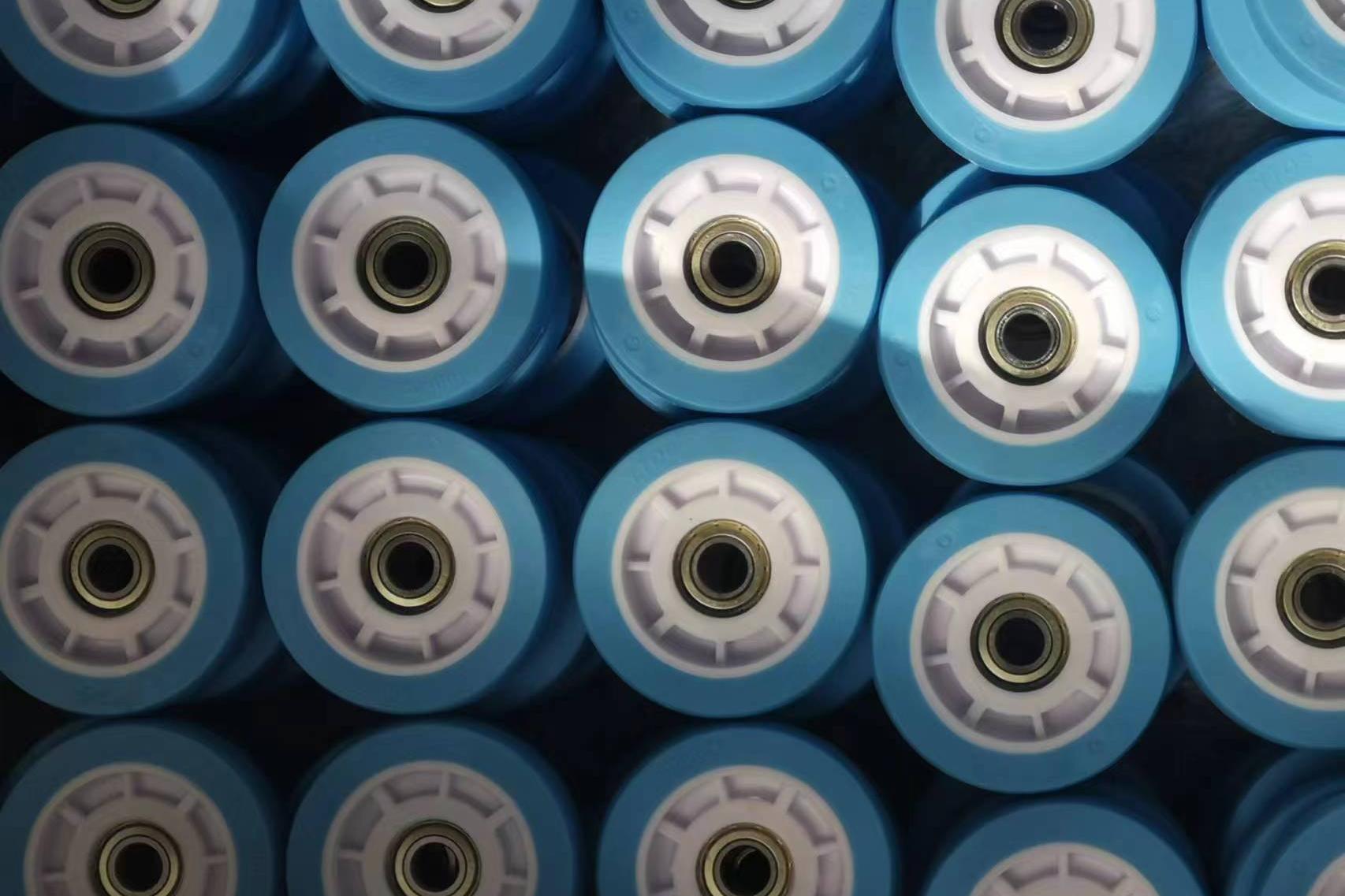
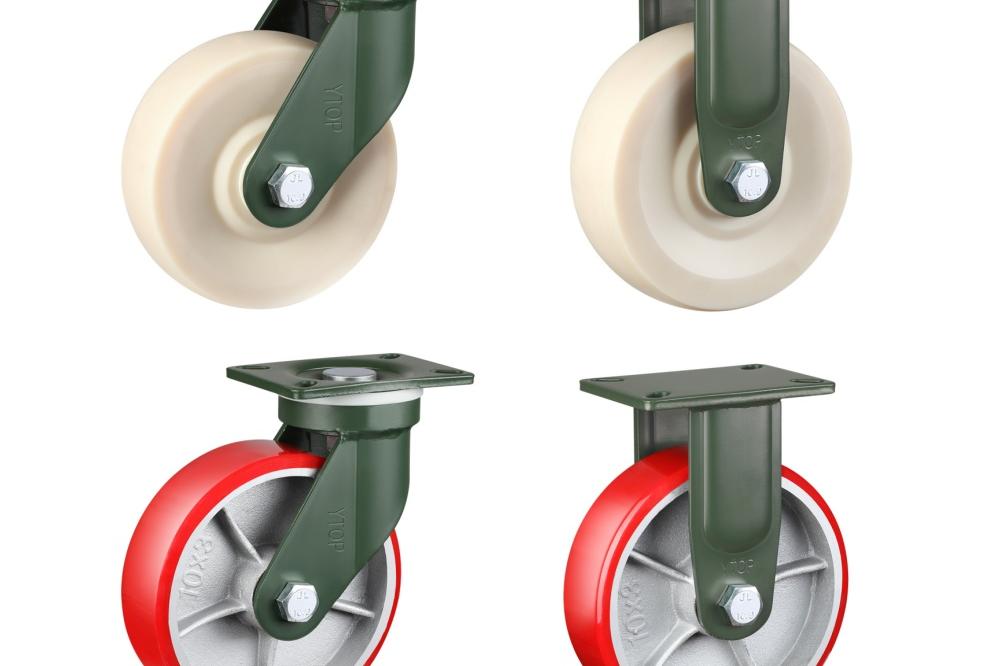
Polyurethane (PU) casters are manufactured from thermoset or thermoplastic polyurethane elastomers. PU wheels offer exceptional load-bearing capacity, often supporting 2-3 times the load of rubber wheels of the same size. Polyurethane has superior abrasion resistance, resisting wear from rough floors, debris, and repeated use. The material can be formulated in various hardness levels, from soft non-marking compounds to hard, high-capacity formulations.
Advantages of Polyurethane Casters
Polyurethane casters excel in heavy-duty industrial applications. They resist oils, grease, chemicals, and water, making them suitable for wet or oily environments. PU wheels do not flat-spot under sustained loads and maintain their shape even after long periods of stationary loading. They also offer lower rolling resistance than rubber, requiring less force to push loaded carts.
Rubber Casters vs Polyurethane Casters: Detailed Comparison
Load Capacity
When comparing rubber casters vs polyurethane casters, load capacity is a major differentiator. Polyurethane wheels typically support 150-1600kg per wheel, depending on size and formulation. Rubber wheels generally range from 50-500kg per wheel. For heavy industrial loads exceeding 500kg, polyurethane is the clear choice.
Durability and Wear Resistance
Polyurethane offers 3-5 times the abrasion resistance of rubber, making PU wheels last significantly longer in high-cycle applications. Rubber wheels, while comfortable and quiet, wear faster on rough or debris-covered floors. For environments with concrete floors, metal shavings, or abrasive debris, polyurethane provides superior longevity.
Rolling Resistance and Noise
Rubber wheels operate more quietly and smoothly on smooth surfaces, absorbing small floor imperfections better. Polyurethane wheels may produce slightly more noise on rough surfaces but require less pushing force due to lower rolling resistance. The choice depends on whether noise reduction or ease of pushing is the priority.
Chemical and Environmental Resistance
Polyurethane resists oils, grease, petroleum products, and many chemicals far better than rubber. Rubber may degrade when exposed to oils, solvents, or UV radiation over extended periods. For outdoor use or applications involving chemical exposure, polyurethane is the superior choice.
Application Recommendations
Choose Rubber Casters For
Rubber casters are ideal for: hospital equipment, office furniture, hotel carts, retail displays, and applications prioritizing quiet operation and floor protection. They work best on smooth, clean indoor surfaces.
Choose Polyurethane Casters For
Polyurethane casters excel in: industrial warehouses, manufacturing equipment, heavy-duty carts, outdoor use, oily or chemical environments, and any application requiring high load capacity and long service life.
Technical Parameter Comparison
Hardness Range and Shore Scale
Rubber casters typically range from Shore A 60A to 90A, with 70A-80A being the most common industrial formulation. Polyurethane casters offer a wider range from Shore A 70A to Shore D 75D, with 90A-95A being the standard heavy-duty formulation. The wider hardness range of PU allows optimization for specific floor conditions and load requirements.
Temperature Resistance
Rubber casters operate effectively from -40C to +80C. Standard polyurethane wheels perform well from -30C to +80C, while high-temperature PU formulations extend the range to +110C. In cold storage environments below -20C, rubber maintains flexibility better than standard PU, which can become brittle.
Chemical Resistance
Polyurethane resists oils, grease, petroleum-based fluids, and many industrial chemicals significantly better than rubber. Natural rubber swells and degrades when exposed to mineral oils. However, rubber shows better resistance to ozone and UV degradation compared to certain PU formulations. For outdoor or chemical-exposed applications, consult the material compatibility chart.
Application Case Studies
Manufacturing Plant Upgrade
A automotive parts manufacturer replaced rubber caster wheels on 200 material carts with iron-core polyurethane wheels. The original rubber wheels lasted 8-10 months on concrete floors with metal shavings. After switching to PU wheels, service life extended to 36-42 months, reducing annual caster replacement costs by 65%. The lower rolling resistance also reduced operator fatigue.
Hospital Flooring Protection
A hospital renovation project required casters that would not damage expensive epoxy floors. While PU was considered, the softer rubber formulation was chosen for noise reduction and floor cushioning in patient care areas. The lighter loads (medical equipment under 150kg per cart) meant rubber’s faster wear rate was acceptable, and the noise reduction benefit was critical for patient comfort.
Maintenance Best Practices
Wheel Cleaning and Inspection
Clean caster wheels regularly to remove debris, metal shavings, and material buildup. Inspect for uneven wear patterns, which indicate overload, misalignment, or faulty swivel bearings. Both rubber and PU wheels should be inspected monthly in industrial environments and quarterly in light-duty use.
Lubrication Schedule
Apply lithium-based grease to swivel bearings every 3-6 months in normal conditions, or monthly in dusty environments. Do not lubricate wheel tread surfaces, as this can reduce traction and increase slip hazards. Keep wheels clean and dry to maximize material performance.
Environmental and Sustainability Considerations
Recyclability and Environmental Impact
Rubber wheels, particularly natural rubber, are biodegradable and easier to recycle than polyurethane. PU wheels, while extremely durable, can be more difficult to recycle and may require specialized processing. However, the longer service life of PU wheels means fewer wheels end up in landfills over time. Organizations with sustainability goals should evaluate both the material’s recyclability and its total lifecycle environmental impact.
Noise Regulations and Workplace Comfort
Noise pollution in industrial settings affects worker comfort and productivity. Rubber wheels operate at 65-75 dB on smooth floors, while PU wheels produce 70-80 dB. In noise-sensitive environments such as open-plan offices or healthcare facilities, rubber wheels provide a quieter solution. For warehouse and factory settings where noise is already high, the difference is less critical.
Cost Analysis and Total Value
Upfront Investment vs Long-Term Savings
Polyurethane wheels cost approximately 25-35% more than rubber wheels of equivalent size and load rating. However, the 3-5x longer service life of PU wheels translates to lower replacement frequency and reduced labor costs for wheel changes. When calculating total cost of ownership over 5 years, PU wheels typically prove more economical for high-cycle applications.
Application-Specific ROI
For light-duty office or furniture applications where wheels see low cycle counts, rubber wheels offer better value due to lower upfront cost. For industrial applications with daily heavy use, PU wheels deliver faster ROI through reduced downtime and fewer replacements. Calculate your expected annual cycle count before making the final material decision.
Ultimately, the rubber vs polyurethane decision depends on balancing four key factors: load capacity requirements, floor conditions, noise sensitivity, and budget. By carefully evaluating each factor against your specific application needs, you can select the optimal caster material that delivers the best combination of performance, durability, and value.
Frequently Asked Questions
Which is cheaper, rubber or polyurethane casters?
Rubber casters are typically 20-30% cheaper upfront than polyurethane casters of the same size. However, PU longer service life often results in lower total cost of ownership over time.
Do polyurethane casters damage hardwood floors?
High-quality polyurethane casters will not damage hardwood or finished floors. In fact, PU provides excellent floor protection and is often preferred over rubber for premium flooring due to its non-marking properties.
Can rubber casters be used outdoors?
Natural rubber casters are not recommended for prolonged outdoor use due to UV degradation. Synthetic rubber (SBR, BR) offers better weather resistance, but polyurethane remains the best choice for outdoor applications.
What is the maximum speed for rubber vs polyurethane casters?
Rubber casters typically operate best at speeds up to 4 km/h. Polyurethane casters can handle speeds up to 6-8 km/h due to better heat dissipation and dimensional stability.
Related Reading
- 📚 BR Rubber Casters vs TPR Casters — Compare rubber material variants for caster wheels.
- 📚 Iron Core Polyurethane Casters Guide — Advantages and disadvantages of PU caster cores.
- 📚 Common Caster Materials Guide — Comprehensive material comparison for caster selection.
- 📚 Caster Wear Resistance Analysis — Compare material wear properties for long-lasting casters.
- 📚 How to Choose Casters: Selection Guide — Step-by-step caster selection based on real scenarios.
Explore our heavy-duty casters (150-610kg) with polyurethane wheels and super heavy-duty casters (700-1600kg) for maximum load capacity, or contact our engineering team for material selection advice.
Post time: Mar-04-2024