
Printing plants and paper converters do not look like harsh environments. The floor is clean, the temperature is comfortable and the loads are moderate. Yet casters in these plants fail in two specific ways that rarely appear anywhere else: paper dust quietly destroys the bearings, and the one thing the plant is most afraid of — a mark or a scratch on finished product — is caused by the wrong wheel.
This article covers the conditions that matter in printing, paper and packaging plants, and the caster choices that follow from them.
Four Conditions Specific to Paper and Print
Paper dust is the first. Trim, coating particles and ink dust are light enough to float and fine enough to enter any unsealed joint, where they absorb lubricant and form a paste that wears the raceway from inside.
Roll weight with a high centre of gravity is the second. A paper reel on a cart is heavy, narrow and tall, and it is the classic unstable load: the weight is concentrated over two casters, and a swivel caster under a reel behaves differently from one under a flat pallet.
Solvent and ink exposure is the third. Cleaning solvents attack some tread compounds and strip grease; inks that cure hard leave a film on the wheel that can transfer to product.
Static is the fourth. Fast-moving paper generates static charge, and in pressrooms with solvent present that is a real hazard rather than an annoyance.
Paper Dust and the Raceway
Paper dust behaves differently from metal or mineral dust: it is soft, but it is hygroscopic and it compacts.
Once inside the swivel joint it mixes with grease and forms a felt-like layer that holds moisture and abrasive particles against the track. The caster does not seize immediately; it becomes stiff, then notchy, then starts to steer the cart off line.
The fix is a sealed raceway plus a cleaning interval, in that order. Greasing an already contaminated joint pushes the paste deeper. In practice, blowing out the joint with dry air before any re-grease roughly doubles the practical service life in a paper plant.
Reels, Roll Stands and High Centres of Gravity
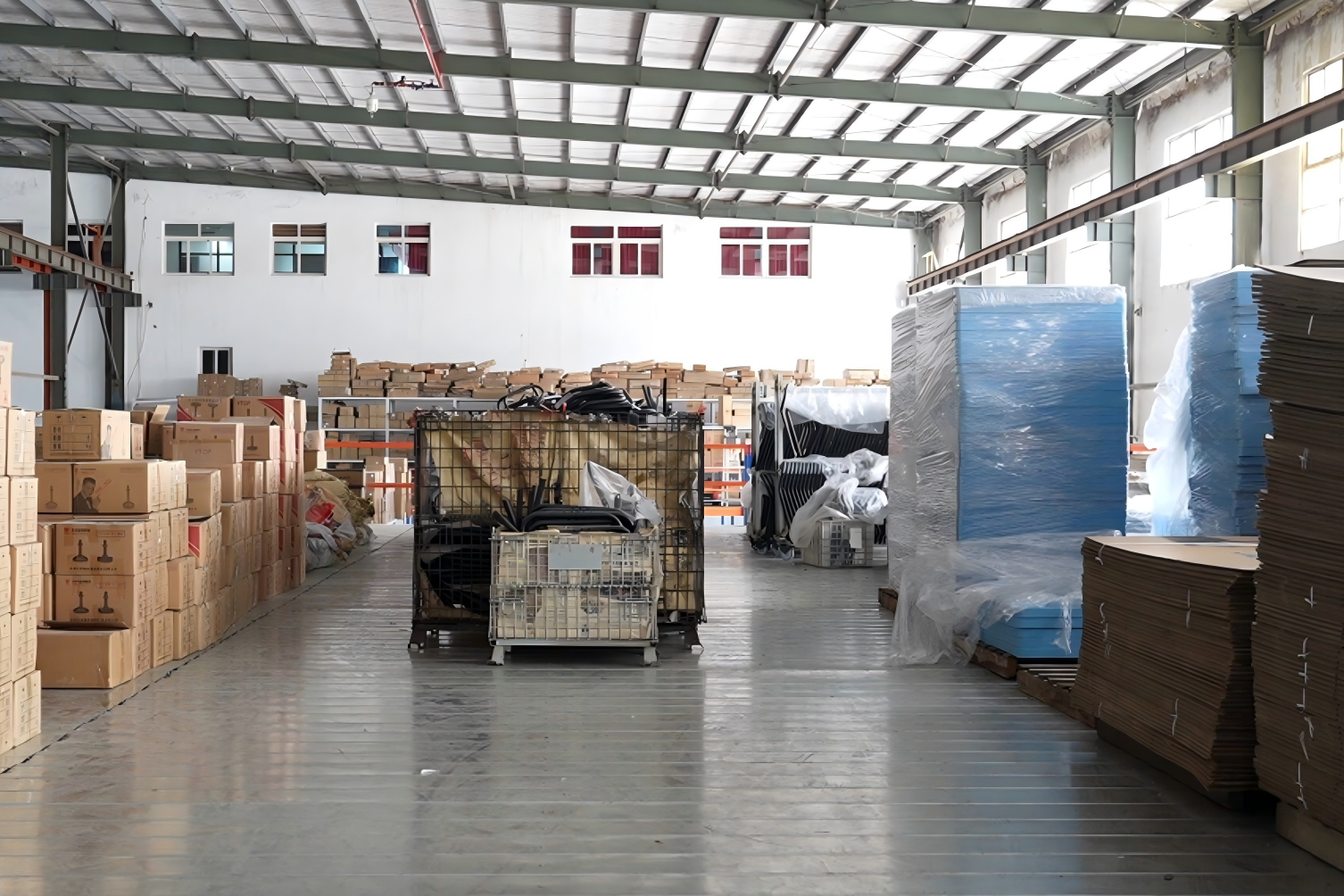
A reel stand is one of the least forgiving loads a caster will see. The mass is high, the footprint is narrow, and the reel can shift as the paper unwinds.
Three measures reduce the risk. Widen the caster base if the frame allows it, since stability scales with the wheelbase rather than with capacity. Use a low-profile caster where deck height permits, to bring the centre of gravity down. And fit a swivel lock or a direction lock to the casters that should not turn, so the stand tracks straight rather than following the floor.
Where the reel stand is pushed by hand, a directional lock on the two leading casters converts an unstable four-swivel arrangement into a predictable one.
Marking, Scratching and Product Contact
In a finishing department, the wheel matters more than the load rating.
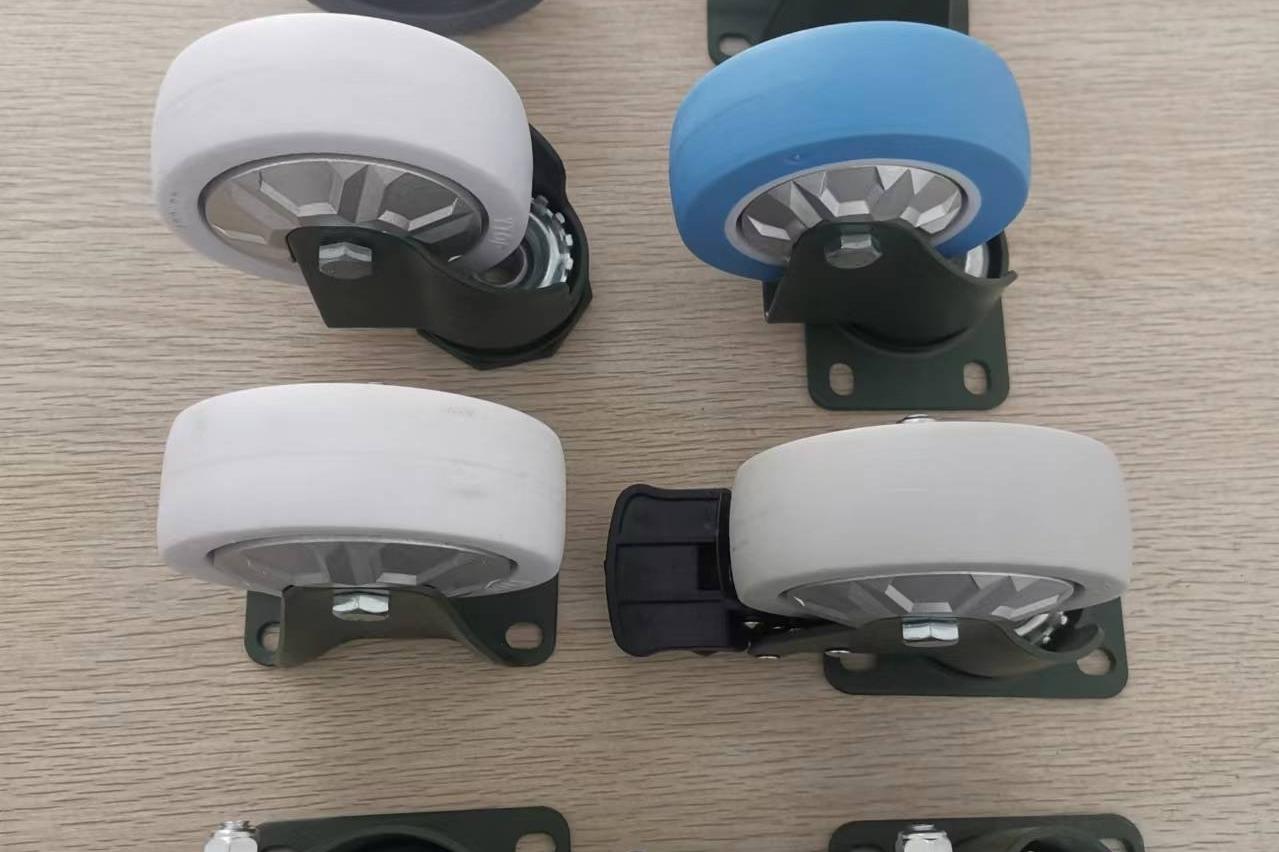
A hard wheel on a coated or vinyl floor leaves marks that appear only when the floor is cleaned, and by then nobody can identify the cause. A soft wheel on a floor with trim offcuts picks up paper and grit, and then presses it into the floor.
The usual compromise in printing plants is a non-marking rubber or soft PU tread on clean finished-goods floors, and a harder tread in the reel store and the waste area where the floor is rougher and the cart never comes near product.
Solvents, Inks and Cleaning Chemicals
Where presses are washed down with solvent, three parts of the caster are at risk: the tread compound, the seal, and the grease.
Standard rubber tread can swell or harden when exposed to solvent; polyurethane is generally more resistant but not universal, and the correct choice depends on the specific chemical. Seals that are not solvent-resistant harden and crack, which opens the joint to dust at exactly the moment it becomes most vulnerable.
The practical approach is to name the chemical rather than to ask for a “chemical resistant” caster. A supplier can match a compound to a named solvent; nobody can match it to a description.
Static in the Pressroom
Paper running through a press generates static, and a charged cart near solvent vapour is a genuine ignition risk in some configurations. Conductive and anti-static casters are used to give the charge a path to earth rather than letting it accumulate on the frame.
Two limits are worth stating plainly. A conductive caster only works as part of an earthed chain: the caster, the frame and the floor all have to be part of the path, and a conductive wheel on an insulating floor achieves nothing. And a standard caster fitted with a “conductive” label is often simply a caster with a carbon-loaded tread, which changes the resistance but not the earth path.
Where static is a genuine hazard, specify the resistance range required by the plant’s electrical standard and confirm how the frame is bonded to earth. Where it is only an annoyance — sheets sticking together, operators getting shocks — a conductive tread alone is usually enough.
Noise, Vibration and Pressroom Etiquette
Pressrooms are noisy places, but caster noise is still worth controlling. A hard wheel on a concrete floor produces a continuous rumble that masks machine faults and adds to operator fatigue over a shift.
Softer treads and larger diameters reduce noise: a larger wheel turns slower and bridges floor joints instead of dropping into them. Where the floor is tiled or has expansion joints, the difference between a 100 mm and a 150 mm wheel is audible, not just technical.
Waste Handling and the Other End of the Plant
The waste baler and the trim collection area are the opposite environment to the pressroom: rough floors, heavy bins, and no product nearby to protect.
Here the compromise reverses. Hard treads, larger diameters and a higher load rating are the right choice, and non-marking properties stop mattering. Splitting the plant’s caster specification into a clean-area type and a waste-area type is usually cheaper than trying to satisfy both with one caster, and it gives maintenance a clear rule for replacements.
Brakes and Loaded Reels
A loaded reel stand on a slight slope will move. In printing plants the usual culprit is not a ramp but a floor that drains toward a gully, or a joint that has settled.
Fit brakes to all four casters, not to two, and check that the brake acts on the wheel rather than only on the swivel. A swivel-only lock stops the cart turning but lets it roll, which is exactly the wrong behaviour under a tall load.
Where the reel stand is parked for long periods under load, the brake is also protecting the tread: a parked caster takes a permanent set where the wheel meets the floor, and that flat spot becomes a thump on the next move.
Maintenance in a Paper Plant
Two habits make the biggest difference.
Clean joints with dry air before greasing. Paper dust plus grease forms a paste, and that paste is what destroys the track; removing it costs a minute per caster.
Replace casters on the reel stands more often than on general carts, even when they look serviceable. A stiff swivel under a tall reel is a stability problem as much as a wear problem, and the consequence of losing control of a reel is out of proportion to the cost of the caster.
A simple test takes thirty seconds: lift the cart so the casters hang free and turn each fork through a full circle by hand. Smooth with slight damping is healthy; notchy, stiff or with any vertical play means replace. Doing this on every reel stand once a quarter prevents most of the incidents that get blamed on floor conditions.
Specification Checklist
Five questions cover most printing and packaging applications.
Will the cart come near finished product, or is it confined to the reel store and waste area? This decides whether the tread must be non-marking.
What chemicals contact the wheel, named specifically rather than described as “solvents”?
What is the load, and how high is the centre of gravity, since stability depends on both?
Is static a hazard or an annoyance, and is the frame actually earthed?
What is the cleaning routine, and who will blow out the joints before re-greasing?
Answer those five and the caster specification writes itself. Skip them and the plant ends up with a fleet of casters that either mark the floor or seize in the dust, and nobody quite knows which failure came from which decision.
Related Reading
Two guides that continue this topic:
- Anti-Wrap Caster Design — why wheel spacing and fork geometry stop trim and fibre winding round the axle.
- Low Centre of Gravity Casters — the stability argument behind reel stands and narrow carts.
Explore our heavy-duty casters (150-610kg) and super heavy-duty casters (700-1600kg), or contact our engineering team with the reel weight, the floor and the chemicals in use.
Post time: Nov-18-2026