
A pharmaceutical plant is not a cleanroom first and a factory second — it is both at once. Every cart that crosses the boundary between a grey area and a Grade C or D room has to be clean enough to enter, and the caster is the part nobody looks at until it starts rusting.
This article covers what casters face in pharmaceutical production, packaging and warehouse areas, and how to specify them so they survive both the cleaning regime and the audit.
Five Conditions in Pharmaceutical Production
The pharmaceutical environment differs from ordinary manufacturing in the way cleaning is done, not just how often.
Cleaning is documented. A cart is cleaned to a written procedure with a validated agent, and a caster that cannot be cleaned to that procedure becomes a finding rather than a wear item.
The cleaning agents are aggressive. Quaternary ammonium compounds, sodium hypochlorite, hydrogen peroxide and 70% alcohol are all common, and each attacks a different part of a caster.
Particulate matters. A caster that sheds paint, rubber crumbs or grease is a contamination source in a room where particle counts are monitored.
Loads are moderate but repetitive. A vial tray, a tote of blister packs or a pallet of cartons is not heavy, but it is moved hundreds of times per shift.
And floors vary. Production rooms have seamless vinyl or epoxy, corridors are often tiled, and the warehouse is plain concrete with joints and dock levellers.
Cleanability Before Durability
In pharma work the order of priorities is reversed: a caster has to be cleanable first and durable second, because an uncleanable caster cannot be used regardless of how long it lasts.
What makes a caster cleanable is simple in principle: smooth surfaces, no exposed threaded rod or hollow tube where liquid collects, no crevices at the bracket and wheel interface, and a finish that survives the cleaning agent without blistering.
Zinc-plated brackets with a powder coat fail this test. The coating blisters at the edges after repeated hypochlorite exposure, and the blister becomes a harbour for residue. Stainless, or a properly cured coating with sealed edges, is the minimum.
Wheels matter as well. A rubber wheel with a rough moulded surface holds residue; a machined polyurethane or nylon wheel with a smooth face wipes clean.
Cleaning Chemistry and What It Attacks
Each agent in a pharma cleaning regime attacks something specific.
Sodium hypochlorite attacks stainless less than it attacks zinc and aluminium, but it attacks grease and elastomer seals aggressively; a chlorinated wash reaching a raceway strips the lubricant and hardens the seal.
Hydrogen peroxide and peracetic acid attack the same targets from a different direction, and they are usually applied as a fog or a spray, which means the caster is exposed on all surfaces rather than only at the tread.
70% alcohol is the mildest of the four but it is applied constantly, and repeated alcohol exposure slowly extracts plasticiser from a soft tread, which hardens it and makes it brittle.
The practical conclusion: sealed raceway, stainless housing in rooms that are fogged, and a grease that is compatible with the specific agent rather than a general-purpose one.
Particle Control and Non-Marking Treads
Particulate is a specification item, not a side note.
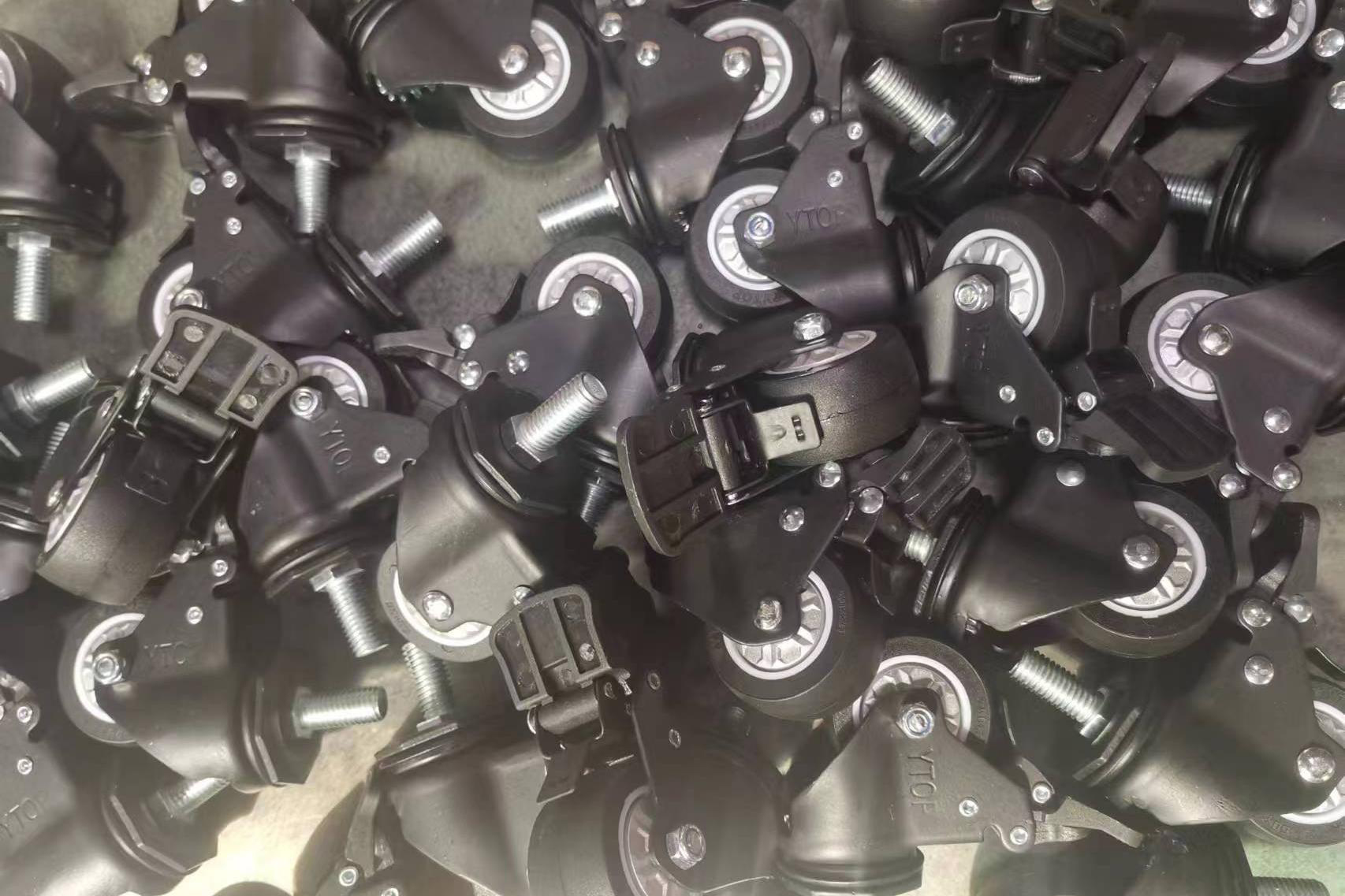
A soft rubber tread abrades on a seamless vinyl floor and leaves black marks that are hard to remove and easy to see in an audit. The marks are cosmetic, but the crumbs they come from are a contamination source.
A polyurethane or nylon tread marks less and sheds less. Where a room is graded, a white or light-coloured non-marking wheel is easier to defend than a black one, because residue shows up immediately and gets cleaned rather than being missed.
Dust from the caster itself is rarely the main particle source — people and cardboard are — but a caster with exposed grease is a clear finding, so a sealed bearing and a clean joint are both hygiene items.
Vial Trays, Totes and Autoclave Carts
Three load types dominate, and each has a different governing constraint.
Vial and ampoule trays are fragile and light, carried on small stainless trolleys. The governing constraint is smoothness and non-marking rather than load; a soft PU wheel at a modest diameter is right, and a hard wheel that transmits every joint as a shock is wrong because it topples trays.
Totes and blister-pack carts are moderate loads moved constantly. Rolling resistance, not load capacity, decides the specification; a wheel that is too small makes the shift exhausting and the joint wear faster.
Autoclave and steriliser carts are the difficult case: heavy, hot when they come out, and often pushed on rails rather than floors. Where they do run on casters, the caster sees temperatures near 100 degrees Celsius at the trolley frame, and a standard grease will not survive it.
Boundary Crossings and Material Air Locks
The most common specification mistake in pharma is designing one caster for the whole site.
A cart that leaves a Grade D room and enters a Grade C room has to be clean at the boundary, and the caster is one of the surfaces that is hardest to clean quickly. Where transfers happen frequently, either the cart is dedicated to one grade, or the caster is specified for the strictest room it will ever enter.
Air locks and pass-throughs also create a physical problem: a raised threshold, a strip curtain and a small ramp in a short distance. A caster of 100 mm handles it; a 75 mm caster catches on the threshold and the operator lifts the cart, which is exactly the manual handling that a caster is meant to remove.
Wheel Choice for Pharmaceutical Areas
Three options fit, and the choice follows the room grade.
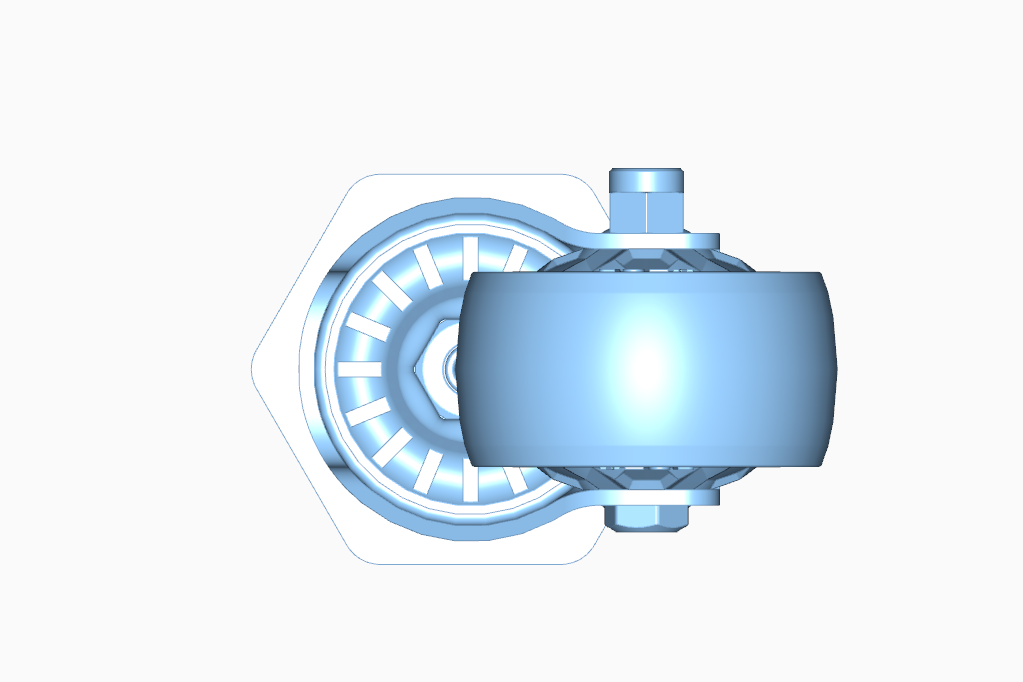
Polyurethane is the general default: smooth, cleanable, non-marking, quiet, and available in light colours. It handles the moderate loads of trays and totes well and tolerates alcohol and quaternary ammonium compounds.
Nylon is the choice for heavier tote carts and for areas where hypochlorite is used routinely, because it is chemically inert and does not absorb cleaning agents. It is harder and noisier, which is acceptable in a corridor but not in a quiet filling room.
Stainless-housed casters with a PU or nylon wheel are the specification for fogged rooms and for any caster that is sprayed rather than wiped. The housing survives; the tread still rolls cleanly.
Brakes and Dust-Free Parking
A cart parked in a filling room must not move, and it must not need a chock that has to be cleaned separately.
A total-lock brake — wheel and swivel locked together — is the right choice where a cart is positioned precisely, because a swivel-only lock still allows the cart to roll. The brake mechanism should be enclosed where possible, since an exposed ratchet collects residue.
Parking practice matters too: a cart left on a caster under load for a full shift deforms a soft tread, and a flat spot becomes a vibration source and a cleaning problem.
Maintenance and Audit Readiness
Four habits cover most of the risk.
Clean the caster to the room’s written procedure rather than by feel, and record it, since the record is what an auditor checks.
Inspect for coating damage after every deep clean; a blister at a bracket edge is the start of a corrosion finding.
Replace rather than re-grease once a raceway has taken cleaning agent, because a joint that has been through hypochlorite will not be restored by adding grease.
Keep a matched spare set per cart type, so a failed caster is swapped rather than bodged mid-shift.
Specification Checklist
Six questions settle a pharmaceutical caster order.
Which cleaning agents are used, at what concentration, and by wipe or by fog?
What is the strictest room grade the cart will enter?
Is the floor seamless vinyl, tile or concrete, which decides the wheel diameter for thresholds?
Does the cart pass through air locks or strip curtains with raised thresholds?
Is the load fragile trays, dense totes, or hot autoclave trolleys?
Who cleans the caster, to which procedure, and is it recorded?
Answer those and the usual outcome is two specifications: a light-coloured PU wheel on a stainless-housed swivel for production and filling rooms, and a nylon wheel on a sealed bracket for corridors, wash areas and the warehouse. The recurring mistake in pharma plants is buying a well-made industrial caster that is strong, quiet and completely unable to be cleaned to a validated procedure.
Related Reading
Two guides that support the choices above:
- Stainless Casters for Washdown and Corrosive Environments — housing, seal and grease selection for aggressive cleaning agents.
- Caster Tread Hardness: Shore A and Shore D — matching tread hardness to floor protection and rolling effort.
Explore our heavy-duty casters (150-610kg) and super heavy-duty casters (700-1600kg), or contact our engineering team with the cleaning agents and room grades.
Post time: Nov-28-2026